Contents
Learning to read is a big journey, and you’re right at the heart of it.
Even ten minutes of reading together can make a real difference. It’s one of the greatest gifts you’ll ever give your child—a key that unlocks school success, confidence, and a lifetime of “just one more chapter” moments.
This guide walks you through simple, reassuring ways to support children as they learn to read—mainly in the early years, with a few pointers for when they’re racing ahead too.
Keep reading aloud to your child (from day one and beyond)
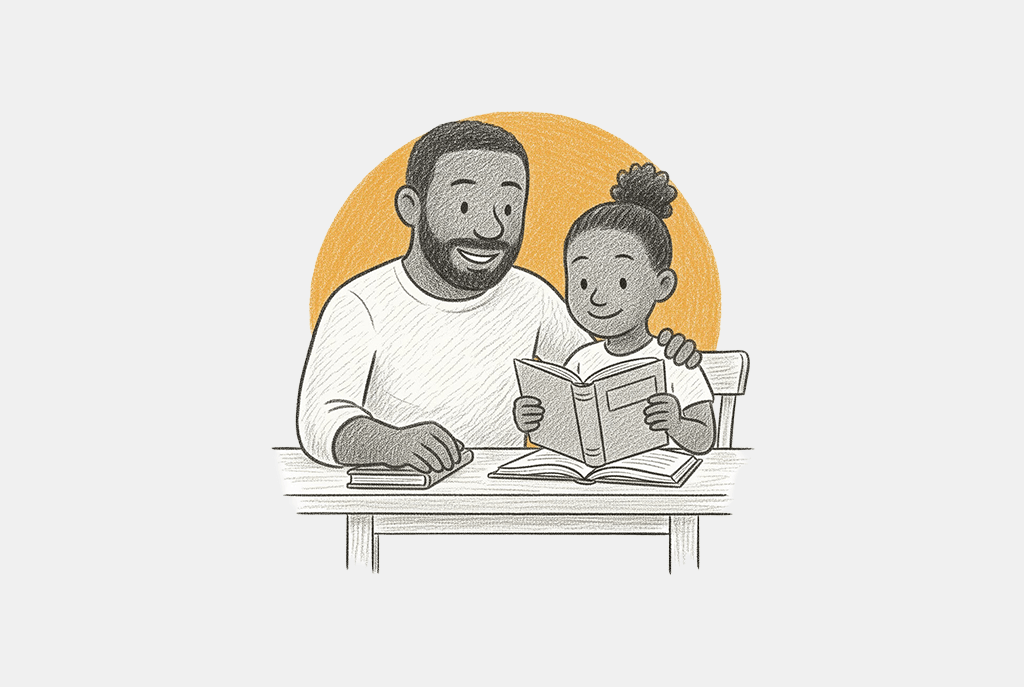
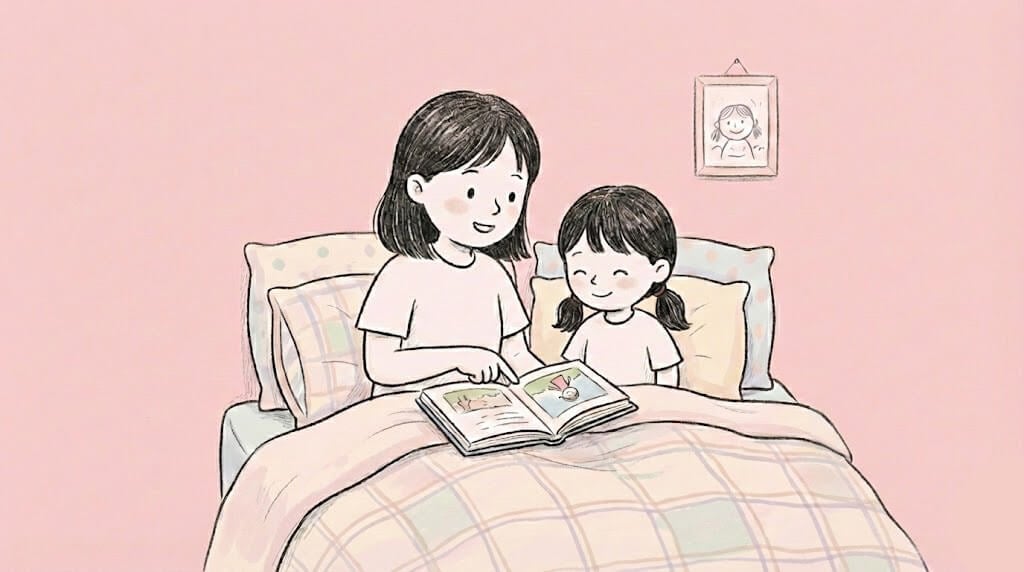
Please don’t pack away the bedtime stories just because your child is learning to read. Reading aloud—from babyhood right through the school years—does wonders for language development, vocabulary, imagination, and that cosy feeling children associate with books.
And here’s the good news: even when they’re reading confidently on their own, they still need (and secretly want) you to keep reading to them.
Research backs this up too—reading aloud beyond age five helps boost listening skills, comprehension, and overall academic success.
So reassure your little one: learning to read won’t replace storytime. You’ll still curl up together with a book. Those shared moments are where a love of reading grows.
Bite-sized reading tips, straight to your inbox
Get confidence-boosting tips to help your child learn to read. Short, useful, and easy to fit into (real) family life!
Even better? You'll also get 30% off your first month of Reading Chest.
Read at the right time (short, positive sessions)
Try to pick a reading time when your child isn’t running on empty. Young children can go from “keen and focused” to “absolutely done” in about 30 seconds, and tired reading is rarely joyful reading.
You might find that a quick practice session after a snack or sometime in the morning works better than squeezing it in at the end of the day. Even ten calm minutes can be more effective than a long session when everyone’s flagging.
The trick is to keep reading time positive. Stop before they burn out. Leave them wanting more. That way, reading becomes a happy routine—not something to power through.
Start a simple daily habit that builds reading confidence with this quick-start activity.
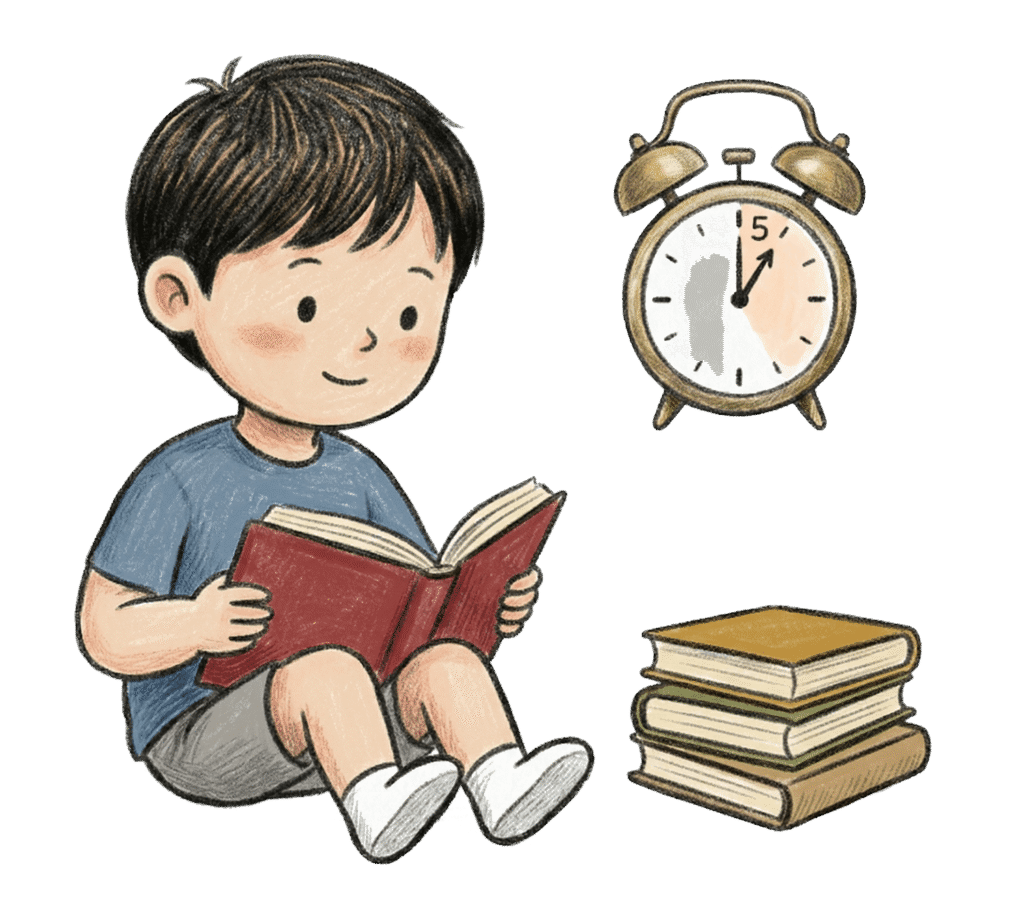
The five-minute reading habit
Five focused minutes with the right book beats an hour of reluctant page-turning. Short daily sessions are where the real progress happens.
Goal
Build confidence and fluency through short, consistent daily reading — because regularity matters more than duration.
You'll need
- A decodable book at the right level
- A comfy spot
- A bit of patience
How to do it
Sit together and read a couple of pages. Let your child point to each word as they sound it out. If they get stuck, give them a moment before you step in — sometimes they just need a second.
When they do need help, try: "Say the sounds, then blend" rather than just saying the word for them. Keep the session upbeat. End it before anyone gets tired.
Five minutes every day adds up to over 30 hours of reading practice in a year. That's not nothing — that's everything. The habit matters more than the duration.
Grab our resources
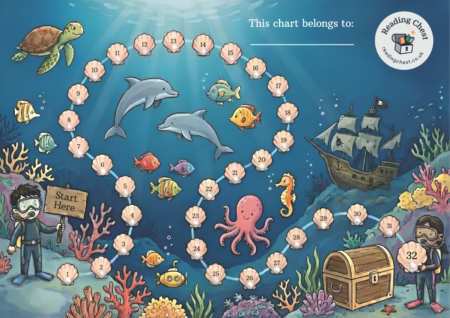
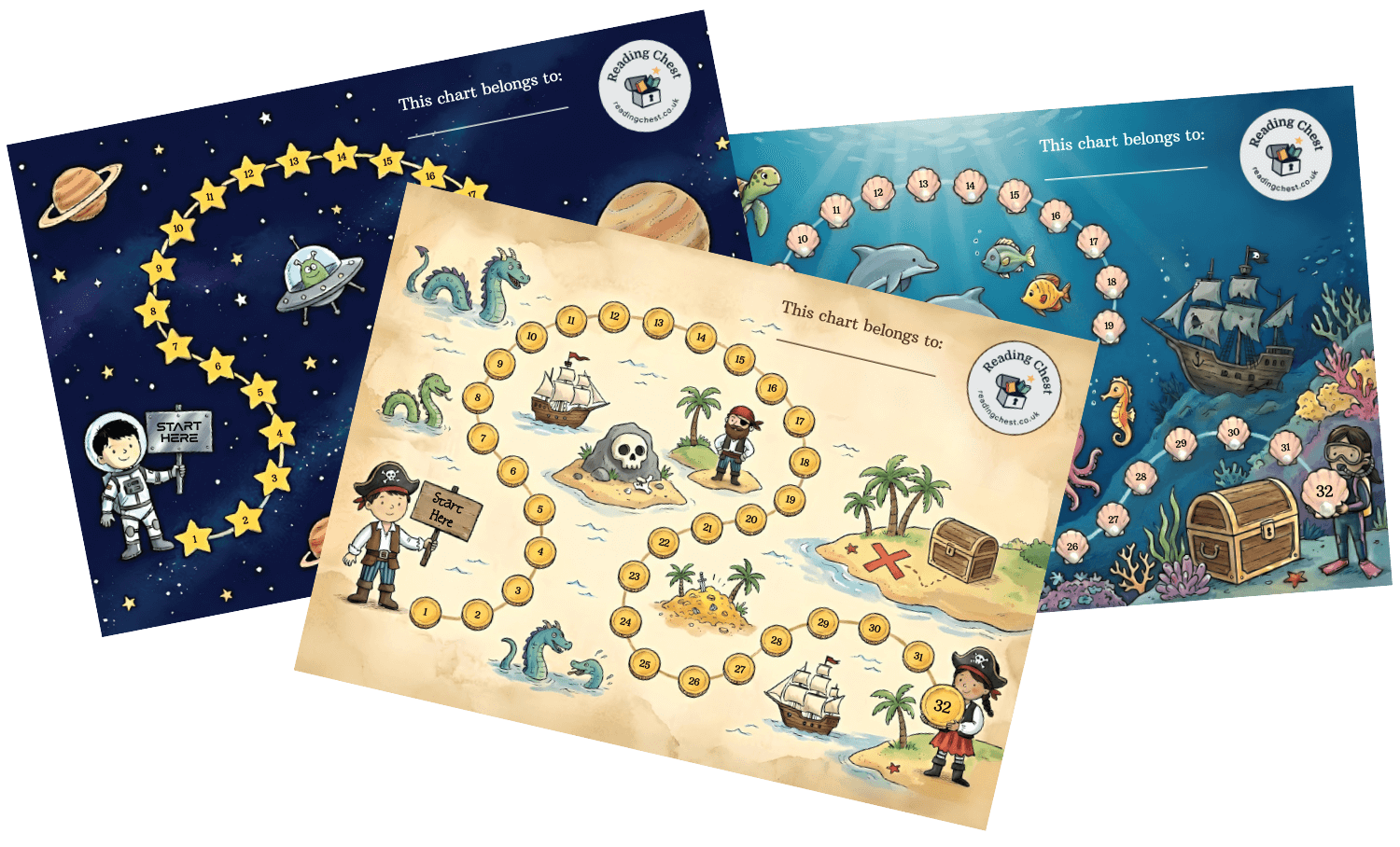
Our handy star charts are the perfect way to track your daily progress as you tick off those five minute reads!


Make reading fun and interactive
Reading together shouldn’t feel like a test. Picture books and early readers are full of brilliant little details that invite conversation, so lean into that.
Chat about the pictures. Ask open-ended questions like, “What do you think is happening here?” or “What might happen next?” Let them take the lead with their ideas—even if they’re wildly imaginative (half the fun, honestly).
This kind of back-and-forth builds comprehension, confidence, and a sense that books are something to explore, not just decode. If you come across a new word, pause for a moment to talk about it. Keep it simple and connected to their world.
The more you turn reading into a shared adventure, the more they’ll want to do it again.
Help them sound out words (using phonics)
When your child meets a tricky word, guide them to “sound it out” rather than guess. Phonics is all about matching letters to the sounds they make and blending those sounds together. If you’re unsure what phonics is, our introduction to phonics is a great place to learn more!
So if they get stuck on shark, you might gently prompt: “Let’s try the sounds… sh ar k.” It won’t always be smooth, and that’s completely normal. Blending takes practice.
Give them time, celebrate the effort, and step in with the full word if their frustration starts creeping up. The goal is confidence, not perfection. Once they crack this sound-letter code, they’ll feel much braver about tackling new words on their own.
Tackle “tricky” words together (sight words and irregular spellings)
Some words just don’t play by the phonics rules. Said, one, know—you can try sounding them out, but you’ll end up somewhere very strange. These “tricky words” pop up all the time, so children need to recognise them by sight.
When you meet one in a book, help your child spot the regular bits first, then talk through the “tricky” part. With said, for example, you might point out the s and d sounds as usual, then explain that ai is doing something a bit unexpected here.
Modelling this shows them that tricky words aren’t magic—they’re just… well, tricky. You can also practise them separately using flashcards or quick word games. Over time, these high-frequency words become instantly recognisable, and reading flows much more smoothly.
Make tricky words fun with this quick game.
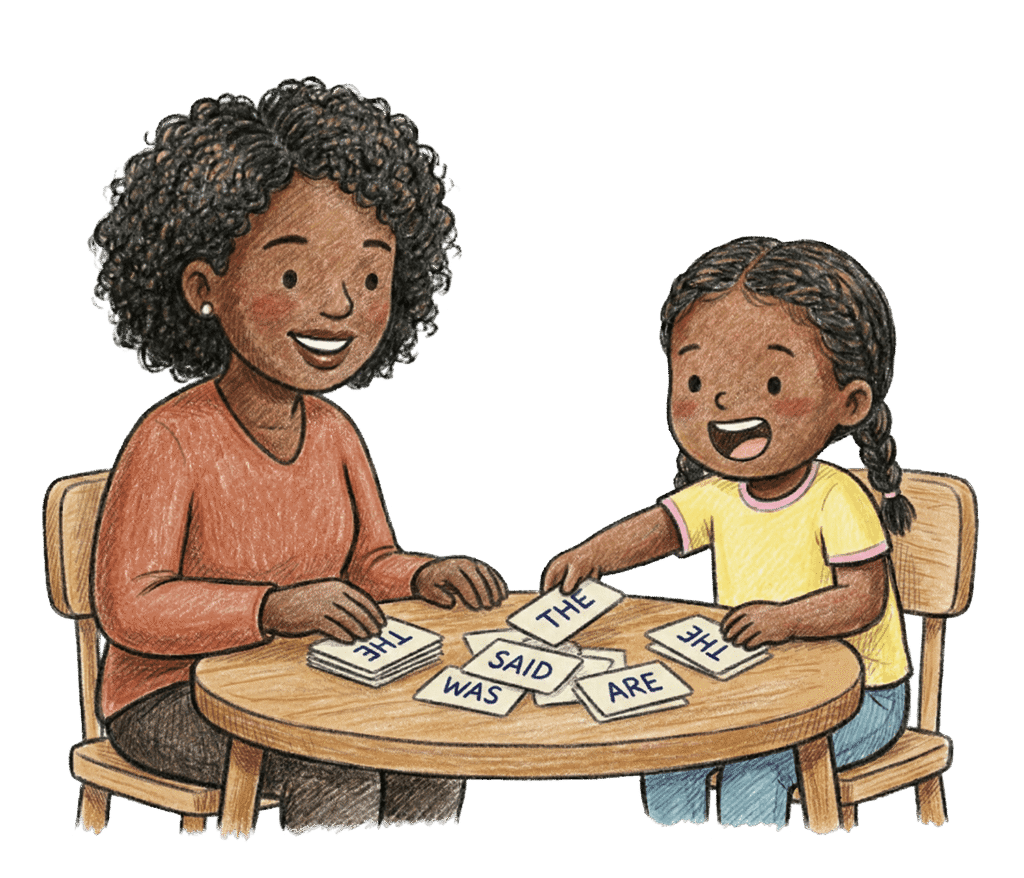
Tricky-word snap
Play snap with tricky word cards — but instead of shouting "snap!", shout the word. Fast, fizzy, and surprisingly effective.
Goal
Learn common tricky words by sight — through speed and repetition, not drilling.
You'll need
Tricky word cards — or just write common words on slips of paper.
How to do it
Deal the cards and play snap. When a match appears, shout the word aloud instead of "snap!" First one to say it correctly takes the pile.
If that's too chaotic — and it can be — try a calmer version: spread the cards out and take turns picking one up and reading it. Any word read correctly goes in your pile.
You can also call out a word and challenge your child to find it in the spread-out cards. That's a good middle ground between game and practice. Finish by reading through your pile together — a nice, low-key way to end the session.
Be a reading role model
Children copy what they see, often with alarming accuracy (except, bizarrely, when it comes to putting shoes away). If you read, they’re far more likely to read.
Let them catch you with a book, an article, or an audiobook on the go. Share little snippets of what you’re enjoying. You could even set up a relaxed “family reading time” where everyone grabs something—yes, comics absolutely count.
When children see that reading is part of everyday life, not a chore reserved for homework, the message sinks in: reading is something people choose to do. And that’s when the real magic happens.
Use everyday print for learning (the world is a reading classroom)
Books are brilliant, but they’re not the only place words live. Signs, menus, cereal boxes, labels, tickets—print is everywhere, and children love spotting it.
Next time you’re out, turn it into a mini game: “Can you find the letter m?” or “What do you think that sign might say?” At home, simple labels (like door, chair, toy box) or a little alphabet chart can quietly reinforce what they’re learning.
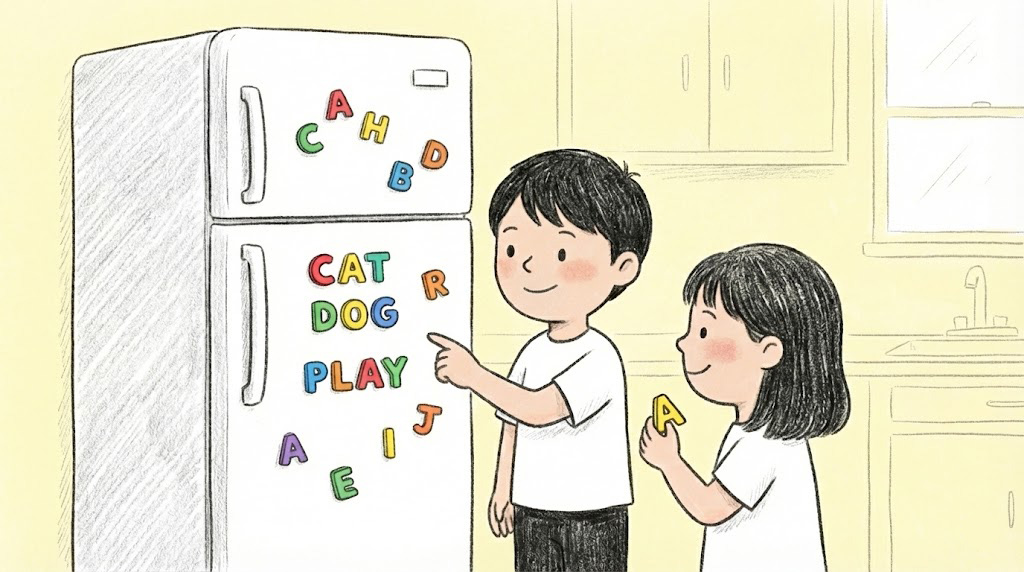
You can stick magnetic letters on the fridge, display their writing, or let them point out words they recognise. All of these tiny moments build print awareness and confidence. Children start to understand that words have meaning everywhere—not just tucked inside a storybook.
Make the most of your Reading Chest books
Every Reading Chest delivery is designed to do a bit more than just land on the doormat (nice as that bit is). Many of the books include helpful notes for grown-ups—tricky words to watch out for, phonics patterns being practised, or simple prompts to talk about the story. These are little nuggets of gold.
Because your books match to your child’s reading level and book band, you’ll naturally get a good mix: titles they can read confidently to you, alongside slightly richer books you can enjoy together. For detailed guidance on selecting books at the right level, see our comprehensive guide to tips on choosing books.
That balance really matters—confidence and challenge, without frustration creeping in.
Interested?
Wondering how to find the right books when your child’s school books aren’t coming home? Learn how Reading Chest can help fill the gap.
Find out more about how Reading Chest works.
Don’t push it – find the right level for success
The right book level makes reading feel possible. Too hard and they’ll quickly deflate; too easy and they won’t learn anything new.
A simple rule of thumb: if your child can read about nine out of ten words correctly, the book is probably a good fit for practice. Below that, things usually tip into frustration territory. You’ll notice they get stuck on individual words and lose track of the story.
It’s fine—brilliant, even—to have some “easy wins” too. Books they can breeze through build confidence and fluency. Save the slightly harder texts for reading together or for you to read aloud.
Every child moves at their own pace. Finding that sweet spot of “just right but still enjoyable” keeps reading fun, steady, and satisfying—exactly as it should be.
Do what works for your child (keep them motivated)
Every child is motivated by something slightly different, so don’t be afraid to experiment. Some children dive into books like they’ve been waiting their whole lives; others… well, let’s just say they need a little convincing.
If your child’s reluctant, try making reading feel shared rather than something they have to “perform.”
Take turns: you read a page, they read the next. Or let them read one character’s lines while you handle the rest of the story. Silly voices are always welcome (borderline required).
A little reward system can help too—a simple sticker chart or a “reading passport” can work wonders. Lots of children love seeing their progress.
And don’t shy away from following their interests. If they’re obsessed with dinosaurs or football or space, lean into it.
Most importantly, keep the atmosphere light. Celebrate the effort, not perfection: “I love how you tried that word!” If something’s not clicking, switch it up. Flexibility keeps them engaged—and makes reading feel like an adventure, not another task on the list.
Our Reading Chest star charts are free to download, and a great way to celebrate progress.
Stay in touch with teachers
Your child’s teacher is your reading teammate, so keep the lines of communication open. Teachers adjust reading levels carefully, but they also rely on what you’re seeing at home.
If the books coming back feel consistently too easy or too hard, just mention it. Children should move up when they’re ready, not just because they’ve ticked off a stack. And if the teacher suggests staying put for a bit longer, that’s usually based on solid observation—moving up too soon can knock a child’s confidence.
Make the most of your child’s reading record. A quick note like “struggled with th” or “read this one independently!” is incredibly helpful. It gives teachers insight into what’s happening beyond the classroom.
Reading is absolutely a team effort. Staying in touch means you can spot concerns early, celebrate progress together, and keep your child gently but steadily moving forward.
Enjoy the journey!
Learning to read is full of tiny triumphs and occasional wobbles—and that’s all part of it. One day your child zips through a whole story, the next day a single word feels like climbing a mountain.
Your encouragement is the constant that gets them through both.
Keep reading to them, keep things relaxed, and keep cheering them on. Every shared book, every moment you pause to help them decode a word, every “Listen to this!” from you shows them that reading is worth it.
And that’s a gift that lasts a lifetime.
Frequently asked questions
What age should my child be able to read?
Children learn to read at different ages. Most start Reception (age 4–5) and are reading simple books by the end of that year. Some take longer, and that’s completely normal. Readiness depends on language development, letter knowledge, and listening skills—all of which develop at different paces. If you’re concerned, chat to your child’s teacher rather than comparing to peers.
How long should I read with my child each day?
Even ten minutes a day makes a difference. Consistency matters more than length. A calm, happy 10 minutes is worth far more than a stressed 30 minutes. Most families find that reading together at bedtime works well, but the best time is whenever works for you. Start small, keep it positive, and build from there.
What if my child is struggling with reading?
First, stay calm. Struggling with reading doesn’t mean something is wrong—it often just means they need a bit more time or a different approach. Talk to their teacher about what you’re seeing. Keep practice short and positive. Try a different type of book (maybe non-fiction instead of fiction, or comics). Make sure they’re getting enough sleep and aren’t hungry during reading time. If concerns persist, mention it at parents’ evening and ask about extra support.
How can I make reading practice less of a battle?
Stop before they’re tired or frustrated. Read at a time when they’re calm and focused. Let them choose books. Use silly voices and make it fun. Take turns reading. Follow their interests. Never force it. If reading is becoming a battle, step back for a few days and reframe it as something enjoyable, not obligatory. A child who’s reading happily, even if it’s easier books or just comics, is winning.
What is the best way to help a child who refuses to read?
Reluctance to read often signals something—tiredness, anxiety, or genuinely tricky books. Try reading aloud to them instead of asking them to read. Let them choose any book, even graphic novels or magazines. Make it shared and fun, not a test. Use reward systems (sticker charts, Reading Chest’s star charts). Read at a different time of day. And sometimes, the best thing to do is simply give them a break. Many children go through phases of reluctance, and pressure only makes it worse.
In summary
Supporting your child’s reading doesn’t require special training or endless hours. It requires patience, positivity, and showing up consistently—even when progress feels slow.
Read to them. Read with them. Let them see you enjoying books. Keep it relaxed. Celebrate effort. Expect wobbles. Trust the process. And remember: every child learns to read. The only question is how much joy they experience along the way—and that depends largely on you.
You’re doing brilliantly. Your child is doing brilliantly. Keep going.
