Contents
January has a funny way of making us feel like we should be doing better.
Better routines. Better habits. Better evenings. Preferably starting immediately, with colour-coded charts and boundless motivation.
And reading often gets swept up in that energy. Do any of these sound familiar?
- “This year we’ll read every night.”
- “This year they’ll fly through books.”
- “This year we won’t miss a single day.”
Then life happens. School starts again. Everyone’s tired. Someone gets ill. The books sit there quietly judging you from the shelf.
So let’s try something different this year.
Instead of setting big reading goals, let’s focus on something far more powerful — building the habit of reading, and helping your child see themselves as a reader.
Why reading resolutions so often fall apart
There’s nothing wrong with wanting to read more. But big, shiny resolutions have a habit of backfiring — especially when it comes to reading.
That’s because reading isn’t a one-off achievement. It’s not something you complete and tick off. It’s something you return to, again and again, in all sorts of moods and moments.
When goals are too rigid:
- Missing a day feels like failure
- Children feel pressure instead of pleasure
- Parents feel guilty (which helps no one)
Reading thrives on consistency, not intensity. Ten minutes most days beats an hour once a week. One page tonight beats nothing because it didn’t feel “worth it”.
Bite-sized reading tips, straight to your inbox
Get confidence-boosting tips to help your child learn to read. Short, useful, and easy to fit into (real) family life!
Even better? You'll also get 25% off your first month of Reading Chest.
Identity matters more than numbers
Here’s the quiet mindset shift that makes the biggest difference:
Becoming a family who reads matters more than how much you read.
Children don’t need to hit targets. They need to feel that reading is something people like them do.
That might sound like:
- “We usually read after school”
- “Books are just part of our day”
- “We’ll grab a book while we wait”
Not:
- “We must read for 20 minutes”
- “We’re behind”
- “We’ve failed this week”
When reading becomes part of who you are — not something you have to earn — it sticks.
Start ridiculously small (on purpose)
If restarting reading feels hard, the answer is almost always to make it easier, not to push harder.
Try setting the bar so low it’s impossible to trip over:
- One page
- One book
- One minute
- One story, read by you
Small habits remove resistance. And once you start, momentum has a funny way of appearing on its own.
This is especially important for children who’ve lost confidence. Finishing something — anything — builds belief far faster than struggling through something that’s too tricky.
And yes, rereading favourite books counts. (In fact, it’s brilliant for fluency and confidence — so let’s stop calling it “cheating”.)
Make reading easy to say yes to
Habits work best when they fit around real life, not an idealised version of it.
A few gentle tweaks that really help:
- Keep books where life already happens — the sofa, the kitchen table, the car
- Let reading happen at different times of day, not just bedtime
- Count all reading, even if it’s short or shared
- Let children choose their own books (even if they seem “too easy”)
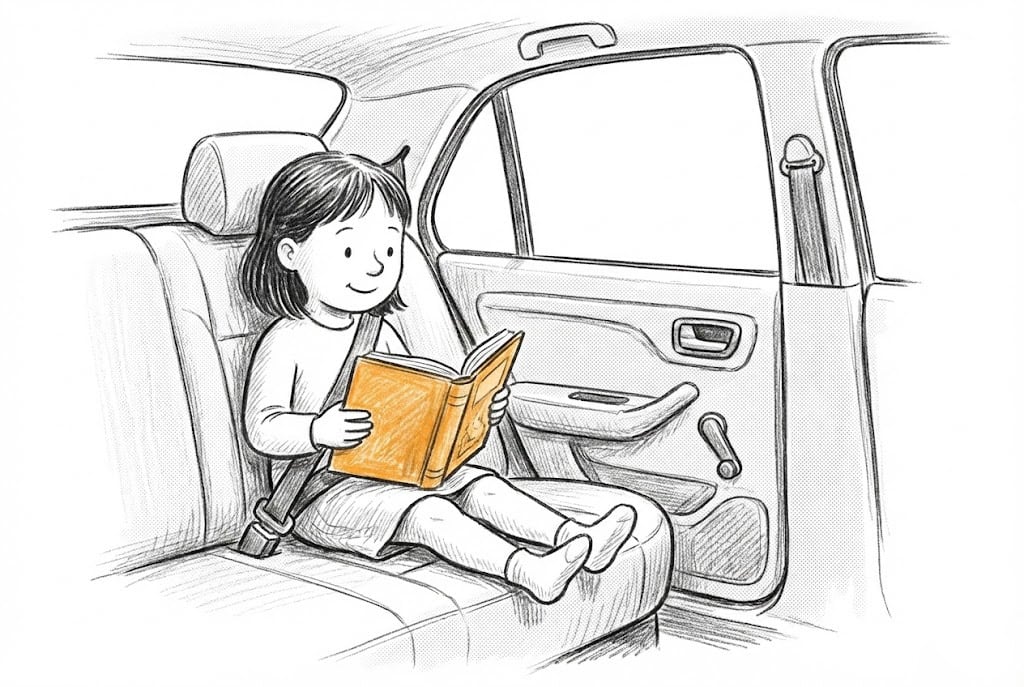
When books are nearby and pressure is low, reading becomes the obvious choice — not another thing to negotiate.
Resetting your child’s reading routine
After a break, it’s completely normal for children to feel rusty. Words feel harder. Confidence wobbles. Resistance creeps in.
This doesn’t mean anything’s gone wrong.
A soft reset works wonders:
- Read together more often
- Drop down a level temporarily if needed
- Focus on success, not speed
- Stop before frustration kicks in
Confidence comes before progress. Always.
And remember — abandoning a book that isn’t working is allowed. Even encouraged. We don’t all finish every book we start, and children don’t need to either.
A little reward can help
If your child loves a bit of encouragement (and let’s be honest, most do), a simple reward system can keep things positive without turning reading into a high-pressure “task”.
A star chart works brilliantly here because it values showing up, not being perfect. One star for reading together. One for giving a tricky word a go. One for remembering to grab a book while you wait for the pasta to boil. Tiny effort, big pride.
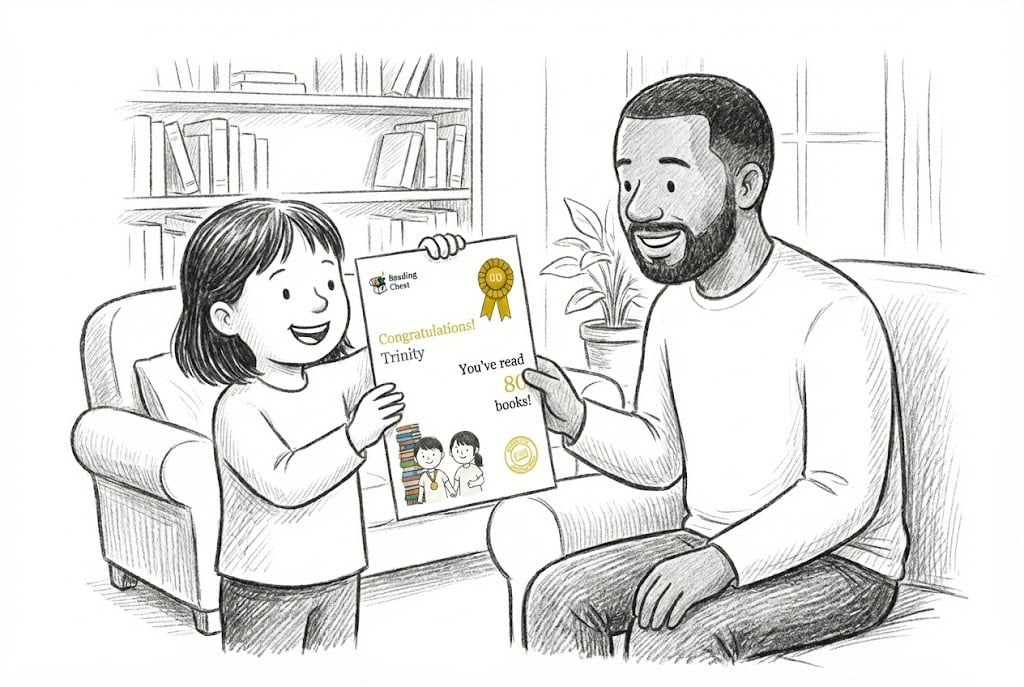
And milestone certificates can be a lovely way to mark progress — finishing a book band, completing a set of stories, or simply sticking with reading for a few weeks. It’s not about bribery; it’s about helping your child notice their own growth.
Reading Chest members get star charts and milestone certificates included to help with celebrating progress together.
What grown-ups bring to the table
You don’t need to be a flawless role model who reads novels every night.
What helps most is being seen reading — occasionally, imperfectly, in whatever form works:
- A book
- A magazine
- A recipe
- An audiobook playing while you cook
Reading aloud still counts, even for older children. Listening builds vocabulary, understanding, and confidence — and it keeps reading feeling warm and shared.
You’re not performing. You’re just showing that reading belongs in everyday life.
What success actually looks like by spring
By a few months in, success won’t look like a perfect streak.
It’ll look more like:
- Books being picked up without prompting
- Fewer battles about reading
- A child who’s more confident, even if progress is uneven
- Reading feeling normal, not special or stressful
That’s when habits have taken root.
One small thing to try this week
If you take anything from this, let it be this:
Don’t aim to read more. Aim to make reading easier to return to.
Choose one tiny change — one book in a new place, one shared story, one pressure-free moment — and see where it leads.
Reading is a long game. And the best readers aren’t the ones who hit targets early — they’re the ones who grow up believing that books are for them.
How Reading Chest can help
Habits are so much easier to build when you’re not constantly hunting for the next book that’s actually the right level (and not mind-numbingly boring).
Reading Chest helps by making sure there’s always a well-matched, phonics-friendly book ready when you need one — delivered through your letterbox, with plenty of variety, plus little extras like star charts and milestone certificates to keep motivation ticking along.
Less faff, more reading. That’s the goal.

Jen Appleyard
Jen Appleyard is a mum of two boys and the owner of Reading Chest. She took over the business in 2024 with one goal: to make early reading easier — and far more joyful — for families.