
Contents
The start of the summer term marks an exciting time for children as they settle back into school routines. With longer days, warmer weather, and fresh opportunities for exploration, this is a perfect time to reinforce reading habits.
But let’s be honest—it’s also the time when reading can quietly slip down the priority list. Weather gets nicer, outdoor play calls, and somehow bedtime reading gets squeezed out. Here’s how to keep reading feeling fresh and exciting through April, May, and into July.
The trick isn’t pushing harder. It’s making reading feel lighter and more seasonal so your child wants to do it.
Why does reading slip in the summer term?
It’s not your fault. Summer term is genuinely tricky for reading habits. Longer days mean more outdoor play (brilliant). End-of-year pressure builds in schools. Children get tired from warmer weather and increased activities. The cosy, dark evenings that make bedtime reading feel natural disappear. Keeping momentum through this season requires a different approach than spring.
Instead of fighting this, work with it. Adjust your expectations, shift your routine, and find new moments where reading fits naturally.
Bite-sized reading tips, straight to your inbox
Get confidence-boosting tips to help your child learn to read. Short, useful, and easy to fit into (real) family life!
Even better? You'll also get 30% off your first month of Reading Chest.
Establishing reading routines that fit the season
With longer daylight hours, traditional bedtime routines might not be your best bet. Instead, try:
After-school reading
The half-hour after school, before outdoor play, is perfect. Children are still in “learning mode”, they haven’t spent their energy yet, and books feel like a natural bridge between school and play.
Outdoor reading
Take books outside. Garden, park, or even the front step works. The novelty keeps children engaged, and there’s something special about reading with warmer weather and fresh air.
Short reading moments
Forget the 20-minute session. Two pages before swimming. One story in the car on the way to the park. Reading in short bursts feels less like “doing school” and more like just… reading.
Audiobooks on the move
Summer often means more journeys—trips to the park, family outings, longer car rides. Audiobooks turn travel time into story time without requiring concentration from a tired child.
Try listening to the same book together in the car, then discussing it over ice cream afterwards. It’s conversation without feeling like a literacy lesson.
What books are good for the summer term?
Summer term calls for different books than winter. Children respond to reading that matches the season and their mood.
Adventure and exploration
Stories about journeys, discovering places, and outdoor adventures match the energy of the season. Camp, jungle, beach, and journey-based books feel seasonally right.
Lighter, shorter reads
Long, heavy fantasy series can feel demanding in summer term. Shorter chapter books, funny stories, or poetry collections feel easier to pick up and more satisfying to finish.
Nature and seasonal themes
Books about gardens, insects, baby animals, and growing things connect naturally with what children see around them. This link between book and reality makes reading feel more relevant.
Stories with warmth and humour
Summer reads don’t need to be serious. Funny books, silly adventures, and warm family stories feel right for the season.
Check our book bands for recommendations matched to your child’s reading level. You can also browse by season to find summer-friendly choices.
Making reading feel lighter without losing momentum
The goal isn’t to maintain winter-term reading intensity. It’s to keep reading as part of everyday life without it feeling like work. Reading Chest helps this shift by keeping fresh, engaging books flowing without the faff of hunting down what comes next.
Celebrate different kinds of reading
Comics, joke books, graphic novels, recipe books, instruction manuals—if it has words, it counts. Summer is the perfect time to branch out from traditional fiction and let your child follow their interests.
Let children choose more freely
If they want to reread the same book five times, that’s fine. If they want books about their current obsession (dinosaurs, space, bugs), perfect. Following interest is how reading stays voluntary.
Focus on fun, not progress
Summer term isn’t the time to push reading levels. If your child wants to stay with familiar books, let them. Confidence and love of reading matter more than moving up a level during sunny months.
Try structured activities that feel like play
Sometimes a bit of structure keeps reading engaging. These needn’t feel like “lessons”—they’re just ways to do something with the stories you’re reading.
Story starters for hot days
This activity is perfect for summer—brief, no-prep, and works in the garden with a notebook and pencil.
Summer story starter
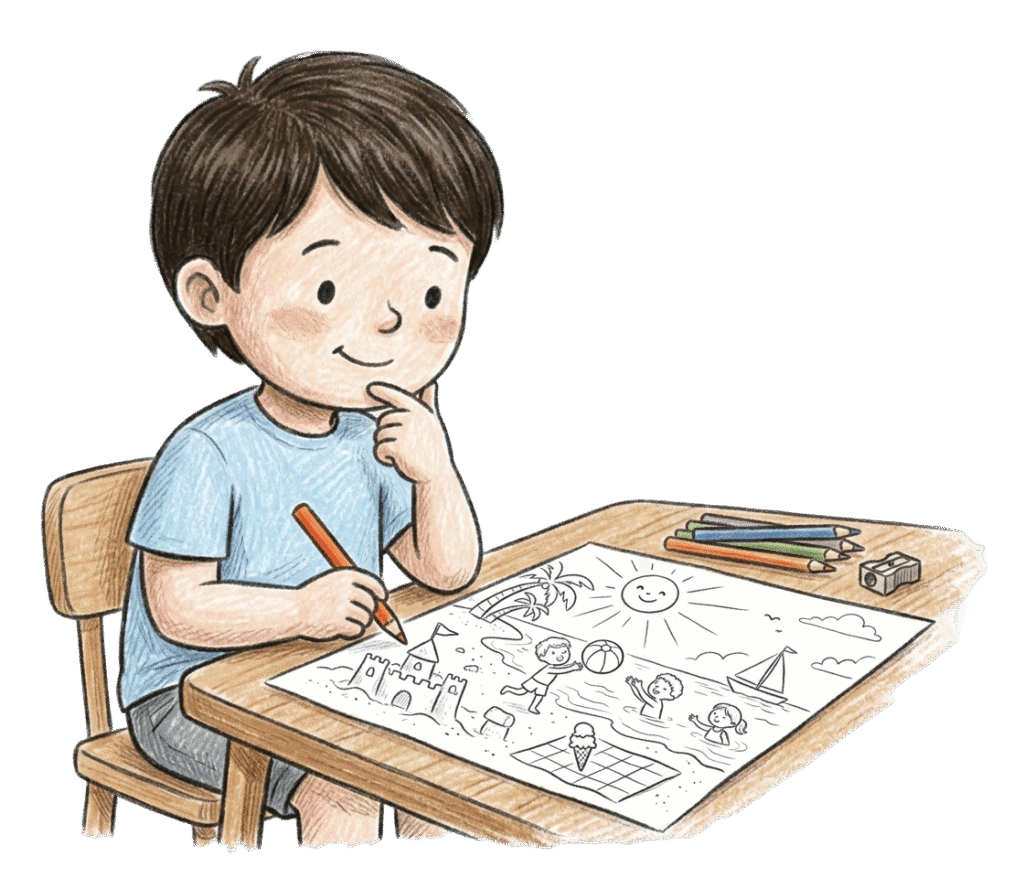
Use the summer colouring sheet as a story prompt — what's happening in the scene? Tell or write a short story about it. Imagination and colour in one go.
Goal
Spark creativity and storytelling using a visual prompt — a picture is a brilliant way in for children who find starting a story hard.
You'll need
- Summer Colouring
- Reading Prompt Cards
How to do it
Spread out the summer colouring sheet and look at it together. Ask: What's happening here? Who are these people? Where are they going?
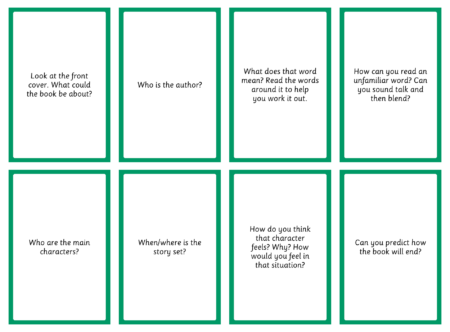
Use the reading prompt cards if you need ideas to get started: "What happened just before this picture?" or "What's happening just out of view?" Let them come up with the story — you can prompt, but try not to lead.
Once they've got a story, they can colour the scene to match it while they tell it to you. You can scribe if they want to write it down. Seasonal, open-ended, and genuinely different every time you do it.
Grab our resources
Print our summer colouring and reading prompt cards to get started.

Before and after reading moments
Capture what children noticed before opening a book and what they think about it after. Builds comprehension without feeling like work.
Picture-cover reading
Cover the pictures and read the words first. Then uncover and re-read. It sounds simple — but it makes a real difference to how children approach a page.
Goal
Encourage real decoding rather than guessing from pictures — a habit that pays off as books get harder and illustrations get fewer.
You'll need
- A decodable book
- Two sticky notes
How to do it
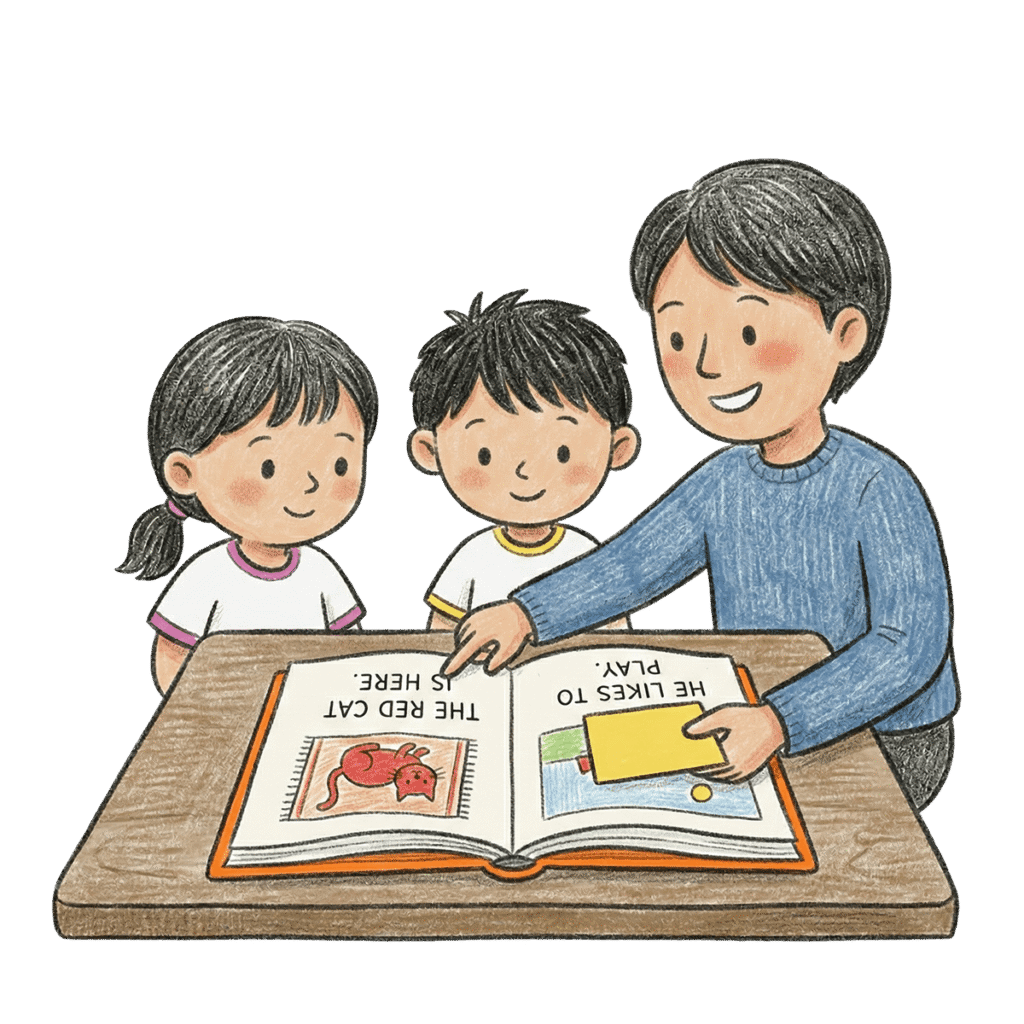
Open the book to a page and cover the illustration with a sticky note. Ask your child to read the words first — just the text, no picture clues.
Once they've had a go (stumbles and all), take away the sticky note and re-read the page together with the picture revealed. Talk about what the picture adds. Did it match what they imagined? Did it help them understand anything differently?
This doesn't need to be every page — even doing it once or twice in a session is enough. The goal is to build the habit of trusting the words, not just guessing from the picture. That's a big deal as books get longer.
Grab our resources
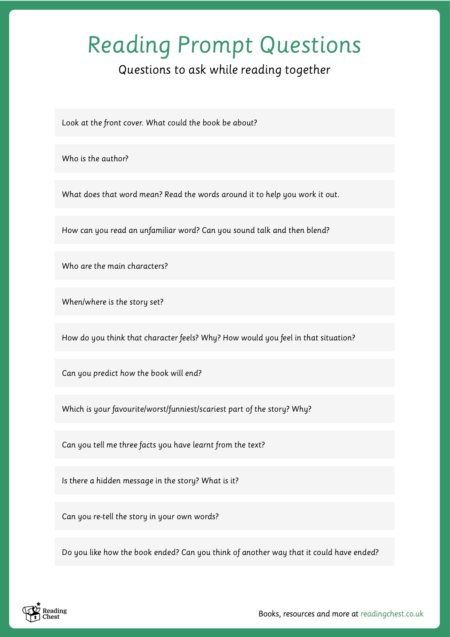
Looking for some help with questions to ask after your reading session? These prompts give you a great starting point.
Balancing reading with summer plans
Summer term means school trips, end-of-year events, preparation for holidays, and just the general busyness of the season building up. Reading won’t (and shouldn’t) be your priority every single day.
Instead of aiming for consistency, aim for flexibility:
- Some weeks will have more reading than others. That’s okay.
- Weeks full of activities? One short story a day is enough.
- Quieter week? Go deeper with a longer book.
- Never force it. A child who reads because they want to beats a child who reads because they have to.
Frequently asked questions
Why does reading slip in the summer term?
Longer days, warmer weather, outdoor play, and end-of-year tiredness all compete for attention. Bedtime becomes later, routines feel less important, and children have more energy for other activities. It’s normal—not a sign you’re doing something wrong. Adjust your expectations and find new reading moments rather than fighting the season.
What books are good for the summer term?
Look for adventure, exploration, and nature stories that match the season. Shorter reads, funny books, and stories about growing things feel seasonally right. Let your child choose more freely—if they’re interested in it, it’s the right book. Check your book band to find summer-friendly reads at the right level.
How do I make reading feel fun when the sun is out?
Take books outside. Garden reading, park reading, and story time with a picnic feel special and match the season. Try shorter reading sessions, different times of day, and lighter books. Audiobooks on journeys count too. The key is finding new moments instead of clinging to winter routines.
Should I change our reading routine for summer term?
Yes, absolutely. Bedtime reading might not work when it’s light until 8pm. Try after-school reading, garden reading, or short bursts throughout the day instead. Summer routines don’t need to look like spring ones. Flexibility matters more than consistency during this season.
How Reading Chest supports summer reading
Maintaining a steady stream of engaging books becomes even more valuable when routines shift with the season. Reading Chest makes this easier by delivering carefully selected books straight to your home, so you’re never hunting for what to read next.
- Book bands: Ensure children read at the right level for continuous progress.
- Activities: Fresh ideas for doing something with the stories you’re reading together.
- Flexible swapping: New books arrive regularly, keeping reading fresh as interests shift.
Less faff, more choice. That’s how reading stays fun through summer term.
Keep the joy of reading alive
The summer term is a beautiful time to read—longer days, warmer weather, and the promise of holidays ahead. Instead of fighting the season, lean into it. Different books, different times of day, different expectations. Your child is still reading. They’re just doing it differently.
And that’s not just okay. That’s exactly how reading becomes a lifetime habit—something that adapts and flexes with life, not something that demands perfection.
