
Contents
A phoneme is a sound. A grapheme is the written symbol that represents that sound. Phonemes live in speech; graphemes live on the page. They pair up: every phoneme has one or more graphemes that can spell it, and every grapheme maps to one or more phonemes.
That’s the whole thing, really. But if you keep getting them mixed up — and most people do, at least at first — this guide walks through the distinction with examples until it sticks.
Phoneme vs grapheme: side by side
| Phoneme | Grapheme | |
|---|---|---|
| What is it? | A unit of sound in spoken language | The written letter(s) representing a sound |
| Where does it live? | In speech — you hear it | On the page — you see it |
| Example | The sh sound in “ship” | The letters sh in “ship” |
| How many in English? | 44 phonemes | Varies — single letters, digraphs, trigraphs |
Think of it this way: the phoneme is the sound your child makes when they say a word. The grapheme is what they write down (or read) to represent it.
Bite-sized reading tips, straight to your inbox
Get confidence-boosting tips to help your child learn to read. Short, useful, and easy to fit into (real) family life!
Even better? You'll also get 25% off your first month of Reading Chest.
Working through a word together
Let’s take the word “night”. It has five letters. But how many phonemes and graphemes does it have?
- Phonemes (sounds): n — igh — t. Three sounds.
- Graphemes (written symbols): n — igh — t. Three graphemes.
- Letters: n, i, g, h, t. Five letters.
So “night” has 5 letters, 3 graphemes, and 3 phonemes. The letters “i”, “g” and “h” all combine into the single grapheme igh, which represents the single phoneme igh (the long “I” sound). One sound, one symbol — it just happens to need three letters to write it.
A few more examples:
| Word | Letters | Graphemes | Phonemes |
|---|---|---|---|
| cat | 3 | c / a / t (3) | c / a / t (3) |
| ship | 4 | sh / i / p (3) | sh / i / p (3) |
| rain | 4 | r / ai / n (3) | r / ai / n (3) |
| night | 5 | n / igh / t (3) | n / igh / t (3) |
| fox | 3 | f / o / x (3) | f / o / x (3) |
Notice that in each of these words, the number of graphemes and phonemes match — because a grapheme is the written form of a phoneme. What doesn’t always match is the letter count.
Why people mix them up
The confusion usually comes from conflating “grapheme” with “letter”. We’re taught from the start to think of reading as decoding letters, so it feels natural to say “that word has four letters and three sounds”. Teachers use more precise language: “three graphemes and three phonemes”.
The terms come as a pair because they describe two sides of the same relationship. A phoneme is always spoken; a grapheme is always written. You can’t really understand one without the other, which is why phonics teaching introduces them together.
A useful mental hook: phoneme starts with “ph” for phone — it’s about sound. Grapheme starts like graph — it’s about what’s written down.
Listening vs looking
Knowing the difference has one very practical use at home. When your child is reading and gets stuck on a word, there are two different approaches:
- Thinking phonemically: “What sounds can you hear in that word?” — focuses on the spoken sounds
- Thinking about graphemes: “What sound do those letters make together?” — focuses on the written symbols
Struggling decoders often need to be pushed in one direction or the other. A child who can hear the sounds but can’t connect them to the letters benefits from more grapheme work. A child who knows the letter-sound rules but can’t hear the separate sounds in a word needs more phonemic awareness practice.
Either way, this activity helps with the listening side — tuning in to sounds in words before worrying about how they’re written:
Sound of the day
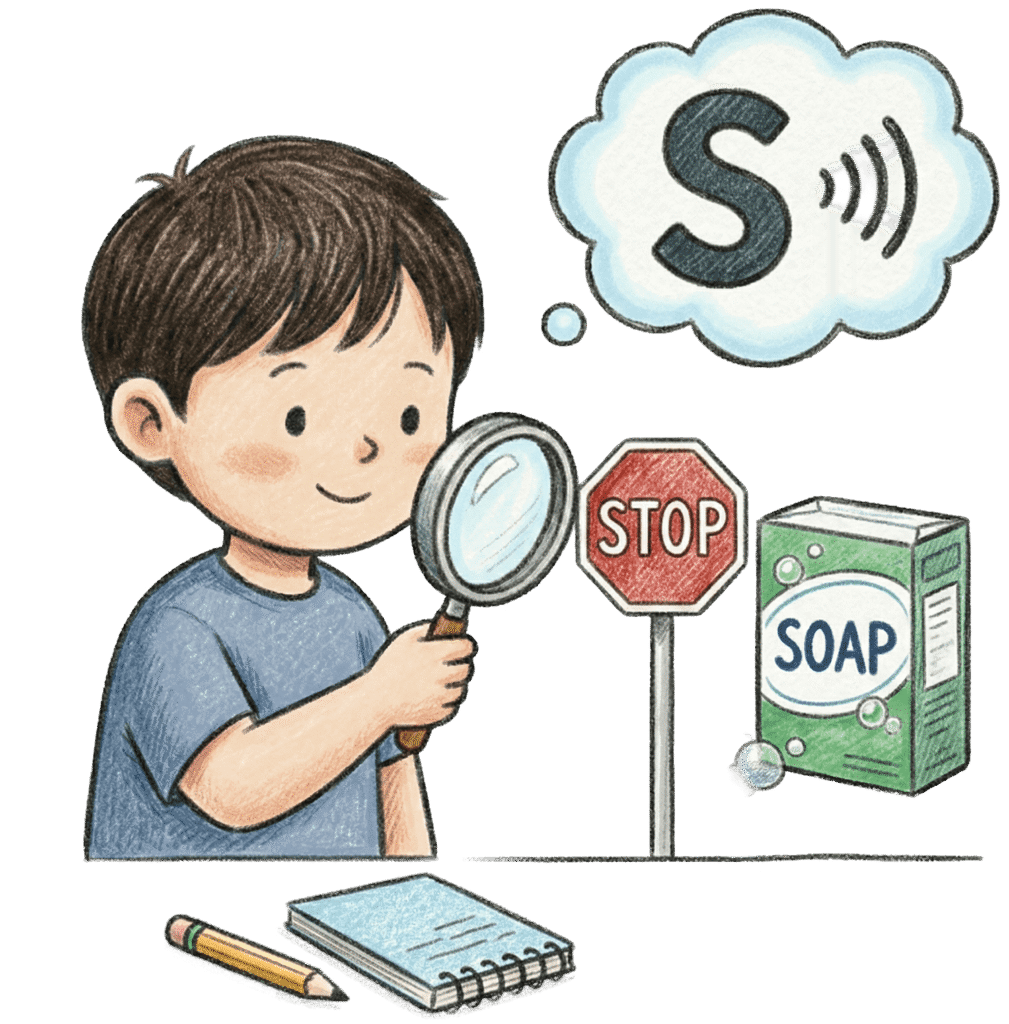
Pick one sound and spend the day noticing it everywhere — on signs, packets, toys, and out in the world. Quick to set up, surprisingly addictive.
Goal
Help your child notice sounds in everyday life — building phonemic awareness without needing to sit down and "do phonics".
You'll need
Just a focus sound — like sh or ee — and your normal day.
How to do it
Pick a sound in the morning. Say it together clearly: sh, ee, m — whatever you're working on. That's your sound of the day.
Then just keep going with your normal day. Whenever you spot it — on a cereal box, a road sign, a shop name, a toy — point it out and say the sound together. Let your child spot them too and make a fuss when they do.
By the end of the day, you'll have done phonics practice a dozen times without sitting down once. That's the magic of making it ambient rather than formal.
And this one encourages children to look actively for graphemes (and the sounds they make) in real books:
Sound search in books
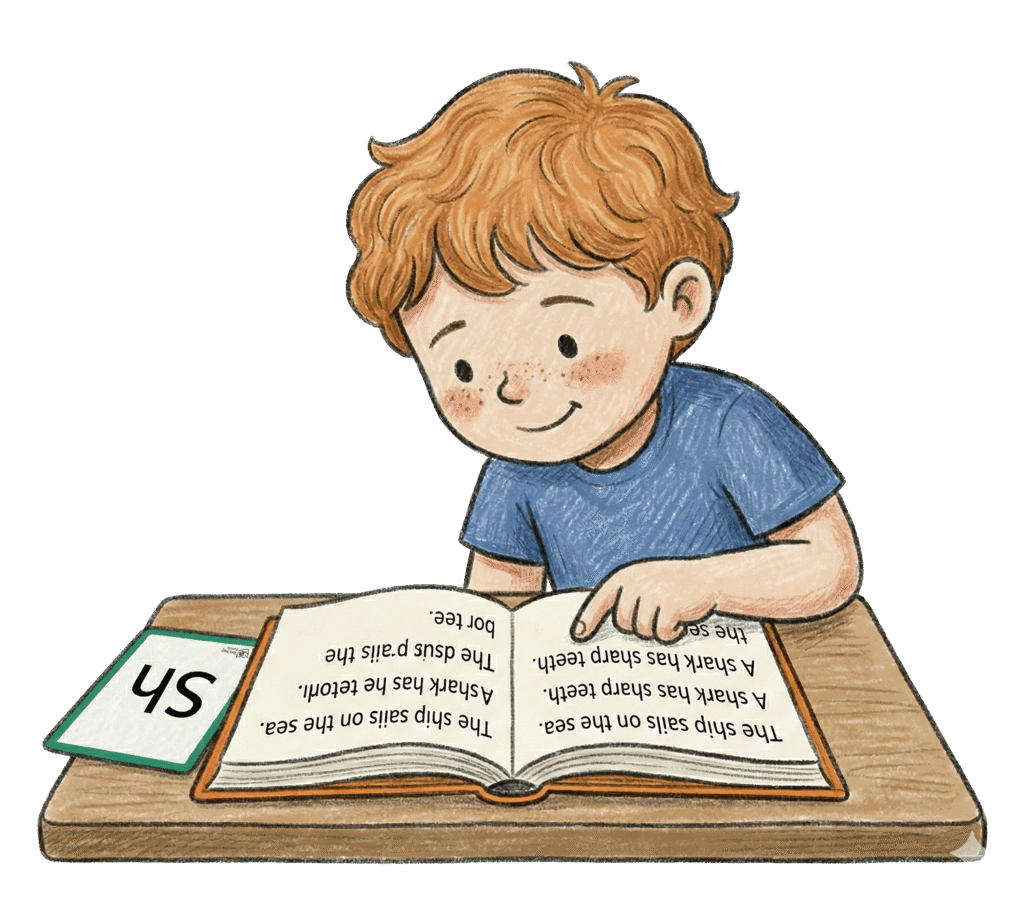
Pick a sound, open a book and hunt for it on the page. Quick phonics practice that connects to real text rather than a worksheet.
Goal
Spot target sounds in real text — building the sound-symbol connection in context, where it actually matters.
You'll need
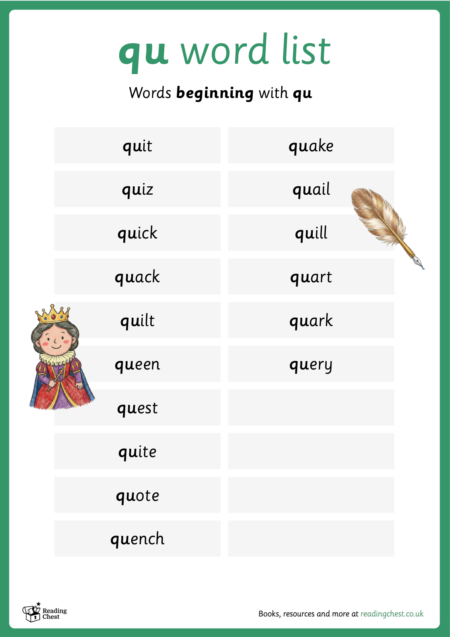
- Phonics "qu" words list
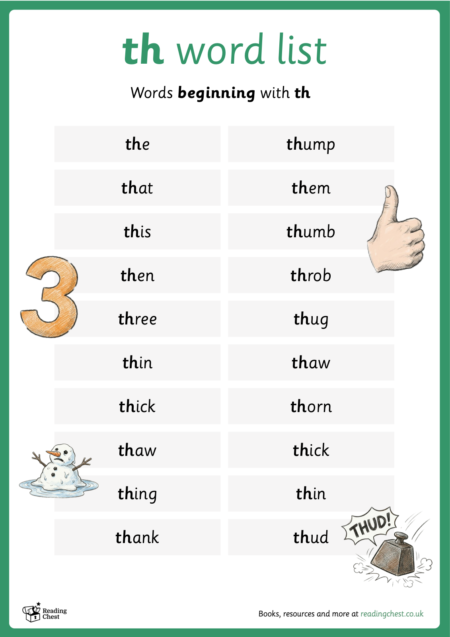
- Phonics "th" words list
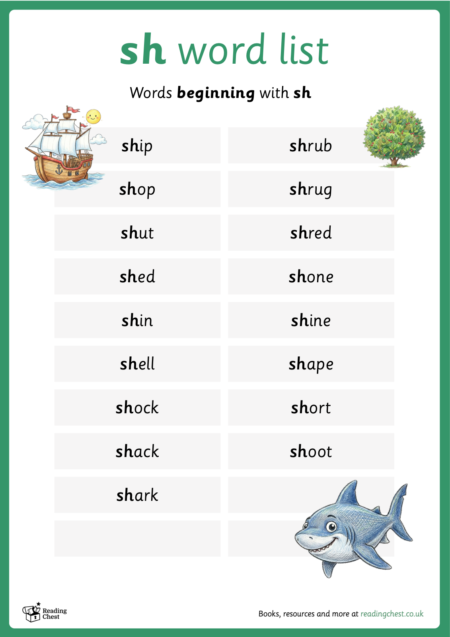
- Phonics "sh" words list
How to do it
Choose a sound to focus on — sh, th or qu are great starting points. Say it together. Then open a book and start scanning.
Every time your child spots that sound in a word, they point and say it. Count how many you find on one page — then try another. Use the word lists as a warm-up if they need to see the sound in isolation first.
This one's fast — five minutes is plenty. The value is in connecting the sound to real words in real sentences, not just practice words on a card.
Grab our resources
Print our phonics "qu" words list and phonics "th" words list to get started.
Frequently asked questions
Can one phoneme have more than one grapheme?
Yes — this is one of the trickier parts of English. The ee sound (as in feet) can be spelled as ee, ea, e, e-e, ie, ey, or y, among others. Children learn the most common spelling first, then the alternatives in Phase 5 of phonics teaching.
Can one grapheme make more than one phoneme?
Yes. The grapheme ow makes the oa sound in snow and the ow sound in cow. The letter c makes the k sound in cat and the s sound in city. Context usually makes it clear which sound applies, and children absorb these patterns gradually through reading.
How many graphemes are there in English?
There’s no single fixed number because the count depends on how you define grapheme variants and alternative spellings. What’s clearer is that there are 44 phonemes in English, each of which can be represented by a variety of graphemes. The mismatch between the number of letters in the alphabet (26) and the number of sounds (44) is what gives English its complex spelling system.
Quick recap
Phoneme = sound (heard). Grapheme = written symbol (seen). They pair up to form the building blocks of phonics. The number of letters in a word and the number of graphemes (or phonemes) are often different — because some graphemes need two or three letters to write a single sound.
