Contents
English has 26 letters but 44 sounds — which is part of why learning to read in English takes a bit of work. The mismatch between letters and sounds is real, but phonics teaching handles it by introducing the sounds in a deliberate order, building from the simplest and most useful to the more complex.
This guide maps all the phonics sounds your child will learn, with example words and a rough guide to when each one is introduced. Think of it as a reference you can return to as your child moves through school: you can look up where a particular sound sits, which ones come next, and how to practise them at home.
At the end you’ll also find our free downloadable flashcards — a handy set to print and keep on the kitchen table.
What are the 44 phonics sounds?
A phoneme is the smallest unit of sound in spoken language. English has 44 phonemes, represented in writing by single letters or combinations of letters called graphemes. (The phonics alphabet sounds children learn are these graphemes — not the alphabet as we normally recite it, but the letter shapes and combinations that represent sounds in words.) The 44 phonemes are split roughly into two groups: consonant sounds (24 of them) and vowel sounds (20, including short and long vowel sounds and vowel digraphs).
Children don’t learn all 44 at once — they work through them in phases, starting with the most common and building up. Widely used frameworks in UK schools include the Letters and Sounds progression (Phases 1–6), Read Write Inc, Little Wandle or Sounds-Write. All of them use a very similar sequence with slightly different materials and groupings.
Different phonics programmes use slightly different terminology (Sets, Phases, Levels), but they teach the same sounds in broadly the same order. The groupings below follow the widely used Phase system, which most UK parents will recognise.
Bite-sized reading tips, straight to your inbox
Get confidence-boosting tips to help your child learn to read. Short, useful, and easy to fit into (real) family life!
Even better? You'll also get 25% off your first month of Reading Chest.
Phase 2: the first single-letter sounds
These are typically the first sounds taught, usually in the first half of Reception. The selection isn’t alphabetical — it’s based on which sounds let children start reading and spelling real words as quickly as possible.
| Sound | Common spelling | Example words |
|---|---|---|
| s | s | sat, sun, bus |
| a | a | ant, cat, bag |
| t | t | tap, pot, sit |
| p | p | pan, top, cup |
| i | i | in, bit, pig |
| n | n | nap, tin, pen |
| m | m | mat, him, mum |
| d | d | dig, bad, mud |
| g | g | got, big, leg |
| o | o | on, hot, dog |
| c | c, k | cap, kit, sock |
| k | k, c | kid, back, cat |
| u | u | up, bun, mud |
| b | b | bat, rob, bed |
| f | f, ff | fan, off, fog |
| e | e | egg, bed, ten |
| l | l, ll | lip, bell, log |
| h | h | hat, him, hot |
| r | r | rat, run, car |
| j | j | jug, jam, jet |
| v | v | van, vet, five |
| w | w | win, wet, web |
| x | x | box, fox, six |
| y | y | yes, yam, yet |
| z | z, zz | zip, buzz, zero |
| qu | qu | quiz, quit, queen |
With just the first six sounds — s, a, t, p, i, n — a child can already read and spell words like sat, pin, nap and tip. The sequence is built so children are reading real words from day one.
Also introduced during Phase 2 are the first consonant digraphs:
| Sound | Spelling | Example words |
|---|---|---|
| sh | sh | ship, shop, fish |
| ch | ch | chip, chin, much |
| th | th | that, then, with (voiced); thin, thick, bath (unvoiced) |
| ng | ng | ring, sing, long |
| nk | nk | sink, bank, drink |
You may notice that th represents two different sounds: the voiced version in words like this and that, and the unvoiced version in words like thin and bath. Children learn both through context, and most grasp them without needing to overthink the distinction.
Phase 3: vowel digraphs and more
Phase 3 typically runs through the second half of Reception and into Year 1. This is where children learn vowel digraphs — pairs of letters that together make a long vowel sound. These are the sounds that give children the most trouble, partly because the same sound can be spelled in several different ways (which is introduced properly in Phase 5).
| Sound | Common spelling(s) | Example words |
|---|---|---|
| ai | ai | rain, tail, wait |
| ee | ee | feet, tree, green |
| igh | igh | night, light, fight |
| oa | oa | boat, coat, road |
| oo | oo | boot, moon, food (long); book, look, foot (short) |
| ar | ar | car, farm, star |
| or | or | for, torn, born |
| ur | ur | fur, turn, burn |
| ow | ow | cow, down, now |
| oi | oi | oil, coin, boil |
| ear | ear | ear, hear, near |
| air | air | air, fair, hair |
| ure | ure | sure, pure, cure |
| er | er | butter, her, over |
oo represents two slightly different sounds: the long sound in moon and the shorter sound in book. In practice, children learn both as the same grapheme and apply them by feel as they encounter more words.
Phase 5: alternative spellings
Phase 5, usually covered in Year 1 and Year 2, is where things open up. Children already know the most common spelling for each sound — now they learn that the same sound can be spelled in multiple ways, and that the same spelling can sometimes make different sounds.
This is where a lot of the complexity of English spelling lives. Here are some of the most important alternative spellings introduced in Phase 5:
| Sound | Alternative spellings | Examples |
|---|---|---|
| ai (long a) | a-e, ay, eigh, ey, a | make, play, eight, they, acorn |
| ee (long e) | ea, e, e-e, ie, ey, y | sea, he, these, chief, key, funny |
| igh (long i) | i-e, ie, i, y | like, tie, find, fly |
| oa (long o) | o-e, ow, o, oe | home, snow, go, toe |
| oo (long oo) | u-e, ue, ew, ou | tune, blue, flew, you |
| or | aw, au, augh, al, oor, our | claw, sauce, taught, walk, floor, four |
| ur | ir, er, ear | bird, her, learn |
| ow (as in cow) | ou | cloud, shout, out |
| j | g, ge, dge | gem, age, bridge |
| f | ph, gh | phone, enough |
| s | c, se, ce | city, house, fence |
| z | se, ze | nose, breeze |
| k | ck, ch, que | duck, school, antique |
| n | kn, gn | knee, gnome |
| r | wr | write, wrap |
It’s a lot — but children pick these up gradually through reading and writing, not by memorising a table. By the time they’ve worked through Phase 5, most children have enough phonics knowledge to tackle almost any word they encounter.
Why sounds are taught in this order
The sequence isn’t random. Phonics programmes start with the sounds that unlock the most words the fastest. The first sounds taught — s, a, t, p, i, n — appear in hundreds of common short words. Compare that to starting with x or z, which appear in far fewer words and are harder to blend.
The sounds also move from simple to complex in terms of how they’re produced and how they’re spelled. Single-letter sounds first, then two-letter digraphs, then vowel combinations, then the messier alternative spellings of Phase 5. Each stage builds on the last.
How to use this list at home
The most practical thing you can do with this list is find out which sounds your child’s class is currently working on — their teacher or the school’s phonics newsletter will tell you — and focus your home practice on those. You don’t need to work through the whole list; just keep pace with school.
A few ideas for practising phonics sounds at home without it feeling like homework:
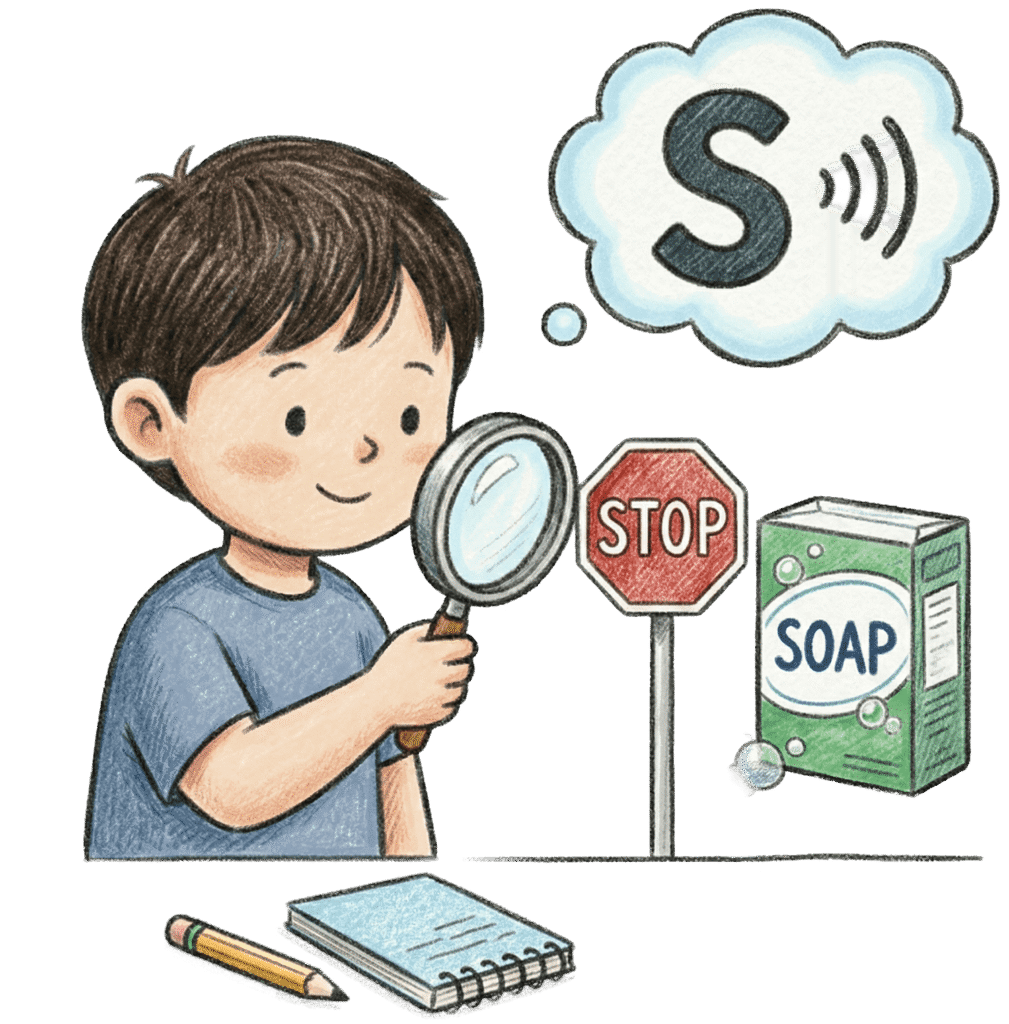
- Spot the sound — pick one sound and look for it together on signs, food packaging, or in a book. Works in the car, on the bus, or while waiting anywhere.
- Sound of the day — make one sound the focus for a day: practise saying it, write it, think of words that contain it.
- Word building — write the letters on slips of paper and let your child move them around to make words.
- Read decodable books — the best practice is reading books pitched at your child’s current level. Reading Chest lets you borrow decodable scheme books by post, so you can always have the right level at home.
This activity is a simple way to get focused practice on whatever sound your child is working on right now — it takes about five minutes and you can do it anywhere:
Sound of the day
Pick one sound and spend the day noticing it everywhere — on signs, packets, toys, and out in the world. Quick to set up, surprisingly addictive.
Goal
Help your child notice sounds in everyday life — building phonemic awareness without needing to sit down and "do phonics".
You'll need
Just a focus sound — like sh or ee — and your normal day.
How to do it
Pick a sound in the morning. Say it together clearly: sh, ee, m — whatever you're working on. That's your sound of the day.
Then just keep going with your normal day. Whenever you spot it — on a cereal box, a road sign, a shop name, a toy — point it out and say the sound together. Let your child spot them too and make a fuss when they do.
By the end of the day, you'll have done phonics practice a dozen times without sitting down once. That's the magic of making it ambient rather than formal.
And if you’d like something a bit more playful, this one is good for exploring initial sounds:
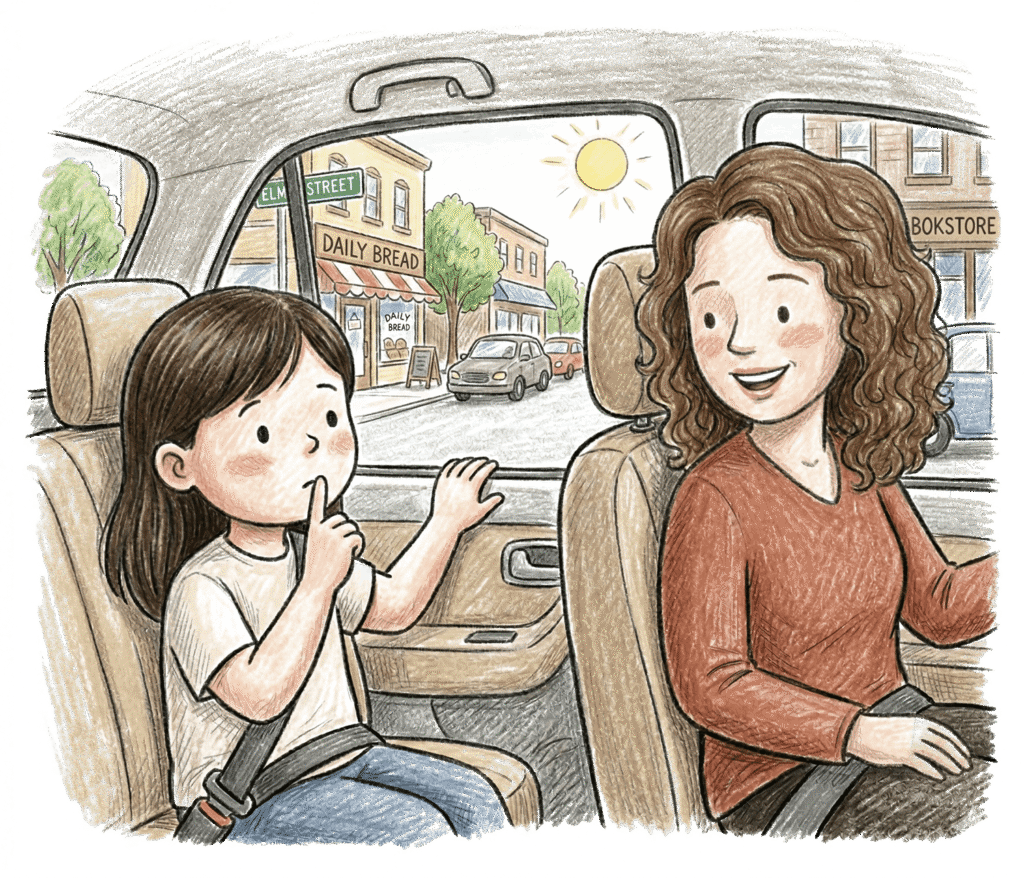
I spy sounds
Play I spy the phonics way — using sounds, not letter names. "I spy something beginning with s" (and you mean the ssss sound, not "ess").
Goal
Practise hearing and producing initial sounds through a game everyone already knows — with one small but important tweak.
You'll need
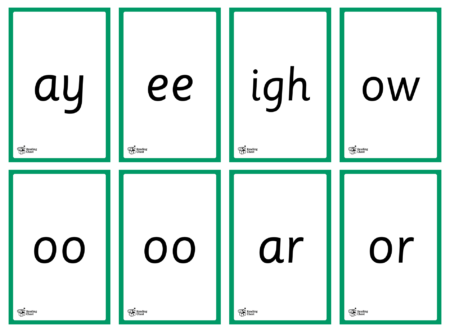
- Digraphs & Trigraphs Flashcards
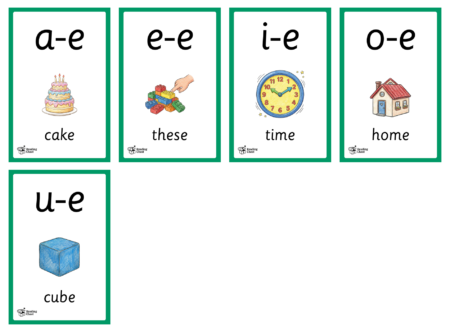
- Split Digraph Flashcards
How to do it
Play I spy as normal, but say the sound, not the letter name. "I spy with my little eye something beginning with s" — that ssss sound, not "ess".
Once they've got the hang of single sounds, you can move to digraphs: "something beginning with sh" or "something with the ch sound". Use the flashcards to remind them what digraphs they know.
This is one of those activities that takes zero prep and can fill a five-minute wait anywhere. The slight phonics twist makes it genuinely useful without making it feel like anything other than I spy.
Grab our resources
Print our digraphs & trigraphs flashcards and split digraph flashcards to get started.
Free phonics flashcards
We’ve made a set of free printable phonics flashcards you can download and use at home. They’re designed to be printed, cut out, and kept somewhere accessible — kitchen table, fridge, or reading corner.
- Alphabet flashcards — the basic letter sounds, good for Reception and early Year 1
- Digraph and trigraph flashcards — covers the Phase 3 digraphs children typically find most challenging
- Alternative spellings flashcards — the Phase 5 spellings, for when children are learning that one sound can be written multiple ways
View all phonics flashcard sets →
Frequently asked questions
How many phonics sounds are there in English?
There are 44 phonemes (sounds) in English, represented by the 26 letters of the alphabet in various combinations. Because there are more sounds than letters, some sounds require two or three letters working together (digraphs and trigraphs). The mismatch — 26 letters, 44 sounds — is what makes English spelling complex, and why phonics teaching takes several years to work through fully.
What is the difference between a phonics sound and a letter name?
A letter name is what you say when you recite the alphabet: “ay, bee, see, dee…” A phonics sound (phoneme) is the actual sound the letter makes in a word: a as in ant, b as in bat, c as in cat. When children are learning to blend sounds into words, they need the phoneme, not the letter name — “buh-a-tuh” blends into “bat”, but “bee-ay-tee” doesn’t.
What is a digraph in phonics?
A digraph is two letters that together make a single sound — like sh in ship, ch in chin, or ai in rain. The two letters can’t be sounded out separately; they always act as a pair.
What are tricky words and how do they fit with phonics sounds?
Tricky words (sometimes called sight words or common exception words) are words that don’t follow regular phonics patterns — like the, said, was and they. Children learn these alongside their phonics sounds, because they appear so frequently in early reading texts. The phonics-sound approach still applies to most of the word — for example, said is mostly decodable, just with an unusual vowel sound.
What is Phase 5 phonics?
Phase 5 is the stage (usually Year 1 and Year 2) where children learn that the same sound can be spelled in multiple ways, and that the same spelling can sometimes represent different sounds. By Phase 5, children already know the most common spelling of each sound — Phase 5 adds the alternatives. It’s the most complex phase and forms the basis of most spelling work in Key Stage 1.
What to remember
English has 44 phonics sounds, all of which your child will learn gradually through Reception, Year 1 and Year 2. The sequence moves from the simplest single-letter sounds to the more complex digraphs, vowel sounds and alternative spellings of Phase 5. By the end of Key Stage 1, most children have the phonics toolkit they need to decode almost any new word they encounter.
You don’t need to drill this list at home — just find out which sounds your child’s class is on, keep reading decodable books together, and point out the sounds you see around you. Small, regular practice makes a much bigger difference than occasional intensive sessions.
