Contents
A grapheme is the written representation of a sound — the letter or letters you see on the page that correspond to a phoneme (a spoken sound). In the word “ship”, the grapheme sh represents the phoneme sh. In “cat”, the grapheme a represents the short vowel sound a.
If you’ve come across this term in school communications or a phonics app and found it slightly baffling — don’t worry. It sounds more technical than it is. Once you see a few examples, it becomes second nature.
This guide explains what graphemes are, how they relate to phonemes, and why the relationship between the two is at the heart of how children learn to read and spell.
Graphemes: the written side of phonics
The simplest way to think about a grapheme is this: if a phoneme is a sound you hear, a grapheme is the symbol you see that represents it.
A grapheme can be a single letter — like b, s, or m. Or it can be two letters working together (a digraph), like sh, ch, or ai. Or even three letters (a trigraph), like igh in night or ear in hear. What they all have in common is that the whole group of letters represents a single phoneme — a single sound.
Here are some examples at a glance:
| Grapheme | Type | Phoneme | Example word |
|---|---|---|---|
| a | single letter | a | cat |
| sh | digraph | sh | ship |
| ch | digraph | ch | chin |
| ai | digraph | ai | rain |
| igh | trigraph | igh | night |
| ear | trigraph | ear | hear |
Bite-sized reading tips, straight to your inbox
Get confidence-boosting tips to help your child learn to read. Short, useful, and easy to fit into (real) family life!
Even better? You'll also get 25% off your first month of Reading Chest.
When the same grapheme makes different sounds
Here’s where things get interesting — and where English earns its reputation for being a bit unpredictable. The same grapheme can sometimes represent different phonemes, depending on the word.
Take the grapheme ow. In snow it makes the oa sound. In cow it makes the ow sound (as in “ouch”). Same letters, different sounds.
Or the grapheme c. In cat it makes the hard k sound. In city it makes the soft s sound. Context — usually what letters come after it — determines which sound applies.
Children pick these up through exposure to lots of words in reading, rather than through explicit rules. The rules do exist (soft “c” before e, i, or y, for instance), but they’re usually absorbed naturally rather than memorised.
When the same sound has different graphemes
The reverse is also true: the same phoneme can be spelled in multiple different ways. The ee sound, for instance, can be written as:
- ee — feet, tree
- ea — sea, read
- e — he, be
- e-e — these, complete
- ie — chief, piece
- ey — key, monkey
- y — funny, happy
This is why spelling in English is harder than decoding. Reading a word just requires matching the grapheme to a phoneme and blending — even if you’ve never seen the word before. Spelling requires knowing which grapheme to choose for the sound you want, and that often has to be learned word by word.
This is what the “alternative spellings” phase of phonics teaching is all about — children systematically learning the different ways the same sound can be written. If you have a free moment, our alternative spellings flashcard set covers the most common ones.
What children do with graphemes in class
When children learn phonics, they’re learning the relationship between phonemes and graphemes in both directions. Reading (decoding) goes from grapheme to phoneme: see the letters, say the sound, blend into a word. Spelling (encoding) goes the other way: hear the word, segment it into phonemes, choose the right grapheme for each one.
This two-way traffic is why phonics teaching spends so much time on both reading and writing. Writing a word out by sounding it through reinforces the phoneme–grapheme connections just as much as reading it does.
Helping your child with graphemes at home
You don’t need to use the word “grapheme” at home — just talk about the letters that make a sound. “What sound do those two letters make together?” is the same question asked more naturally.
The most useful thing you can do is practise with whatever sounds your child’s class is currently working on. Ask the teacher, check the school’s phonics letter, and use those as your focus. This activity is a good starting point for any current sound:
Sound of the day
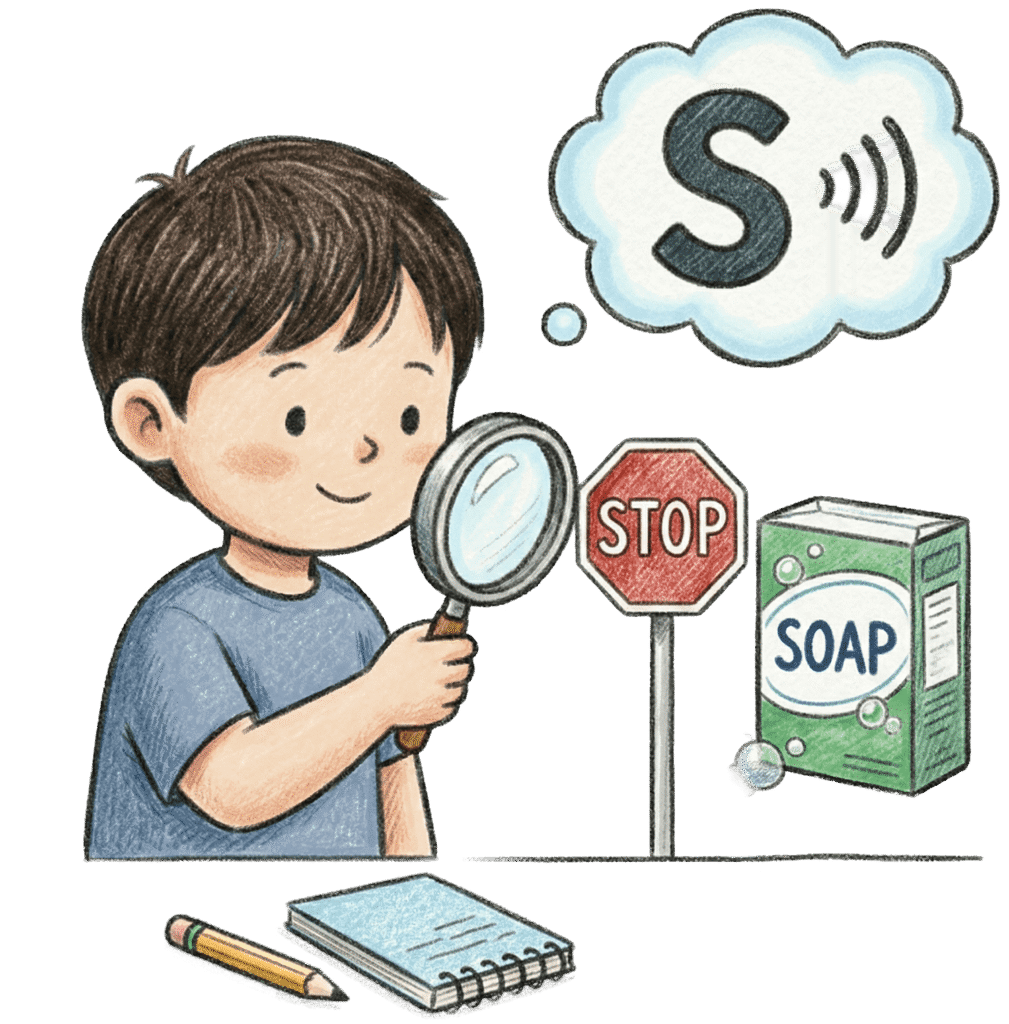
Pick one sound and spend the day noticing it everywhere — on signs, packets, toys, and out in the world. Quick to set up, surprisingly addictive.
Goal
Help your child notice sounds in everyday life — building phonemic awareness without needing to sit down and "do phonics".
You'll need
Just a focus sound — like sh or ee — and your normal day.
How to do it
Pick a sound in the morning. Say it together clearly: sh, ee, m — whatever you're working on. That's your sound of the day.
Then just keep going with your normal day. Whenever you spot it — on a cereal box, a road sign, a shop name, a toy — point it out and say the sound together. Let your child spot them too and make a fuss when they do.
By the end of the day, you'll have done phonics practice a dozen times without sitting down once. That's the magic of making it ambient rather than formal.
If your child is working on digraphs specifically, this one turns sound-spotting into a game:
Digraph detective
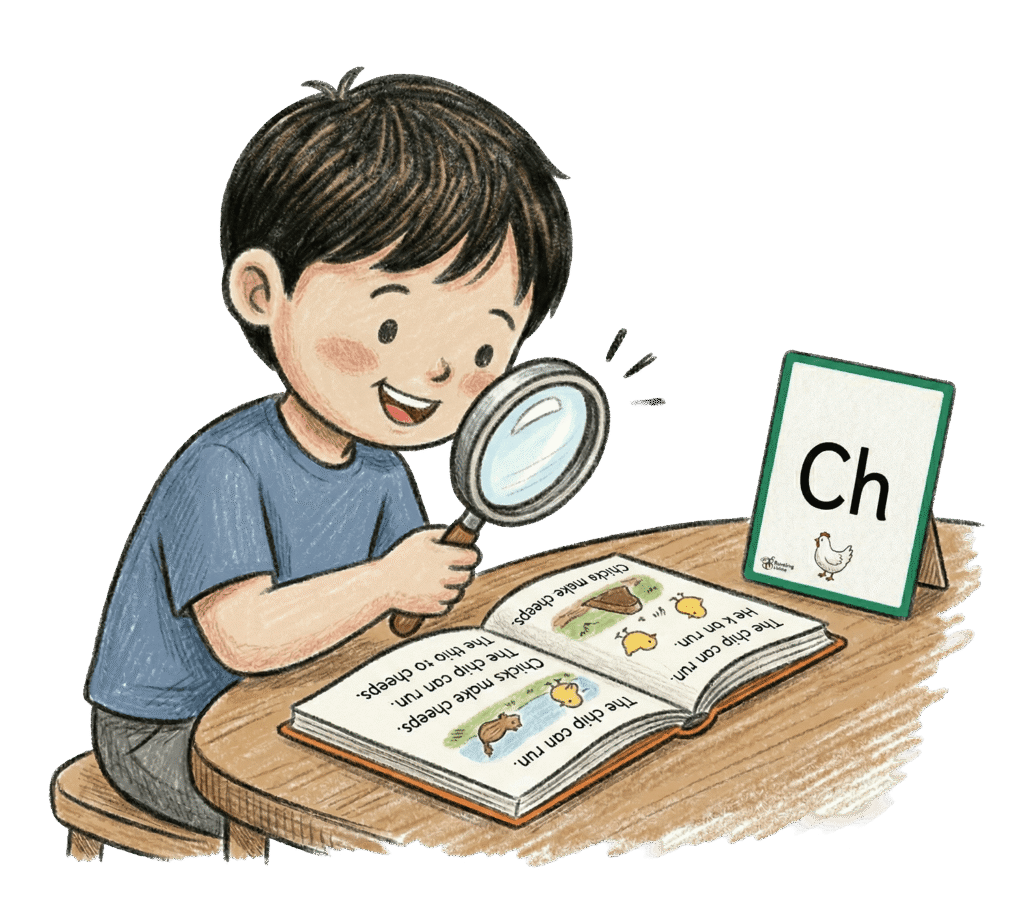
Pick a digraph — sh, th, ch, ng — and go hunting. How many times can you spot it hiding in words on a page, a sign, a cereal box? Detective hats on.
Goal
Train your child's eye to spot digraphs in real text — so they stop seeing two letters and start seeing one sound.
You'll need
- Digraphs & Trigraphs Flashcards
- Phonics "sh" words list
- Phonics "th" words list
How to do it
Choose one digraph to focus on — sh, th, ch or ng are all great options. Say it together a couple of times so it's fresh in their mind.
Then hunt. Open a book, use a word list, or scan whatever's nearby — packaging, posters, signs. Every time they spot the digraph in a word, they point and say the sound. Count how many you find.
Keep it relaxed. You're not testing whether they can read every word — you're just training their eye to notice the pattern. That noticing is half the battle with digraphs.
Grab our resources
Print our digraphs & trigraphs flashcards and phonics "sh" words list to get started.
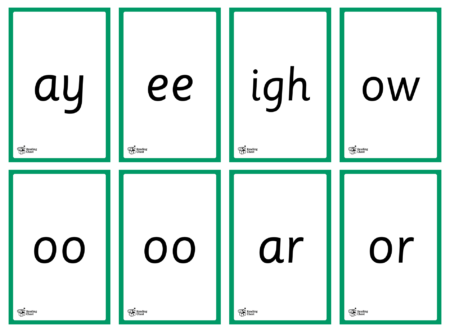
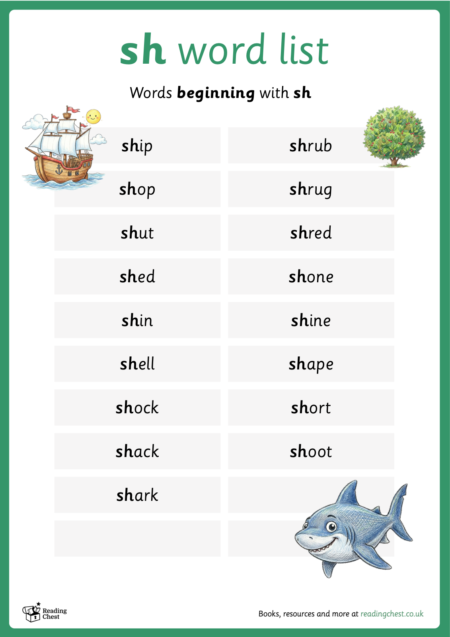
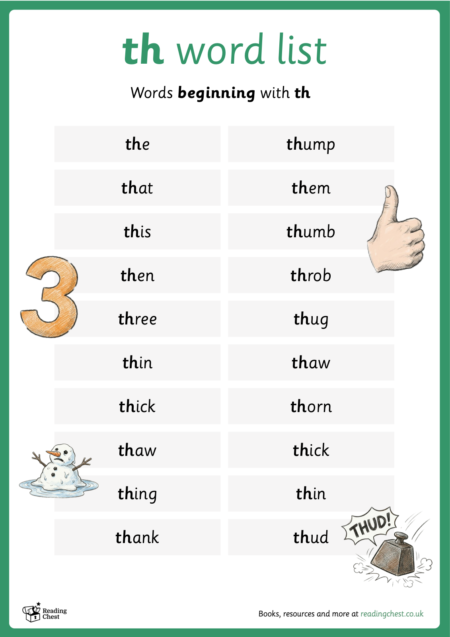
We’ve also got a free set of digraph and trigraph flashcards you can print and keep at home.
Frequently asked questions
What is the difference between a grapheme and a letter?
All single letters are graphemes, but not all graphemes are single letters. A grapheme is any letter or group of letters that represents a single phoneme (sound). So a is a grapheme, and so is sh, even though “sh” is two letters. The defining feature is that the whole unit maps to one sound.
How is a grapheme different from a phoneme?
A phoneme is a sound in spoken language; a grapheme is the written symbol that represents it. Phonemes exist in speech, graphemes exist on paper. They pair up: the grapheme sh represents the phoneme sh.
What is a digraph?
A digraph is a grapheme made up of two letters that together represent a single phoneme — like sh, ch, th, ai, or oa. The two letters can’t be sounded out separately; they always work as a pair.
What is a trigraph?
A trigraph is a grapheme made of three letters that represent a single sound, like igh in night, ear in hear, or air in fair.
The short version
A grapheme is the written symbol — the letter or letters on the page — that represents a phoneme (a sound). Graphemes can be single letters, digraphs, or trigraphs. The same grapheme can sometimes make different sounds, and the same sound can often be spelled in different ways — which is what makes English spelling tricky, and why phonics teaching takes several years to work through fully.
