
Contents
A phoneme is the smallest unit of sound in a word. It’s not a letter — it’s a sound. The word “cat” has three phonemes: c, a, t. Say each one and you can hear them as separate sounds. Push them together and you get “cat”.
If you’ve seen the word “phoneme” in a school letter and found yourself nodding along politely without being entirely sure what it meant — you’re not alone. It sounds more intimidating than it is. Once it clicks, it stays clicked.
This guide explains what phonemes are, why English has more of them than you might expect, and what any of this has to do with helping your child learn to read.
Phonemes: sounds, not letters
The key thing to understand about phonemes is that they live in speech, not on the page. When you say a word out loud, you can often hear it as a sequence of smaller sounds — those individual sounds are phonemes.
Take the word “ship”. It has four letters: s, h, i, p. But it only has three phonemes: sh, i, p. The letters “s” and “h” work together to make a single sound — sh — so they count as one phoneme, not two.
This is why the number of phonemes in a word often doesn’t match the number of letters. “Night” has five letters but only three phonemes: n, igh, t. “Ox” has two letters but also two phonemes: o, x. It varies word by word.
Bite-sized reading tips, straight to your inbox
Get confidence-boosting tips to help your child learn to read. Short, useful, and easy to fit into (real) family life!
Even better? You'll also get 25% off your first month of Reading Chest.
Why English has 44 phonemes, not 26
English has 26 letters in its alphabet but 44 phonemes. That surprises most people. The reason is that many sounds in English are made by combining two or more letters — and some letters make different sounds depending on the word they’re in.
Here are some examples of phonemes that need more than one letter:
- sh — one sound, two letters: shop, fish, brush
- ch — one sound, two letters: chip, much, beach
- igh — one sound, three letters: night, light, tight
- oa — one sound, two letters: boat, road, coat
These are called digraphs (two letters) and trigraphs (three letters) — but they’re still each representing a single phoneme, a single sound.
Phonemes and graphemes: what’s the difference?
Once you know what a phoneme is, the word “grapheme” usually comes up pretty quickly. Here’s the short version: a phoneme is a sound; a grapheme is the written symbol (letter or letters) that represents that sound on the page.
So in the word “ship”:
- The phoneme sh is the sound you hear
- The grapheme sh is the two letters you see written down
They’re two sides of the same coin — one is the sound, one is how you write it. When children learn phonics, they’re learning to connect phonemes to graphemes: hearing a sound and knowing which letters make it, and seeing letters and knowing what sound to say.
Why this matters for learning to read
When children learn to read using phonics, they’re learning to do two things: blend (pushing sounds together to read a word) and segment (breaking a word into its sounds to spell it).
Both of these rely on phonemic awareness — the ability to hear the individual phonemes in a word. A child who can hear that “cat” is made of three sounds — c, a, t — is in a much better position to decode words on the page than a child who hears “cat” as a single whole sound.
This is why early phonics teaching often starts with listening activities before children even look at letters. Tuning in to the sounds in words is the foundation everything else is built on.
You don’t need to use the word “phoneme” at home. What matters is the habit of listening for sounds: “How many sounds can you hear in ‘dog’?” is just as useful said out loud as any technical explanation.
How to help your child with phonemes at home
The best phoneme practice isn’t flashcards on a table — it’s woven into everyday moments. A few ideas:
- Sound counting — pick a simple word and count the sounds together. “Let’s count the sounds in ‘shop’ — sh, o, p — that’s three!” Fingers are great for this.
- Spot the odd one out — say three words that start with the same sound and one that doesn’t: “sat, sun, map, sock — which one’s the odd one out?”
- Robot talk — say a word in “robot voice” by stretching out each sound: c-a-t. Then let your child blend it back together.
This activity is a simple, flexible way to make sound-spotting feel like a game rather than a lesson:
Sound of the day
Pick one sound and spend the day noticing it everywhere — on signs, packets, toys, and out in the world. Quick to set up, surprisingly addictive.
Goal
Help your child notice sounds in everyday life — building phonemic awareness without needing to sit down and "do phonics".
You'll need
Just a focus sound — like sh or ee — and your normal day.
How to do it
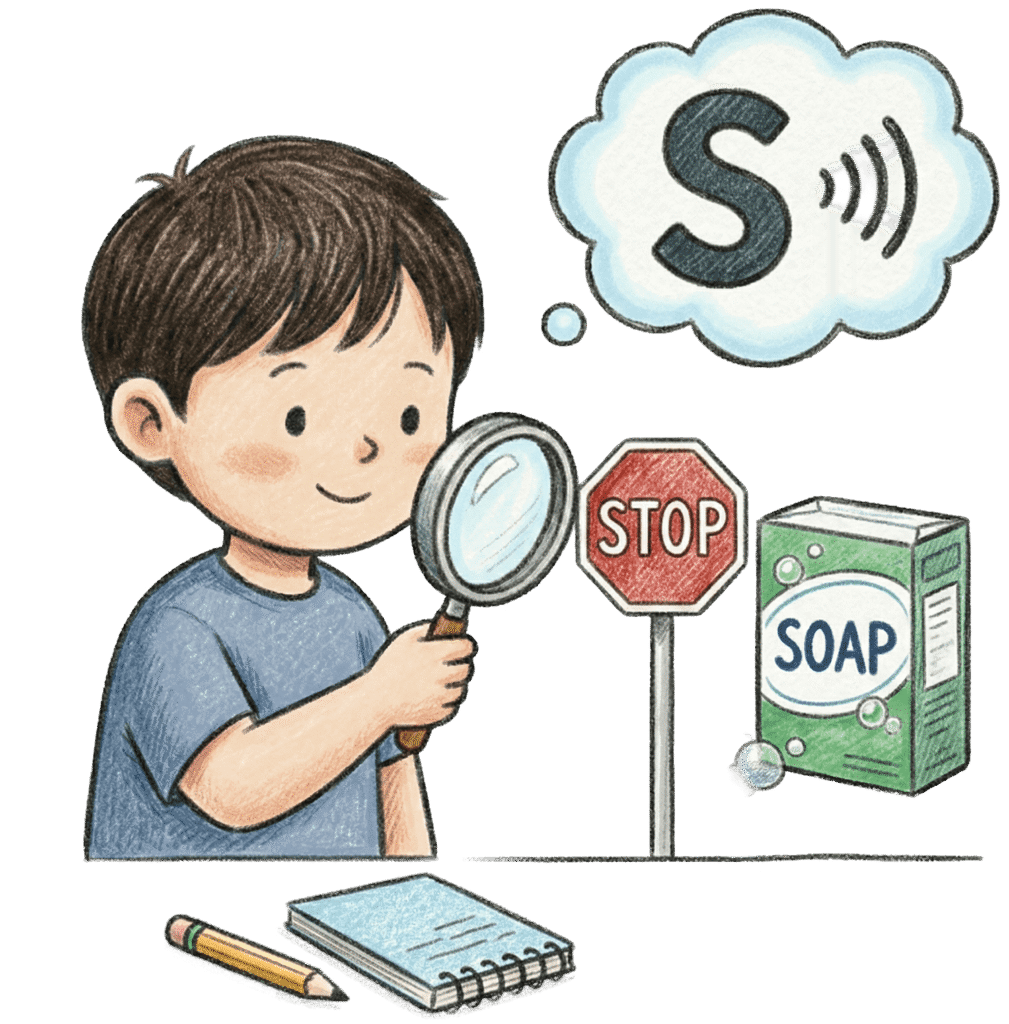
Pick a sound in the morning. Say it together clearly: sh, ee, m — whatever you're working on. That's your sound of the day.
Then just keep going with your normal day. Whenever you spot it — on a cereal box, a road sign, a shop name, a toy — point it out and say the sound together. Let your child spot them too and make a fuss when they do.
By the end of the day, you'll have done phonics practice a dozen times without sitting down once. That's the magic of making it ambient rather than formal.
And if you’re out and about, this one turns the world around you into a phonics resource:
I spy sounds
Play I spy the phonics way — using sounds, not letter names. "I spy something beginning with s" (and you mean the ssss sound, not "ess").
Goal
Practise hearing and producing initial sounds through a game everyone already knows — with one small but important tweak.
You'll need
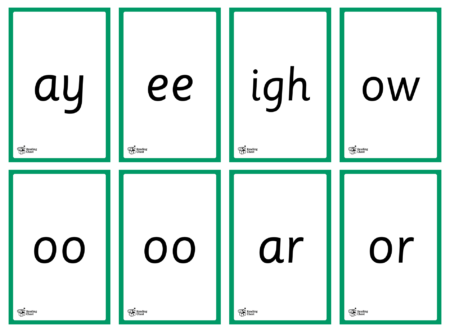
- Digraphs & Trigraphs Flashcards
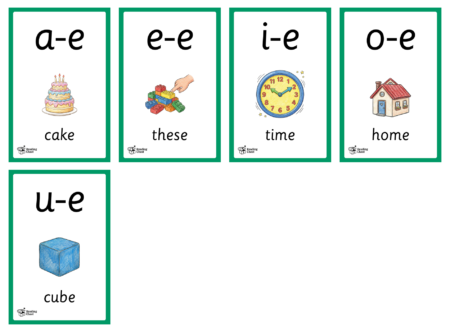
- Split Digraph Flashcards
How to do it
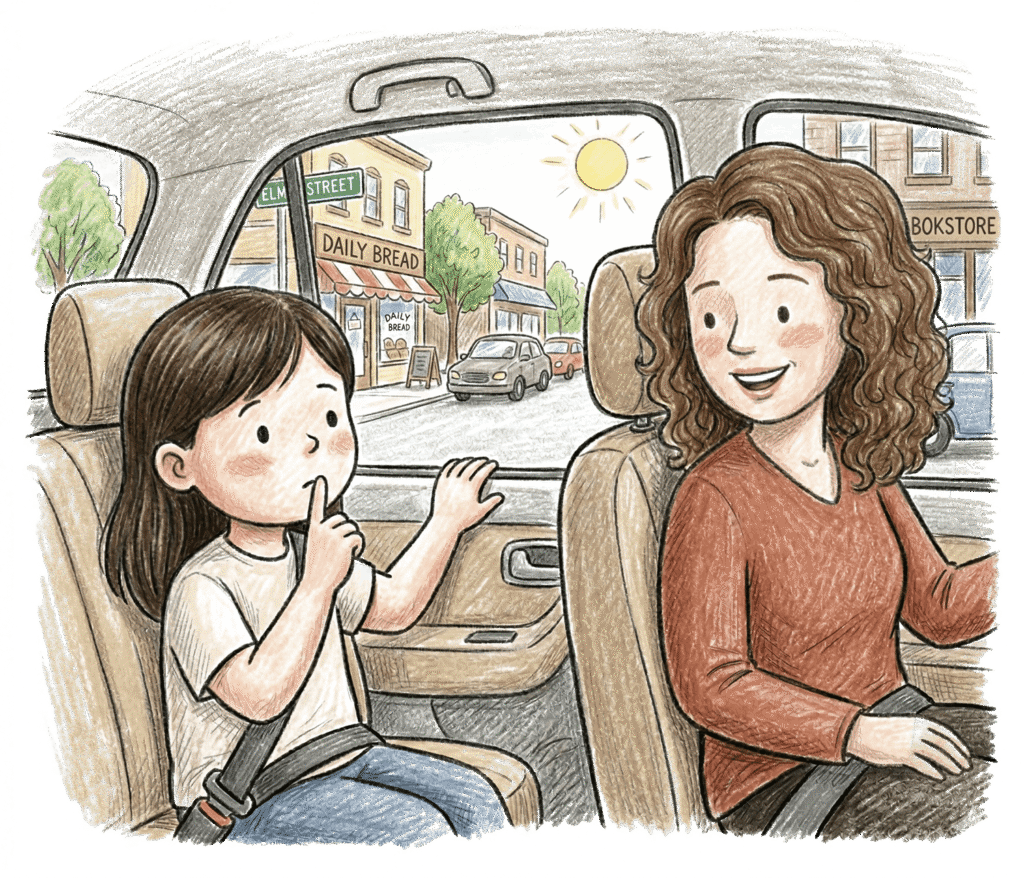
Play I spy as normal, but say the sound, not the letter name. "I spy with my little eye something beginning with s" — that ssss sound, not "ess".
Once they've got the hang of single sounds, you can move to digraphs: "something beginning with sh" or "something with the ch sound". Use the flashcards to remind them what digraphs they know.
This is one of those activities that takes zero prep and can fill a five-minute wait anywhere. The slight phonics twist makes it genuinely useful without making it feel like anything other than I spy.
Grab our resources
Print our digraphs & trigraphs flashcards and split digraph flashcards to get started.
Frequently asked questions
How many phonemes are in the word “fish”?
“Fish” has three phonemes: f, i, sh. It has four letters, but “sh” is a single phoneme — one sound made by two letters working together. This is a common example teachers use to show that the number of letters and the number of phonemes in a word aren’t always the same.
What’s the difference between a phoneme and a letter?
A letter is a written symbol; a phoneme is a sound in speech. They often correspond — the letter “b” usually represents the phoneme b — but not always. Some phonemes need two or three letters (like sh or igh), and some letters make different phonemes in different words (the letter “c” in cat vs city).
What is phonemic awareness?
Phonemic awareness is the ability to hear and manipulate individual sounds (phonemes) in spoken words — without needing to look at any letters. It includes things like identifying the first sound in a word, counting how many sounds a word has, or blending sounds together to make a word. It’s one of the strongest predictors of reading success and is developed through phonics teaching and oral language activities.
Is a phoneme the same as a syllable?
No — they’re different units. A syllable is a “beat” in a word, and always contains a vowel sound. A phoneme is a single sound, which may or may not be a vowel. The word “cat” has one syllable and three phonemes. The word “rabbit” has two syllables (rab-bit) and five phonemes: r, a, b, i, t.
The short version
A phoneme is simply a sound — the smallest building block of spoken language. English has 44 of them, made up of individual letters or combinations of letters working together. Children who learn to hear the phonemes in words are far better equipped to read and spell, which is why phonics teaching spends so much time on sounds before letters.
You don’t need to use the jargon at home. Just listen to words together, count sounds, and back up whatever your child’s school is doing. That’s genuinely all you need to do.
