Contents
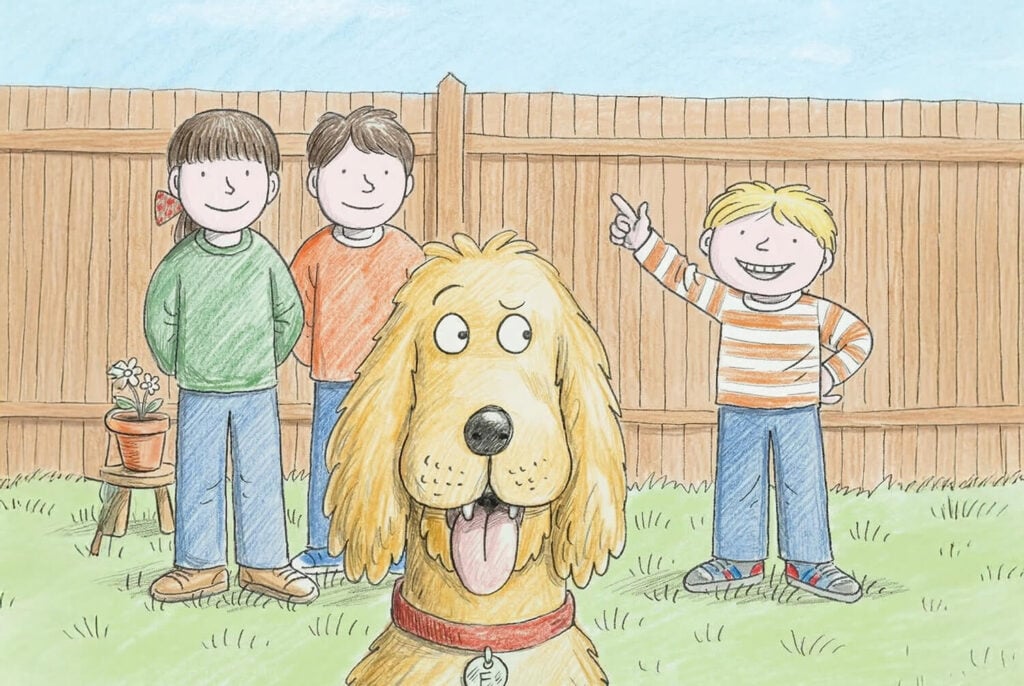
Biff, Chip and Kipper are the main characters in Oxford Reading Tree (ORT) — the most widely used reading scheme in UK primary schools. If your child has come home with one of those distinctive orange-spined books featuring a family, a magic key, and a very excitable dog, they’re reading ORT.
The dog’s name, since you’re wondering, is Floppy. This is genuinely one of the most searched questions about the series, which tells you something about the cultural footprint of these books.
This guide covers the characters, how the series works, what the different levels mean, and how to make the most of these books at home — whether your child is just starting out or working their way through the magic key adventures.
Who are Biff, Chip and Kipper?
Biff and Chip are siblings, and Kipper is their younger brother. They live with their parents (Mum and Dad) and the family dog, Floppy. Grandma makes regular appearances. The children’s friends Wilf and Wilma also feature heavily in the stories, particularly from the middle levels upwards.
The series began in the 1980s and has been updated and expanded considerably since, but the core characters remain the same. Many parents who grew up reading Biff, Chip and Kipper now find their children reading the same books — with a slightly more modern look.
Bite-sized reading tips, straight to your inbox
Get confidence-boosting tips to help your child learn to read. Short, useful, and easy to fit into (real) family life!
Even better? You'll also get 30% off your first month of Reading Chest.
How Oxford Reading Tree is structured
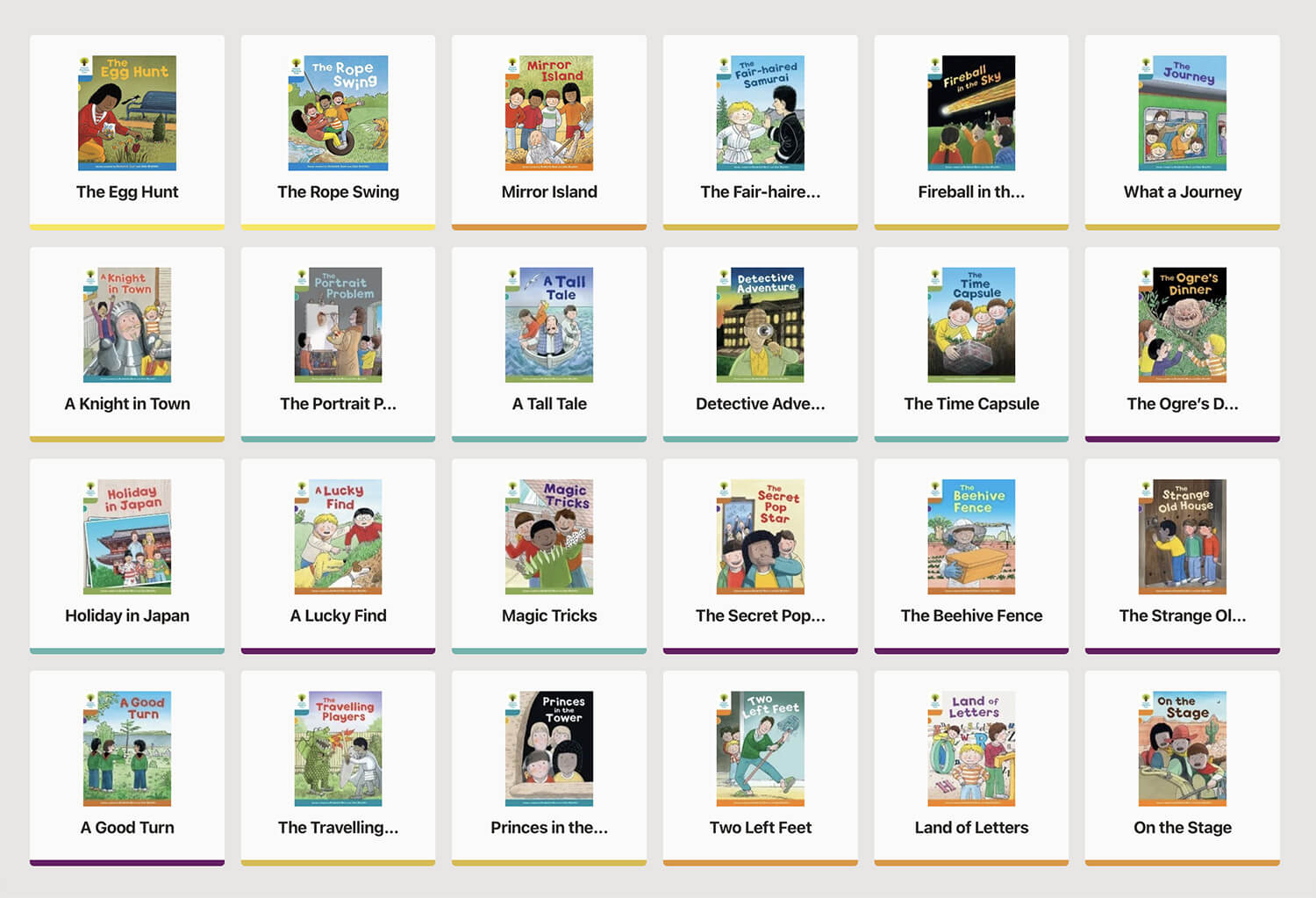
Oxford Reading Tree runs from Level 1 (or Level 1+) up to Level 20, though most primary school children work through Levels 1 to 9 during their time in school before moving to other series or free reading. The levels are also colour-banded, so a Turquoise book band book is an ORT Level 7 or 8, for example.
At the early levels (1–3), the books are very short — often just a few pages with large print and simple sentences, focused on decoding and picture-supported reading. By the middle levels (4–6), the stories become longer and more complex, with less reliance on pictures and more sustained narrative. From Level 7 upwards, the books are closer to short chapter books.
The magic key appears from Level 5 onwards. This is where the stories become genuinely engaging for children — the key transports the children to different settings and times, which gives the series much more storytelling range than the early domestic scenes might suggest.
You can browse Oxford Reading Tree books on Reading Chest across the full range of levels (and all of them are available to borrow through our subscription!)
Levels and book bands at a glance
ORT levels map roughly to book bands as follows:
| Book Band | Color | ORT Level |
|---|---|---|
| Pink book band | ORT Level 1+ | |
| Red book band | ORT Level 2 | |
| Yellow book band | ORT Level 3 | |
| Blue book band | ORT Level 4 | |
| Green book band | ORT Level 5 | |
| Orange book band | ORT Level 6 | |
| Turquoise book band | ORT Level 7 | |
| Purple book band | ORT Level 8 | |
| Gold book band | ORT Level 9 | |
| White book band | ORT Level 10 | |
| Lime book band | ORT Level 11 | |
| Extended book band | ORT Level 12 & 13 |
You can explore our full book band guide for more detail on what each level looks like and what children are expected to be able to do at each stage.
Making the most of Biff, Chip and Kipper at home
These books are designed to be read aloud, discussed, and enjoyed — not just decoded. At every level, there’s more going on than the words on the page, and the pictures carry a lot of the story (especially at lower levels). Here are a few approaches worth trying:
- Look at the pictures first. Before reading, talk about what’s happening in the pictures. This builds vocabulary and helps your child predict what the text might say — without giving it away.
- Ask questions after reading. “Why did Biff do that? What would you have done?” Simple questions build comprehension and make the book a conversation rather than an exercise.
- Let them read to you rather than the other way around. Many children read more confidently when they’re the one in charge of the book.
- Reread books they’ve already done. A second read is good for fluency — and children often enjoy showing off that they can read something well.
If your child seems bored by the very early levels, it’s worth checking whether they’ve actually been placed at the right level. Sometimes children who are moved through levels quickly end up more engaged because the stories are more interesting.
When children move on from Biff, Chip and Kipper
Most children transition away from the core Biff, Chip and Kipper stories around ORT Level 9 (Gold band), as they move into chapter books and more varied fiction. ORT itself continues with different series — TreeTops, for example — but the familiar characters give way to a broader range of authors and styles.
This is a natural progression, and children often feel proud when they move into “real” books. If yours is reluctant to leave the magic key behind, the good news is that the stories do get genuinely more exciting at the upper levels.
Try this with any Biff, Chip & Kipper book
This activity uses the cover and pictures to get children thinking before they start reading — it works brilliantly with ORT books, which have rich illustrations worth exploring:
Picture-cover reading
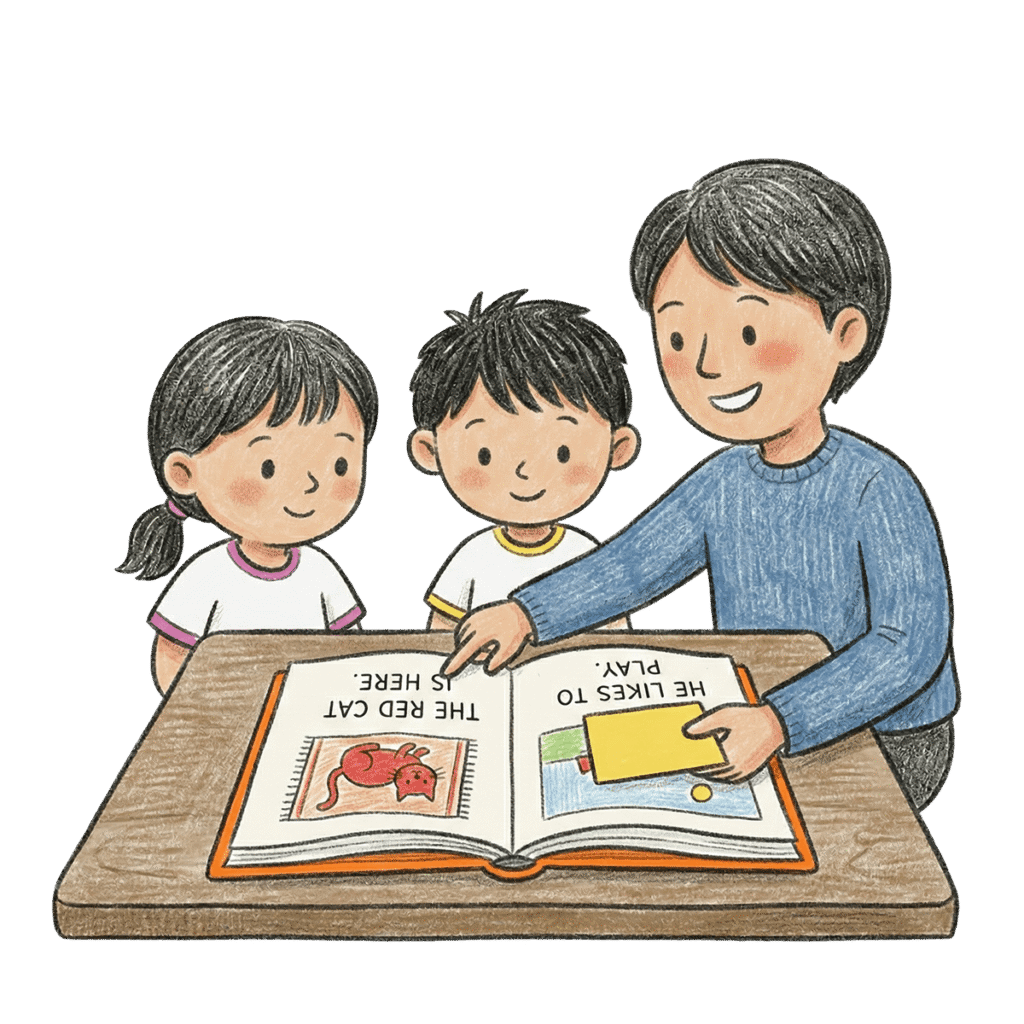
Cover the pictures and read the words first. Then uncover and re-read. It sounds simple — but it makes a real difference to how children approach a page.
Goal
Encourage real decoding rather than guessing from pictures — a habit that pays off as books get harder and illustrations get fewer.
You'll need
- A decodable book
- Two sticky notes
How to do it
Open the book to a page and cover the illustration with a sticky note. Ask your child to read the words first — just the text, no picture clues.
Once they've had a go (stumbles and all), take away the sticky note and re-read the page together with the picture revealed. Talk about what the picture adds. Did it match what they imagined? Did it help them understand anything differently?
This doesn't need to be every page — even doing it once or twice in a session is enough. The goal is to build the habit of trusting the words, not just guessing from the picture. That's a big deal as books get longer.
Grab our resources
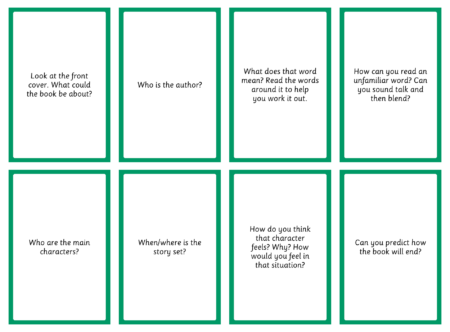
Looking for some help with questions to ask after your reading session? These prompts give you a great starting point.
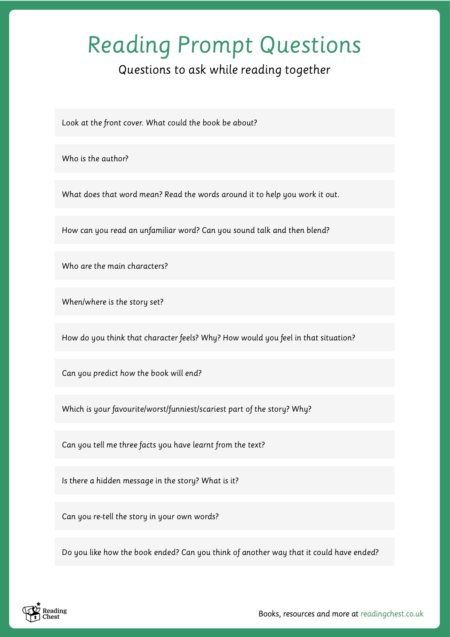
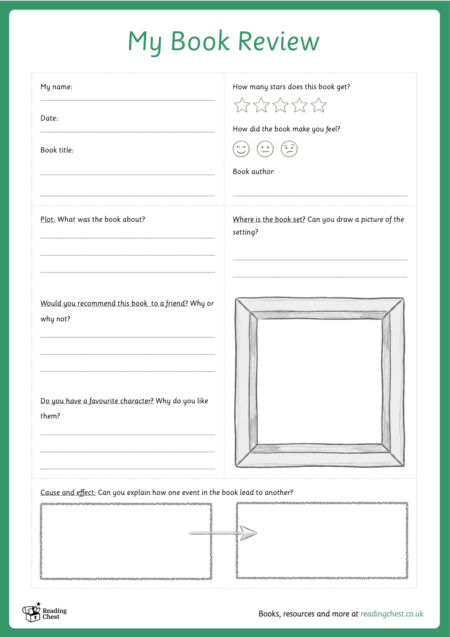
And once they’ve finished a book they enjoyed, this activity gives them a way to share their thoughts — great for building comprehension and opinion-forming:
Write a book review
Fill in a short review while the book is still fresh — favourite moments, characters, whether they'd recommend it. Turns opinion into words.
Goal
Help your child organise their thoughts about a book and practise putting opinions into words — a skill that gets easier every time you do it.
You'll need
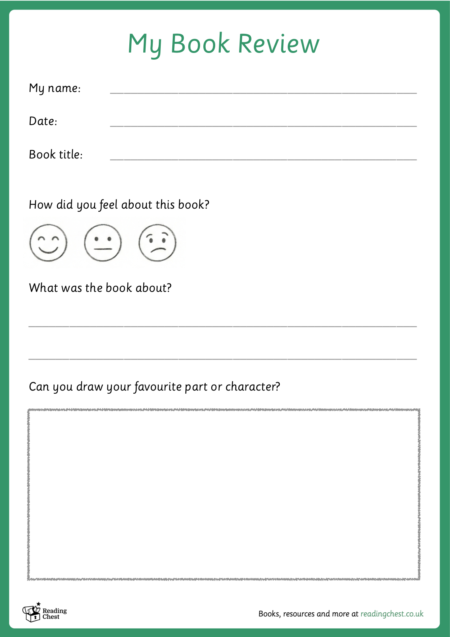
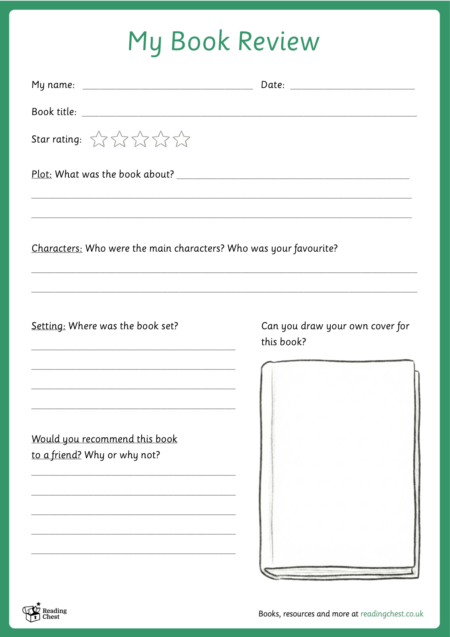
- Beginner, Intermediate or Advanced Book Review template — pick the right one for your child
- A book they've just finished
- Pencil and colouring pens
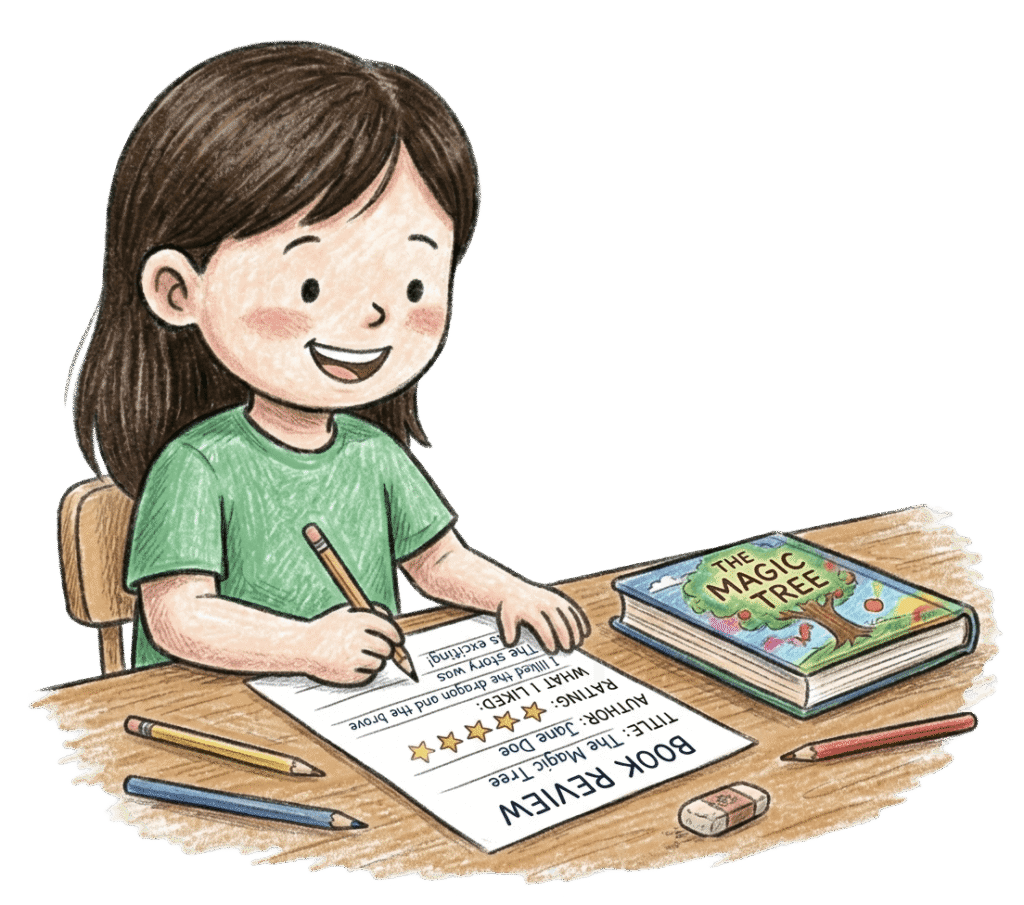
How to do it
Choose the right template — beginner for younger or less confident writers, advanced for those who have plenty to say. Sit down together soon after they've finished the book, while it's all still clear in their mind.
Go through the review together rather than leaving them to fill it in alone. Ask the questions out loud first: "What was your favourite bit? Who was your favourite character? Would you tell a friend to read it?" Let them answer verbally, then help them put the answer into the box.
The goal isn't a perfectly written review — it's the habit of thinking carefully about a book and forming an opinion. That habit, practised regularly, builds real readers.
Grab our resources
We have beginner, intermediate and advanced book review templates — pick the one that matches your child's confidence and let them share their thoughts.
Frequently asked questions
What is Floppy’s full name in Oxford Reading Tree?
Floppy is just Floppy — no full name given in the books. The dog is a golden retriever-type character who often ends up at the centre of the adventure, or causes the trouble in the first place. Floppy is arguably the most beloved character in the series.
What level are Biff, Chip and Kipper books?
The Biff, Chip and Kipper stories span ORT Levels 1 to 9, covering the Pink through Gold book bands. The characters appear across this full range, though the magic key storylines don’t begin until Level 5. Above Level 9, the ORT scheme continues with different series and characters.
Are Biff, Chip and Kipper books decodable?
Oxford Reading Tree books are levelled readers, not fully decodable books in the phonics sense. They control vocabulary and sentence complexity by level, but they’re not matched to a specific phonics sound sequence in the same way that dedicated phonics programmes (like Read Write Inc or Little Wandle readers) are. ORT is excellent for fluency and comprehension development, but it’s usually used alongside a phonics programme in school rather than as a replacement for it.
Can I access Biff, Chip and Kipper books for free online?
Yes — Oxford Owl offers a free parent eBook library that includes many Biff, Chip and Kipper titles. You’ll need to create a free account. The selection is reasonably comprehensive across the main levels, though not every book is available digitally.
