

Contents
National Share a Story Month (May, UK) is a celebration of something simple but powerful: reading stories with the people you love. It doesn’t have to be fancy. A parent and child on the sofa with a picture book, siblings sprawled on a rug with a chapter book, grandparents visiting with their own stories—that’s the magic.
When you read together, something shifts. Your child learns that stories matter. Language comes alive. And you get some of those quiet, connected moments that make parenting feel worth it.
Here’s how to make the most of Share a Story Month in your home.
The power of reading together
Reading aloud to children isn’t something you outgrow. Even confident readers benefit from hearing stories read with expression, rhythm, and someone there beside them.
- Language blooms: When children hear stories read aloud, they absorb vocabulary, sentence patterns, and the music of language. It happens naturally, without any flashcards or worksheets.
- Connection deepens: Sharing a story creates a moment of focused attention. No screens, no rush. Just you, your child, and a book. That’s powerful.
- Imagination explodes: Listening to someone read fires up a child’s imagination more than watching images on a screen. They’re building the pictures in their mind.
- It signals that stories matter: When you sit down to read together, you’re telling your child: “This is important. You’re important. This time together is important.”
Bite-sized reading tips, straight to your inbox
Get confidence-boosting tips to help your child learn to read. Short, useful, and easy to fit into (real) family life!
Even better? You'll also get 25% off your first month of Reading Chest.
Making shared reading a celebration
The cosy corner approach
Create a reading space that feels special. Cushions, blankets, fairy lights if you fancy them. Not because it has to look magazine-perfect, but because comfort invites children to settle in.
Let your child help build the space. They’re more likely to want to spend time somewhere they’ve had a say in creating.
Story nights with a theme
Pick a theme—funny stories, adventure stories, stories about animals—and hunt out books that fit. It turns story time into a mini exploration.
Different voices, different characters
Bring stories to life by giving characters different voices. Your child will giggle (and remember the story better). Don’t worry about being a brilliant voice actor—silly is often more fun than polished.
Read-aloud relay
Take turns reading pages or paragraphs aloud. Older children often love this because they get to be the reader. Younger ones feel included.
Ideas for capturing attention
If your child fidgets during stories, that’s normal. Try pausing to chat about pictures, ask predictions, or let them move around while you read.
- Predict what happens next: “What do you think will happen when the dragon opens that door?” Kids stay engaged because they’re thinking, not just listening.
- Spot details in illustrations: “Can you find the hidden mouse in this picture?” It’s a game and a story combined.
- Act it out: Some children want to jump up and mime the character’s actions. Let them. They’re engaged.
- Make sound effects: Your child can be in charge of the dragon’s roar or the car’s honk. It’s their job, their investment.
Reading together at other times
Shared reading doesn’t have to mean bedtime. Try:
- Car journeys: Audiobooks or you reading aloud on a long drive.
- Rainy afternoon escape: A chapter book together under a blanket fort.
- Breakfast nook: A quick picture book before the day gets started.
- Weekend adventure: Pack a book and read at the park or during a picnic.
Even ten minutes counts. Shared reading doesn’t need an hour of focus. A quick story in the morning or a few pages after lunch is still building connection and language.
Shared reading at different stages
Reading together looks different depending on your child’s age, but it matters at every stage.
Very young children
Babies and toddlers might only sit for a minute, bounce on your knee, or chew the book. That’s all okay. You’re building the habit and the love.
Early readers
Your child might want to read the words while you read, or point at pictures and name them. Let them lead sometimes. They’re building confidence.
Confident readers
Even children who read fluently love being read to. Chapter books bring stories to life in a different way than reading alone. Plus, you get to hear what they think about the plot.
Bringing shared reading to life
This activity is the perfect introduction to making read-aloud time connected and engaging. It’s built for reading together.
If you want to make story time interactive, this activity turns reading into a game where your child drives the story forward.
Stop-the-story choices
Pause mid-story and ask: what do you think will happen next? Read on and find out whose guess was closest. Keeps minds engaged right through to the last page.
Goal
Practise predicting and thinking ahead while reading — building comprehension and keeping attention right where it should be: on the story.
You'll need
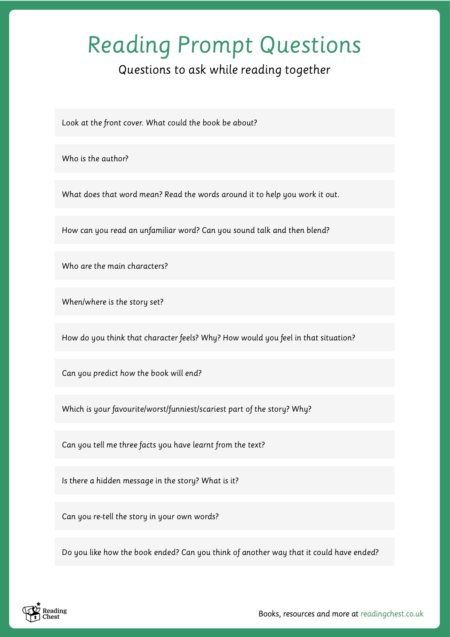
- Reading Prompt Questions
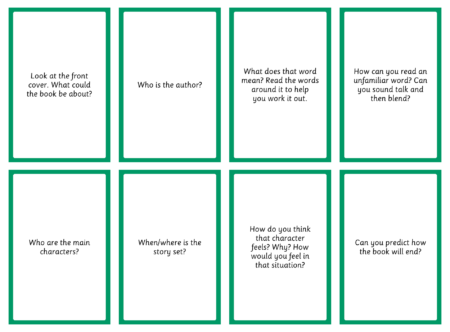
- Reading Prompt Cards
How to do it
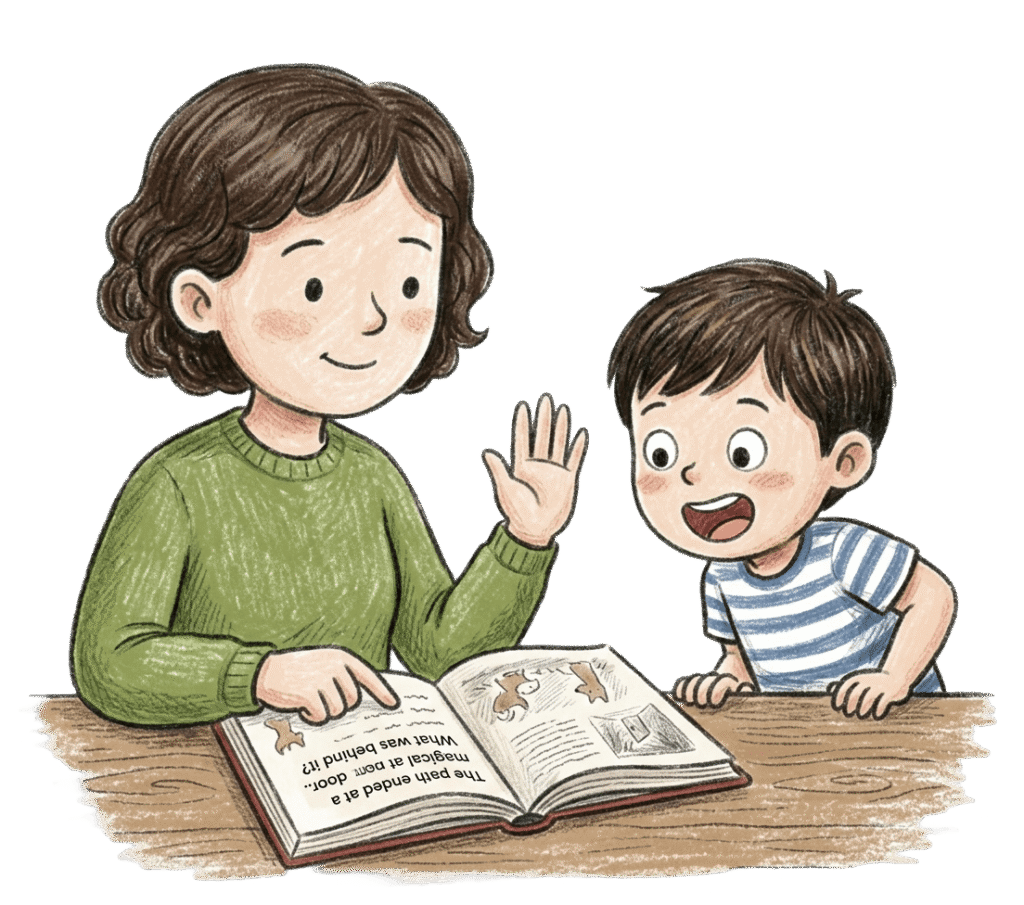
Read together until you hit a turning point — a cliffhanger, a choice, a moment of tension. Stop. Ask: "What do you think happens next?" Let them share their idea, however far-fetched.
Use the prompt cards if you need a nudge: "Why did they do that?" or "What would you do in their position?" Then read on and find out.
When the real outcome arrives, compare it to their prediction. "You were almost right!" or "Nobody saw that coming!" are equally good reactions. The habit of thinking ahead while reading is one of the most useful comprehension skills there is — and this is how it gets built.
Grab our resources
Print our reading prompt questions and reading prompt cards to get started.
Frequently asked questions
When is National Share a Story Month?
National Share a Story Month is celebrated in May each year in the UK. It’s a chance to focus on the joy of reading together and celebrating storytelling in families and communities.
What’s the difference between shared reading and letting children read alone?
Both matter. Reading alone builds independence and confidence. But shared reading offers something different: the rhythm of someone else’s voice, connection, and exposure to stories slightly harder than they’d choose alone. They complement each other perfectly.
How do I keep older children interested in listening to stories?
Choose books they’re excited about—not books you think they should like. Chapter books, funny stories, adventure series. Let them pick sometimes. And let them know it’s okay to fidget, draw, or build while listening. Their hands might be busy, but their ears are engaged.
Is shared reading important for children who can already read fluently?
Absolutely. Children who read well still benefit from being read to. They hear expression and emotion in the voice. They access stories that are slightly harder to read alone. And they get to share the story-world with you. It’s not about reading level—it’s about connection and magic.
National Share a Story Month is really an invitation to slow down and remember why stories matter. Whether your child snuggles up, fidgets throughout, or reads parts aloud themselves, you’re doing something powerful: you’re showing them that stories are worth sharing.
Looking for brilliant books to share? Browse our collection by reading level to find stories everyone will love.
