Contents
Phonics word lists are collections of words grouped by the sound pattern they contain — all the CVC words with short a, for example, or all the words containing the sh digraph. They’re a targeted way to practise a specific sound your child is currently learning, rather than reading or spelling words at random.
If your child’s school has told you they need to practise a particular sound, or if you’ve seen a phonics book labelled with a sound group and wondered what to look for, this is your starting point.
Below you’ll find an overview of the main word list types, why each one matters, and links to our free printable downloads.
Why targeted word lists help
Phonics teaches children that letters represent sounds. The best way to consolidate that knowledge is repetition with the specific sound: reading lots of words that contain it, spelling lots of words that contain it, spotting it in books. A word list gives you a ready-made set of practice material without having to hunt through books for examples.
The key is using the right list at the right time. If your child is currently learning digraphs like sh and ch, there’s limited value in practising long vowel word lists they haven’t been taught yet. Targeted practice — matched to what the school is currently teaching — is far more effective than a scattergun approach.
Ask your child’s teacher which sounds they’re currently working on, then focus the practice there.
Bite-sized reading tips, straight to your inbox
Get confidence-boosting tips to help your child learn to read. Short, useful, and easy to fit into (real) family life!
Even better? You'll also get 30% off your first month of Reading Chest.
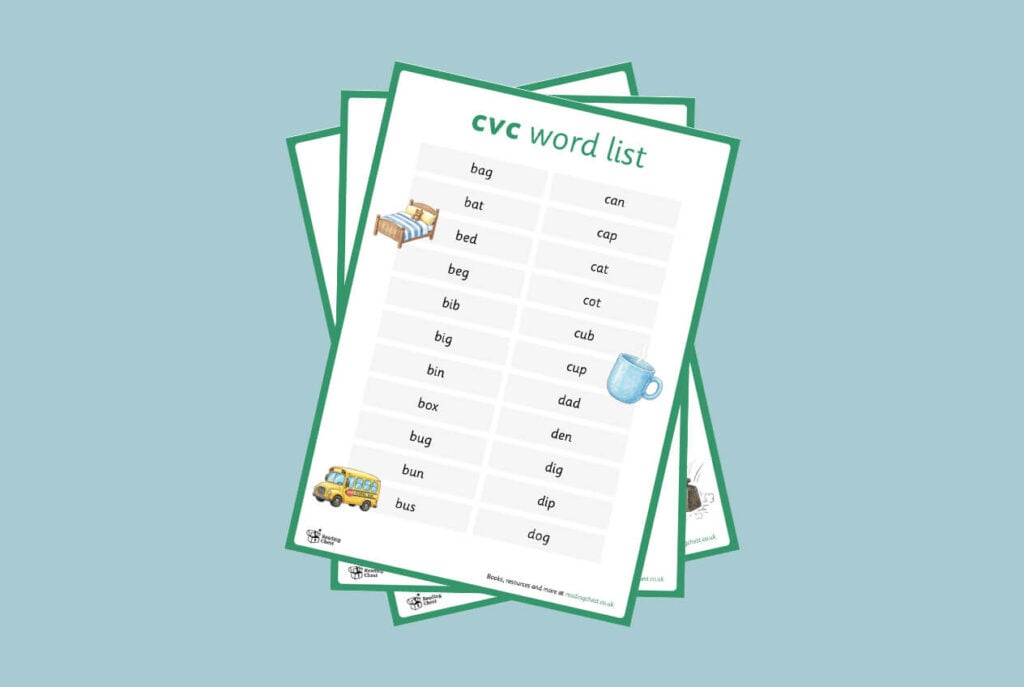
CVC word lists
CVC (consonant–vowel–consonant) words are the starting point for phonics — simple three-sound words like cat, dog, sit, and hop. Our guide to CVC and CVCC words explains the word structure codes in more detail, but the short version is: these are the simplest words for children to decode and spell, and they form the foundation of everything that follows.
CVC word lists are grouped by vowel sound — short a (cat, bat, map), short e (bed, ten, pet), and so on — so you can match practice directly to the sounds your child is working on.
We’ve got free printable CVC word lists and word cards in our resources section — you can print them and use them for sorting games, writing practice, or just reading aloud together.
CVCC and CCVC word lists
Once children are secure with CVC words, they move on to words with consonant clusters: CVCC words (like lamp, soft, best) and CCVC words (like frog, clap, step). These introduce the complexity of two consonants sitting together, which requires children to blend or segment an extra sound.
Consonant clusters are a common stumbling point — many children who read CVC words fluently hit a wall here. Targeted practice with CVCC and CCVC word lists is one of the most direct ways to address it. Again, our free resources section has printable word lists and cards for both.
Digraph word lists
Digraph word lists group together words containing a specific two-letter sound — all the sh words, all the th words, and so on. These are particularly useful when a child is first learning a new digraph, because they provide the repetition needed to make the pattern automatic.
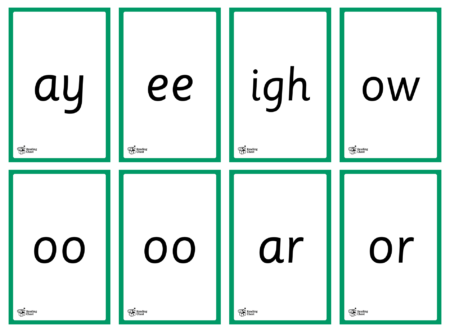
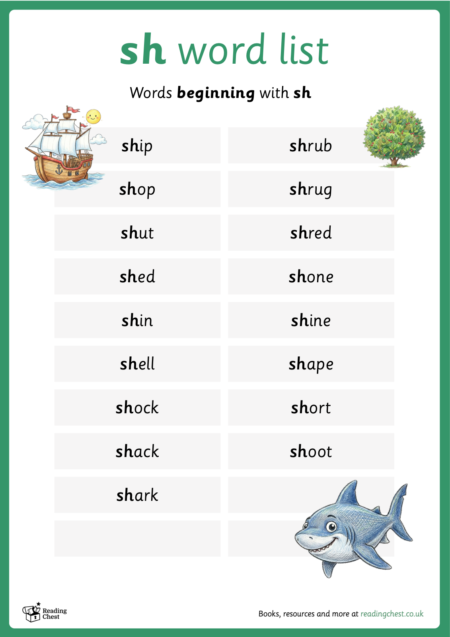
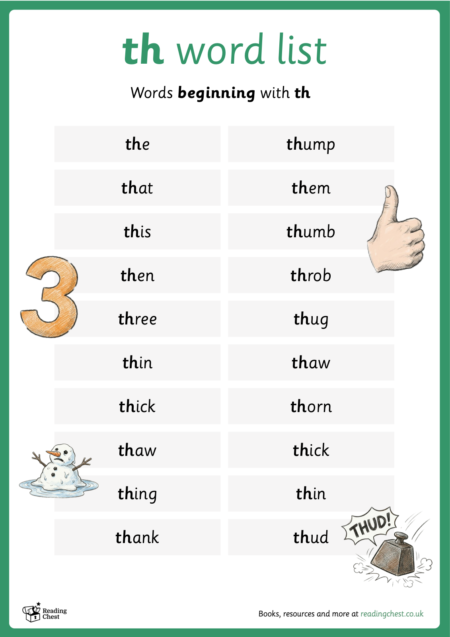
We have dedicated word lists for sh words and th words, plus our digraph and trigraph flashcard set covers all the main digraphs in one printable resource.
How to use word lists at home
Word lists are flexible — you can use them in a lot of ways beyond just reading through them. Here are approaches that tend to work well:
- Reading aloud — simply reading the list together, one word at a time. Saying the sounds as you go rather than just recognising the whole word reinforces the phonics skill rather than building memorisation.
- Spelling practice — cover the list, say a word aloud, ask your child to write it. Then uncover and check. Immediate feedback is important — don’t leave it till the end of the list.
- Sorting — mix two lists together (short a and short e, for example) and sort them into groups. This helps children discriminate between similar sounds, which is a genuine spelling skill.
- Word building with letters — use magnetic letters or letter tiles to build words from the list. More tactile and often more engaging than writing, especially for younger children.
This activity is a structured way to use CVC word lists at home:
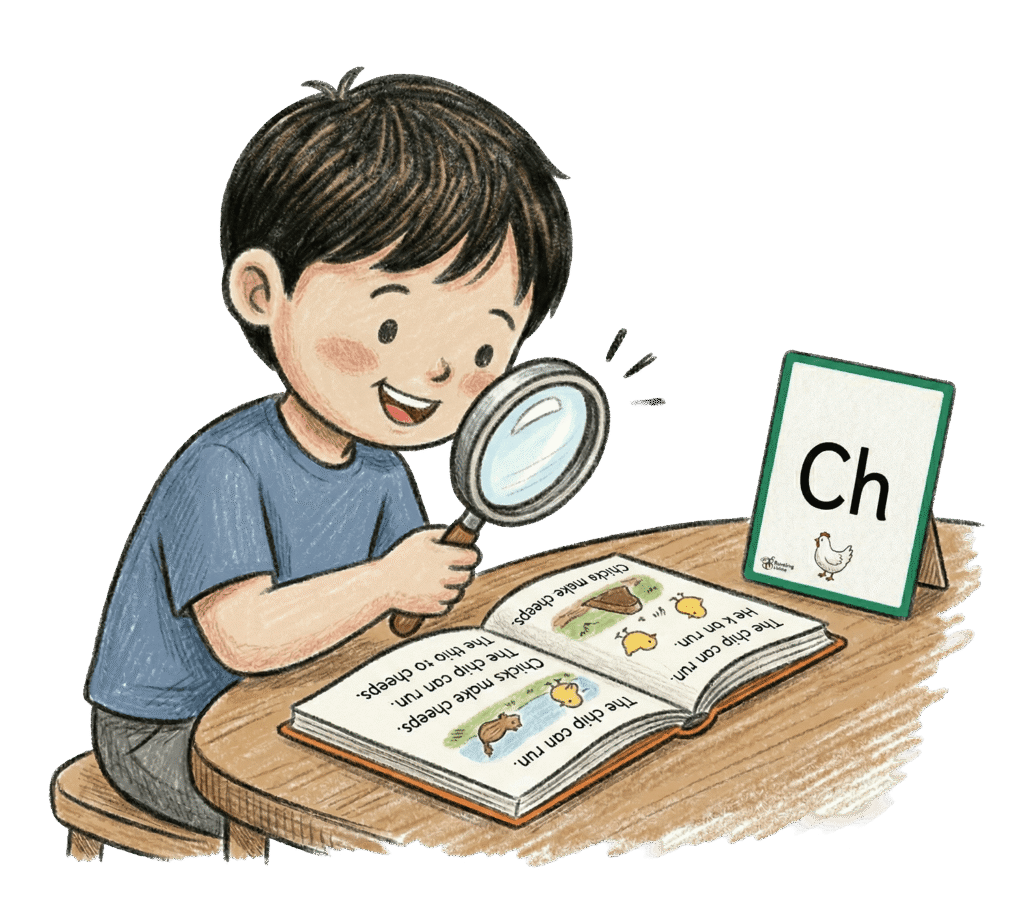
Digraph detective
Pick a digraph — sh, th, ch, ng — and go hunting. How many times can you spot it hiding in words on a page, a sign, a cereal box? Detective hats on.
Goal
Train your child's eye to spot digraphs in real text — so they stop seeing two letters and start seeing one sound.
You'll need
- Digraphs & Trigraphs Flashcards
- Phonics "sh" words list
- Phonics "th" words list
How to do it
Choose one digraph to focus on — sh, th, ch or ng are all great options. Say it together a couple of times so it's fresh in their mind.
Then hunt. Open a book, use a word list, or scan whatever's nearby — packaging, posters, signs. Every time they spot the digraph in a word, they point and say the sound. Count how many you find.
Keep it relaxed. You're not testing whether they can read every word — you're just training their eye to notice the pattern. That noticing is half the battle with digraphs.
Grab our resources
Print our digraphs & trigraphs flashcards and phonics "sh" words list to get started.
And this one is good for building familiarity with words from any sound group in a book context:
Sound search in books
Pick a sound, open a book and hunt for it on the page. Quick phonics practice that connects to real text rather than a worksheet.
Goal
Spot target sounds in real text — building the sound-symbol connection in context, where it actually matters.
You'll need
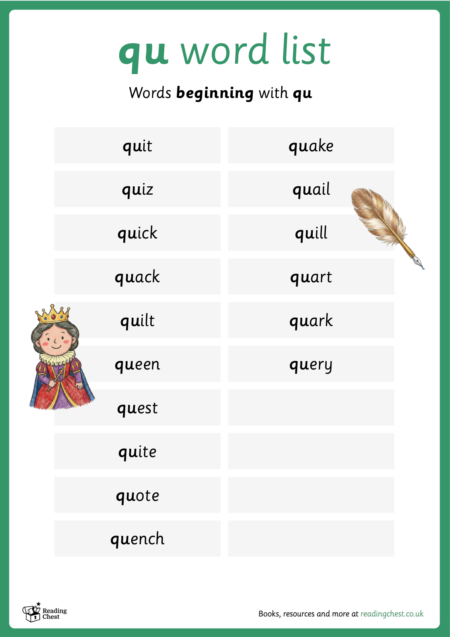
- Phonics "qu" words list
- Phonics "th" words list
- Phonics "sh" words list
How to do it
Choose a sound to focus on — sh, th or qu are great starting points. Say it together. Then open a book and start scanning.
Every time your child spots that sound in a word, they point and say it. Count how many you find on one page — then try another. Use the word lists as a warm-up if they need to see the sound in isolation first.
This one's fast — five minutes is plenty. The value is in connecting the sound to real words in real sentences, not just practice words on a card.
Grab our resources
Print our phonics "qu" words list and phonics "th" words list to get started.
Tricky word lists
Tricky words — also called common exception words — are high-frequency words that don’t follow regular phonics patterns. They need a different kind of practice: rapid recognition rather than sounding out. Our free tricky words list covers the words children need to know at Reception and Key Stage 1, and we have tricky word cards for games at home.
Free printable resources
All of our free word lists and flashcard sets are in our resources section. You can download and print them at home — no sign-up needed. We have CVC word lists, CVCC word lists, word cards, digraph and trigraph flashcards, tricky word cards, and more.
Frequently asked questions
How do I know which word list to use?
Ask your child’s teacher which sounds they’re currently working on in school — then match the word list to that. Phonics practice is most effective when it’s building on what’s being taught in the classroom, not running ahead or reviewing sounds they’ve already fully consolidated.
How long should phonics word list practice take?
Five to ten minutes is usually plenty — short and regular beats long and infrequent. If your child is losing focus, stop. A few words done attentively is worth more than a whole list done reluctantly.
The best time is often during a natural pause in the day — before dinner, after school, in the car. It doesn’t need to be a sit-down session.
Should I use word lists for reading or spelling?
Both, ideally — but not at the same time. Reading from the list (blending practice) and spelling from the list (segmenting practice) are different skills, and both matter. If your child finds spelling harder than reading (very common), prioritise spelling practice with the current sound group.
Are phonics word lists the same as sight word lists?
No — they serve different purposes. Phonics word lists group words by sound pattern and are used to practise decoding and spelling. Sight word lists (and the UK equivalent, tricky word lists) focus on high-frequency words that need to be recognised automatically. Both are useful; they’re just targeting different skills.
