Contents
Children’s Art Week is the perfect excuse to get out the crayons, splash a bit of paint around (hopefully not on the cat), and let creativity run wild. But it’s also a brilliant time to weave in some reading—because books and art? They’re best friends.
When children draw what they’ve read, imagine new endings, or turn their favourite characters into felt-tip masterpieces, something clicks. They don’t just hear a story—they feel it, see it, and make it their own.
Here are some fun, low-pressure ways to bring books and art together this Children’s Art Week—no glitter explosions required (unless you’re into that sort of thing).
Why art + reading = magic
Stories want to be seen
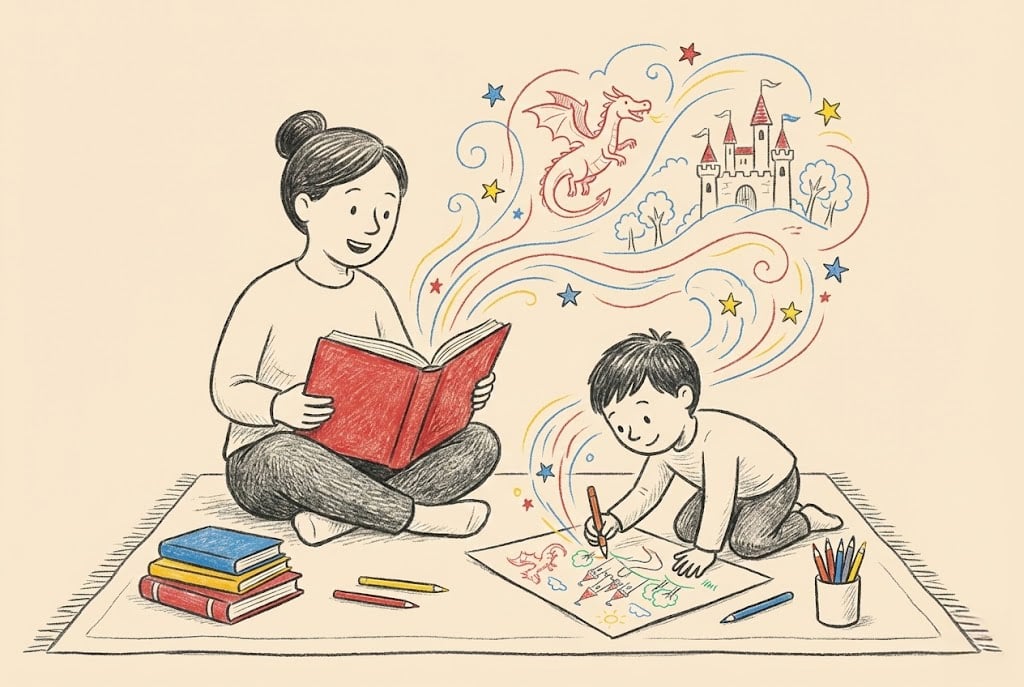
Every story has a picture hiding inside it—and kids are brilliant at spotting them. Whether it’s a grumpy dragon, a mysterious forest, or a world made of jellybeans, reading helps children create entire universes in their heads. Drawing brings those universes to life.
- Boosts comprehension: If they can draw it, they’ve probably understood it.
- Fires up imagination: Books plant the seed, art helps it grow (into a sparkly unicorn tree, sometimes).
- Builds confidence: Making something from a story gives kids a sense of ownership. “I made this!” is powerful stuff.
Bite-sized reading tips, straight to your inbox
Get confidence-boosting tips to help your child learn to read. Short, useful, and easy to fit into (real) family life!
Even better? You'll also get 25% off your first month of Reading Chest.
Fun ideas to try this Children’s Art Week
Make your own mini book
Fold some paper, grab the felt tips, and boom—you’ve got a DIY publishing house. Let your child write and illustrate their own story (or re-tell a favourite one in their own words).
- Start with a silly sentence and take turns adding to it.
- Use stickers, collage scraps or stamps for extra flair.
- Display it proudly—the fridge is now your family’s official library shelf.
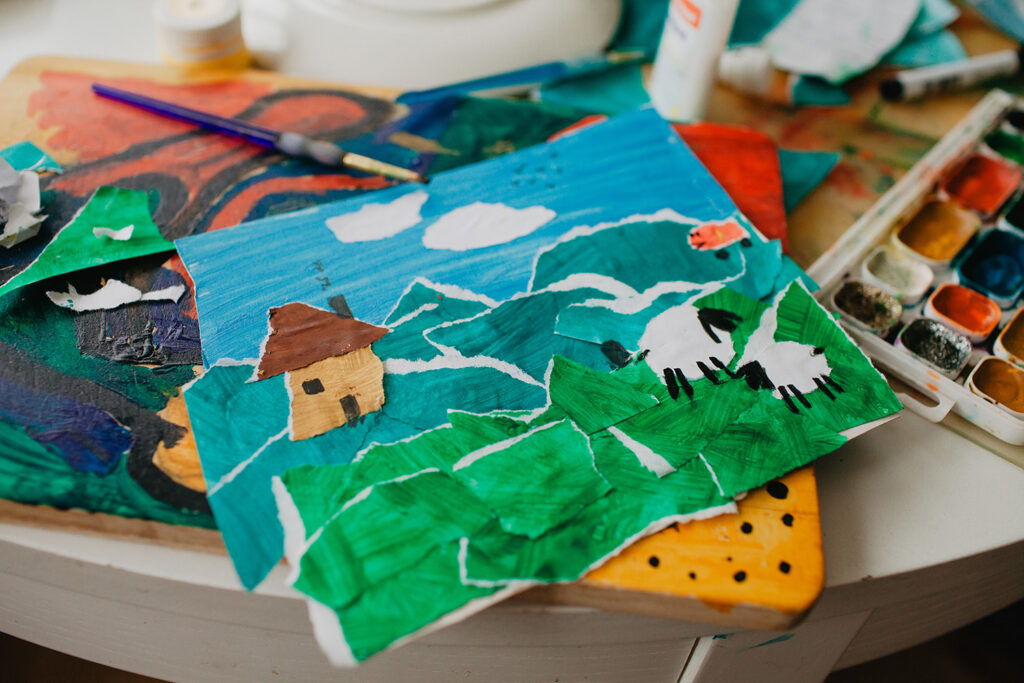
Draw a scene from a favourite book
This one’s simple but effective. Ask: “What’s the most exciting/funny/sad bit of the story?” Then get drawing.
- Let them choose the medium—pencil, paint, chalk, digital, spaghetti…
- Talk about what’s happening in the scene and how the characters feel.
- Bonus round: Can they show what happens next?
Act it out (with props!)
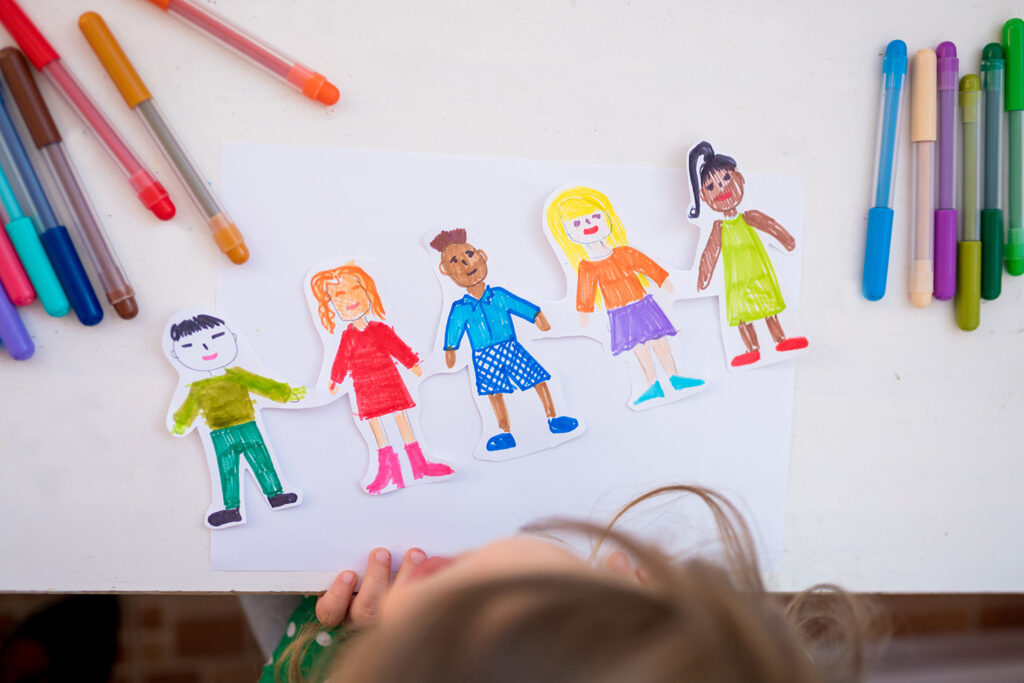
If your child’s more of a performer than a painter, get theatrical.
- Read a story together and pick a scene to act out.
- Make simple props or costumes (a tea towel can do wonders).
- Record it to send to family—or just enjoy the front-row seats.
Illustrate a new ending
What if the wolf opened the door and found… a party? Let kids change the ending of a story and draw what happens instead. It gets them thinking about plot, character and cause-and-effect—all while having a giggle.
Why this all works (sneaky learning alert)
It strengthens reading muscles
Linking art to stories helps children remember what they’ve read and understand it better—especially for visual learners. When they translate words into pictures, they’re proving to themselves that they’ve grasped what the story is really about.
It helps with emotional literacy
Drawing how characters feel helps children make sense of big emotions—both in books and in real life. A child might not be able to describe why a character is sad, but they can show it through colour, expression, or the way they draw a scene.
It builds communication skills
Whether they’re describing their drawing or narrating their comic strip, children are practising how to share their thoughts clearly (and with flair). This confidence with words transfers back to their reading and writing too.
Creative activities to try
To help your child practise connecting picture books to their own artwork, try this hands-on activity that focuses on visual storytelling and imagination:
Picture-cover reading
Cover the pictures and read the words first. Then uncover and re-read. It sounds simple — but it makes a real difference to how children approach a page.
Goal
Encourage real decoding rather than guessing from pictures — a habit that pays off as books get harder and illustrations get fewer.
You'll need
- A decodable book
- Two sticky notes
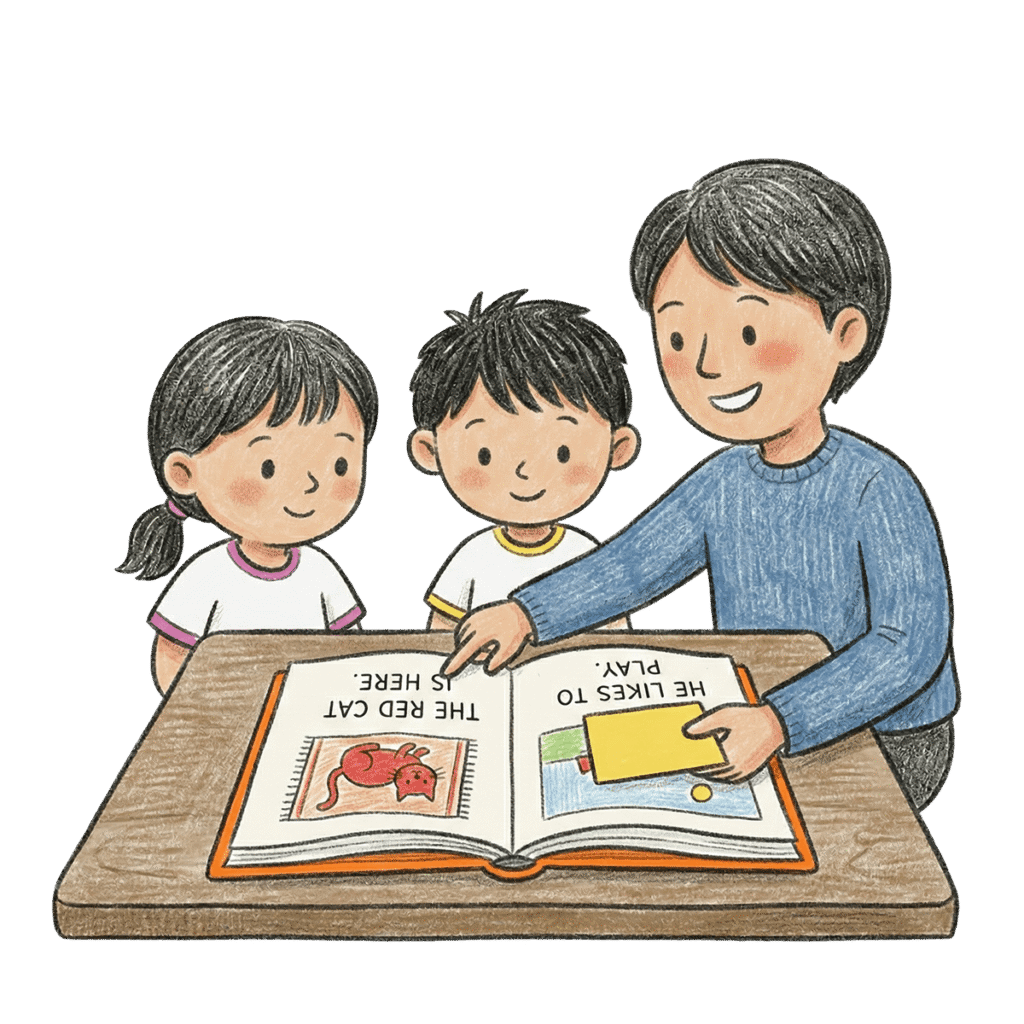
How to do it
Open the book to a page and cover the illustration with a sticky note. Ask your child to read the words first — just the text, no picture clues.
Once they've had a go (stumbles and all), take away the sticky note and re-read the page together with the picture revealed. Talk about what the picture adds. Did it match what they imagined? Did it help them understand anything differently?
This doesn't need to be every page — even doing it once or twice in a session is enough. The goal is to build the habit of trusting the words, not just guessing from the picture. That's a big deal as books get longer.
Grab our resources
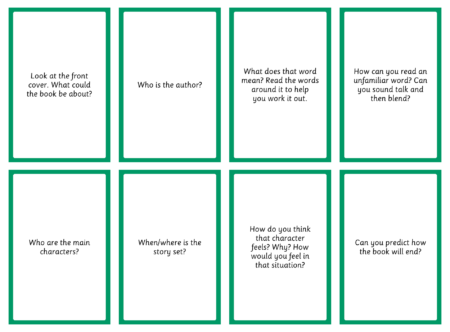
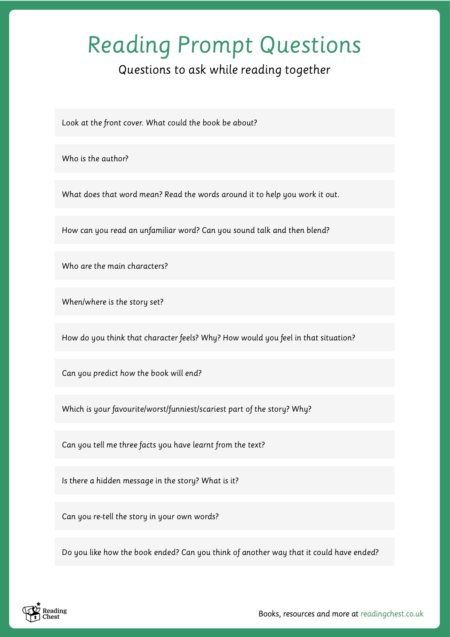
Looking for some help with questions to ask after your reading session? These prompts give you a great starting point.
Another great way to build on this is to encourage your child to roleplay and bring stories to life through play and movement:
Book to life roleplay
Pick a scene, grab whatever props you can find — a tea towel, a cushion, a very willing teddy — and act it out. Bring the book to life.
Goal
Recreate a scene from the story through play — builds sequencing, recall, and expressive language (and is generally quite chaotic in a good way).
You'll need
Nothing needed — works with whatever you have to hand.
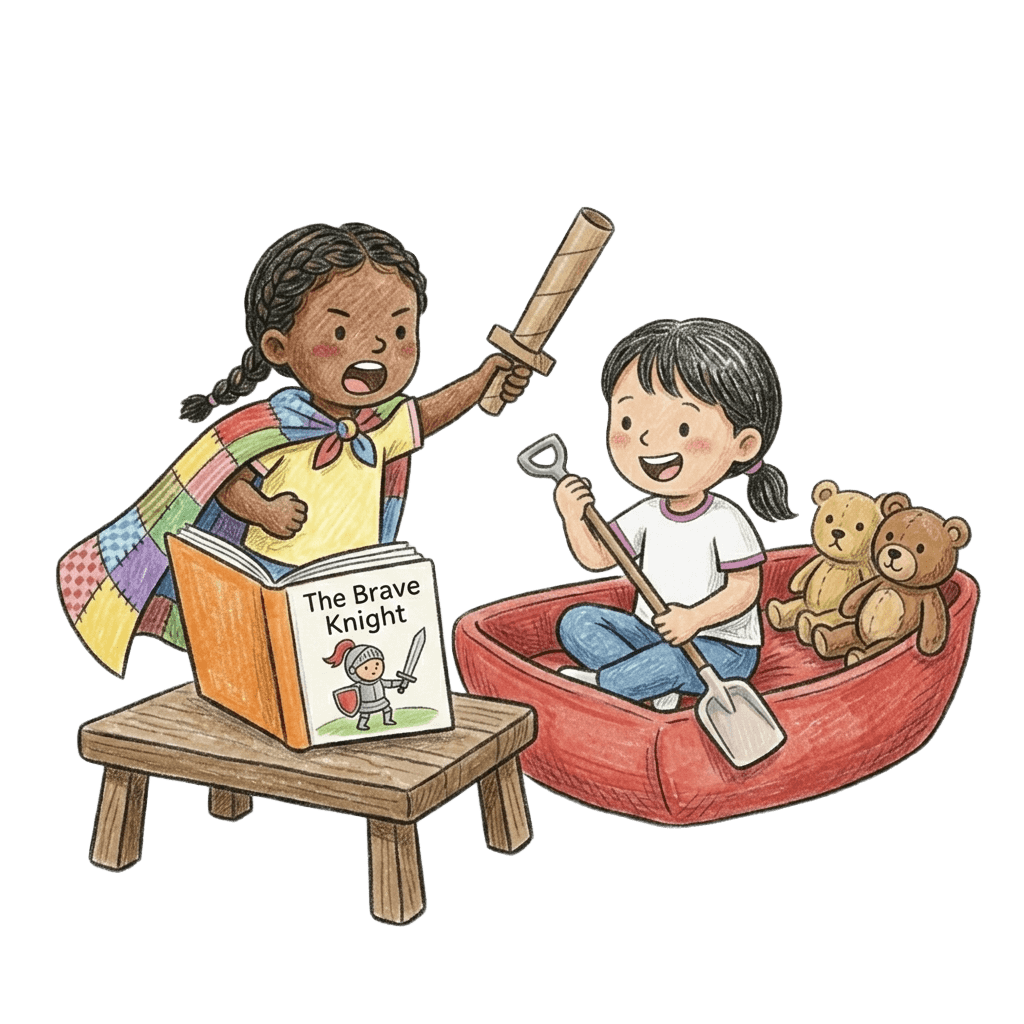
How to do it
Pick a favourite scene from a book you've read together. Decide who plays which character — including you. Go for it.
Use what you have: a blanket for a cape, a cushion for a boat, teddies as the extras. Keep the book open if it helps, or go from memory. Either is fine.
One or two minutes is plenty. Swap roles and try again if they're enjoying it. The real value is in remembering the order of events and thinking about how characters move and speak — but mostly it's just fun.
Where to find illustrated books
Looking for fresh inspiration? With Reading Chest, you can keep the stories coming—so there’s always something new to spark creativity. We have beautifully illustrated books at just the right level for your child, delivered straight to your door with easy swaps whenever you fancy trying something different. If you’re not sure where to start, our guide to choosing books helps you pick stories that’ll really grab your child’s imagination.
Frequently asked questions
When is Children’s Art Week?
Children’s Art Week typically takes place in June or July. The exact dates vary each year, so it’s worth checking the Children’s Art Week website to find out when it’s happening. But honestly, any week is a good time to mix books and art!
How are picture books connected to art?
Picture books are actually collaborations between authors and illustrators. The pictures aren’t just decoration—they’re telling the story alongside the words. When children look at illustrations, they’re learning how artists use colour, shape, and style to show emotion and action. This teaches them visual literacy, which strengthens their overall understanding of storytelling.
What are the best illustrated books for young children?
Look for books with bold, engaging illustrations that match your child’s reading level. Picture books by authors like Eric Carle, Julia Donaldson, and Oliver Jeffers are brilliant starting points. We’d recommend browsing our book collection by reading level and theme—there are hundreds of beautifully illustrated titles to choose from.
How can I use art to encourage reading?
If your child loves drawing, let them choose books with illustrations that grab their attention. After reading, encourage them to sketch scenes, create new covers, or draw their own versions of characters. This turns reading into a creative act rather than a passive one, which often hooks reluctant readers into the story.
Let’s see your masterpieces!
We’d love to see how your child turns stories into art. Share their book-inspired creations with us on Twitter/X, Facebook, or Instagram. Who knows? They might just inspire someone else’s next reading adventure.
