Contents
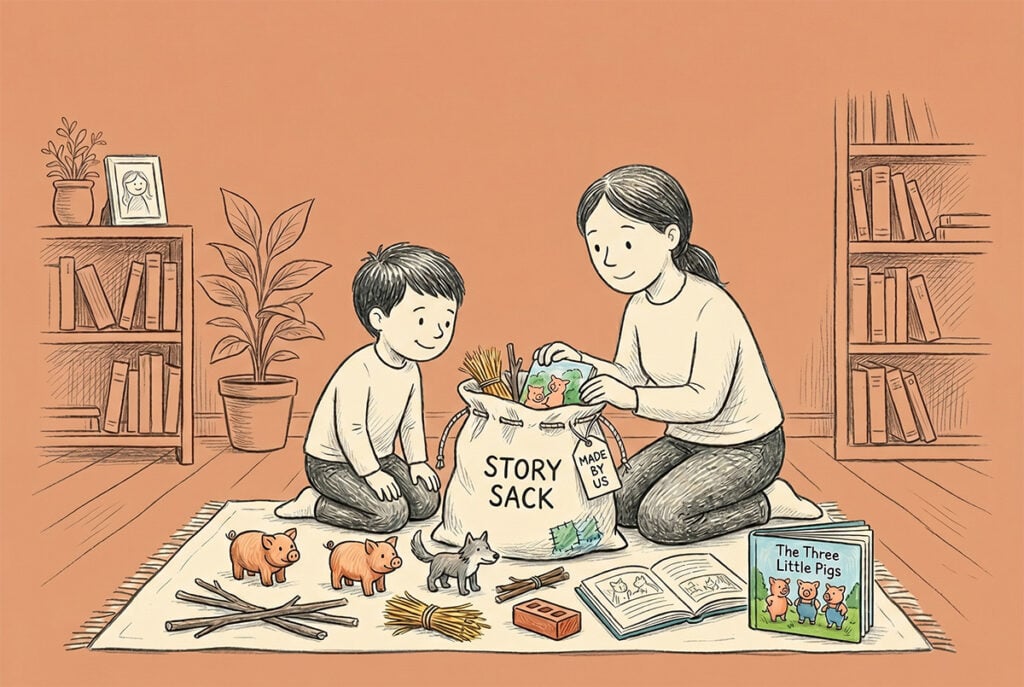
A story sack is a bag or box containing a picture book alongside a collection of props, toys, and activities that bring the story to life. Originally developed by literacy advocate Neil Griffiths in the 1990s, story sacks are now a familiar feature of Reception and KS1 classrooms — and a genuinely simple idea that’s easy to replicate at home without spending much at all.
The concept is straightforward: rather than reading a book in isolation, children interact with it through related objects, puppets, and activity cards that deepen their engagement with the story, its characters, and its themes. A story sack turns reading into a multi-sensory experience.
Here’s what goes inside one, why they work, and how to make your own.
What goes inside a story sack
A typical story sack contains:
- The main picture book, chosen as the centrepiece of the sack
- Character props or soft toys — a puppet of the main character, or a toy representing something central to the story
- Scene-setting items — small objects representing key settings or moments (a fabric square for the three bears’ table, a toy boat for a seafaring adventure)
- A non-fiction book on a related topic — if the story features a bear, a simple book about bears adds a factual layer
- Activity cards — ideas for games, questions, drama activities, or crafts linked to the book
- A simple game — a matching game, puzzle, or sequencing activity using story characters or events
There’s no single correct formula. Story sacks made at home can be as simple or elaborate as you like. A sack for a toddler might just be the book plus two or three relevant toys; a sack made with an older child as a school project might include a self-made game and handwritten activity cards.
Bite-sized reading tips, straight to your inbox
Get confidence-boosting tips to help your child learn to read. Short, useful, and easy to fit into (real) family life!
Even better? You'll also get 30% off your first month of Reading Chest.
Why story sacks are effective
Story sacks work because they engage more than just one learning channel at a time. A child sitting with a book reads and listens; a child using a story sack might also be handling objects, acting out scenes, answering questions, playing games, and making connections to the wider world.
For children who find sitting still with a book difficult — or who engage more readily with hands-on activity — a story sack can be a significant bridge into a story. The prop or toy gives them something to hold onto (literally and figuratively) as they navigate the text.
The underlying principles are well-evidenced in literacy development: repeated reading, active engagement, multi-sensory interaction with language all support comprehension and vocabulary growth. A story sack is a vehicle for doing all of those things in an accessible, enjoyable format.
Making a story sack at home
You don’t need to buy a commercial story sack kit. The best ones are often made with objects you already have.
Start with a book your child loves — or one connected to a current class topic. Then think about what physical objects relate to that story: characters, settings, objects that appear in the key scenes. These don’t have to be exact replicas — a plastic farm animal can stand in for a fox, and a square of blue fabric can represent a river. Children’s imaginations do the heavy lifting.
Involving your child in making the sack is half the point. Deciding what goes in, finding the objects, drawing activity cards — all of this builds comprehension and engagement with the story before the sack is even used.
Choosing a book
Good story sack books are usually picture books with clear characters, a defined setting, and a simple but engaging plot. Repeated refrains (“I’ll huff and I’ll puff”, “Run, run, as fast as you can”) help, because they give children something to join in with during read-alouds.
Stories with a small cast of characters and memorable scenes tend to generate the most natural props and activities. Older children can make story sacks for chapter books too, but it’s easier to start with picture books.
Story sacks in school
In many Reception and Year 1 classes, story sacks are a staple of the reading corner and group literacy sessions. Children use them independently, in pairs, or with a teaching assistant to revisit familiar stories in active ways. Schools sometimes send story sacks home for families to use during the week — if your child has brought one home, the activity cards are usually a good place to start.
Some schools have story sack libraries that children can borrow from, similar to a book lending library. If yours does, it’s worth asking at the office or in the school newsletter.
Try this at home
This activity uses a favourite book as a starting point for dramatic play — exactly the kind of engagement story sacks are designed to encourage:
Book to life roleplay
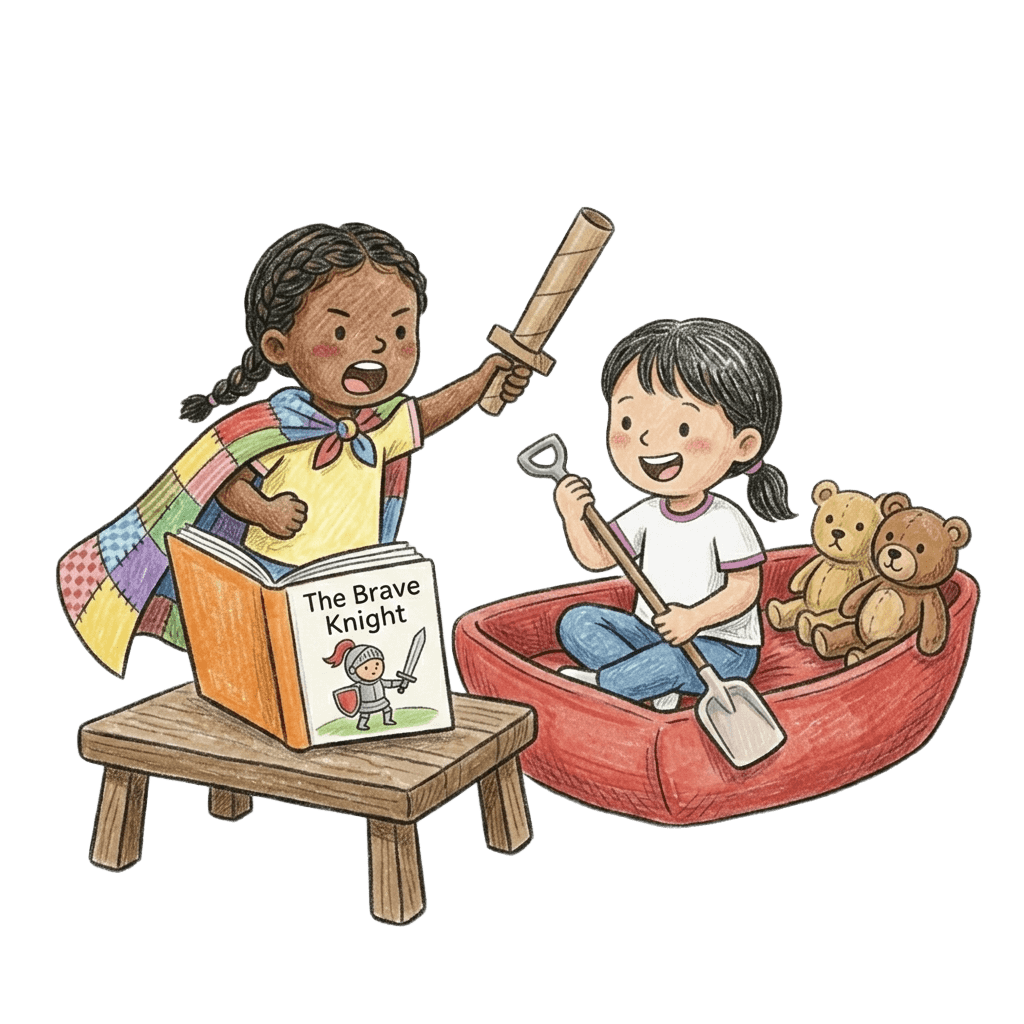
Pick a scene, grab whatever props you can find — a tea towel, a cushion, a very willing teddy — and act it out. Bring the book to life.
Goal
Recreate a scene from the story through play — builds sequencing, recall, and expressive language (and is generally quite chaotic in a good way).
You'll need
Nothing needed — works with whatever you have to hand.
How to do it
Pick a favourite scene from a book you've read together. Decide who plays which character — including you. Go for it.
Use what you have: a blanket for a cape, a cushion for a boat, teddies as the extras. Keep the book open if it helps, or go from memory. Either is fine.
One or two minutes is plenty. Swap roles and try again if they're enjoying it. The real value is in remembering the order of events and thinking about how characters move and speak — but mostly it's just fun.
And this one invites children to build the setting of a story using objects and materials at home — a natural extension of the story sack idea:
Build the setting
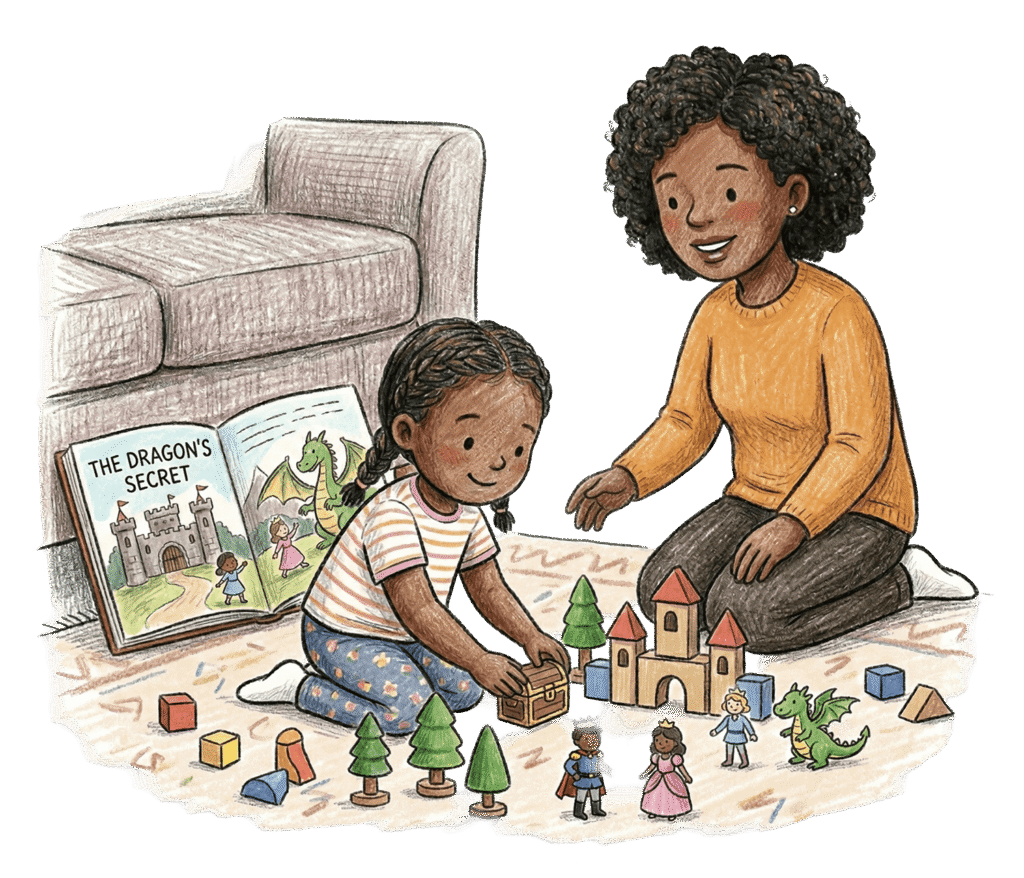
After reading, build the story's setting out of toys, blocks, cushions or paper. Then re-read a scene from inside the world you've made.
Goal
Help your child picture the story world in 3D — deepens comprehension and makes the book feel real and worth revisiting.
You'll need
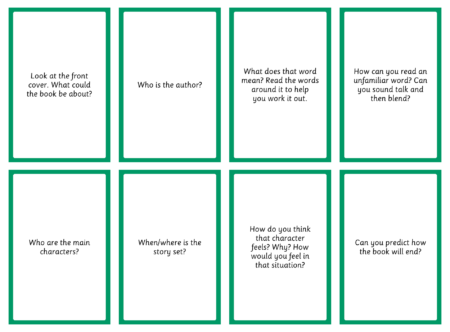
- Reading Prompt Cards
How to do it
When you've finished a story, ask: "Where did it happen? What did it look like there?" Then build it — use toys, blocks, cushions, a big piece of paper, whatever's around. A forest of socks counts.
Place any characters you have in the scene. Then open the book and re-read a passage or two while you're sitting inside your version of the story world. It feels completely different when you're "in" it.
Use the prompt cards to spark conversation: What would you hear here? What might happen next? What's just out of view? It's a hands-on way to dig deeper into a story without it feeling like work.
Grab our resources
Print our reading prompt cards to get started.
Frequently asked questions
What age are story sacks for?
Story sacks work best for children aged 2–7, roughly covering nursery through to Year 2. They’re most commonly used in Reception and Year 1, where picture book engagement and multi-sensory learning are central to the curriculum. Older children can create story sacks as a project (which is itself a valuable literacy task), but using them as a reading tool is less common once children are reading chapter books independently.
Do I need to buy a commercial story sack?
Not at all. Commercial story sacks exist and can be a useful starting point, but homemade ones are often better — because the process of making them (choosing objects, creating activity cards, discussing what matters in the story) is itself a rich literacy activity. You need a book you already own, a bag or box, and a handful of household objects. The involvement of your child in building the sack is more valuable than the quality of the props.
What books work well for story sacks?
Classic picture books with strong characters and memorable scenes are ideal: The Very Hungry Caterpillar, We’re Going on a Bear Hunt, The Gruffalo, The Tiger Who Came to Tea, Elmer, and Room on the Broom are popular choices. Stories with a repeated refrain, a clear narrative arc, and a small cast of characters tend to generate the most natural props and activities. Books connected to a topic your child is learning at school also make a good fit.
Is there a difference between a story sack and a story box?
The terms are used interchangeably — some educators prefer “story box” or “story basket” depending on the container, but the concept is identical. A fabric bag (hence “sack”) is traditional, but a shoebox, a basket, or a colourful tub works equally well. The container matters much less than the objects inside and how they’re used.
