
Contents
World Book Day arrives every March with a rush of last-minute costumes, hastily assembled from school uniforms and whatever you can find in the dress-up box. It’s chaotic, sometimes funny, occasionally stressful – and underneath all of that, there’s something genuinely important happening. At the heart of World Book Day is a celebration of something much bigger than fancy dress: reading for pleasure.
That phrase gets used often, but it’s worth pausing to think about what it really means. Reading for pleasure isn’t something that starts when children are old enough to read chapter books independently. It’s not a destination you reach once they’ve mastered phonics. It’s a journey that starts now, in these early years, built on small moments where books feel enjoyable, exciting, funny or comforting rather than like schoolwork.
Why reading for pleasure actually matters
Reading for pleasure is one of the most powerful predictors of a child’s long-term reading success. Children who enjoy books – who see them as friends rather than challenges – read more widely, develop richer vocabularies, and score higher on comprehension tests. But the benefits go far beyond test scores.
Children who read for pleasure develop resilience when reading is hard. They have more patience with tricky words because they’re curious about where the story is going. They build worlds in their imagination. They develop empathy by living inside other people’s heads. They discover that reading is a way to explore interests, find answers, and escape into adventure.
In short: reading for pleasure is the difference between a child who can read and a child who loves to read. And that love, once built, tends to last a lifetime.
Bite-sized reading tips, straight to your inbox
Get confidence-boosting tips to help your child learn to read. Short, useful, and easy to fit into (real) family life!
Even better? You'll also get 25% off your first month of Reading Chest.
Reading for pleasure starts long before chapter books
It’s easy to think that “real” reading for pleasure is something that happens later – when children are confidently devouring fantasy novels or graphic novels on their own. But that’s a missed opportunity. The early reading years, the ones you’re in right now, are absolutely crucial to building that love.
Reading scheme books often get a bad reputation. Parents sometimes think of them as boring, repetitive, or just homework dressed up as books. But a really well-chosen reading scheme book – one that’s pitched at exactly the right level, with a story that genuinely interests your child – is the gateway to reading for pleasure.
When children experience books at just the right level, something magical happens:
- The words are manageable – they don’t all feel impossible, and there are some familiar ones mixed in with the new ones.
- The story is genuinely interesting – it’s not trying to teach a lesson or shoehorn in phonics; it’s just a good story at this level.
- They can read it independently (or nearly independently), which builds a huge sense of pride and capability.
- You can share it together, celebrate their success, and chat about what happens – which deepens enjoyment.
Every time this happens, your child learns: I can do this. Reading is good. I want to do it again. That’s the foundation of reading for pleasure, and it’s built one book, one positive experience at a time.
Understanding reading levels and book bands
If you’re new to the idea of reading levels and book bands, the concept is simple: books are levelled so that children can find books that match their current reading ability. Not too easy – or it’s boring and they learn nothing – and not too hard – or it’s frustrating and they want to give up.
Just right is the sweet spot where reading feels achievable but still requires a bit of effort. That’s where the magic of enjoyable, successful reading happens.
We’ve created a guide to book bands if you want to understand the levels more deeply. For now, just know that levelled books are there to help your child experience success – and success is the ingredient that builds pleasure.
Making the learning stage feel pleasurable
So how do you make sure that those early reading scheme books – the phonics ones, the carefully levelled ones – are actually enjoyable?
Choose books they actually want to read
Yes, the level matters. But interest matters more. If your child is obsessed with dinosaurs, find dinosaur books at their level. If they love funny stories, prioritise those. If they’re passionate about animals, space, vehicles or anything else – use that passion. A child who’s excited about the topic will push through a little reading challenge far better than one who’s bored by the subject.
Mix scheme books with pleasure reads
Scheme books are brilliant for developing decoding skills. But they’re not the whole story. Also read books they purely love – the funny ones that make them giggle, the ones with familiar characters, the ones with gorgeous pictures, the ones they’ve asked for repeatedly. This mix keeps reading from feeling like one-note practice.
Read aloud together
There’s something magic about a parent reading aloud. It’s cosy, it shows that books are something you enjoy, and it means your child gets to hear fluent reading – which is brilliantly contagious. Children who are read to daily are significantly more likely to grow into readers.
Talk about what you read
After reading, chat about the story. “Did you like that bit? That was funny, wasn’t it.” “Who’s your favourite character?” “What do you think will happen next?” These conversations aren’t formal – they’re just natural chat. But they deepen a child’s connection to the story and show them that books are worth thinking and talking about.
World Book Day beyond the costumes
The costumes are fun – and there’s nothing wrong with a bit of fancy dress chaos. But the real celebration of World Book Day happens in the days and weeks around it. Here are some ideas:
Visit a library together
Let your child choose. Lots of books, no pressure, no “right” level – just find things that interest them. Libraries are treasure troves of reading for pleasure, and choosing independently is empowering.
Recommend a book to a friend
Encourage your child to recommend a book they’ve loved to someone else. It deepens their own enjoyment and shows them that books are worth sharing.
Act out a favourite story
Get silly. Be the characters. Make props. Act out favourite scenes. This brings stories alive and shows your child how much more there is to a book than just the words.
Create a cosy reading space
Cushions, blankets, good lighting – make reading feel special. A dedicated reading spot becomes somewhere they actually want to go.
Share your own reading
Let your child see you reading. A magazine, a novel, the back of a packet – it all counts. Children whose parents read are far more likely to become readers themselves.
How to know you’re building reading for pleasure
You’ll know you’re getting it right when:
- Your child asks for books, rather than you always having to suggest reading time.
- They want to talk about their books, share favourite bits, recommend them to friends.
- They sometimes choose to read independently, just because they want to.
- Reading doesn’t feel like homework or practice – it feels like something they actually enjoy.
- They’re willing to tackle a bit harder book if the story is interesting enough.
These don’t all appear at once, and they don’t mean reading is always easy or effortless. But they’re signs that reading is starting to feel like a genuine pleasure, not just a skill to practise.
Building reading for pleasure at home
The beautiful thing about reading for pleasure is that you don’t need special techniques or fancy resources. You just need:
- Regular access to books that interest your child
- Time together – unhurried, cosy, no pressure
- Your genuine enthusiasm about books and reading
- Willingness to let your child choose sometimes, even if their choice surprises you
If accessing books at your child’s reading level is challenging, a service like Reading Chest ensures you always have fresh, levelled books arriving – which removes one barrier to building that consistent habit of pleasure reading together.
If you’re looking for a structure to help build this, here’s an activity that captures the joy of reading aloud together and turns it into a shared adventure:
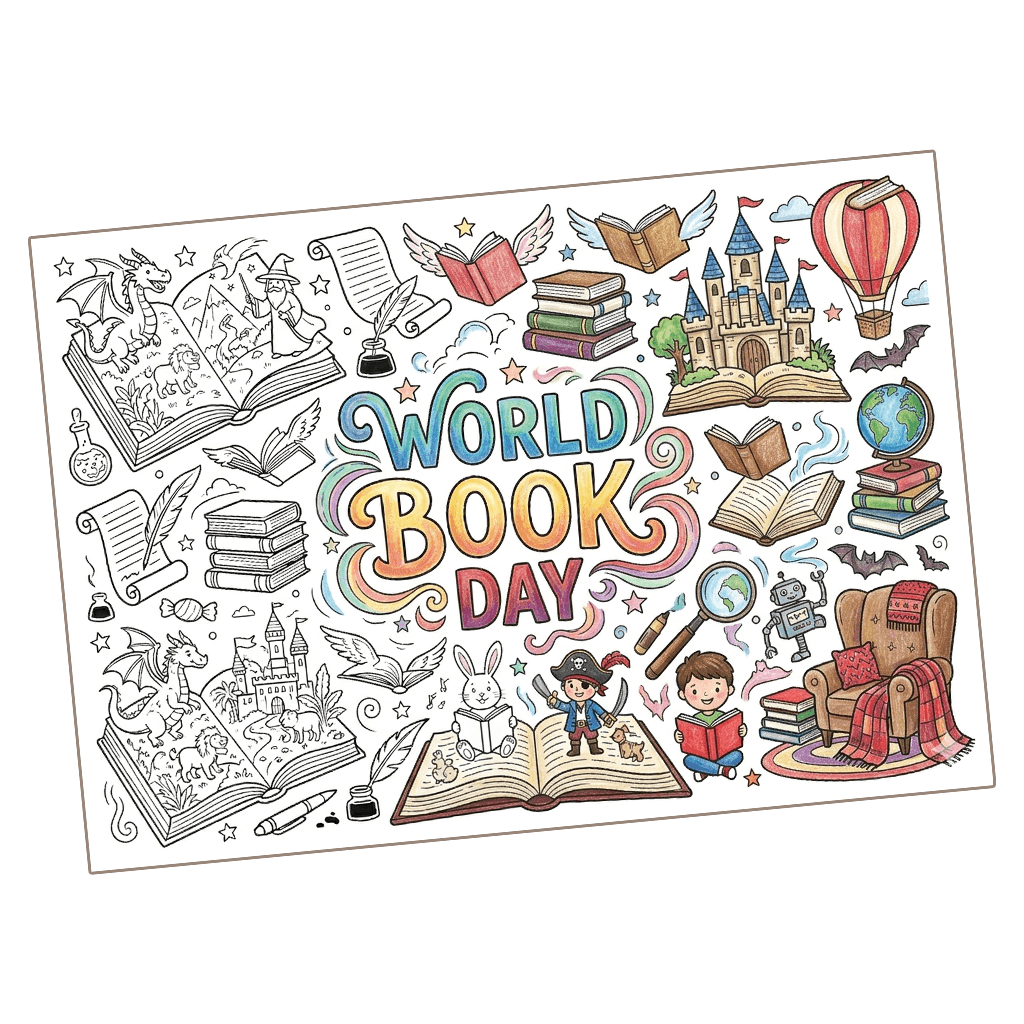
World Book Day colouring & book chat
Colour our World Book Day page together and chat about favourite books, characters and stories. Low-key, lovely, and a good excuse to talk about reading.
Goal
Celebrate books and spark a conversation about reading — because enthusiasm is contagious, and World Book Day is a good day to let it show.
You'll need
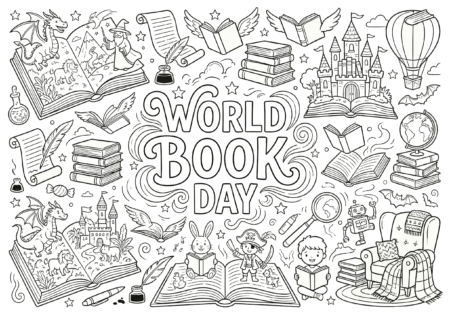
- World Book Day Colouring
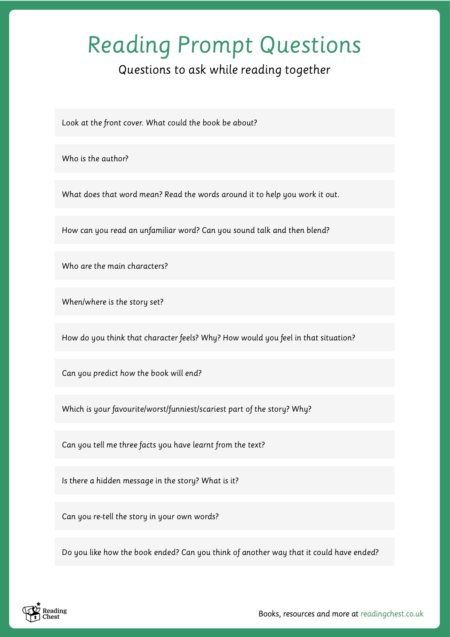
- Reading Prompt Questions (optional)
How to do it
Settle down with the colouring page and get drawing together. As you colour, chat: "Who's your favourite character ever? What would they do if they showed up here?" Keep it loose — this isn't a quiz.
Use the prompt questions if the conversation needs a nudge: "What's the best book you've read this year?" or "If you could be any character for a day, who would it be?" You'll probably end up talking about your own favourites too, which is the whole point.
World Book Day works best when it feels like a celebration rather than an assignment. Colouring together and talking about stories is exactly that.
Grab our resources
Print our world book day colouring and reading prompt questions to get started.
And if you want to build children’s agency and excitement around reading, letting them make real choices about where stories go is powerful:
Stop-the-story choices
Pause mid-story and ask: what do you think will happen next? Read on and find out whose guess was closest. Keeps minds engaged right through to the last page.
Goal
Practise predicting and thinking ahead while reading — building comprehension and keeping attention right where it should be: on the story.
You'll need
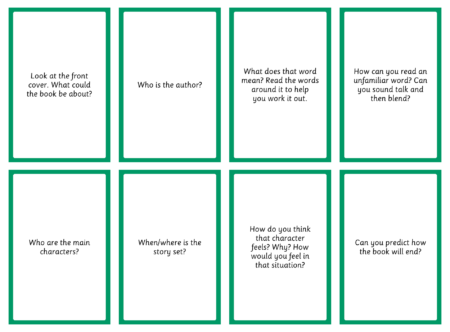
- Reading Prompt Questions
- Reading Prompt Cards
How to do it
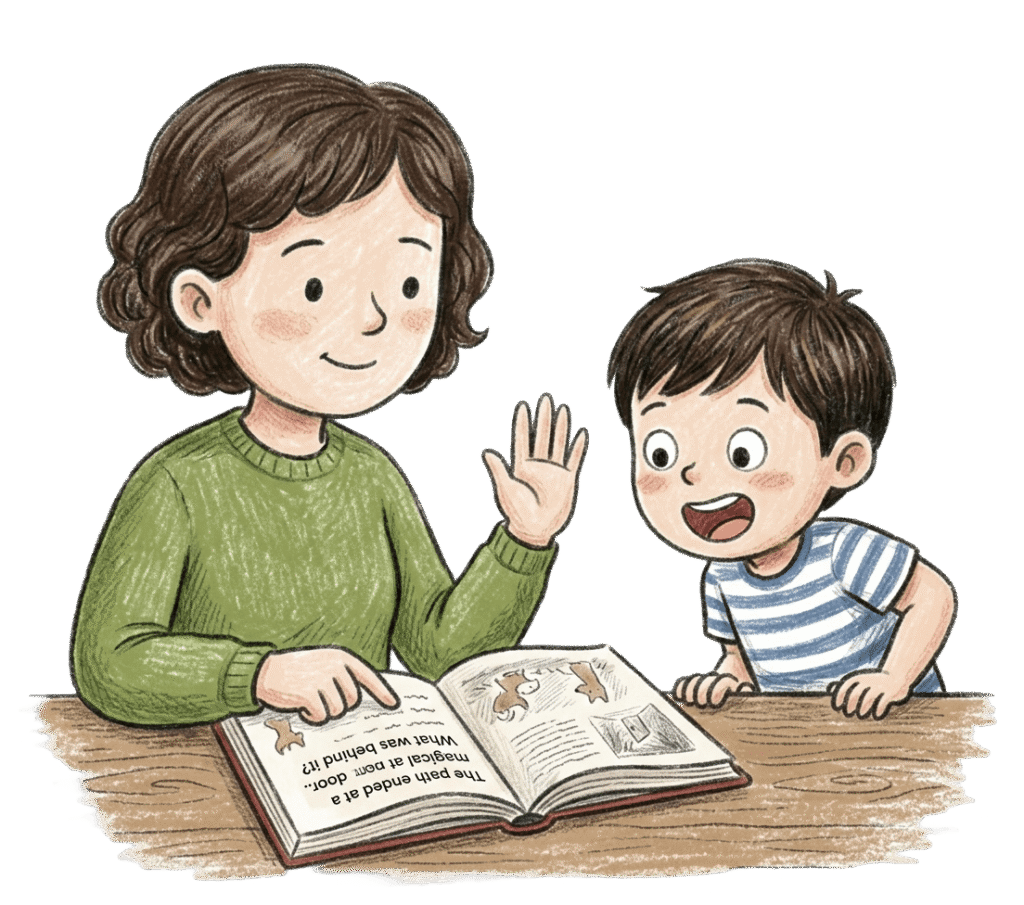
Read together until you hit a turning point — a cliffhanger, a choice, a moment of tension. Stop. Ask: "What do you think happens next?" Let them share their idea, however far-fetched.
Use the prompt cards if you need a nudge: "Why did they do that?" or "What would you do in their position?" Then read on and find out.
When the real outcome arrives, compare it to their prediction. "You were almost right!" or "Nobody saw that coming!" are equally good reactions. The habit of thinking ahead while reading is one of the most useful comprehension skills there is — and this is how it gets built.
Grab our resources
Print our reading prompt questions and reading prompt cards to get started.
Frequently asked questions
When is World Book Day?
World Book Day in the UK is celebrated on the first Thursday in March each year. Schools often use it as a hook to celebrate reading and books, though the official date might shift slightly depending on school calendars.
What counts as reading for pleasure?
Reading for pleasure means books that your child chooses because they’re interested in them – not because they’re homework. It can be comic books, graphic novels, non-fiction about their passions, picture books with beautiful illustrations, funny stories or anything else that makes them want to read. Pleasure reading is about engagement, not difficulty level.
Is World Book Day just about dressing up?
The costumes are fun, but the real point is celebrating reading. Use World Book Day as a springboard to visit libraries, discuss favourite books, gift a special book, or spend extra time reading together. The dressing up is just an excuse to focus on something genuinely important – helping your child love reading.
What’s the best way to use the World Book Day £1 book token?
Let your child choose. Yes, many books at participating shops cost more than £1, but that’s fine – you can make up the difference. The magic is in your child getting to pick something they genuinely want, not something you’ve chosen for them. That agency builds a sense of ownership and excitement about the book.
World Book Day is ultimately a reminder that reading matters – not just as a skill, but as a source of joy, imagination and connection. Whether your child is in school costume or in pyjamas, the best way to celebrate is to keep building that love of reading, one positive experience at a time.
