Contents
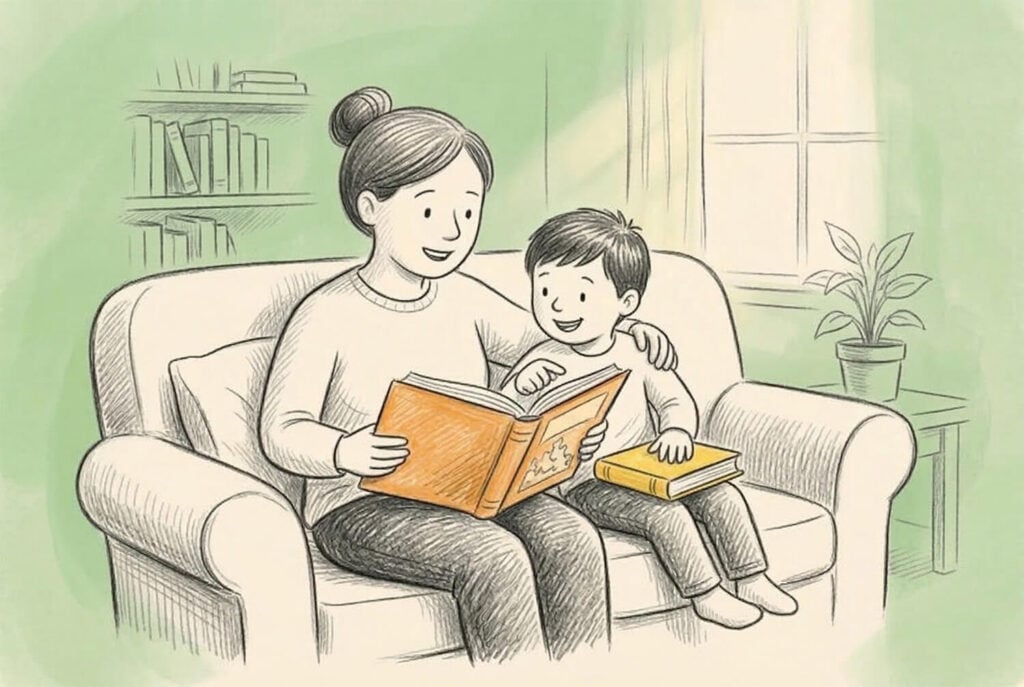
Most parents know they should read with their children. What fewer parents feel confident about is how to do it well — how to listen to a child reading without damaging their confidence, how to ask the right questions, how to keep it enjoyable when a child is resisting, and when to take a step back.
This isn’t about whether to read together. It’s about getting more out of the time you already spend, at whatever stage your child is at.
Why reading together still matters as children grow
There’s a common assumption that once a child can read independently, the value of reading together diminishes. The opposite is true. Shared reading — whether that’s reading aloud to your child or listening to them read — continues to be valuable through primary school and beyond.
When you read aloud to a child, you’re giving them access to vocabulary, sentence structures, and ideas above their independent reading level. You’re also modelling what engaged reading looks and sounds like. When you listen to your child read, you’re giving them an audience — someone who genuinely wants to hear the story — which is one of the most motivating things you can provide.
Bite-sized reading tips, straight to your inbox
Get confidence-boosting tips to help your child learn to read. Short, useful, and easy to fit into (real) family life!
Even better? You'll also get 30% off your first month of Reading Chest.
How to listen to your child reading
Listening well is harder than it sounds. A few things that make a real difference:
- Use the five-second rule when they get stuck. When your child pauses at a word, wait five seconds before jumping in. Many children will work it out if you give them time. Jumping in immediately teaches them to wait for you rather than problem-solve.
- Prompt before you tell. If they’re still stuck after five seconds, prompt: “What sounds can you see? Can you break it apart?” If they still can’t get it, just tell them the word calmly and move on. Don’t dwell on it.
- Don’t correct every small error. If your child reads “a rabbit hopped into the garden” when the book says “the rabbit hopped into the garden”, that’s not worth stopping for. Save corrections for errors that affect meaning or show a genuine misunderstanding of a sound pattern.
- Respond to the story, not just the reading. A small comment about what’s happening — “Oh, I wonder why she did that” — reminds both of you that the goal is understanding and enjoyment, not performance.
Questions that deepen understanding
You don’t need a list of approved comprehension questions to have a good reading conversation with your child. Three questions work for almost any book at any level:
- “What’s happening so far?” — this asks your child to summarise and sequence, which is a real comprehension skill. It also tells you quickly whether they’ve been following the story or just decoding words.
- “Why do you think [character] did that?” — this asks for inference: using clues in the text to understand motivation. Even young children can attempt this with a book they know well.
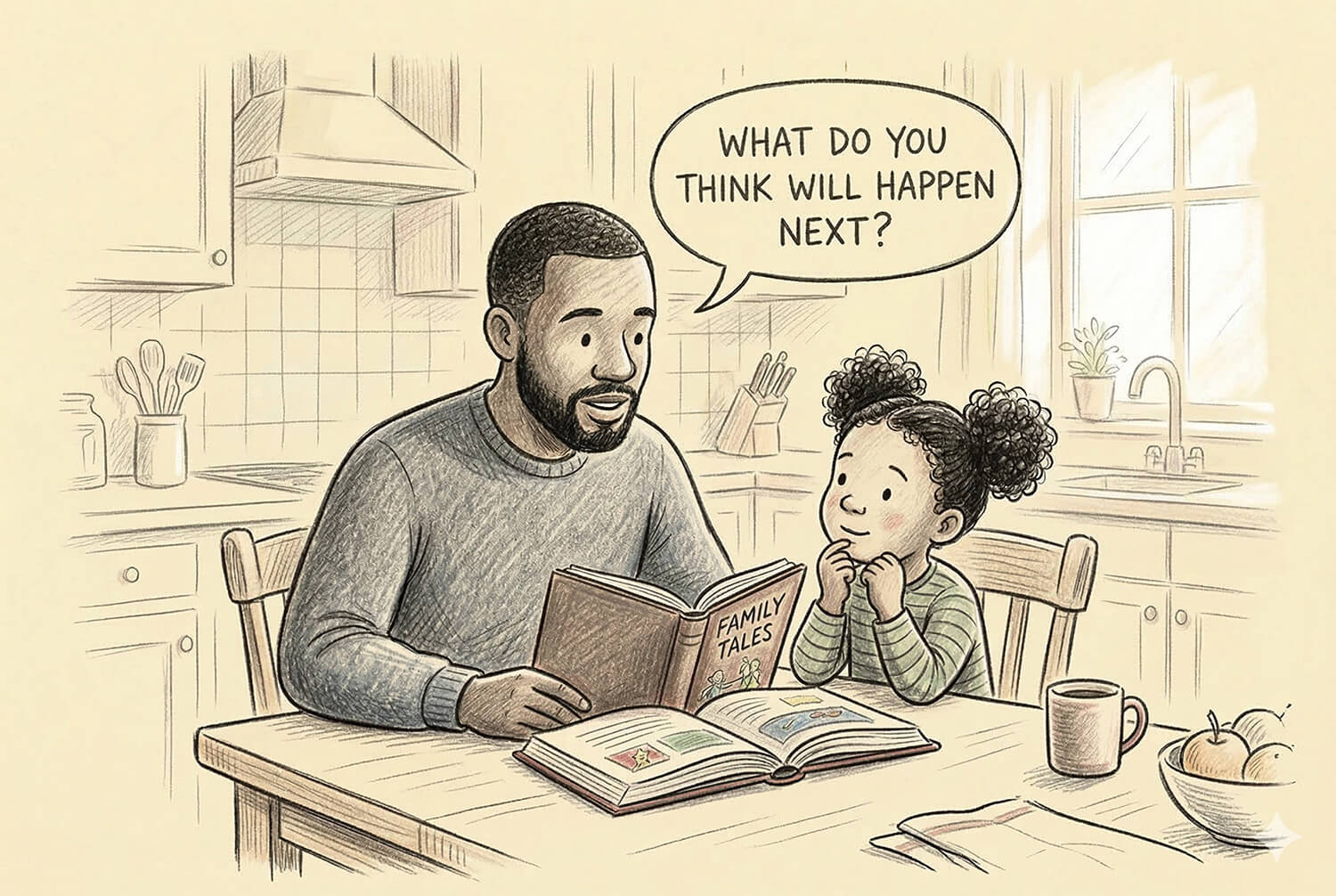
- “What do you think will happen next?” — this uses prior knowledge of the story and an understanding of narrative to predict. It also creates investment in reading on to find out.
Ask these naturally, not as a quiz. The best reading conversations feel like you’re both interested in the story, not like one of you is testing the other.
Reading together at different stages
What “reading with your child” looks like changes as they develop:
- Pre-reader and early decoder (Reception to Year 1) — reading aloud to your child is the main event. For books they’re learning to decode, sit together and point to words as they read. Be patient with the sounding-out process; it’s doing important work even when it sounds laboured.
- Developing reader (Year 2 to Year 3) — children may alternate reading pages or paragraphs with you, or read to you while you listen. Keep the sessions short enough to end while they’re still enjoying it.
- More fluent reader (Year 3 and beyond) — you might read aloud books that are above your child’s independent level, sharing a longer chapter book over weeks. Your child might read books to you. Either way, talking about books matters as much as the reading itself.
When children resist reading together
Children who resist reading with a parent are usually telling you one of two things: the books are wrong, or the dynamic is wrong. Sometimes both.
If the books feel too easy or too hard, try adjusting. If the reading sessions feel like assessment — performance-focused, correction-heavy, or dragging on too long — that’s worth changing. Reading together should feel like something you both enjoy, not a chore to get through.
Ten minutes every evening done willingly is worth more than thirty minutes done resentfully. Consistency is more important than duration. If it’s become a battleground, stepping back, returning to books they love, and reading aloud to them without asking for anything in return often resets the relationship.
This activity builds the five-minute daily reading habit in a low-pressure way that makes it easy to stay consistent:
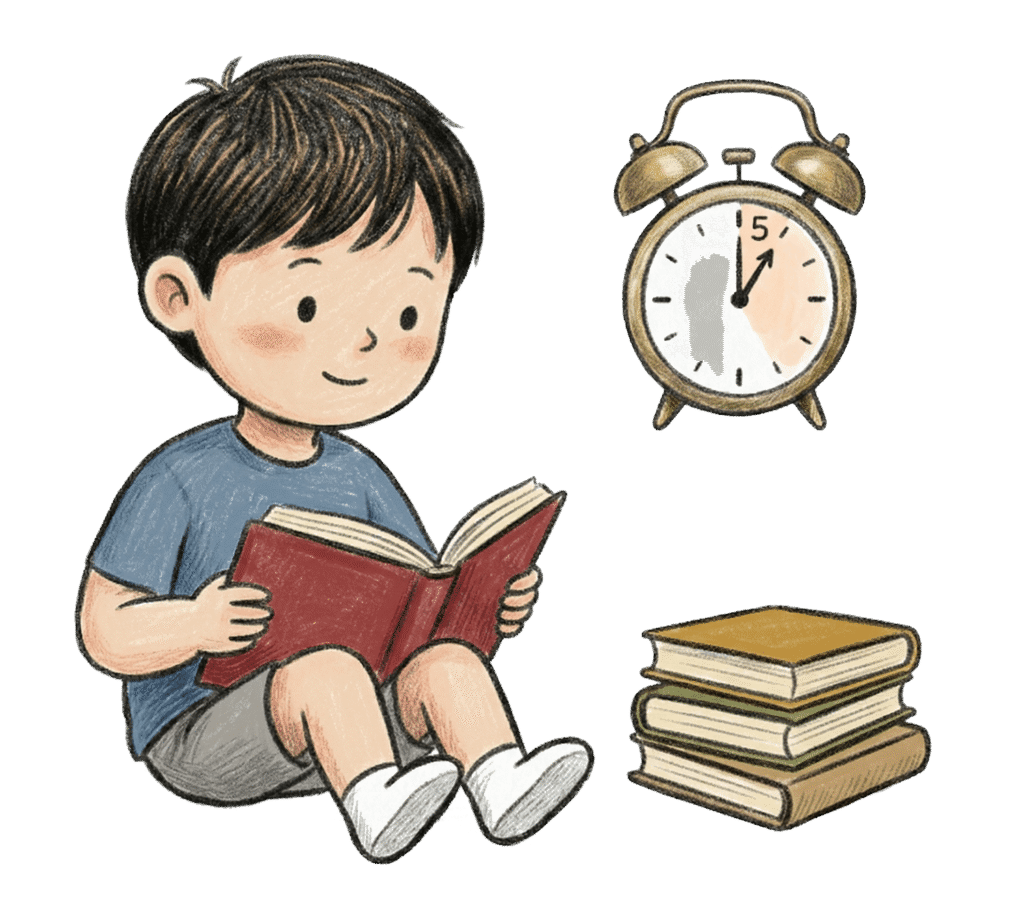
The five-minute reading habit
Five focused minutes with the right book beats an hour of reluctant page-turning. Short daily sessions are where the real progress happens.
Goal
Build confidence and fluency through short, consistent daily reading — because regularity matters more than duration.
You'll need
- A decodable book at the right level
- A comfy spot
- A bit of patience
How to do it
Sit together and read a couple of pages. Let your child point to each word as they sound it out. If they get stuck, give them a moment before you step in — sometimes they just need a second.
When they do need help, try: "Say the sounds, then blend" rather than just saying the word for them. Keep the session upbeat. End it before anyone gets tired.
Five minutes every day adds up to over 30 hours of reading practice in a year. That's not nothing — that's everything. The habit matters more than the duration.
Grab our resources
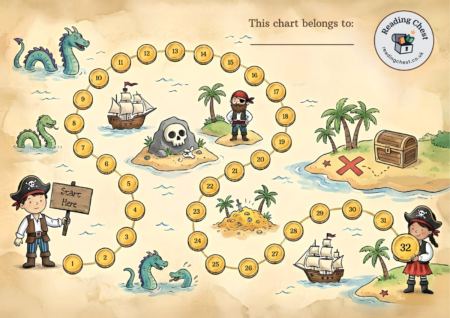
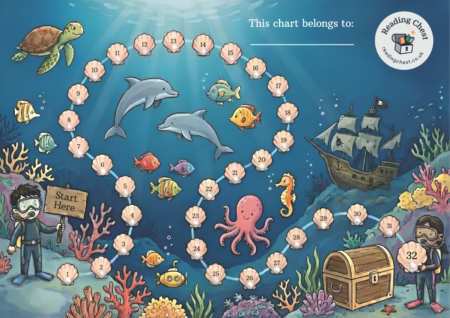
Our handy star charts are the perfect way to track your daily progress as you tick off those five minute reads!

And this one is a great way to deepen engagement with whatever your child is currently reading:
Before and after reading
One question before you open the book. One after you close it. That's it — but it shifts everything from just decoding words to actually thinking about them.
Goal
Help your child get more from every reading session by tuning in to meaning, not just getting through the words.
You'll need
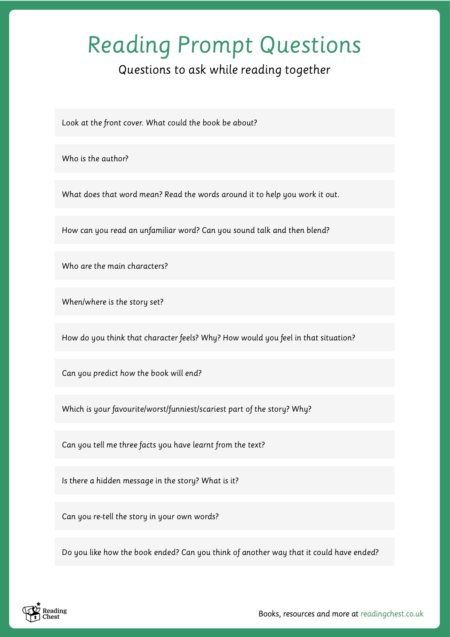
- Reading Prompt Questions
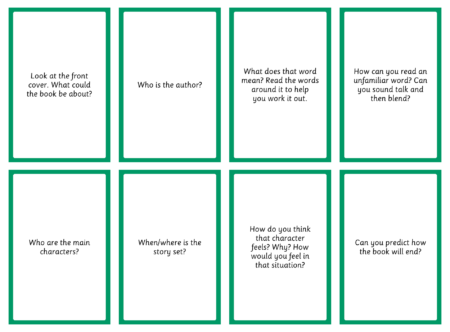
- Reading Prompt Cards
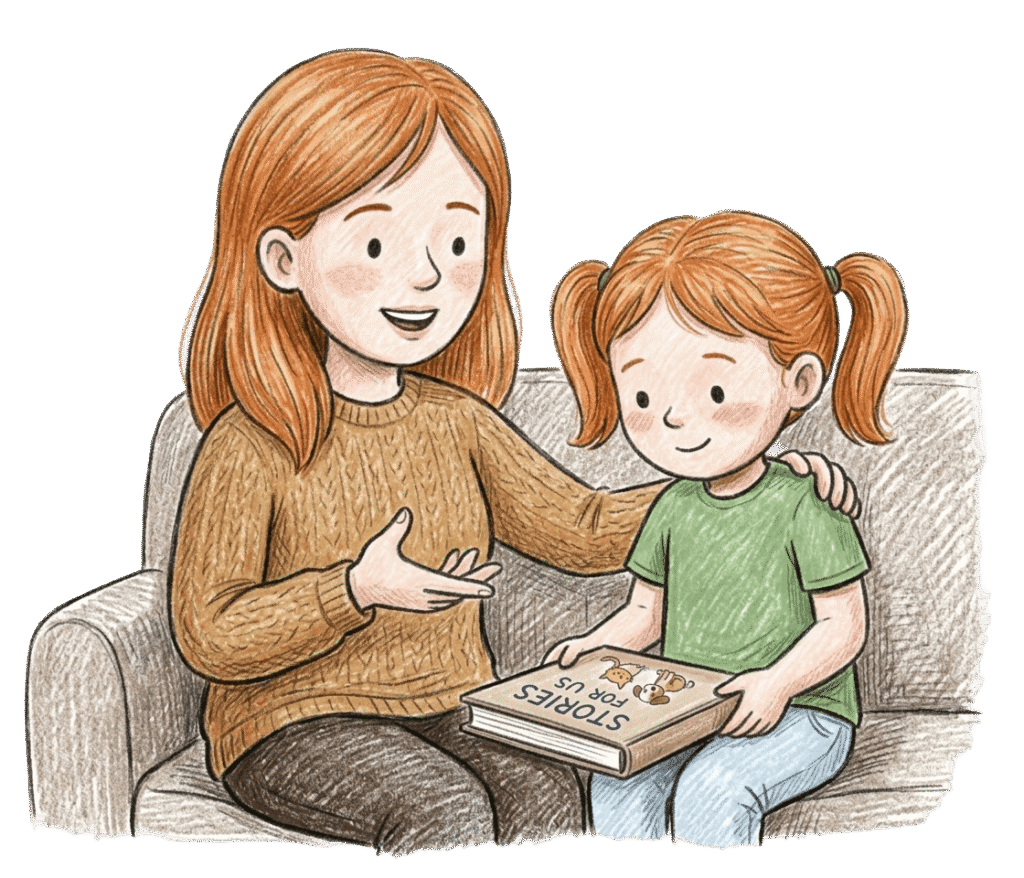
How to do it
Before you open the book, ask one simple question: "What do you think this might be about?" or "What do you notice on the cover?" That's all — don't overthink it.
Read together. When you finish, ask one follow-up: "What was your favourite part?" or "What would you do if you were that character?" Use the prompt cards if you want more ideas.
Keep it brief. You're not running a comprehension test — you're just helping them connect with what they've read. That habit of pausing to think is one of the most useful things a reader can learn.
Grab our resources
Print our reading prompt questions and reading prompt cards to get started.
Frequently asked questions
Should I read books to my child that they’ve already read independently?
Yes, if they want you to — re-reading familiar books is genuinely enjoyable for children and builds fluency and comprehension. If you’re choosing what to read aloud, it’s often more valuable to read books slightly above their independent level, so they can access richer language and stories with your support. But if your child keeps asking for the same book they love, that’s worth honouring too.
Is it okay if my child just listens rather than reading aloud themselves?
Absolutely. Being read to develops vocabulary, comprehension, and a sense of narrative in the same way that reading print does — without the decoding effort. Many children prefer to listen at home and read independently at school, or vice versa. Both count. If your child has had a hard day and just wants to curl up and be read to, that’s a good use of reading time.
My child doesn’t want me to read with them anymore — is that normal?
Very common, especially as children get older and start to value their independence. If your child is an established, enthusiastic reader who’d rather read alone, that’s genuinely fine — that’s the goal. But it’s still worth finding ways to share books: talking about what they’re reading, taking turns reading parts of a book aloud together, or reading the same book separately and discussing it. The connection around books matters even when the shared reading session itself becomes less central.
What if I’m not a confident reader myself?
You don’t need to be a fluent reader to share books with your child. Looking at picture books together, talking about the illustrations, making up stories, or listening to audiobooks alongside your child all have value. If reading aloud is difficult, audiobooks narrated by a professional can stand in for that part — and your child watching you engage with stories in any form is still modelling that books are worthwhile. If you’d like support with your own reading, your local library can connect you with adult literacy resources.
