Contents
Choosing first reading books for your child is one of those tasks that sounds simple until you stand in front of a shelf (or a website) and realise there are about forty different options, two incompatible systems for describing them, and no clear guidance on which one you need. Decodable or levelled? Scheme or non-scheme? Does the colour band matter?
It does matter — especially in the early stages. This guide breaks down what kind of books work best for beginning readers, what to look for, and how to match books to where your child actually is.
The reassuring part: once you understand the two main types of first reading books and how they work, the decision becomes a lot clearer.
The two types of first reading books
There are two main categories of books for children who are just starting to read, and they serve different purposes:
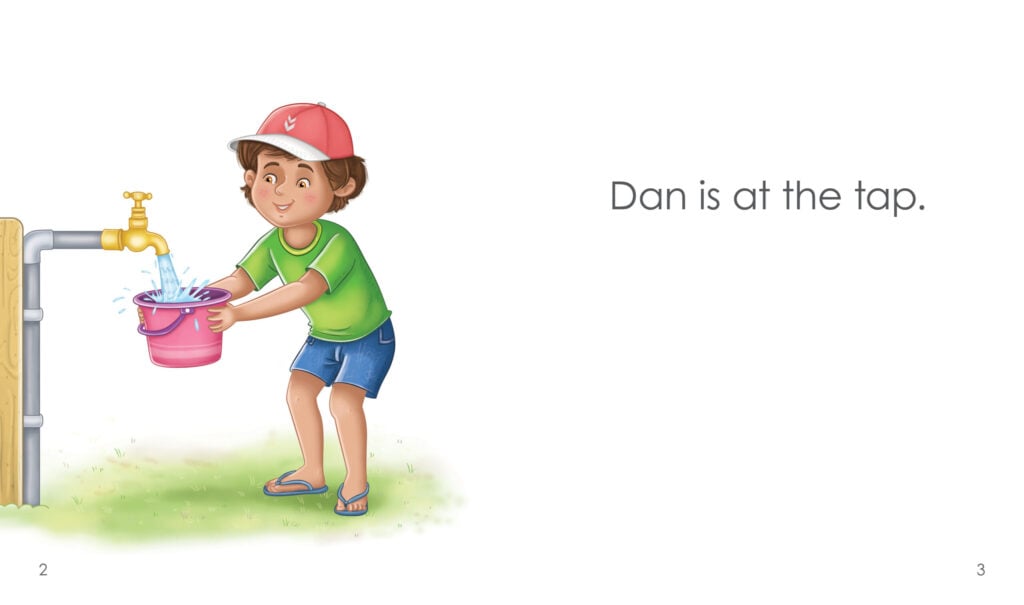
Decodable books
A decodable book is one where every word can be sounded out using the phonics sounds the child has already been taught. If your child knows the sounds s, a, t, p, i, and n, a decodable book at that stage will only contain words that can be built from those sounds (plus a handful of common “tricky words” that need to be recognised on sight).
This is the type of book children use in school in the early stages of a phonics programme. The point is that they can decode every word independently — no guessing from pictures, no needing to be told what a word says. Genuine decoding practice.
Levelled readers
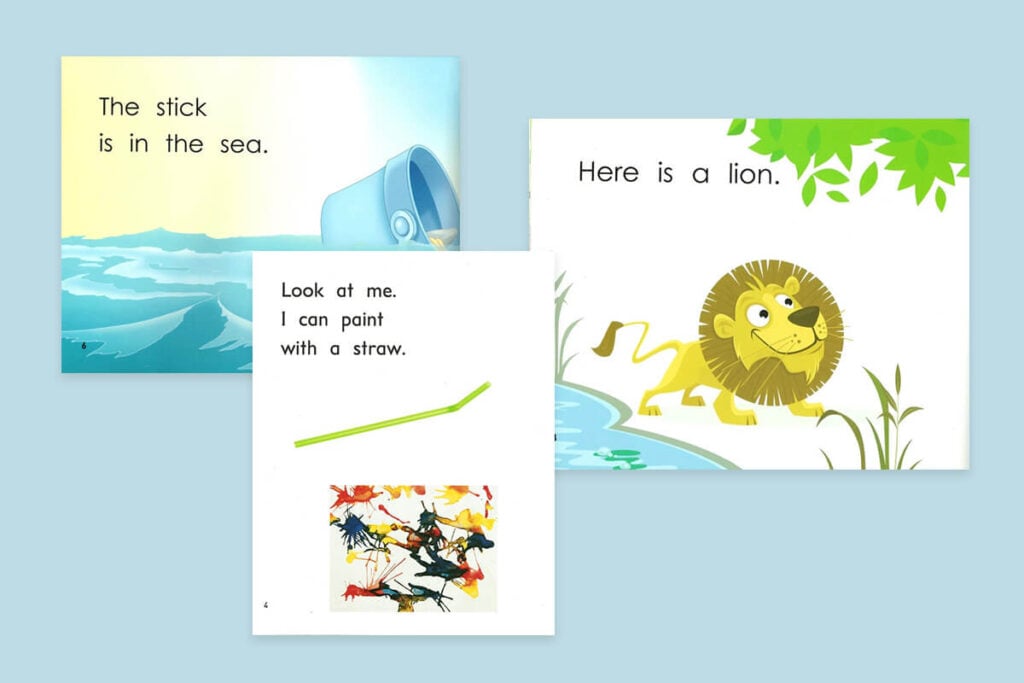
Levelled readers — like many Oxford Reading Tree books — control vocabulary and sentence complexity but aren’t fully phonics-matched. They’re designed to be readable at a given stage, but they may contain some words a child can’t yet decode independently.
These work better for children who already have solid phonics foundations and are developing fluency and comprehension.
Both types have their place. For children who are very early in their reading journey — Reception and early Year 1 — decodable books are the most valuable for independent reading practice. Levelled readers become more useful once decoding is becoming automatic.
Bite-sized reading tips, straight to your inbox
Get confidence-boosting tips to help your child learn to read. Short, useful, and easy to fit into (real) family life!
Even better? You'll also get 30% off your first month of Reading Chest.
What to look for in a first decodable book
The most important thing when choosing a decodable book is whether it matches your child’s current phonics knowledge. A book that introduces sounds your child hasn’t learned yet isn’t decodable for them — it becomes a guessing exercise, which is the opposite of what you want.
The simplest way to check: ask the teacher which phonics sounds your child is currently on, or which “phase” or “set” they’re in. Then look for books labelled for that stage. Most quality decodable series clearly indicate which sounds they use on the back cover or in the front matter.
A few things to look for in a good first decodable book:
- Clear, appropriately sized print — not too small, good spacing between words
- Illustrations that support but don’t give away the text — pictures should illustrate the story, not substitute for reading the words
- Simple, natural-sounding sentences — “The cat sat on the mat” works; contorted sentences that exist only to include certain sounds are less helpful
- A clear sound focus on the cover — reputable decodable series tell you exactly what sounds the book practices
Does it have to be a scheme book?
No. What matters is whether the book is decodable at the right level for your child — not whether it belongs to a specific publisher’s series. There are excellent standalone decodable books, and there are scheme books that are better or worse quality at different levels.
That said, reading scheme books are designed to progress systematically. If you’re building a home reading library from scratch, using a coherent scheme (even just a few books from each stage) means the progression is built in. If you’re supplementing school books, any decodable book at the right phonics level will do.
Don’t forget picture books
Decodable books are for reading practice. Picture books — and any other books read together for pleasure — are for vocabulary, love of stories, world knowledge, and the sheer joy of books. Both should be part of your child’s reading life, and one doesn’t replace the other.
A child who reads a decodable book for practice and then curls up with a picture book at bedtime while a parent reads aloud is getting the best of both worlds. The decodable practice builds the mechanics; the shared reading builds everything else.
If you’re reading a picture book together and come across a word your child can decode, let them have a go. It’s satisfying when a real-world book gives you a chance to use the skill you’ve been practising.
Taking the guesswork out of it
The challenge with first reading books is matching them precisely to where your child is. Too easy and the practice is limited; too hard and reading becomes frustrating. Getting this right consistently — especially if your child is progressing quickly — is one of the reasons a subscription service can help. Reading Chest delivers decodable phonics books matched to your child’s current level, replacing them as they progress. It takes the level-matching off your plate entirely.
If you’re choosing books yourself, our guide to choosing books for your child has practical advice for every stage.
Getting started with a new book
This activity is a great way to use any first reading book — it builds anticipation and gets children thinking before they even open the cover:
Picture-cover reading
Cover the pictures and read the words first. Then uncover and re-read. It sounds simple — but it makes a real difference to how children approach a page.
Goal
Encourage real decoding rather than guessing from pictures — a habit that pays off as books get harder and illustrations get fewer.
You'll need
- A decodable book
- Two sticky notes
How to do it
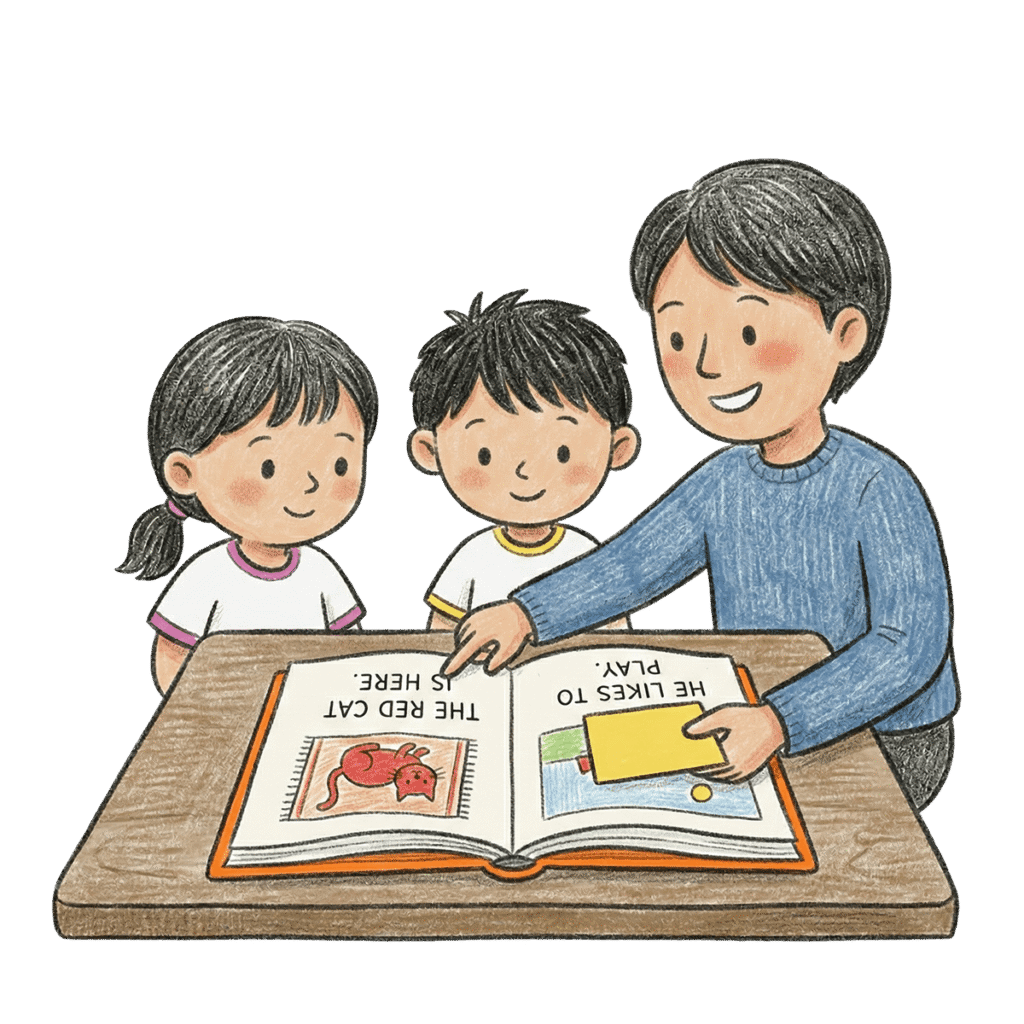
Open the book to a page and cover the illustration with a sticky note. Ask your child to read the words first — just the text, no picture clues.
Once they've had a go (stumbles and all), take away the sticky note and re-read the page together with the picture revealed. Talk about what the picture adds. Did it match what they imagined? Did it help them understand anything differently?
This doesn't need to be every page — even doing it once or twice in a session is enough. The goal is to build the habit of trusting the words, not just guessing from the picture. That's a big deal as books get longer.
Grab our resources
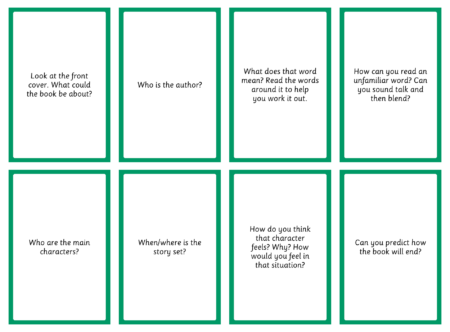
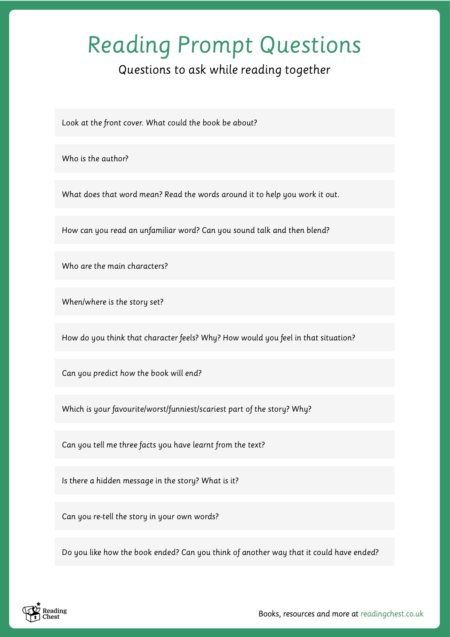
Looking for some help with questions to ask after your reading session? These prompts give you a great starting point.
And for making reading a daily habit — especially important in the early stages when regular practice matters most:
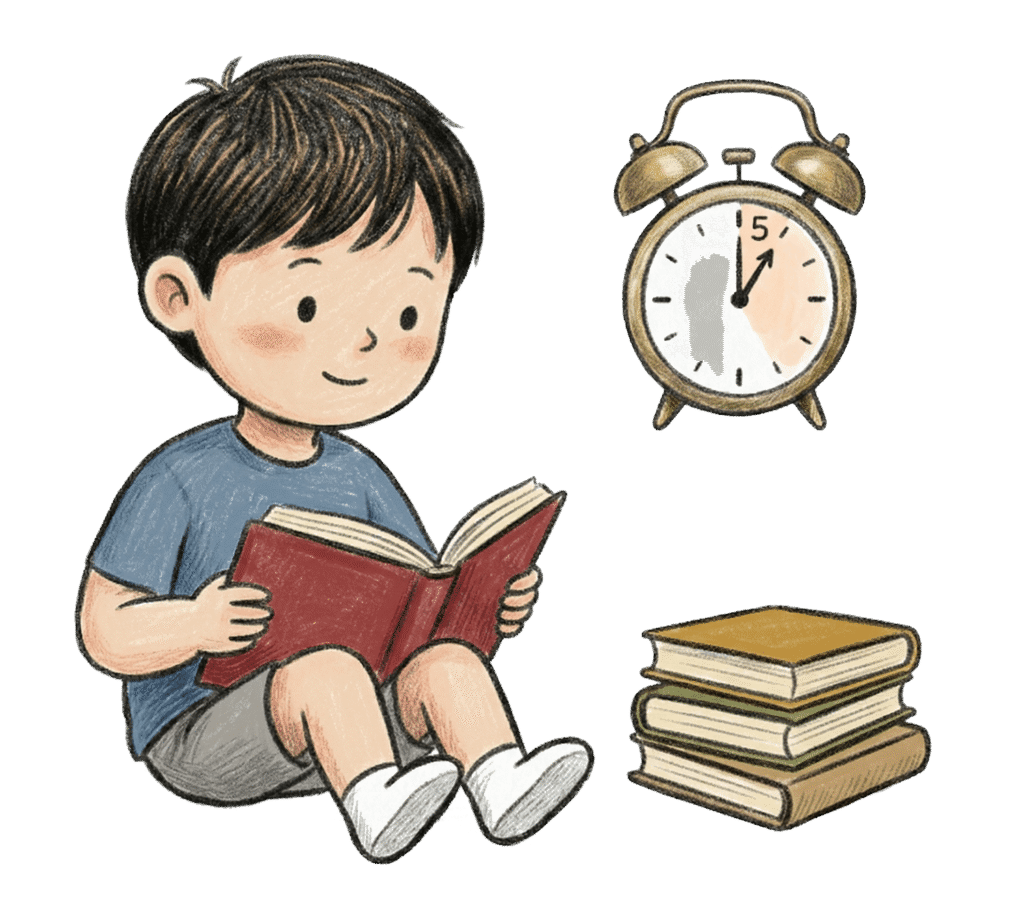
The five-minute reading habit
Five focused minutes with the right book beats an hour of reluctant page-turning. Short daily sessions are where the real progress happens.
Goal
Build confidence and fluency through short, consistent daily reading — because regularity matters more than duration.
You'll need
- A decodable book at the right level
- A comfy spot
- A bit of patience
How to do it
Sit together and read a couple of pages. Let your child point to each word as they sound it out. If they get stuck, give them a moment before you step in — sometimes they just need a second.
When they do need help, try: "Say the sounds, then blend" rather than just saying the word for them. Keep the session upbeat. End it before anyone gets tired.
Five minutes every day adds up to over 30 hours of reading practice in a year. That's not nothing — that's everything. The habit matters more than the duration.
Grab our resources
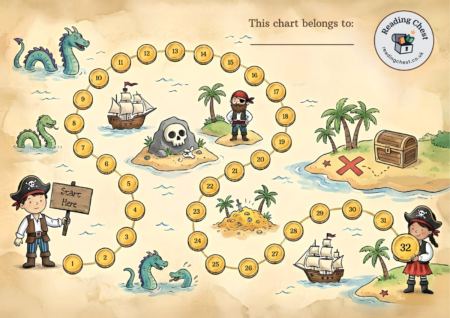
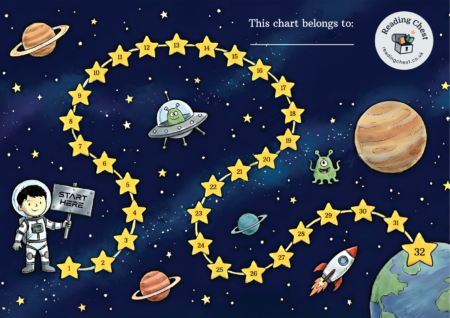
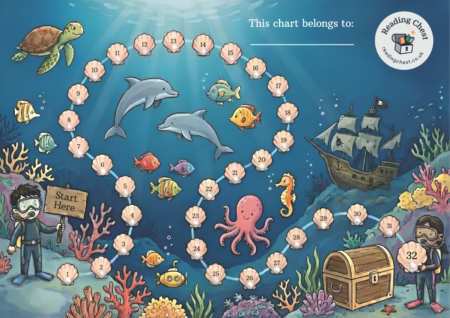
Our handy star charts are the perfect way to track your daily progress as you tick off those five minute reads!
Frequently asked questions
What are the best first reading books for a 4-year-old?
For a 4-year-old who is beginning to learn phonics, the best first reading books are decodable books matched to the sounds they’re currently being taught in school. Common starter series include Songbirds Phonics (Oxford), Read Write Inc Phonics readers, and Little Wandle books. Ask their teacher which sounds they’re working on, then choose books that only use those sounds.
My child can read picture books but struggles with school reading books — why?
This is very common. If a child has been read to a lot, they often have impressive spoken vocabulary and story understanding — but when they encounter a text they have to decode independently, those skills don’t automatically transfer. School reading books (especially decodable ones) require a different skill: sounding out unfamiliar words. The good news is that regular practice with decodable books at the right level builds this skill quickly.
How do I know if a book is too hard for my child?
A simple rule: if your child makes more than about one or two errors per page, the book is probably too hard for independent practice. It’s fine to read harder books together, but for building confident reading, choose books where they can get through most of the text with only occasional help. The right level should feel achievable but require some effort — not frustrating.
