Contents
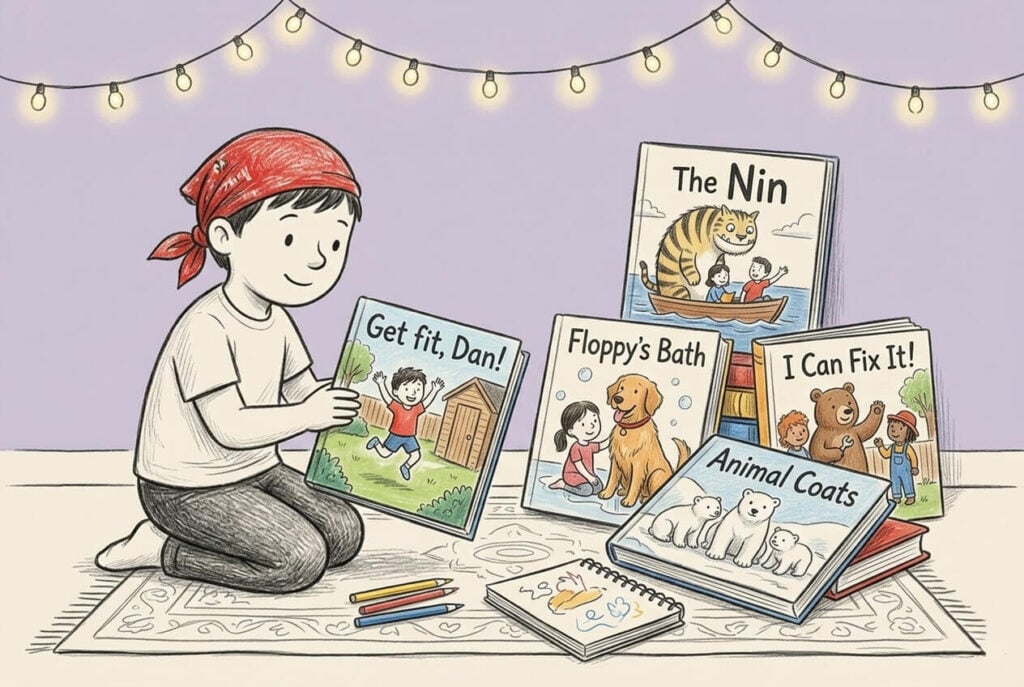
Phonics books — also called decodable books or decodable readers — are books where every word can be sounded out using only the phonics sounds a child has already been taught. They’re specifically designed for beginning readers to practise decoding independently, without having to guess unfamiliar words.
If your child’s school has sent home a slim, not-very-illustrated book and you’ve wondered what makes it different from a regular picture book, this guide explains it. It’s a more significant difference than it looks.
Decodable books are one of the best tools available for building confident early readers — but they work best when children are using them at the right level and for the right purpose.
What makes a book decodable
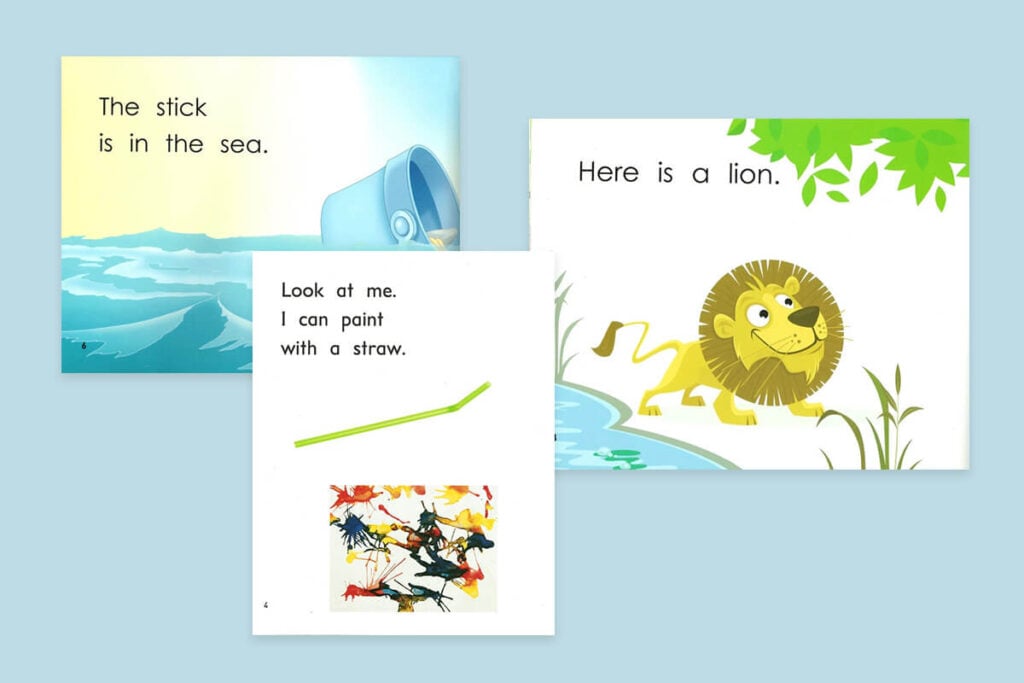
A decodable book is built around the sounds a child knows. If a child is currently learning the sounds s, a, t, p, i, n, and m, a decodable book at that stage will only contain words that can be made from those sounds, plus a small number of “tricky words” (common words like the or I that don’t follow regular phonics patterns and need to be recognised on sight).
This means the child can work out every single word on the page by sounding it out. No guessing from pictures. No being told what a word says. Genuine, independent decoding practice — which is exactly what the developing reader needs.
As children learn more sounds, they move to books at the next decodable level, which introduce those new sounds in the text.
Bite-sized reading tips, straight to your inbox
Get confidence-boosting tips to help your child learn to read. Short, useful, and easy to fit into (real) family life!
Even better? You'll also get 30% off your first month of Reading Chest.
Why decodability matters
When a child encounters a word they can’t decode, they tend to use one of several workarounds: guessing from the picture, guessing from the first letter, or asking an adult. These workarounds aren’t necessarily bad in the short term, but they don’t build the decoding skill that fluent reading depends on.
A book that’s fully decodable removes the need for workarounds. Every word is accessible using the child’s phonics knowledge. This builds the habit of sounding out unfamiliar words — a habit that persists and grows more powerful as the child’s phonics knowledge expands.
Research consistently supports the use of decodable books for beginning readers. The 2023 DfE guidance on teaching reading identifies matched decodable texts as an important component of early phonics teaching.
Avoid giving a very early reader books that include sounds they haven’t been taught yet. It forces guessing, which works against the phonics approach the school is using.
Decodable books vs levelled readers
Levelled readers — like many Oxford Reading Tree books — control vocabulary and sentence length by level, but they’re not fully phonics-matched. A levelled reader at Pink band might be readable and manageable for a Reception child, but it may contain words that aren’t fully decodable at that stage. Children with good visual memory often manage these books well, but they’re not doing pure phonics practice when they read them.
This doesn’t mean levelled readers are bad — they’re excellent for developing fluency and comprehension once decoding foundations are in place. The distinction is about which skill you’re developing:
- Decodable books → build decoding skill and phonics knowledge
- Levelled readers → build fluency, vocabulary, and comprehension
Most children use both at different stages. Decodable books are most important in the early phonics phase (Reception and Year 1); levelled readers become more central from Year 2 onwards.
What about the pictures?
This is one of the things parents notice most: phonics books often have quite minimal or simple illustrations. That’s intentional. In a fully decodable book, the pictures illustrate the story — they don’t give away what the words say. If the text says “the cat sat” and the picture shows a cat sitting, that’s fine. If the picture shows a cat sitting on a mat with a rat and a hat, and the text says “the cat sat on the mat with the rat and the hat,” it’s still the child’s phonics doing the work.
What you want to avoid are books where a child can identify the word simply by looking at the picture rather than reading it. That creates a habit of picture-reading rather than text-reading, which needs to be unlearned later.
How to find the right decodable book
The key question is: what sounds does your child currently know? Ask their teacher which phonics phase, set, or stage they’re currently on. Different phonics programmes use different terminology:
- Read Write Inc uses sets (Set 1, Set 2, Set 3)
- Little Wandle uses phases (Phase 2, 3, 4, 5)
- Letters and Sounds (the older framework) also uses phases
Our helpful guide to book bands gives you examples of each stage with suggested ages, to help you find just the right level.
Most decodable book series clearly label their books by phonics stage on the cover or inside front. Match the book’s label to your child’s current stage and you’re in the right place.
If you’d rather not work this out yourself each time, a Reading Chest subscription delivers phonics books matched to your child’s current level, replacing them automatically as they progress.
When children move beyond decodable books
Decodable books are most critical during the early phonics phase — typically Reception through to the end of Year 1, sometimes into early Year 2. Once a child’s phonics knowledge is secure and decoding becomes automatic, the need for strictly controlled decodable text reduces. At that point, levelled readers and eventually free reading take over.
The transition happens gradually. Many children still benefit from occasional decodable text in Year 2, particularly for consolidating trickier phonics patterns like ough and eigh.
Practice that reinforces phonics books
This activity works alongside decodable books to help your child notice and practise the sounds they’re encountering:
Sound of the day
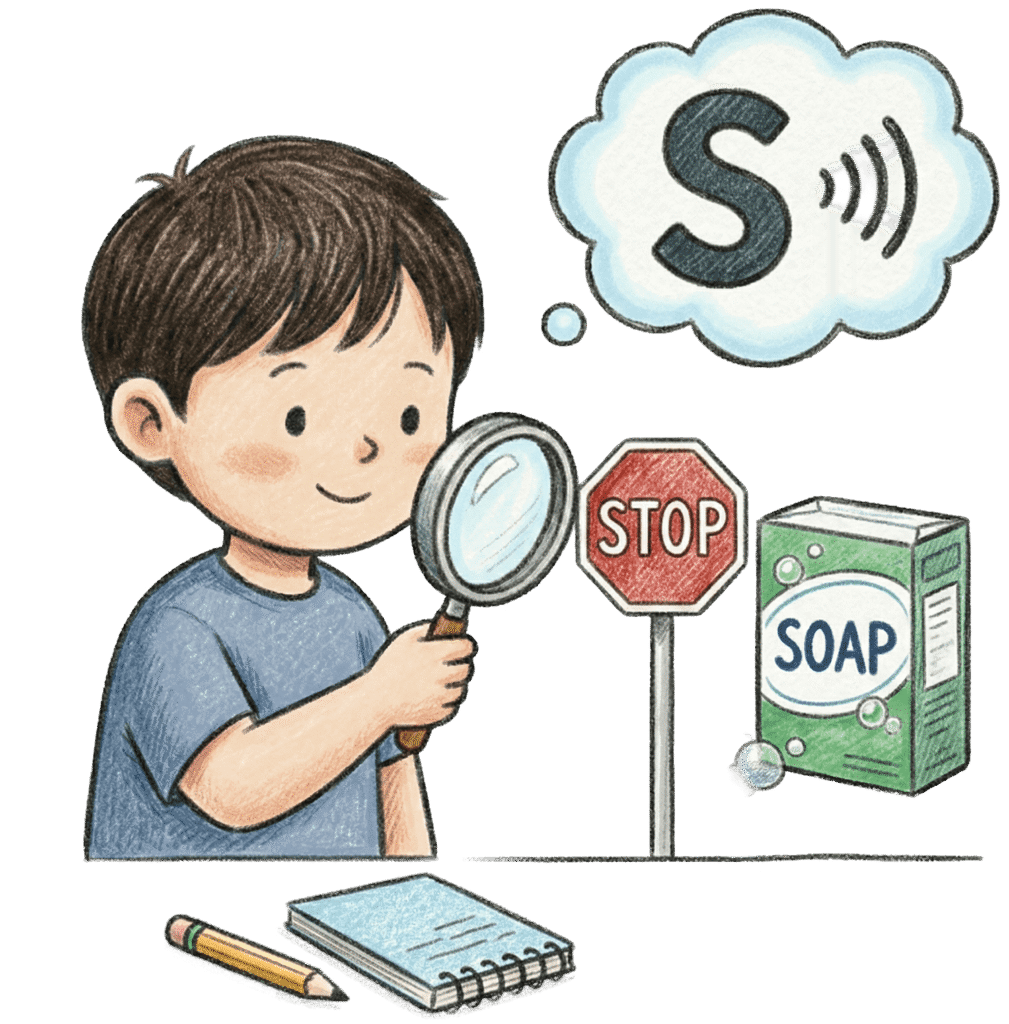
Pick one sound and spend the day noticing it everywhere — on signs, packets, toys, and out in the world. Quick to set up, surprisingly addictive.
Goal
Help your child notice sounds in everyday life — building phonemic awareness without needing to sit down and "do phonics".
You'll need
Just a focus sound — like sh or ee — and your normal day.
How to do it
Pick a sound in the morning. Say it together clearly: sh, ee, m — whatever you're working on. That's your sound of the day.
Then just keep going with your normal day. Whenever you spot it — on a cereal box, a road sign, a shop name, a toy — point it out and say the sound together. Let your child spot them too and make a fuss when they do.
By the end of the day, you'll have done phonics practice a dozen times without sitting down once. That's the magic of making it ambient rather than formal.
And this one makes daily phonics practice feel like part of the routine rather than extra work:
The five-minute reading habit
Five focused minutes with the right book beats an hour of reluctant page-turning. Short daily sessions are where the real progress happens.
Goal
Build confidence and fluency through short, consistent daily reading — because regularity matters more than duration.
You'll need
- A decodable book at the right level
- A comfy spot
- A bit of patience
How to do it
Sit together and read a couple of pages. Let your child point to each word as they sound it out. If they get stuck, give them a moment before you step in — sometimes they just need a second.
When they do need help, try: "Say the sounds, then blend" rather than just saying the word for them. Keep the session upbeat. End it before anyone gets tired.
Five minutes every day adds up to over 30 hours of reading practice in a year. That's not nothing — that's everything. The habit matters more than the duration.
Grab our resources
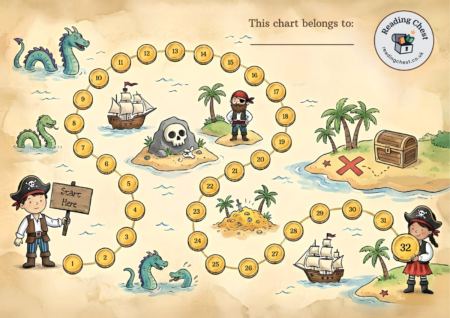
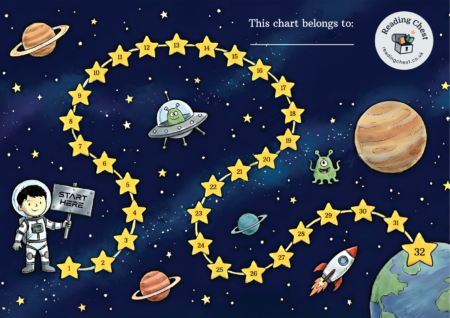
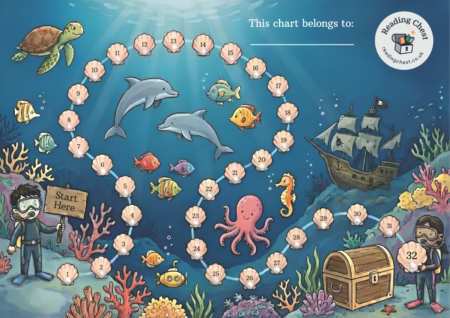
Our handy star charts are the perfect way to track your daily progress as you tick off those five minute reads!
Frequently asked questions
What’s the difference between phonics books and reading scheme books?
All phonics books are reading scheme books, but not all reading scheme books are phonics books. “Phonics books” or “decodable books” specifically means books where every word can be sounded out using taught sounds. Broader reading schemes like Oxford Reading Tree include books that aren’t fully decodable — they control difficulty in other ways. The distinction matters most in Reception and Year 1.
Are phonics books boring?
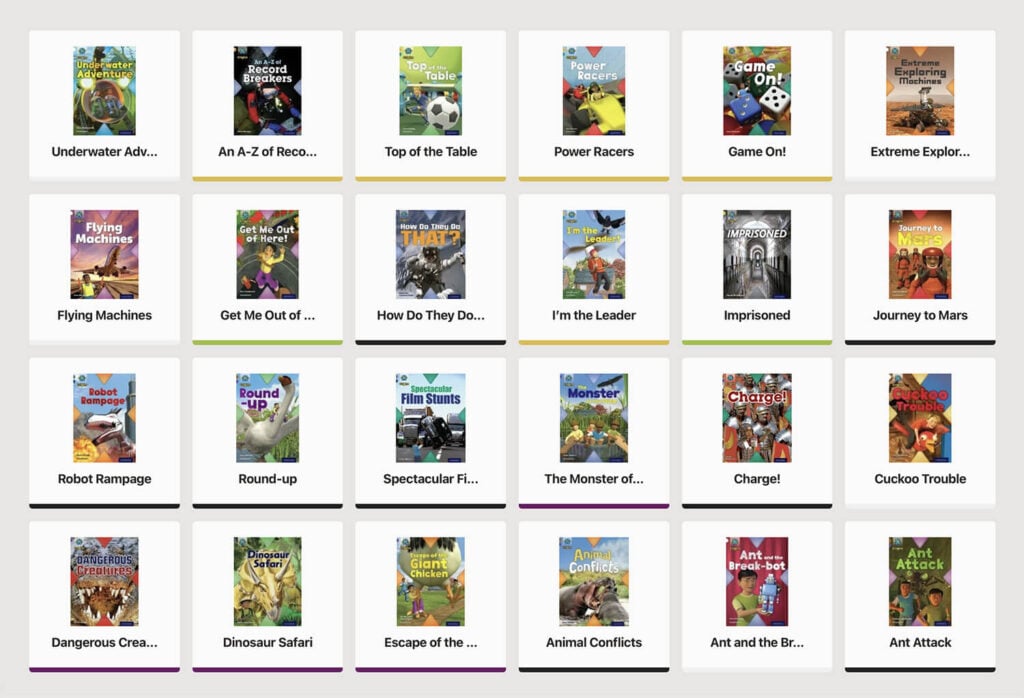
Some are, honestly. Early decodable texts can feel stilted because the constraint of using only certain sounds limits what stories can be told. But quality decodable series have improved enormously — Songbirds Phonics (by Julia Donaldson), Project X Phonics, and newer series have genuine characters and storylines even at the earliest stages. It’s worth seeking out the ones children actually enjoy.
Can I buy phonics books to use at home even if my child’s school uses a different scheme?
Yes, with one caveat: different phonics programmes teach sounds in different orders. A book from a Dandelion Reader series introduces sounds in a different sequence than a Read Write Inc book. If you use home phonics books that don’t match your school’s sequence, your child might encounter sounds in a book that they haven’t been taught yet at school. Ask the teacher which programme they use and try to find books that match that sequence, or at least check what sounds any book you buy actually uses.
