Contents
A reading scheme is a structured series of books designed to develop children’s reading skills in a planned, sequential way. The books progress gradually in difficulty — introducing new sounds, words, or sentence structures at each stage — so that children can build confidence as they move through the levels.
If you’ve nodded along at a parents’ evening when the word “scheme” came up, you’re not alone. It’s one of those terms that gets used freely in schools without always being explained to the people it matters most to: parents. Here’s what it actually means and why it matters for your child.
The short version: reading schemes exist to make learning to read more systematic. Rather than picking up any book and hoping for the best, a scheme gives children a clear progression path, with each book building on what came before.
Why reading schemes exist
Learning to read is a skill that needs to be built in stages. Very early readers can’t simply pick up a typical picture book and decode it independently — the vocabulary is too varied, the sentence structures too complex, and the phonics too unpredictable. Reading schemes solve this by controlling those variables.
A well-designed scheme introduces vocabulary gradually, uses sentence structures appropriate to the child’s stage, and — in phonics-based schemes — only uses words that include sounds the child has already been taught. This means a child can practise reading independently without having to guess or rely on pictures to work out unfamiliar words.
Bite-sized reading tips, straight to your inbox
Get confidence-boosting tips to help your child learn to read. Short, useful, and easy to fit into (real) family life!
Even better? You'll also get 30% off your first month of Reading Chest.
The main types of reading scheme
Fully decodable phonics schemes
These are schemes where every word in each book uses only the phonics sounds a child at that stage has already learned. The books are matched to a specific phonics programme — so a child using Read Write Inc at school would use RWI Phonics readers, and a child using Little Wandle would use Little Wandle decodable books.
The advantage: no guessing. A beginning reader can sound out every word on the page using the tools they’ve been given. This builds confidence and genuine decoding skill.
Levelled readers and colour-banded schemes
These schemes — like Oxford Reading Tree (the Biff, Chip and Kipper books) or Bug Club — use a colour-banded system to organise books by difficulty. They control vocabulary and sentence complexity, but they’re not fully phonics-matched in the same way. They’re often used once children have secure phonics foundations and are developing fluency and comprehension.
Hybrid approaches
Many schools use a combination — decodable phonics readers in the early stages, then transitioning to a levelled scheme as children move towards independent reading. This is entirely normal and reflects the different skills children need at different points.
How schemes differ from regular books
The key difference between a reading scheme book and a regular picture book is intentional control. Scheme books are designed so that the vocabulary, sentence length, and print size all work together to support a child at a specific stage. A picture book chosen for pleasure doesn’t have those constraints — it might use any vocabulary the author wants, with complex sentences, small print, and rich but unpredictable language.
Both have a role. Scheme books are for reading practice — developing decoding, fluency, and comprehension in a structured way. Picture books (and other non-scheme books) are for pleasure, language exposure, vocabulary building, and developing a love of reading. Children need both, and one doesn’t replace the other.
If your child comes home with a scheme book that feels too easy or too hard, it’s worth letting the teacher know. Scheme books should be a comfortable challenge — readable but requiring some effort.
The main schemes parents encounter
The most common reading schemes in UK primary schools are:
- Oxford Reading Tree (ORT) — The Biff, Chip and Kipper books. The most widely used scheme in the UK.
- Bug Club — Pearson’s broad reading scheme, with both phonics books and levelled readers. Read our guide to Bug Club reading levels
- Read Write Inc (RWI) — A phonics programme with matched decodable readers. Read our RWI guide
- Project X — Adventure-themed OUP scheme, popular with reluctant readers. Read our guide to Project X
- Collins Big Cat — A broad, flexible levelled reader scheme from Collins.
When children finish a scheme
Most children move off reading schemes and into “free reading” — choosing books independently based on interest rather than level — somewhere around Year 3 or Year 4. At that point, decoding is largely automatic and the focus shifts to reading stamina, comprehension, and the joy of books rather than structured progression.
This is a genuinely exciting moment. If your child reaches it, celebrate it. And then keep reading with them anyway.
If you’re looking for books to try at the right level, our guide to choosing books for your child has practical advice for every stage.
If you’d like to browse scheme books at a particular level, you can explore our full collection at Reading Chest — filtered by scheme and book band.
Try this at home
This activity works well with any scheme book — and helps children get more from each reading session than just working through the words:
Picture-cover reading
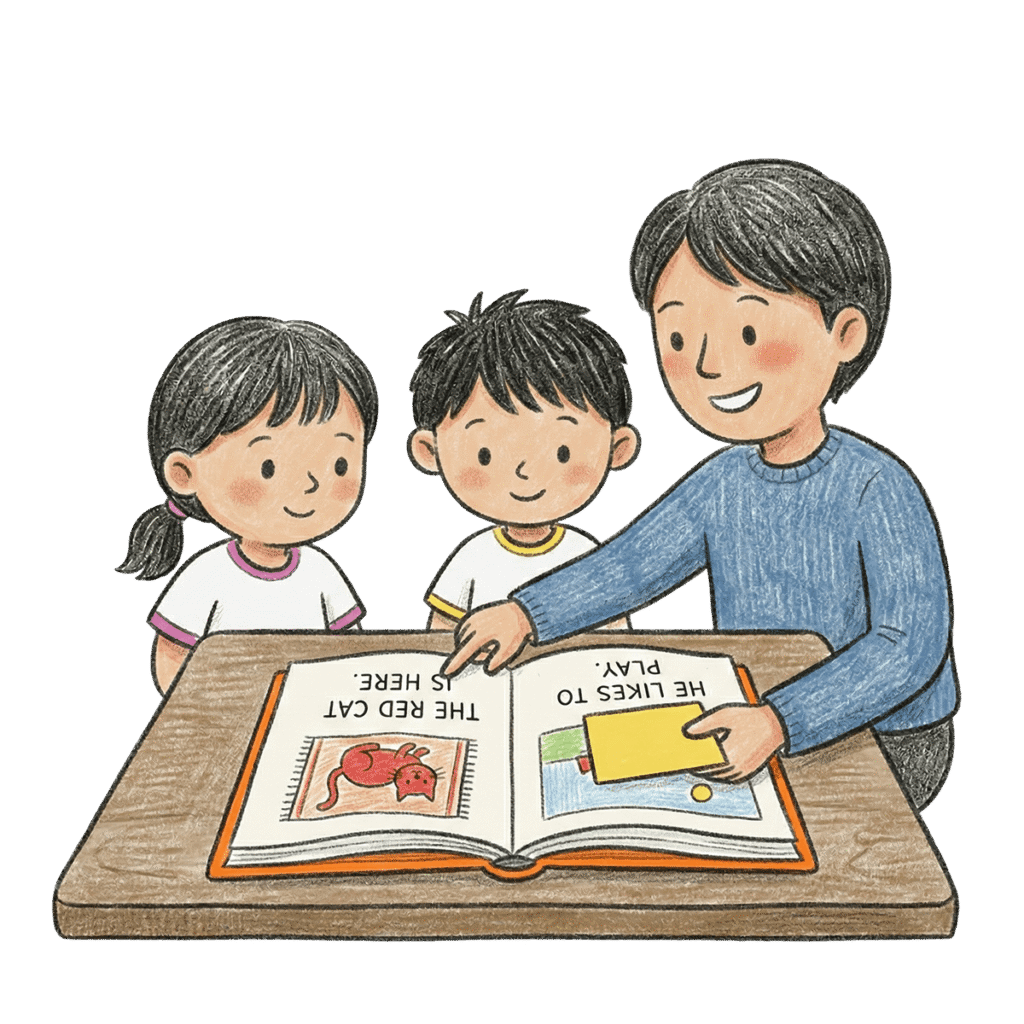
Cover the pictures and read the words first. Then uncover and re-read. It sounds simple — but it makes a real difference to how children approach a page.
Goal
Encourage real decoding rather than guessing from pictures — a habit that pays off as books get harder and illustrations get fewer.
You'll need
- A decodable book
- Two sticky notes
How to do it
Open the book to a page and cover the illustration with a sticky note. Ask your child to read the words first — just the text, no picture clues.
Once they've had a go (stumbles and all), take away the sticky note and re-read the page together with the picture revealed. Talk about what the picture adds. Did it match what they imagined? Did it help them understand anything differently?
This doesn't need to be every page — even doing it once or twice in a session is enough. The goal is to build the habit of trusting the words, not just guessing from the picture. That's a big deal as books get longer.
Grab our resources
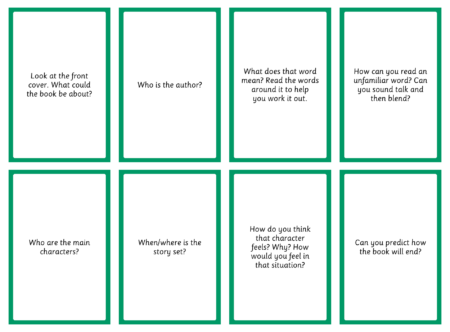
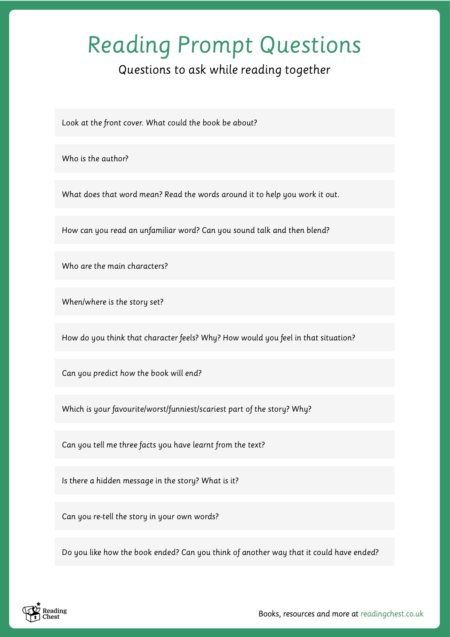
Looking for some help with questions to ask after your reading session? These prompts give you a great starting point.
And if you want a simple daily habit that makes scheme practice feel routine rather than a chore:
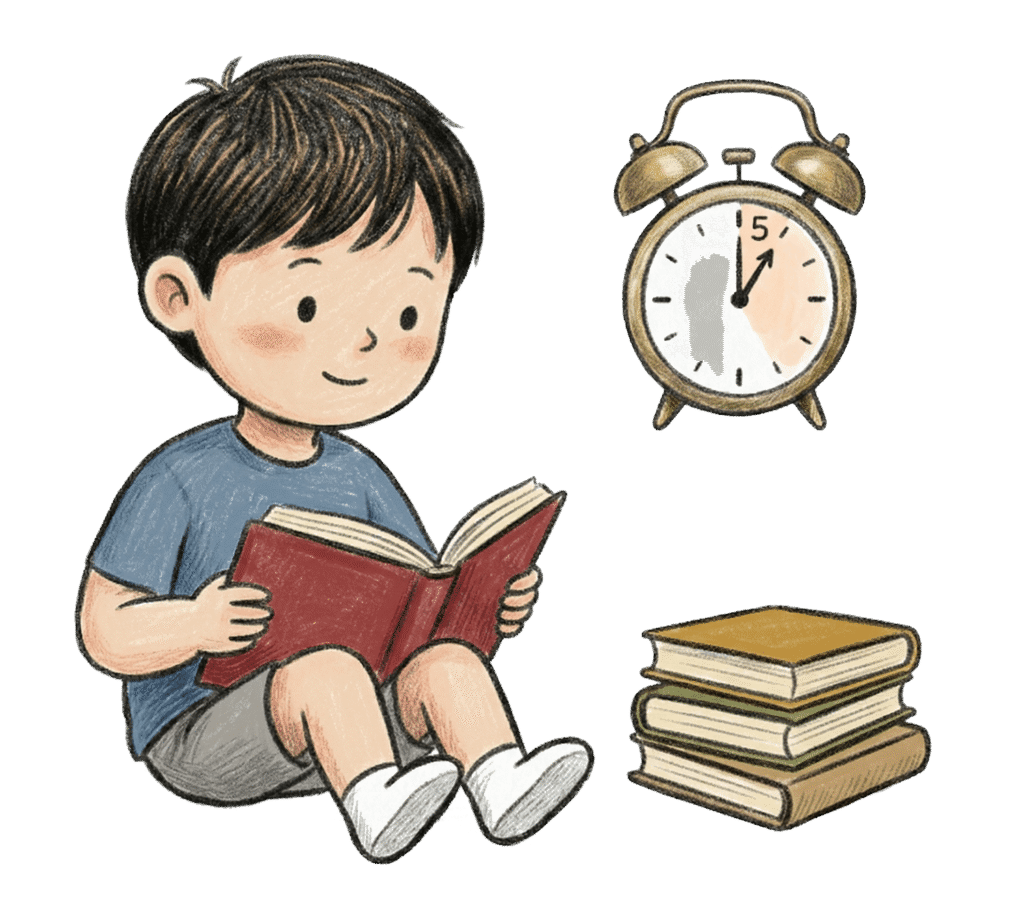
The five-minute reading habit
Five focused minutes with the right book beats an hour of reluctant page-turning. Short daily sessions are where the real progress happens.
Goal
Build confidence and fluency through short, consistent daily reading — because regularity matters more than duration.
You'll need
- A decodable book at the right level
- A comfy spot
- A bit of patience
How to do it
Sit together and read a couple of pages. Let your child point to each word as they sound it out. If they get stuck, give them a moment before you step in — sometimes they just need a second.
When they do need help, try: "Say the sounds, then blend" rather than just saying the word for them. Keep the session upbeat. End it before anyone gets tired.
Five minutes every day adds up to over 30 hours of reading practice in a year. That's not nothing — that's everything. The habit matters more than the duration.
Grab our resources
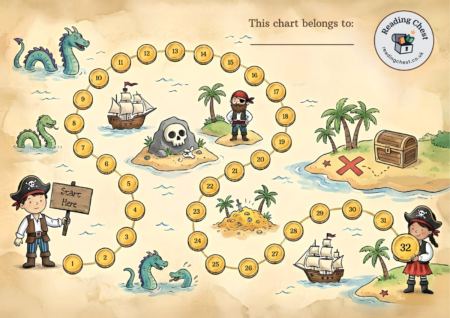
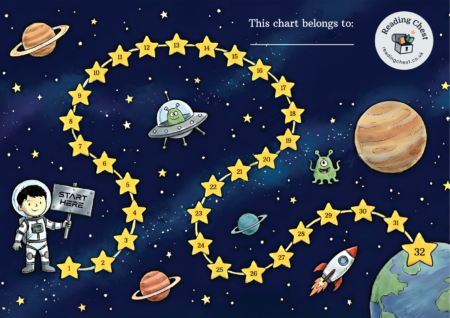
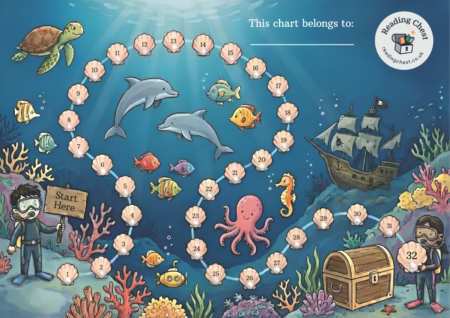
Our handy star charts are the perfect way to track your daily progress as you tick off those five minute reads!
Frequently asked questions
Does it matter which reading scheme my child’s school uses?
Less than you might think. What matters more is that the books are at the right level and that your child is reading regularly. All the major UK reading schemes are designed to develop the same underlying skills — they just take different routes. If your child’s school uses a validated phonics programme (like RWI or Little Wandle), the books will be specifically designed to support that programme, which is an advantage in the early stages.
Can I use reading scheme books at home even if my child’s school uses a different one?
Yes, with a caveat. In the very early stages (Reception and Year 1), it’s ideal to use books that match your child’s school phonics programme, because decodable books are matched to specific sound sequences. Using a book from a different scheme might introduce sounds the child hasn’t been taught yet. Once children have a solid phonics foundation (typically from Year 2 onwards), this matters much less.
What’s the difference between a reading scheme and a reading programme?
The terms are often used interchangeably. “Reading scheme” usually refers to the books; “reading programme” or “phonics programme” usually refers to the teaching method. In practice, many programmes come with matched readers (e.g. Read Write Inc has its own RWI books), which means the programme and the scheme work together.
