Contents
Bug Club is Pearson’s levelled reading scheme, widely used in UK primary schools both in physical book form and through the ActiveLearn digital platform.
If your child has a Bug Club login or has come home with books featuring a small bug on the spine, this guide explains how the level system works, what the levels mean, and how Bug Club maps to the broader book band system you’ll see at school.
What Bug Club is
Bug Club is Pearson’s primary reading scheme, covering a wide range of levels from early decodable phonics books right up to confident independent reading in upper primary.
It’s available in two forms: physical books that schools stock and send home, and digital eBooks accessible through the ActiveLearn platform online.
Bug Club is distinct from Bug Club Phonics (Pearson’s separate systematic phonics programme, used in Reception and Year 1). Once children have a solid phonics foundation, they typically move into the wider Bug Club reading scheme alongside or instead of the strictly decodable phonics readers.
Bite-sized reading tips, straight to your inbox
Get confidence-boosting tips to help your child learn to read. Short, useful, and easy to fit into (real) family life!
Even better? You'll also get 30% off your first month of Reading Chest.
How Bug Club levels work
Bug Club uses a colour-coded level system that broadly maps to the national book band framework used across UK schools. This means you can cross-reference Bug Club levels with books from other publishers — if your child is on Bug Club Orange, they’re reading at approximately the same level as Oxford Reading Tree Level 6 books.
The Bug Club colour levels follow the standard book band sequence:
| Colour | At this level | Typical year(s) |
|---|---|---|
| First reading words, very simple sentences | Reception | |
| Simple sentences, basic vocabulary | Late Reception to Year 1 | |
| Slightly longer sentences, more words per page | Year 1 | |
| More varied vocabulary, growing sentence complexity | Year 1 to Year 2 | |
| Longer books, more developed plots | Year 1 to Year 2 | |
| More complex stories and non-fiction, wider vocabulary | Year 2 | |
| Moving towards chapter book structure | Year 2 to Year 3 | |
| Sustained reading across longer texts | Year 3 | |
| More demanding vocabulary and plot complexity | Year 3 to Year 4 | |
| Approaching confident independent reading | Year 4 to Year 5 | |
| Confident, fluent reading, wide range of genres | Year 5 and beyond |
Your child’s teacher sets their level in the ActiveLearn system, which controls which books appear in their digital library. For a full explanation of the book band colour system across all schemes, our book bands guide has the complete cross-scheme reference.
Digital and physical Bug Club
One of the distinctive features of Bug Club is the digital platform. Children log in to ActiveLearn and access eBooks at their set level, completing pop-up comprehension questions as they read. Their teacher can see how much reading has been completed, which books they’ve read, and how they’ve done on the comprehension questions.
Physical Bug Club books work the same way as any other reading scheme — children bring them home, read them, and return them. Many schools use both: physical books are sent home for decodable phonics practice in the early stages, and the digital library supplements or replaces physical books as children progress.
If your child only has digital access but you’d like them to be reading more physical books, Reading Chest has a range of Bug Club books available to rent. Physical books and digital books develop the same reading skills, but many children — and parents — find physical books easier to read together.
Bug Club vs Oxford Reading Tree
The two most common reading schemes in UK schools are Bug Club and Oxford Reading Tree (ORT). Because both map to the same book band colour system, children moving between schools — or schools that switch schemes — don’t face a dramatic transition. A child on ORT Level 5 (Blue band) and a child on Bug Club Blue are at approximately the same reading level.
The main visible difference is the books themselves: ORT is dominated by the Biff, Chip and Kipper stories (alongside other series), while Bug Club has its own range of story and non-fiction books across each level. Some children respond more enthusiastically to one set of characters and stories than the other.
If your child seems unengaged with the books they’re bringing home, it’s worth mentioning to the teacher — many schools have books from multiple schemes.
Supporting your child at home
Whether your child reads Bug Club digitally or in print, the approach at home is the same: read together regularly, ask questions about what they’ve read, and keep sessions short enough to stay enjoyable. A few specific things to know about Bug Club:
- If your child struggles with the digital interface, sit with them the first few times to navigate to their books and understand the pop-up questions. Once they’re comfortable with the platform, they’ll be more independent.
- Pop-up comprehension questions are normal. Children sometimes find them annoying if they interrupt the story; reassure them that answering the questions matters and makes reading count on the school’s system.
- Don’t worry if your child’s level seems “easy”. Bug Club digital levels are set by the teacher to match the child’s current reading ability. If the books seem very easy, it might be because the teacher is building confidence — or it might be worth asking whether the level should be reviewed.
These activities complement Bug Club reading at home:
Picture-cover reading
Cover the pictures and read the words first. Then uncover and re-read. It sounds simple — but it makes a real difference to how children approach a page.
Goal
Encourage real decoding rather than guessing from pictures — a habit that pays off as books get harder and illustrations get fewer.
You'll need
- A decodable book
- Two sticky notes
How to do it
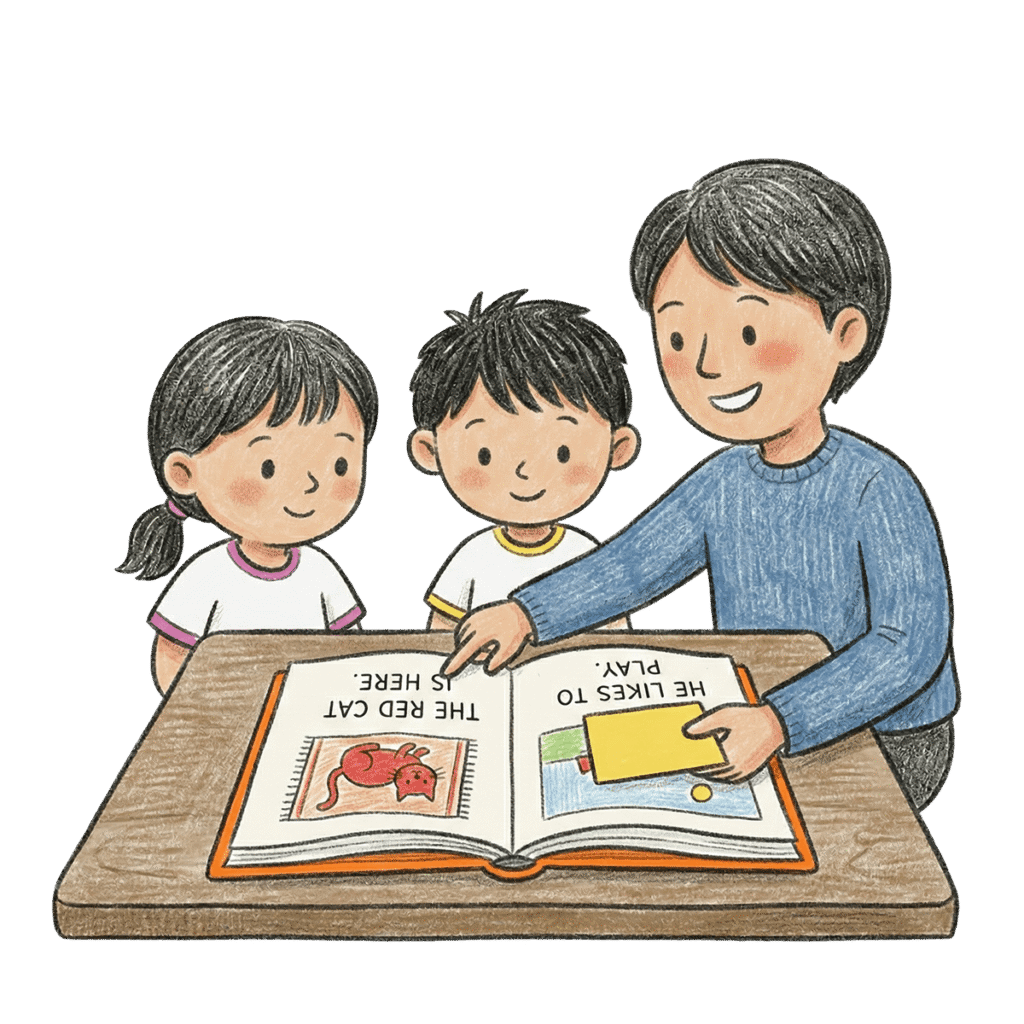
Open the book to a page and cover the illustration with a sticky note. Ask your child to read the words first — just the text, no picture clues.
Once they've had a go (stumbles and all), take away the sticky note and re-read the page together with the picture revealed. Talk about what the picture adds. Did it match what they imagined? Did it help them understand anything differently?
This doesn't need to be every page — even doing it once or twice in a session is enough. The goal is to build the habit of trusting the words, not just guessing from the picture. That's a big deal as books get longer.
Grab our resources
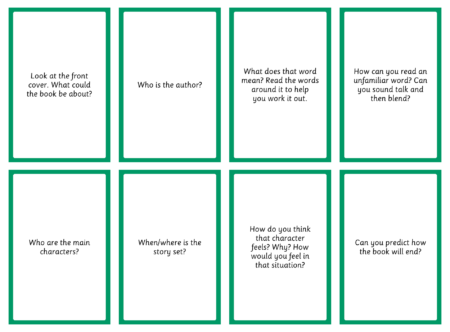
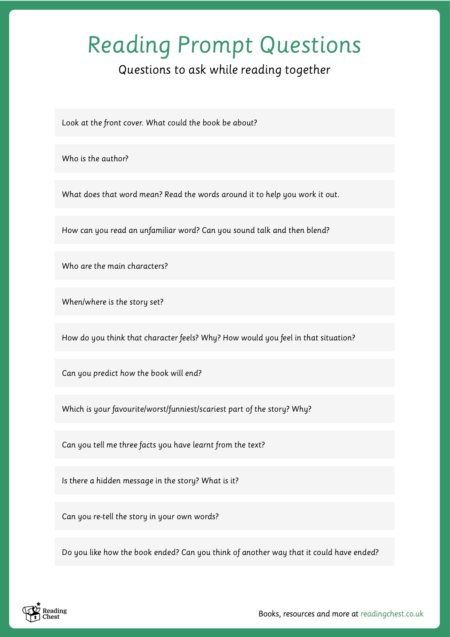
Looking for some help with questions to ask after your reading session? These prompts give you a great starting point.
Before and after reading
One question before you open the book. One after you close it. That's it — but it shifts everything from just decoding words to actually thinking about them.
Goal
Help your child get more from every reading session by tuning in to meaning, not just getting through the words.
You'll need
- Reading Prompt Questions
- Reading Prompt Cards
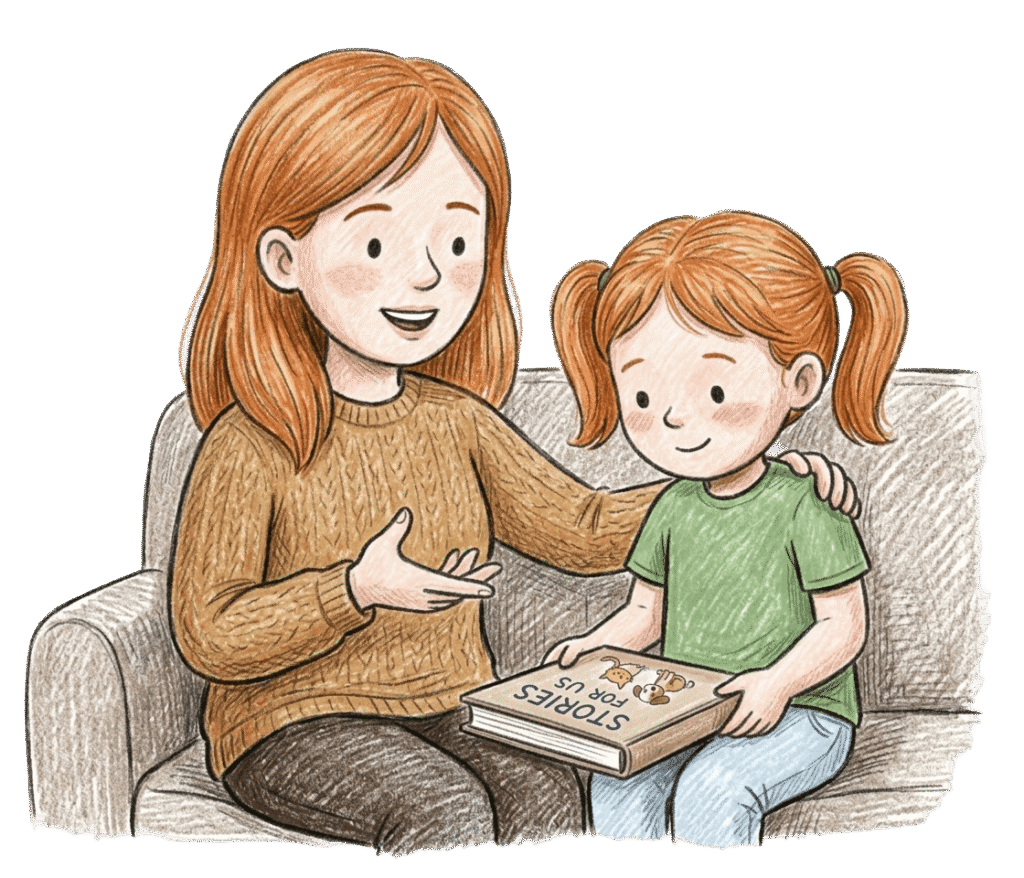
How to do it
Before you open the book, ask one simple question: "What do you think this might be about?" or "What do you notice on the cover?" That's all — don't overthink it.
Read together. When you finish, ask one follow-up: "What was your favourite part?" or "What would you do if you were that character?" Use the prompt cards if you want more ideas.
Keep it brief. You're not running a comprehension test — you're just helping them connect with what they've read. That habit of pausing to think is one of the most useful things a reader can learn.
Grab our resources
Print our reading prompt questions and reading prompt cards to get started.
Frequently asked questions
How do I know what Bug Club level my child should be on?
Your child’s teacher sets their level based on classroom assessment — listening to your child read and monitoring comprehension. The level in the digital library reflects that assessment. If you think the level seems wrong (too easy or too hard), talk to the teacher. Schools usually review reading levels regularly, but it’s reasonable to ask if you’re concerned.
My child says there are no new books left in their Bug Club library — what should I do?
This usually means they’ve read all the books available at their current level, which means it’s probably time for the teacher to move them up. Contact the school to let them know, and ask whether their level can be updated in ActiveLearn. In the meantime, re-reading familiar books, reading physical books at home, or borrowing books from a library or Reading Chest all keep the reading going.
Is it okay for my child to read books above their Bug Club level for pleasure?
Yes, for pleasure reading. There’s no harm in browsing higher-level books if your child is interested and enjoying them, even if they need more support to read them. The Bug Club level set by the school is for independent reading practice — where the aim is decoding and comprehension without much support. For reading together or audiobooks, level matters much less than enjoyment and engagement.
