Contents
Read Write Inc (RWI) is the UK’s most widely used systematic phonics programme, taught in roughly a third of primary schools in England. If your child’s school uses it, you’ll hear terms like “Fred Talk,” “special friends,” and “Set 2 sounds” — and you’ll want to know what those mean so you can support things at home.
This guide explains how Read Write Inc works, what the different sets of sounds involve, how the books are structured, and what you can practically do to help at home without needing to become a phonics expert.
It’s worth knowing that supporting RWI at home doesn’t mean replicating the programme — it means understanding the vocabulary your child is using so you can respond helpfully when they practise with you.
What is Read Write Inc?
Read Write Inc was developed by Ruth Miskin and is published by Oxford University Press. It’s a systematic synthetic phonics programme, which means it teaches children to read by blending sounds from left to right, and to spell by segmenting words into their individual sounds.
The programme is structured around learning sounds in a specific order, then applying those sounds in carefully sequenced decodable books. Children are grouped by their current progress, not by age — so your child might be in a phonics group that includes children from different year groups. This is deliberate: children benefit from working at the level that’s right for them.
For a broader introduction to how phonics teaching works in UK primary schools, our main phonics guide covers the foundations.
Bite-sized reading tips, straight to your inbox
Get confidence-boosting tips to help your child learn to read. Short, useful, and easy to fit into (real) family life!
Even better? You'll also get 30% off your first month of Reading Chest.
The three sets of sounds
RWI organises its sounds into three sets. Children work through them in order.
Set 1 Speed Sounds
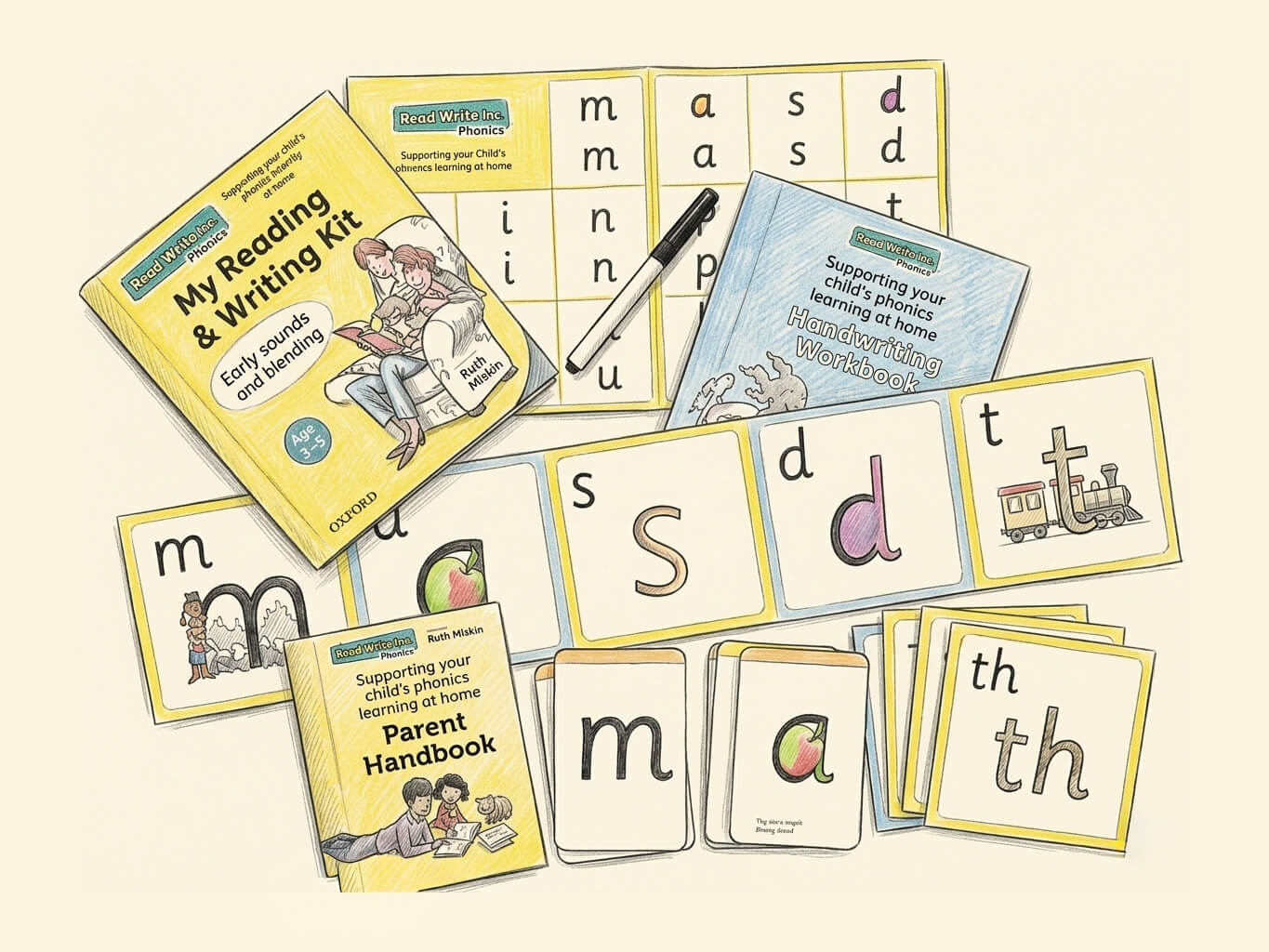
Set 1 covers the 40+ sounds that children need to get started with reading and writing. It includes all the single-letter sounds (m, a, s, d, t, and so on) plus the most common consonant digraphs — what RWI calls “special friends“: sh, ch, th, qu, ng, and nk.
Children also learn to read and write words using these sounds — not just recognise the sounds in isolation.
Set 2 Sounds
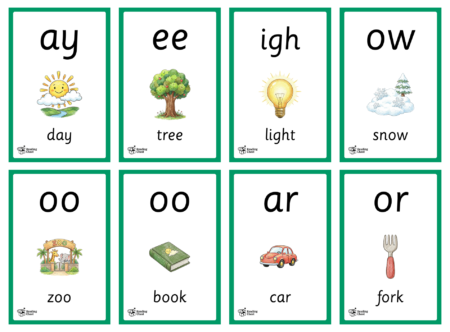
Set 2 introduces the main vowel digraphs: ay, ee, igh, ow, oo, ar, or, air, ir, ou, and oy. These are taught as units — two letters that together make one vowel sound.
By the end of Set 2, children can decode a wide range of common words. Many children complete Set 2 during Year 1.
Set 3 Sounds
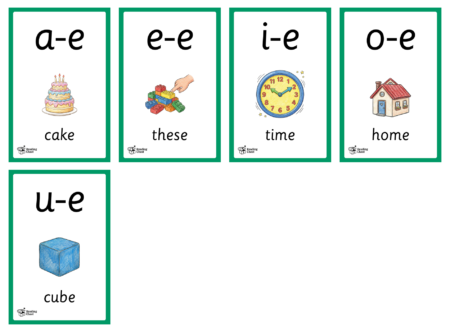
Set 3 covers alternative spellings for sounds children already know — for example, the /ai/ sound can also be spelled ea (as in bread), a-e (as in cake), or ai (as in rain). English has many of these “same sound, different spelling” patterns, and Set 3 systematically teaches them.
Set 3 is typically completed in Year 2, though children progress at different speeds.
Key RWI terminology explained
Fred Talk
Fred is a frog character in the programme. “Fred Talk” means sounding out a word phoneme by phoneme — c–a–t rather than cat. When children “Fred Talk” a word before blending it, they’re practising the core skill of phonics. Equally, “Fred fingers” means using one finger per phoneme when spelling — holding up fingers to count the sounds in a word before writing it.
Special friends
Special friends is RWI’s term for digraphs — two letters that make one sound. When reading, children learn to spot special friends first before blending the rest of the word.
Ditties and Storybooks
Ditties are the first decodable reading books in RWI — very short, using only Set 1 sounds. Storybooks are the next stage, longer and slightly more complex. Both are fully decodable — all the words can be sounded out using only sounds the child has been taught.
RWI books and reading at home
RWI uses its own decodable book series, published by Oxford University Press. These are closely matched to the speed sounds children are working on, so every word in the book should be within reach.
Schools typically send a reading book home matched to your child’s current group. If your child’s school also sends home a “Book Bag Book” (a non-decodable Oxford Reading Tree book), that’s a companion for reading together for enjoyment — not for solo decoding practice. The decodable book is the one to focus on for phonics.
You can also find RWI phonics resources on Oxford Owl, Oxford University Press’s free parent website, which includes e-books and activities.
How to support your child at home
The most important thing is to use the same language the programme uses. If your child says “it’s a special friend,” respond in kind. Don’t correct the terminology — it’s deliberate and consistent.
- When reading together: encourage your child to Fred Talk words they’re unsure of, rather than guessing from the picture. “Can you Fred Talk it?” is a useful prompt.
- When spelling: ask your child to Fred Finger the word before writing it. “How many sounds? Hold up the fingers.”
- Sound practice: use flashcards or just point out sounds in everyday reading. “What sound do those two letters make together?”
- Keep it short: 5–10 minutes of reading practice per day is enough. Longer sessions with resistance are counterproductive.
Note: if your child’s school uses RWI, avoid teaching additional phonics rules using a different method — mixed approaches can confuse children. Stick to the RWI vocabulary and ask the school if you’re unsure.
This activity is a good way to practise sounds in a low-pressure format at home:
Sound of the day
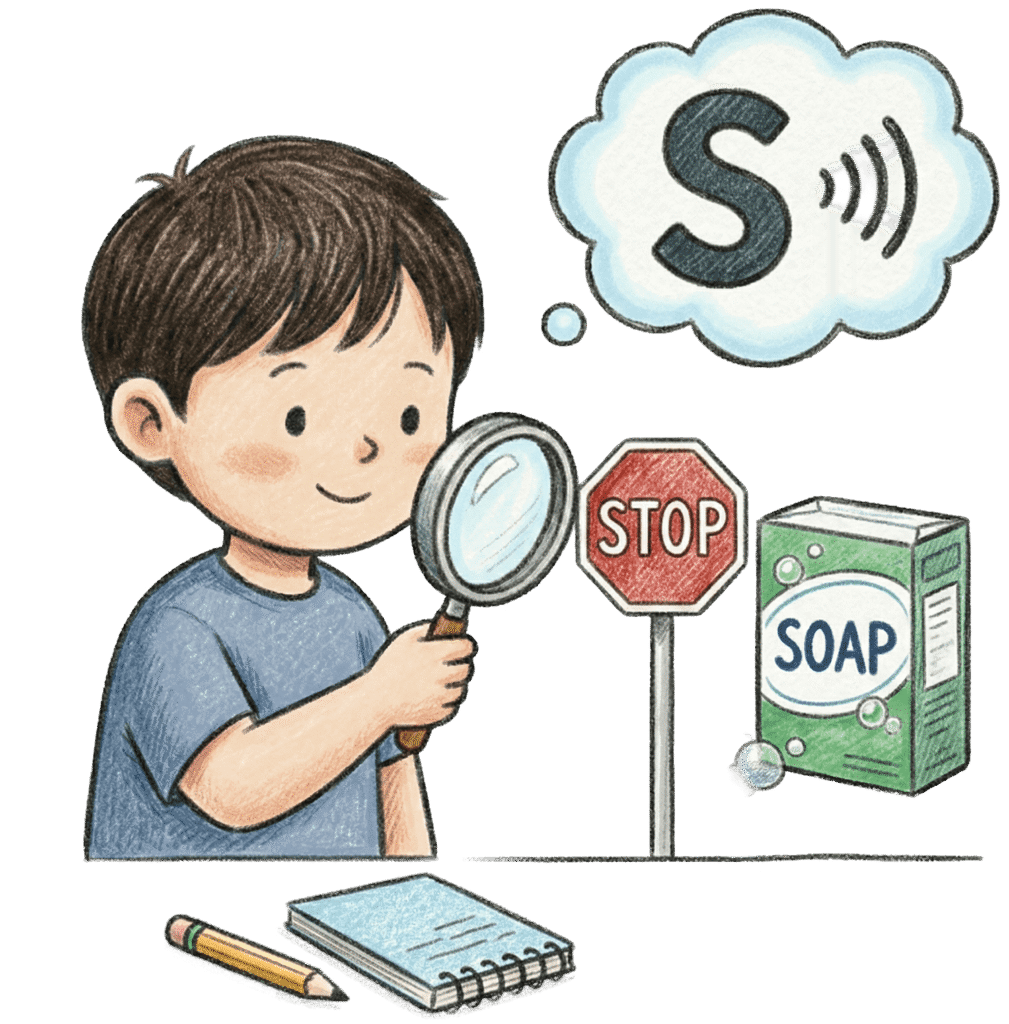
Pick one sound and spend the day noticing it everywhere — on signs, packets, toys, and out in the world. Quick to set up, surprisingly addictive.
Goal
Help your child notice sounds in everyday life — building phonemic awareness without needing to sit down and "do phonics".
You'll need
Just a focus sound — like sh or ee — and your normal day.
How to do it
Pick a sound in the morning. Say it together clearly: sh, ee, m — whatever you're working on. That's your sound of the day.
Then just keep going with your normal day. Whenever you spot it — on a cereal box, a road sign, a shop name, a toy — point it out and say the sound together. Let your child spot them too and make a fuss when they do.
By the end of the day, you'll have done phonics practice a dozen times without sitting down once. That's the magic of making it ambient rather than formal.
And this one builds confidence with sound recognition through a simple game structure:
Teach the teddy sounds
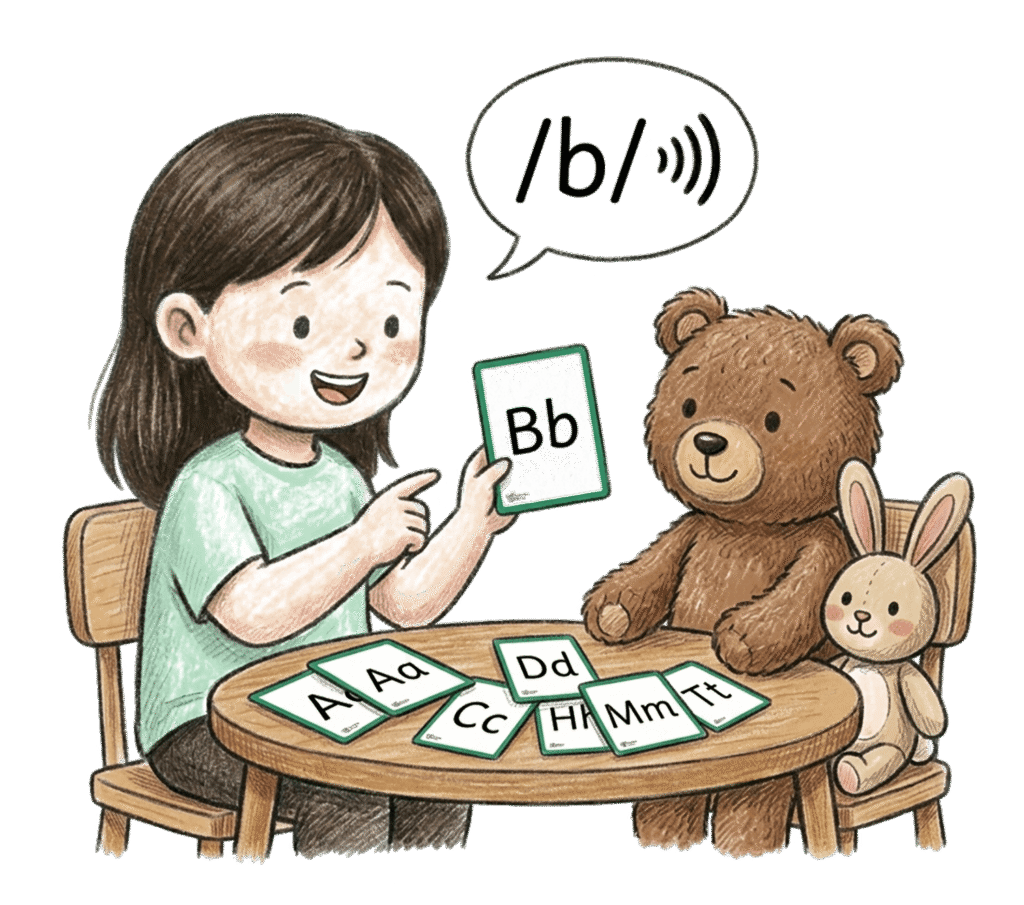
Your child becomes the teacher. They show a teddy (or any toy) the letter cards and explain each sound. Teaching something is the best way to really learn it.
Goal
Practise letter-sound recall by putting your child in charge — teaching takes the pressure off and reveals exactly what they know.
You'll need
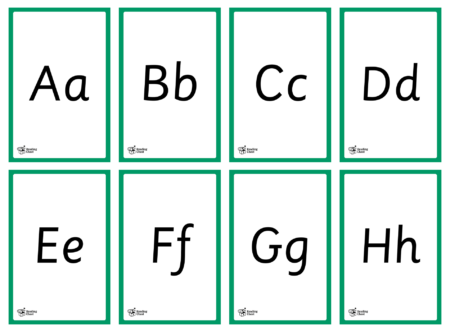
- Alphabet Flashcards (Both Cases)
- Digraphs & Trigraphs Picture Flashcards
- Split Digraph Flashcards
How to do it
Choose a teddy, doll or soft toy to be the "pupil". Give your child a stack of flashcards — a mix of letters and digraphs. Their job: teach the teddy each sound.
They hold up a card, say the sound clearly, maybe give an example word. You can play the teddy if you like — getting confused, needing things repeated, asking "what word does that make?" Children love being the expert.
If your child gets stuck on a card, the teddy can get it "wrong" too — which takes the pressure off. It's much easier to correct a teddy's mistake than to admit your own. And the teaching still works either way.
Grab our resources
Print our alphabet flashcards (both cases) and digraphs & trigraphs picture flashcards to get started.
Frequently asked questions
How do I know which RWI group my child is in?
Groups are usually not publicised by name but your child will know if they’re on Set 1, Set 2, or Set 3 sounds. Their reading book level will give you a rough indication too. Ask the class teacher if you’re unsure — they should be able to tell you which sounds your child is currently working on.
What is the difference between RWI phonics and RWI spelling?
RWI Phonics is the early reading and spelling programme (Reception through Year 2). Once children have completed the phonics programme, schools may use RWI Spelling for ongoing spelling instruction in Key Stage 2. They’re both part of the Read Write Inc family but serve different purposes.
My child is stuck on Set 1 — should I be worried?
Not necessarily. Children progress at different speeds and staying in Set 1 for longer than expected is common. The school will be monitoring progress and will offer support if needed. Focus on regular practice with the sounds your child is currently working on rather than rushing ahead.
Does RWI have free resources for parents?
Yes — Oxford Owl (home.oxfordowl.co.uk) has free e-books, reading activities, and phonics resources for parents whose children are using Oxford’s programmes. Ruth Miskin Training also publishes parent-facing videos explaining the programme.
