Contents
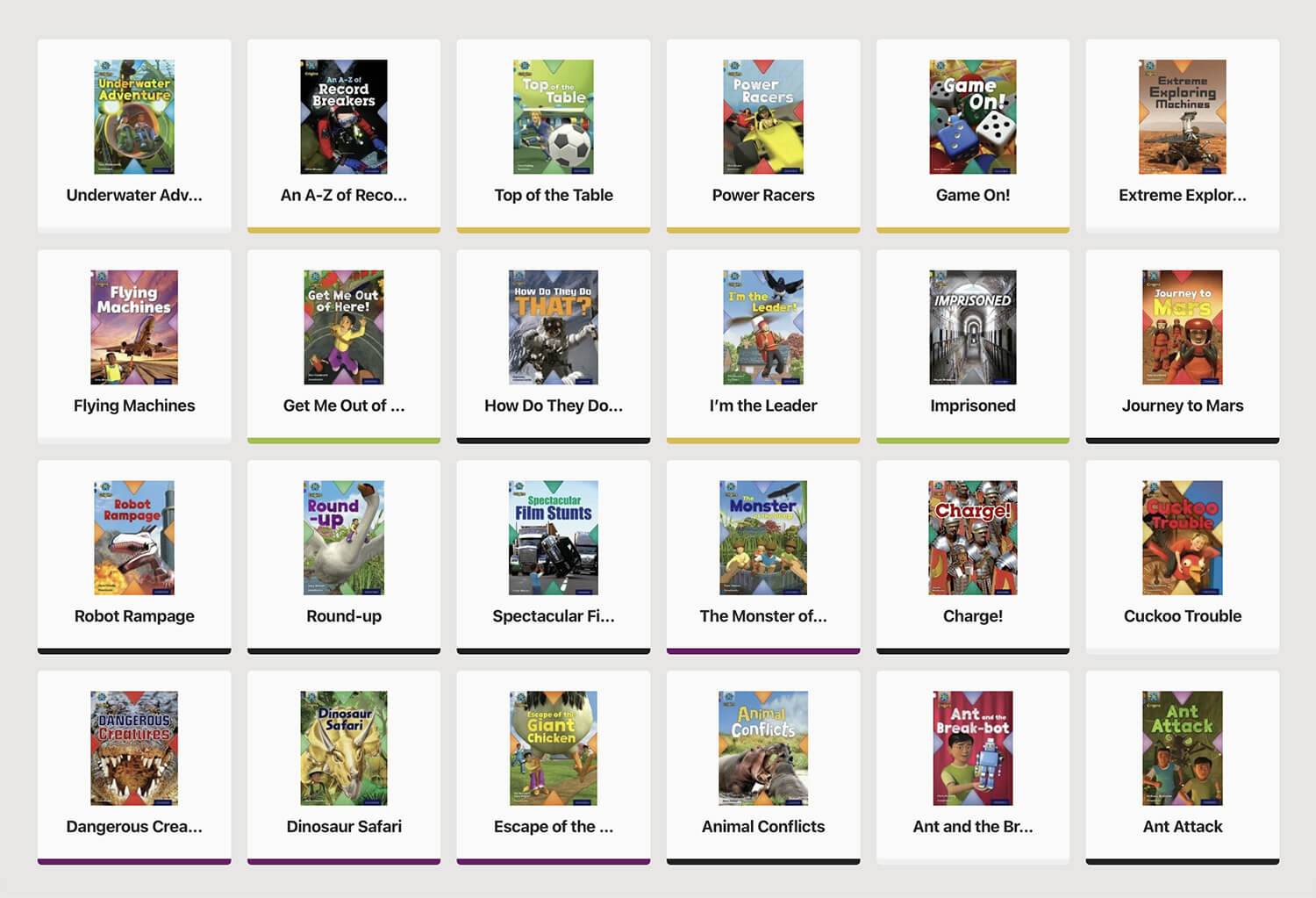
Project X is Oxford University Press’s adventure-themed reading scheme, aimed at children aged roughly 5–9. Where Oxford Reading Tree gives you a family with a magic key, Project X gives you a group of children facing urban missions, mysteries, and (in the Alien Adventures spin-off) full-on science fiction. If you’ve got a child who’s been resistant to school reading books but lights up at anything action-packed, Project X is worth knowing about.
This guide covers both the main series and Project X Alien Adventures, how the levels work, what makes it different from other schemes, and how to get the most from it at home.
The short version: Project X is particularly effective with children who find the domestic, gentle storylines of some other reading schemes uninteresting. It meets them where they are.
What Project X is
Project X was developed by Oxford University Press and launched in 2009. The central premise of the original series is a group of children — Max, Cat, Ant, and Tiger — who go on missions, solve problems, and have adventures in a contemporary urban setting. The stories are split across short chapters (typically 2–3 chapters per book), which makes them feel like proper books rather than reading exercises.
The books are levelled using Oxford Levels and standard book bands, which means they map directly to the same framework used by Oxford Reading Tree and other major schemes. A teacher using Oxford levels can place a child in Project X just as easily as in any other ORT-linked scheme.
Bite-sized reading tips, straight to your inbox
Get confidence-boosting tips to help your child learn to read. Short, useful, and easy to fit into (real) family life!
Even better? You'll also get 30% off your first month of Reading Chest.
Project X Alien Adventures
Alien Adventures is a spin-off series launched in 2013, aimed at slightly older reluctant readers (typically Years 2–4).
The premise shifts the setting to science fiction: the same team of characters now deal with alien encounters, space missions, and genuinely exciting plots. The reading levels are slightly higher than the original Project X, running from Green band upwards.
For children who’ve aged out of the original Project X stories but still find more traditional reading scheme content unengaging, Alien Adventures often hits the spot. The sci-fi angle appeals particularly to children who love Minecraft, space, and adventure games.
How the levels work
Project X uses Oxford Levels, which map to standard book bands:
| Book Band | Color | ORT Level |
|---|---|---|
| Pink book band | ORT Level 1+ | |
| Red book band | ORT Level 2 | |
| Yellow book band | ORT Level 3 | |
| Blue book band | ORT Level 4 | |
| Green book band | ORT Level 5 | |
| Orange book band | ORT Level 6 | |
| Turquoise book band | ORT Level 7 | |
| Purple book band | ORT Level 8 | |
| Gold book band | ORT Level 9 | |
| White book band | ORT Level 10 | |
| Lime book band | ORT Level 11 | |
| Extended book band | ORT Level 12 & 13 |
You can use our book band guide to see what these levels mean in terms of your child’s year group and expected reading stage.
What makes Project X different
The most significant difference between Project X and schemes like Oxford Reading Tree is the theme. ORT is deliberately domestic and familiar; Project X is deliberately exciting. The characters are slightly older-feeling, the stakes are higher, and the plots have genuine tension.
This matters because motivation is a significant factor in reading progress. A child who’s engaged with the story reads more carefully, tries harder with difficult words, and is more likely to want to read the next book.
For children who’ve been going through the motions with their reading books, the shift to Project X can be genuinely transformative.
The books are also non-fiction friendly: each series includes non-fiction titles that complement the fiction, which appeals to children who prefer facts to stories.
Using Project X at home
The storylines in Project X reward discussion. After reading, simple questions about plot, character decisions, and what might happen next can build comprehension significantly — and children who are invested in the story are usually happy to talk about it.
One particularly useful approach: if there’s a cliffhanger at the end of a chapter (and there often is), ask your child what they think will happen before continuing. This builds inference skills naturally, because they’re actually curious about the answer.
You can browse Project X books on Reading Chest by level.
Getting more from each book
This activity helps children engage with the story before they even start reading — useful for building anticipation and prediction skills:
Picture-cover reading
Cover the pictures and read the words first. Then uncover and re-read. It sounds simple — but it makes a real difference to how children approach a page.
Goal
Encourage real decoding rather than guessing from pictures — a habit that pays off as books get harder and illustrations get fewer.
You'll need
- A decodable book
- Two sticky notes
How to do it
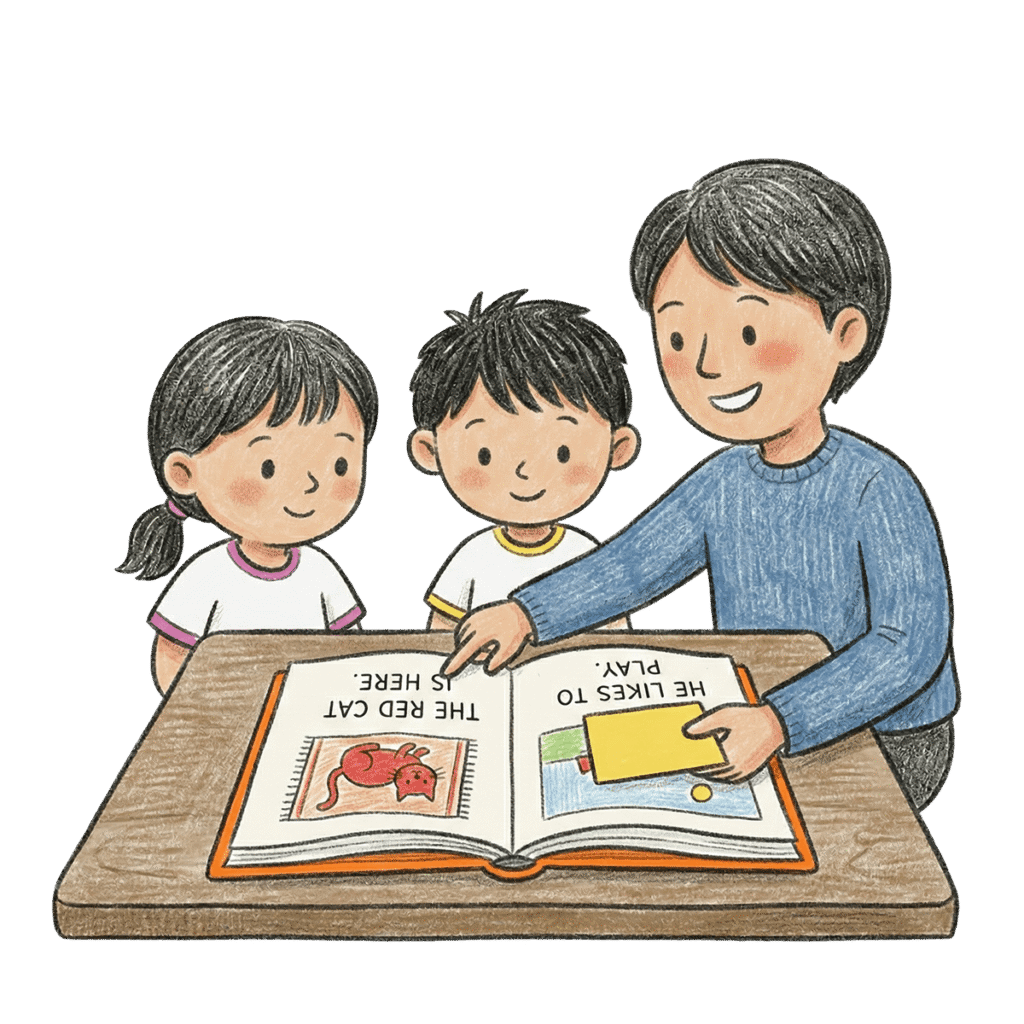
Open the book to a page and cover the illustration with a sticky note. Ask your child to read the words first — just the text, no picture clues.
Once they've had a go (stumbles and all), take away the sticky note and re-read the page together with the picture revealed. Talk about what the picture adds. Did it match what they imagined? Did it help them understand anything differently?
This doesn't need to be every page — even doing it once or twice in a session is enough. The goal is to build the habit of trusting the words, not just guessing from the picture. That's a big deal as books get longer.
Grab our resources
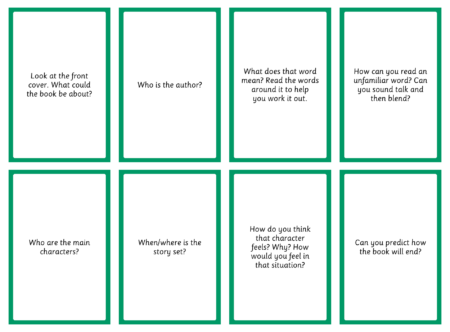
Looking for some help with questions to ask after your reading session? These prompts give you a great starting point.
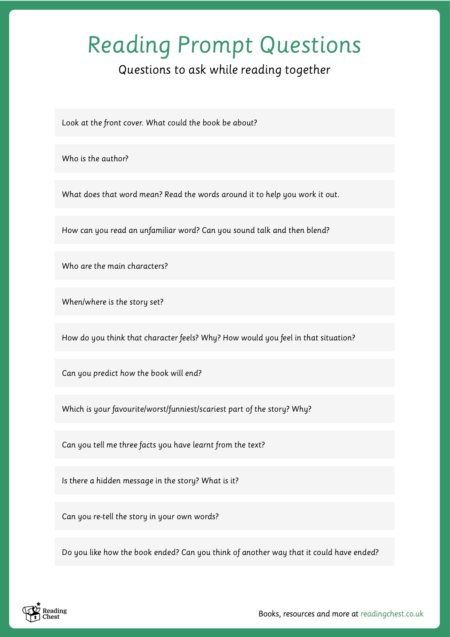
And this one deepens comprehension after reading — it works especially well with Project X because the storylines have genuine before-and-after moments:
Before and after reading
One question before you open the book. One after you close it. That's it — but it shifts everything from just decoding words to actually thinking about them.
Goal
Help your child get more from every reading session by tuning in to meaning, not just getting through the words.
You'll need
- Reading Prompt Questions
- Reading Prompt Cards
How to do it
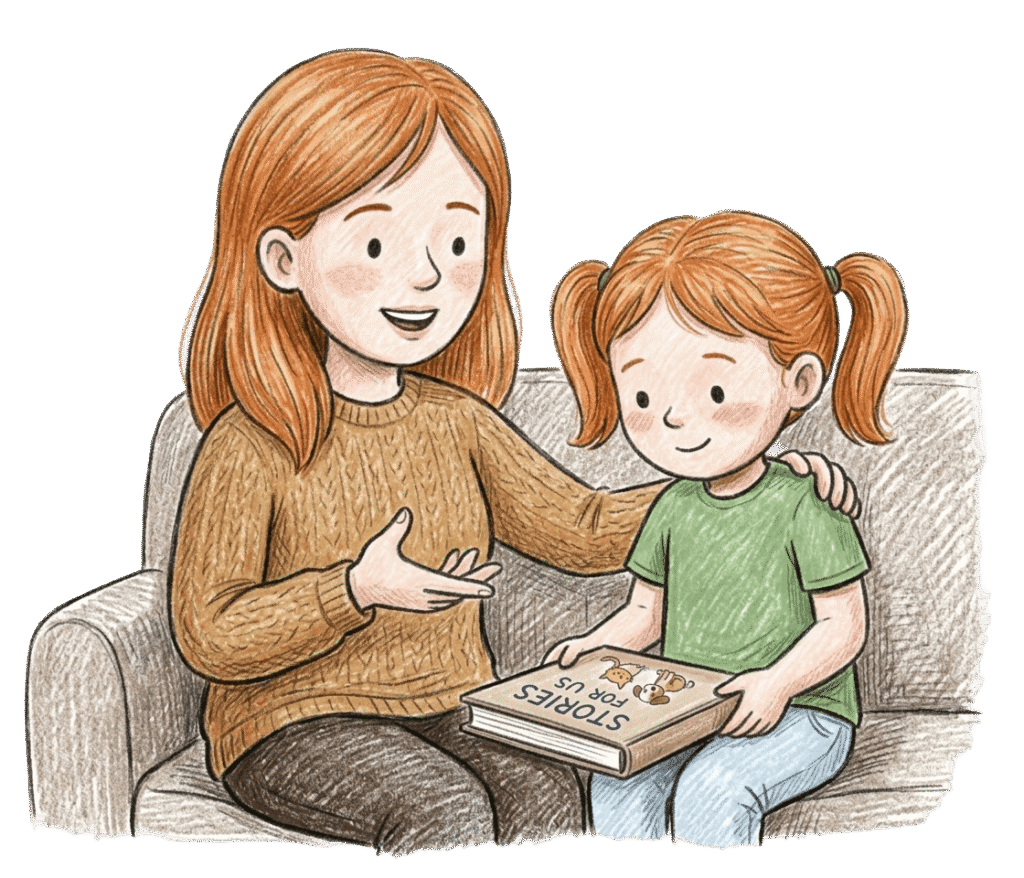
Before you open the book, ask one simple question: "What do you think this might be about?" or "What do you notice on the cover?" That's all — don't overthink it.
Read together. When you finish, ask one follow-up: "What was your favourite part?" or "What would you do if you were that character?" Use the prompt cards if you want more ideas.
Keep it brief. You're not running a comprehension test — you're just helping them connect with what they've read. That habit of pausing to think is one of the most useful things a reader can learn.
Grab our resources
Print our reading prompt questions and reading prompt cards to get started.
Frequently asked questions
What age is Project X suitable for?
Project X is broadly aimed at children aged 5–9, with the original series starting at Red band (Year 1 level) and going up to White band (Year 4–5 level). Project X Alien Adventures extends the range slightly upwards. The themes are more exciting than many reading schemes at equivalent levels, which makes them particularly good for older children who are still working at lower bands and find other scheme books babyish.
Is Project X available in schools?
Yes — many primary schools stock Project X, either as the main reading scheme or as supplementary books for children who are engaged by the adventure themes. If your child’s school doesn’t have them, it’s worth checking your local library or a rental service. You can also buy individual titles, though they’re typically sold as class sets, which makes individual purchase expensive.
Is Project X a phonics scheme?
Project X is a levelled reading scheme, not a phonics scheme. The books are carefully levelled and controlled for vocabulary and sentence complexity, but they’re not matched to a specific phonics sound sequence in the way that decodable phonics books are. They’re best used once children have a solid phonics foundation — typically from the end of Year 1 onwards — when the focus shifts to fluency and comprehension.
