Contents
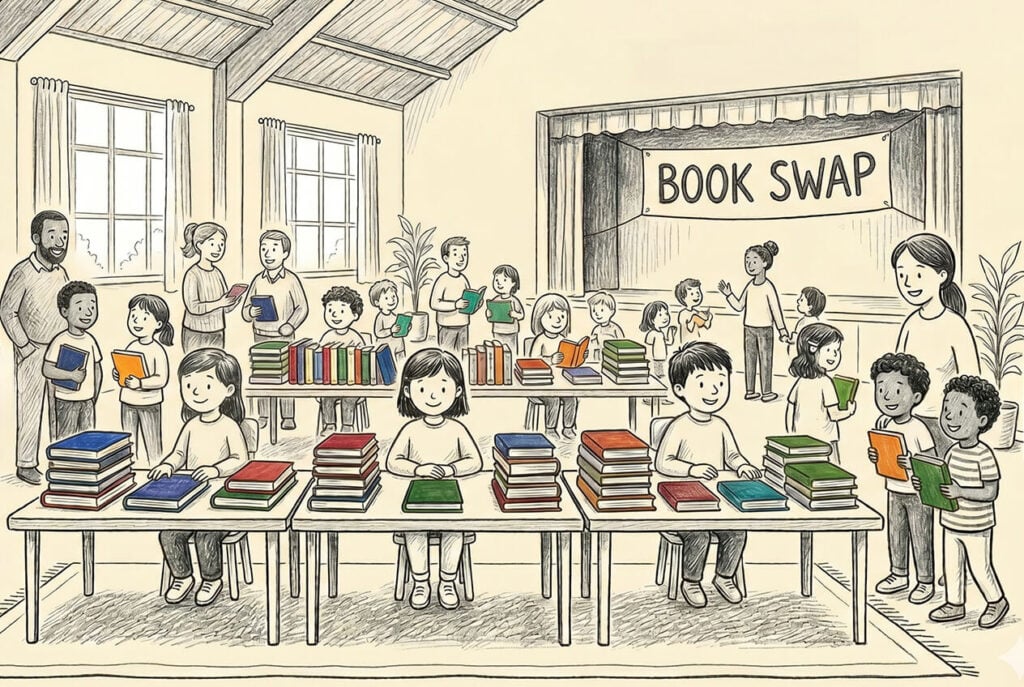
A book swap is exactly what it sounds like: children bring books they’ve finished with and leave with books they haven’t read yet. It’s one of the simplest and most satisfying ways to get more books into children’s hands — free for families, good for the environment, and often a genuinely enjoyable event in its own right.
Book swaps work at any scale: a small exchange between five families, a whole-class event, a school-wide occasion, or a community event in a library or village hall. The basic structure is the same whatever the size.
Here’s how to plan and run one that works well for everyone.
Choosing a format
The simplest book swap format is a straight one-for-one exchange: each child brings a book and takes a book. This is easy to explain, fair to everyone, and keeps the logistics minimal. It works well for small class swaps and community events.
A slightly more flexible format is a “table swap”: all donated books go on a shared table, and children browse and take what they like, regardless of whether there’s an exact match for what they brought. This produces better choice for participants but requires a generously stocked table to work well.
For larger events, a token system — each donated book earns a token that can be exchanged for a book from the table — manages the flow more fairly and prevents children from taking more than they’ve contributed.
Bite-sized reading tips, straight to your inbox
Get confidence-boosting tips to help your child learn to read. Short, useful, and easy to fit into (real) family life!
Even better? You'll also get 30% off your first month of Reading Chest.
What to ask families to bring
Be specific in your guidance. The most useful things to communicate are:
- Books in good condition — not torn, heavily marked, or missing pages
- Books appropriate for the age group attending the swap
- Books the child has genuinely finished with rather than reluctant donations
For a school event, specify the age range. If the swap is for a Year 1 class, asking for picture books and early readers makes the table more useful for everyone. For a whole-school event, splitting the display into age-appropriate sections helps children find what suits them.
Remind families that a book doesn’t have to be pristine to be swappable — a well-loved, slightly dog-eared book is still a good read. The goal is circulation, not a pristine collection.
Setting up on the day
For a school or community event, the practicalities are straightforward. Sort donations in advance if possible, removing any clearly unsuitable books and organising the rest by age range or level. Create an appealing display — books face-up on a table, with a bit of space around them, are far more inviting than a pile. Have a system for donations that arrive on the day (a drop box near the entrance, or a designated corner).
If you’re running a community event, decide in advance what happens to leftover books. Having a plan (a library donation, a school stock top-up, a charity shop run) means the event ends cleanly rather than leaving the organiser with a box of unclaimed books and no idea what to do with them.
Making it more than a transaction
A book swap can be a functional five-minute exchange, or it can be something more memorable. A few things that make it more engaging:
- Add activities alongside the swap: a craft table, a reading corner with beanbags, a brief storytime, or a “recommend a book” board where children write three words about what they’re bringing to help others choose.
- Create a mystery book corner: wrap some books in brown paper with two or three clue words written on the outside. Younger children find this particularly appealing, and it’s a good way to move books that might otherwise be overlooked.
- Invite children to write in the books: a simple label inside the front cover — “This book was read by [name] and they thought…” — starts a chain of readers and gives the book a sense of history. Children enjoy finding previous owners’ notes when they pick up a book at a future swap.
Try this activity
This activity guides children through planning and hosting a book swap themselves — useful whether you’re helping a child organise a class event or running a small family exchange:
Host a book swap
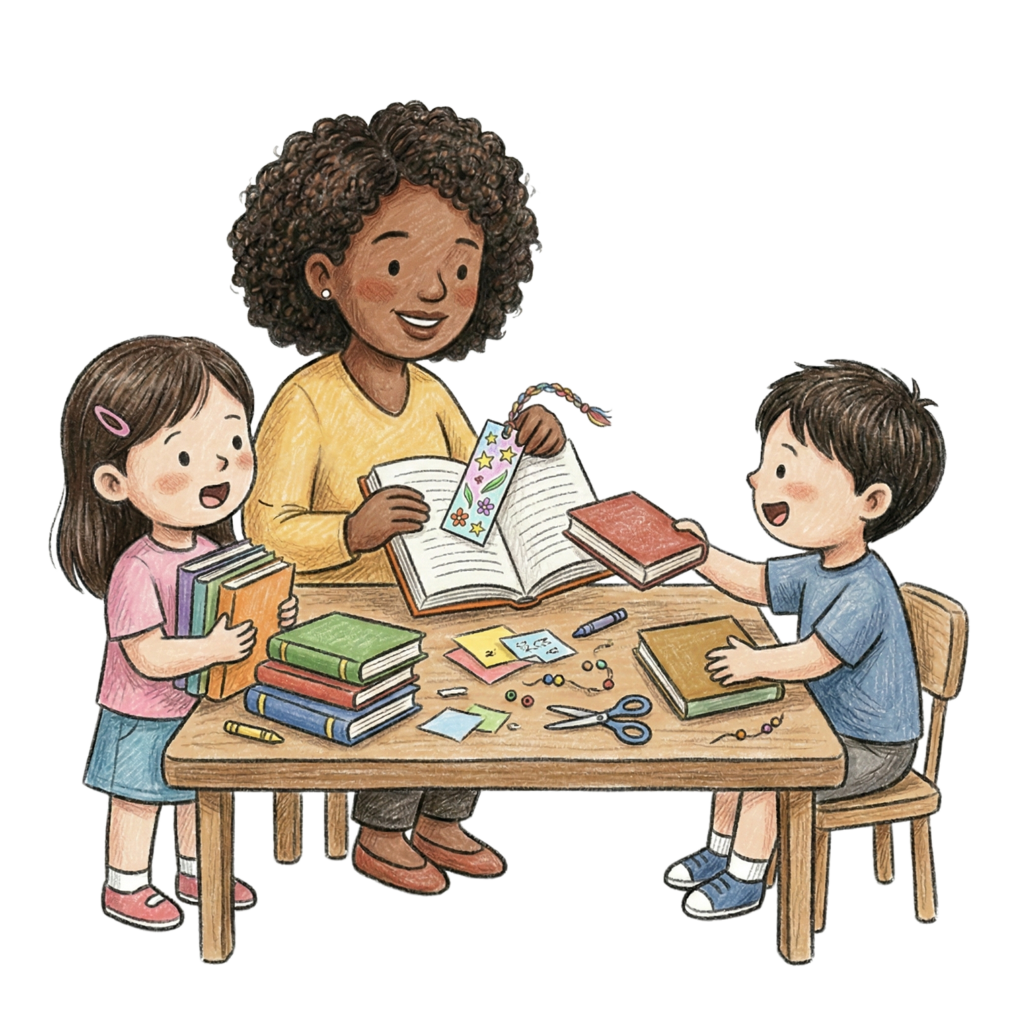
Swap books with a friend or family member. Tuck a handmade bookmark inside and chat about why you picked it. Sharing books, sharing opinions.
Goal
Give reading a social purpose — and practise talking about books in a natural, enthusiastic way.
You'll need
- Bookmark Template
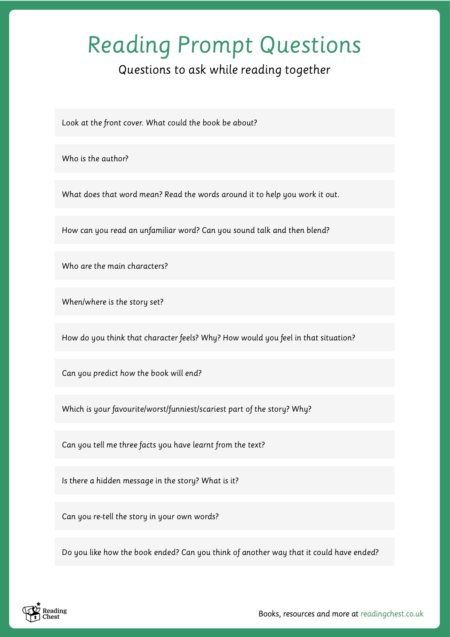
- Reading Prompt Questions
How to do it
Invite a friend or family member to do a book swap. Each person picks a book they've enjoyed and wants to pass on. If you like, write a small note about why you chose it — even just one sentence.
Make bookmarks together to tuck inside. Decorate them, add "From [name]" or a little illustration. It makes the swap feel like a proper gift.
When you've both read your swapped books, get together and chat. Use the prompt questions if the conversation needs a nudge: What did you think? Would you recommend it? Was it what you expected? Reading starts to feel like something people do together — because it is.
Grab our resources
Print our bookmark template and reading prompt questions to get started.
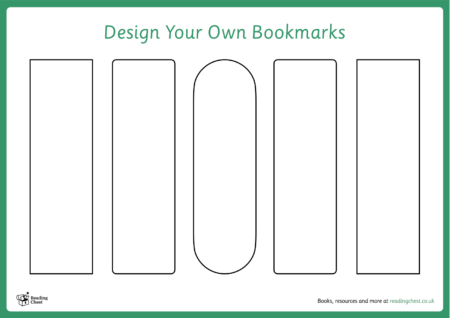
Children can also make personalised bookmarks to give away alongside their donated books — a small touch that makes the swap feel more special:
Design a bookmark
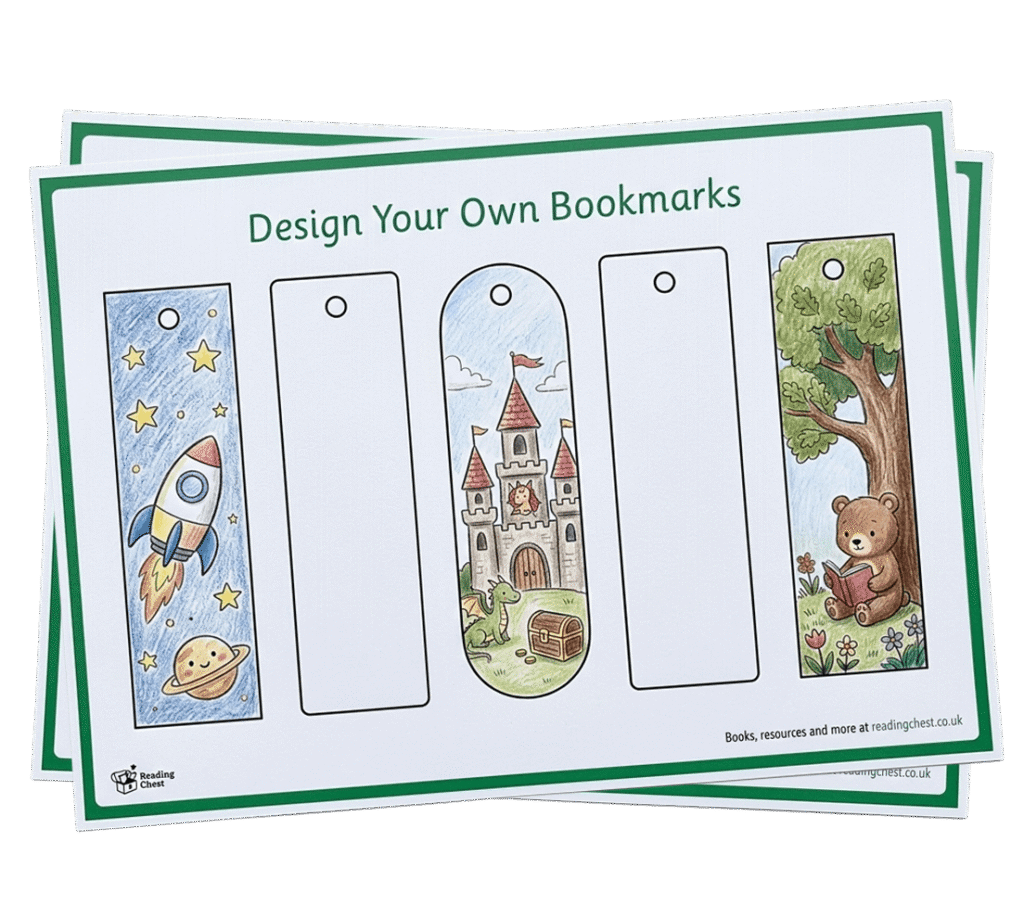
Design a bookmark inspired by a favourite book — add a character, a favourite word, or just go full creative chaos. A five-minute make with a genuinely useful result.
Goal
Build a personal connection to books through a simple, creative make — and give your child something to use every time they sit down to read.
You'll need
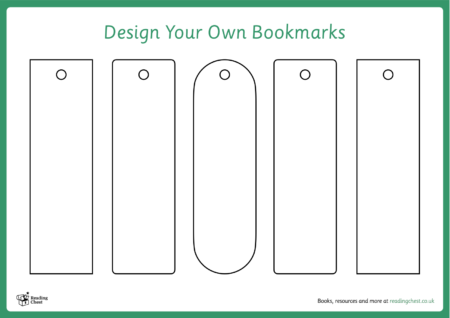
- Bookmark Template or Bookmark Template (With Holes)
- Colouring pens or pencils
- A favourite book for inspiration
How to do it
Choose a book your child has enjoyed and talk about what stands out — a favourite character, a funny moment, a word they love. Print a bookmark template and let them design it however they like.
They might draw the character, write the title, decorate it with colours from the cover, or just make something completely unrelated and beautiful. All of these are correct.
If you have the template with holes, thread ribbon or string through the top once it's done. The finished bookmark goes straight into the book — and tends to get used, which is the nicest bit.
Grab our resources
Print our bookmark template or bookmark template with holes to get started — choose the style that suits your child best.
Frequently asked questions
How many books should each child bring?
One book per child is the simplest rule and usually produces a good result. If you want a larger table for more choice, asking for two or three is fine — but make clear this is optional, so children without many spare books at home don’t feel excluded. The swap works best when everyone can participate regardless of how many books they have available to give.
What if children bring books in poor condition?
It happens, and the best approach is to communicate the standard expected in advance rather than managing it at the door. If poor-condition books arrive, a quiet “set aside” pile for anything genuinely unsuitable is more gracious than turning donations away. Most families make a genuine effort if the expectation is clearly communicated beforehand, and a slightly worn book is usually still worth reading.
What do I do with leftover books?
The most useful destinations are school libraries, local library donations, charity shops that accept children’s books (many do), and community Little Free Libraries. Hospital children’s wards and family refuges also often welcome good-condition children’s books — worth checking their current needs first. Having a plan before the event means you’re not left with a box of books and a decision to make at the end of a long day.
Can I run a book swap online?
Yes, though it requires more coordination. Online book swaps work well within a defined community — a school parent group, a local Facebook group, or a WhatsApp community. A photo post of the books you have, a reply from anyone who wants them, and a local drop-off or postal exchange to complete it. For children, an in-person swap is usually more memorable and enjoyable, but an online version works well for older children and families.
