Contents
Little Wandle Letters and Sounds is now one of the most widely adopted phonics programmes in England — and the one most likely to be used if your child’s school has recently changed its approach. It’s rigorous, well-structured, and very different from the looser phonics teaching that was common before 2020.
If your child’s school uses Little Wandle and you want to understand what’s going on in phonics lessons — what the phases mean, how the books work, and how you can help at home — this guide covers it clearly.
Little Wandle has its own specific approach to home reading that’s quite different from what many parents expect. Understanding it makes the books your child brings home make a lot more sense.
What is Little Wandle?
Little Wandle Letters and Sounds Revised is published by the Little Wandle Foundation and is a systematic synthetic phonics programme that meets the DfE’s validation criteria. It was developed as a fully resourced, evidence-based update to the original Letters and Sounds framework — which was a government document, not a programme, and which schools often struggled to implement consistently.
Where Read Write Inc is probably the best-known name in phonics, Little Wandle has become the most commonly chosen programme by schools adopting or renewing their phonics provision since 2021. Many schools switched to it when the DfE introduced its new validation criteria and the original Letters and Sounds framework was removed from the approved list.
For an introduction to how phonics teaching works more broadly, our phonics guide has the essentials.
Bite-sized reading tips, straight to your inbox
Get confidence-boosting tips to help your child learn to read. Short, useful, and easy to fit into (real) family life!
Even better? You'll also get 30% off your first month of Reading Chest.
How Little Wandle is structured
Little Wandle follows a 26-week Reception programme, then moves into Year 1 consolidation and fluency work. It covers the same phases as the original Letters and Sounds framework.
Reception: Phases 2–4
Phase 2 introduces the first 19 graphemes: s, a, t, p, i, n, m, d, g, o, c/k, ck, e, u, r, h, b, f/ff, l/ll, ss. These are the building blocks for simple CVC words.
Phase 3 adds the remaining single sounds plus the main digraphs: j, v, w, x, y, z/zz, qu, then vowel digraphs including ai, ee, igh, oa, oo, ar, or, ur, ow, oi, ear, air, er.
Phase 4 doesn’t introduce new sounds but focuses on reading and spelling CCVC and CVCC words — words with consonant clusters like frog and lamp.
Year 1: Phase 5
Phase 5 is all about alternative spellings — learning that the same sound can be spelled multiple ways. Children who know ai from Phase 3 learn that the same /ai/ sound can also be spelled ay (as in day) or a-e (as in make). There are around 20 alternative spellings taught in Phase 5.
Year 1 also includes preparation for the Year 1 Phonics Screening Check in the summer term.
Year 2 and beyond: fluency
Little Wandle includes a dedicated fluency strand from Year 2 onwards, using Fluency readers — books designed for practising reading with expression and pace, once decoding is largely secure. This is the programme’s explicit response to the gap between “can decode” and “reads fluently.”
The Little Wandle books
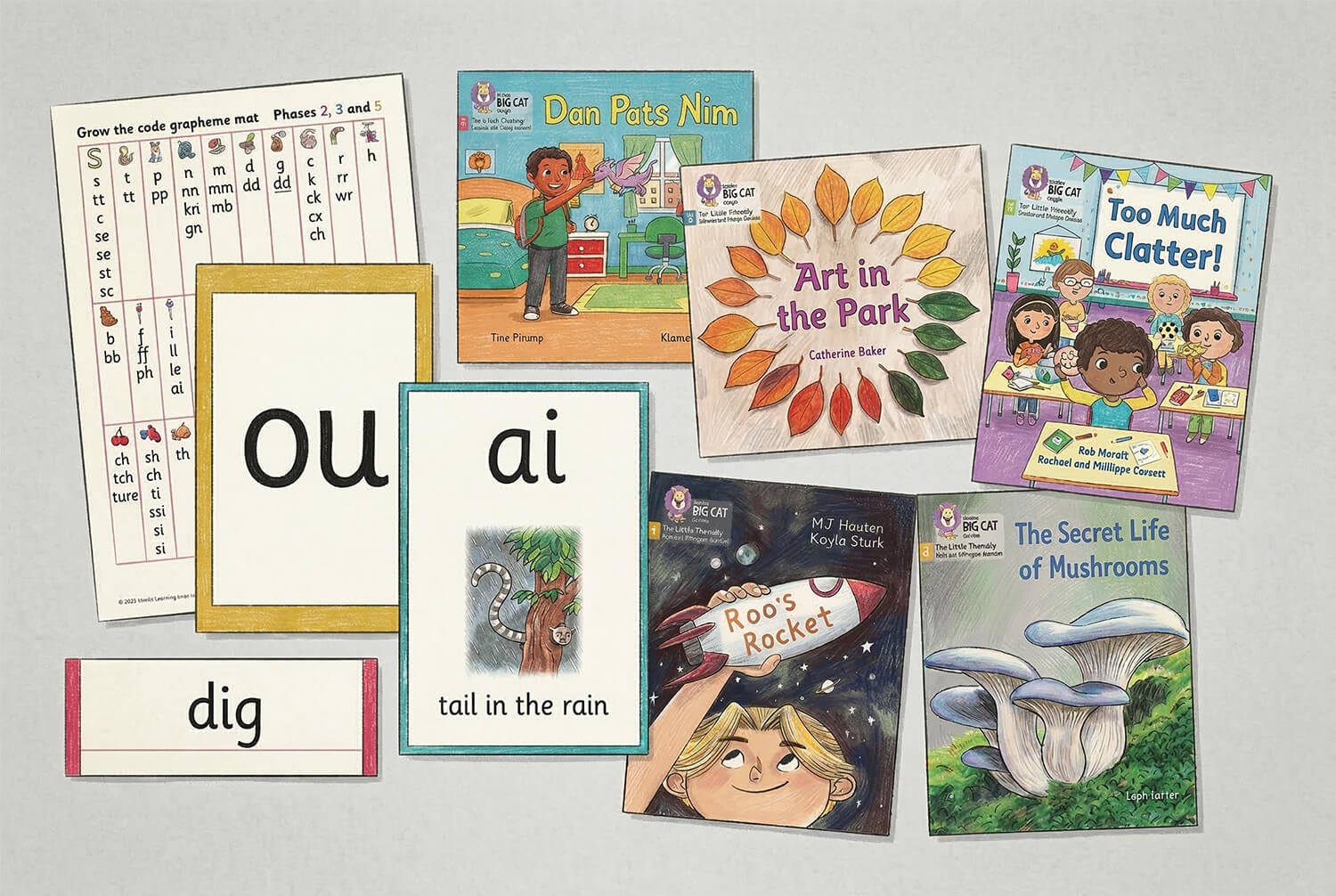
Little Wandle uses its own set of decodable books, closely matched to the phase a child is working on. Each unit of teaching introduces new sounds and then provides three matched books at different levels of challenge.
The distinctive feature of Little Wandle is its three-read approach. Each book is intended to be read three times over the course of a week:
- First read (decode): focus on accurately sounding out the words
- Second read (prosody): focus on reading with expression and fluency
- Third read (comprehension): focus on understanding the meaning of the text
This is why your child may bring the same book home more than once. That’s not because they’re stuck — it’s the programme working as designed. Each re-read serves a different purpose.
How to support your child at home
Little Wandle schools will often share information about the current phase sounds via a parent newsletter or app. If you know which sounds your child is currently on, you can practise them at home in a targeted way.
- Follow the three-read approach: when your child brings a book home for a second or third read, don’t assume they should be reading it perfectly. Support them in whichever aspect that read is targeting — expression on the second read, talking about the story on the third.
- Don’t skip ahead: resist the urge to introduce sounds or letter combinations your child hasn’t been taught yet. The programme is carefully sequenced and jumping ahead can create more confusion than it solves.
- Use tricky words: Little Wandle uses the same “tricky words” concept — common exception words that need to be recognised rather than decoded. Ask the school for the current tricky word list and practise these separately from the phonics.
If your child’s school sends home a Little Wandle “Reading for Pleasure” book alongside the decodable book, that one is for you to read to them, or to share together — not for solo decoding practice. Keep the two purposes separate.
Sound of the day
Pick one sound and spend the day noticing it everywhere — on signs, packets, toys, and out in the world. Quick to set up, surprisingly addictive.
Goal
Help your child notice sounds in everyday life — building phonemic awareness without needing to sit down and "do phonics".
You'll need
Just a focus sound — like sh or ee — and your normal day.
How to do it
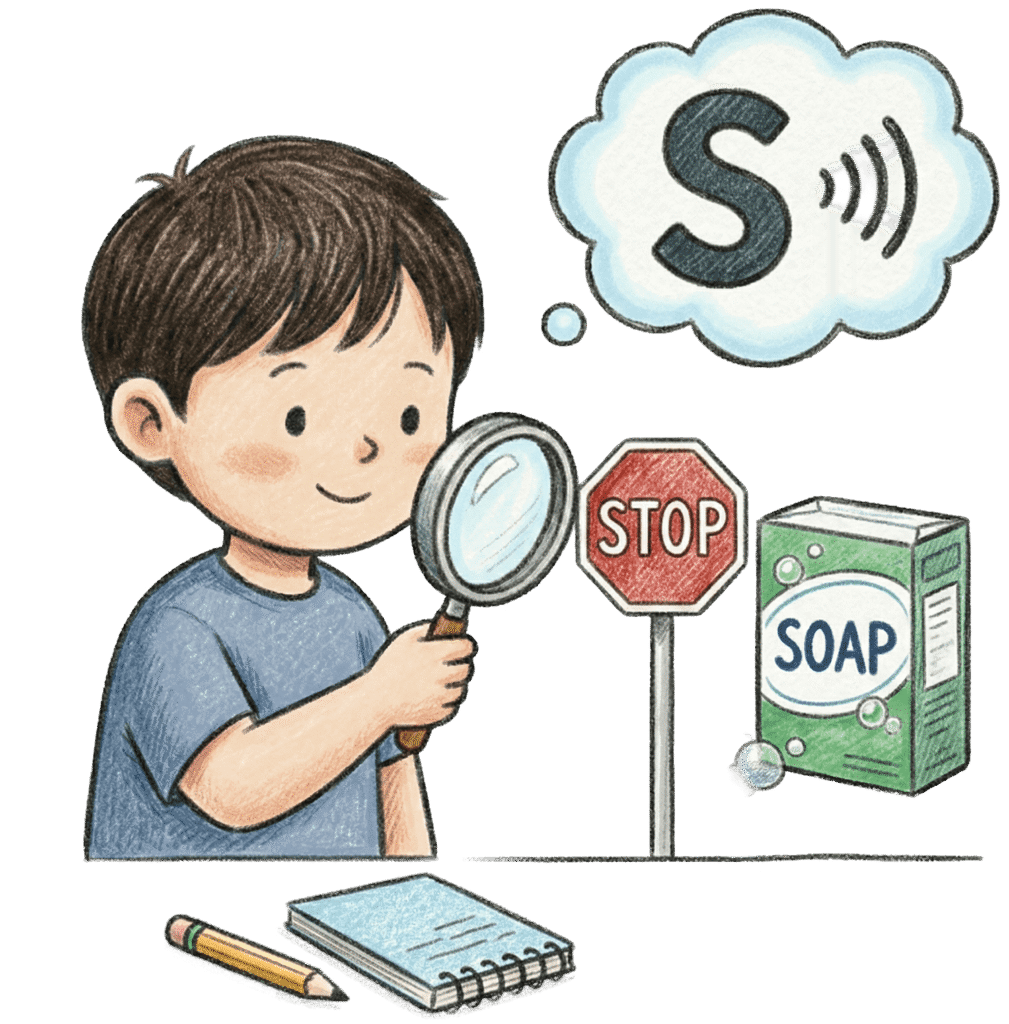
Pick a sound in the morning. Say it together clearly: sh, ee, m — whatever you're working on. That's your sound of the day.
Then just keep going with your normal day. Whenever you spot it — on a cereal box, a road sign, a shop name, a toy — point it out and say the sound together. Let your child spot them too and make a fuss when they do.
By the end of the day, you'll have done phonics practice a dozen times without sitting down once. That's the magic of making it ambient rather than formal.
Digraph detective
Pick a digraph — sh, th, ch, ng — and go hunting. How many times can you spot it hiding in words on a page, a sign, a cereal box? Detective hats on.
Goal
Train your child's eye to spot digraphs in real text — so they stop seeing two letters and start seeing one sound.
You'll need
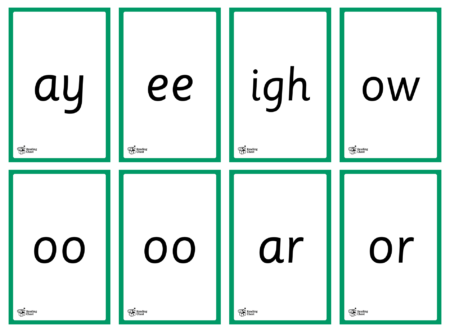
- Digraphs & Trigraphs Flashcards
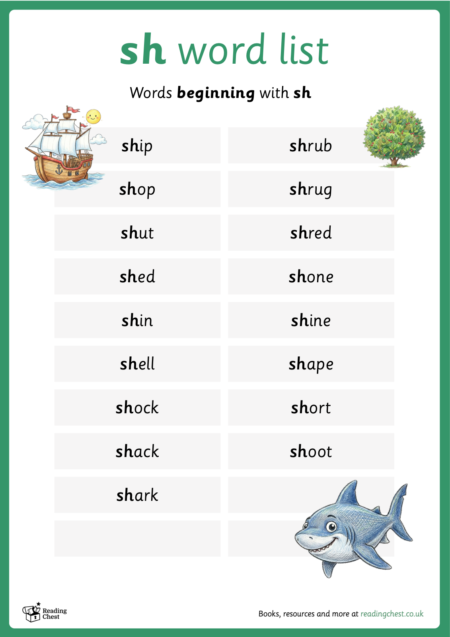
- Phonics "sh" words list
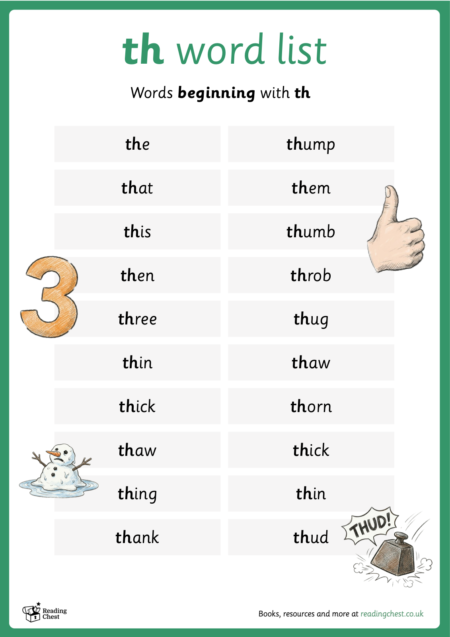
- Phonics "th" words list
How to do it
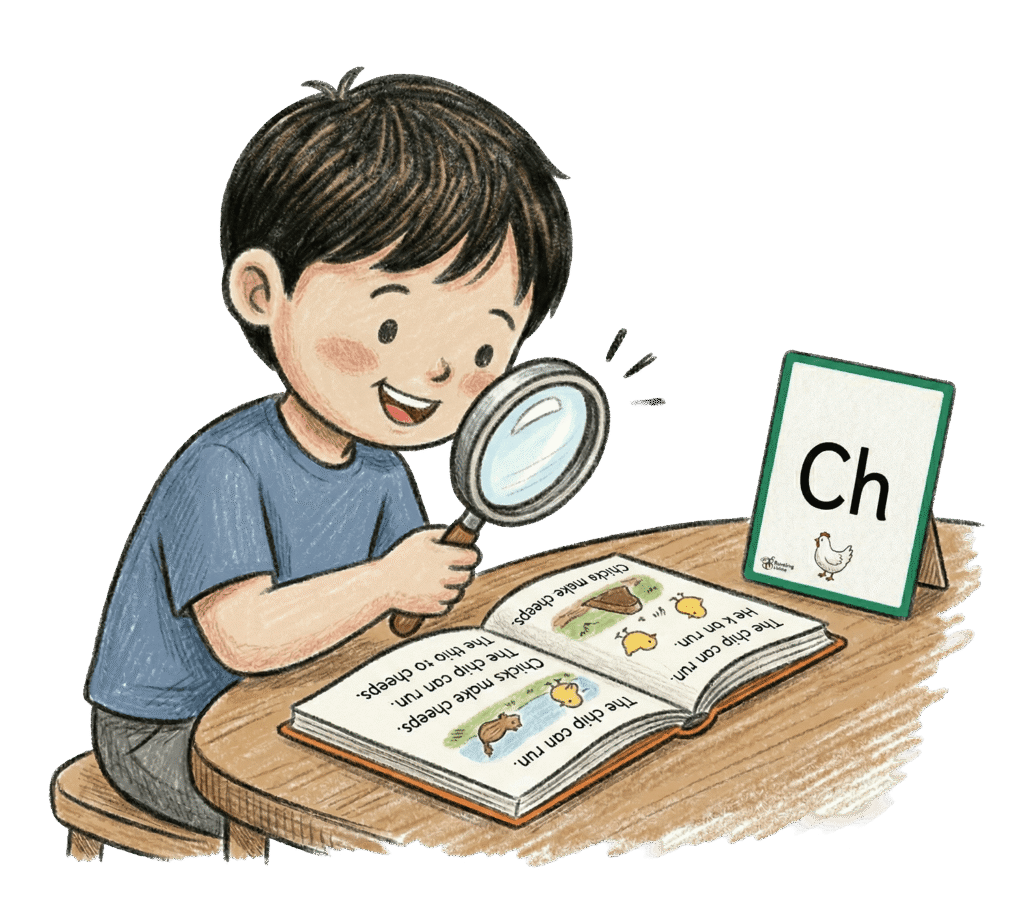
Choose one digraph to focus on — sh, th, ch or ng are all great options. Say it together a couple of times so it's fresh in their mind.
Then hunt. Open a book, use a word list, or scan whatever's nearby — packaging, posters, signs. Every time they spot the digraph in a word, they point and say the sound. Count how many you find.
Keep it relaxed. You're not testing whether they can read every word — you're just training their eye to notice the pattern. That noticing is half the battle with digraphs.
Grab our resources
Print our digraphs & trigraphs flashcards and phonics "sh" words list to get started.
Frequently asked questions
Is Little Wandle the same as Letters and Sounds?
They share the same phase structure (Phases 2–5) and were both published by or associated with the same original government framework. But Little Wandle is a fully developed programme with its own books, training, and resources — unlike the original Letters and Sounds, which was a planning document that schools had to supplement themselves. Little Wandle is the complete, updated version.
Why does my child keep bringing home the same book?
This is deliberate. Little Wandle uses a three-read approach where each reading of the same book targets a different skill: accurate decoding on the first read, fluency and expression on the second, comprehension on the third. Repeated reading is one of the most evidence-backed strategies for building reading fluency.
How long does Little Wandle take to complete?
The core Reception programme is 26 weeks. Phase 5 (alternative spellings) runs through Year 1. The fluency strand continues into Year 2. Most children who’ve gone through the programme will be secure with the fundamental phonics code by the end of Year 1 and are working on fluency in Year 2.
Does Little Wandle have free parent resources?
The Little Wandle Foundation website (littlewandlelettersandsounds.org.uk) has some parent-facing resources including videos explaining the programme and guidance on how to support reading at home. Your school may also provide Little Wandle parent handouts.
