
Contents
Non-Fiction November (November, UK) is perfect timing if you’ve got a child who asks question after question. “Why do birds have feathers?” “How do trains work?” “What do hedgehogs eat?” Instead of frantically googling, you’ve got books. Brilliant, beautiful non-fiction books with answers, pictures, and the official stamp of “this is worth learning about.”
The thing about non-fiction for children is that it says: your questions matter. Your curiosity is interesting. Let’s find out together. That’s powerful.
Here’s how to lean into Non-Fiction November in a way that feels natural and fun.
Why non-fiction matters for young readers
Non-fiction doesn’t get enough credit. For many children, it’s the gateway to loving reading.
- It hooks reluctant readers: A child who won’t touch a storybook might devour a book about dinosaurs, space, or their favourite animal. Interest is the most powerful motivator.
- It builds different reading skills: Children learn to skim, scan for information, read captions, use indexes and diagrams. These are skills they’ll need forever.
- It supports learning: Non-fiction often connects beautifully with what children are doing at school. A topic book about the Victorians or how plants grow becomes richer when there’s a story element.
- It shows that knowledge is interesting: When a child finds an answer in a book, they’ve discovered something powerful: books are tools. Knowledge is accessible. They matter.
Bite-sized reading tips, straight to your inbox
Get confidence-boosting tips to help your child learn to read. Short, useful, and easy to fit into (real) family life!
Even better? You'll also get 25% off your first month of Reading Chest.
Simple ways to celebrate at home
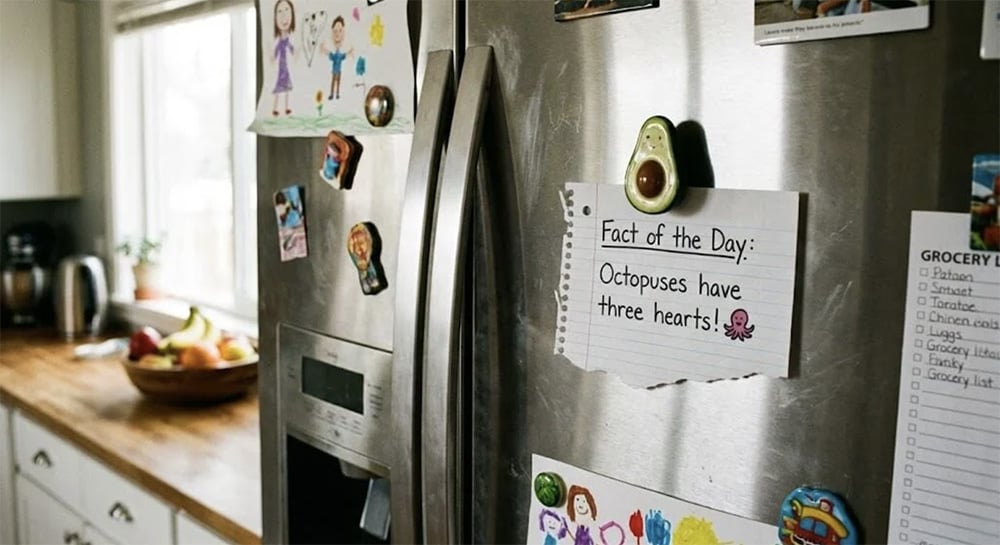
Fact of the day
Pick one non-fiction book each day in November. Find a fun fact and share it. Write it on a sticky note for the fridge. Draw a quick picture. That’s it. No pressure, no big project—just celebrating interesting information.
Follow their obsession
Does your child have a thing? Trains, insects, dinosaurs, cooking, planets, animals, sports? Use Non-Fiction November as permission to lean fully into that interest. Gather two or three books on the topic (at different levels if possible) and let them lead.
Non-fiction bedtime reading
Not every evening needs a story. Try reading a non-fiction book—or just a few pages—at bedtime. Short, snappy pages are perfect when everyone’s tired but you still want that quiet, connected reading time.
Turn questions into adventures
When your child asks “Why do leaves fall?” resist the urge to explain. Say instead, “Great question. Let’s find a book about that.” You’re teaching them that books are where you find answers. Stick with them as they explore. Talk about what you find.
Create a topic shelf
Gather a small stack of non-fiction books on one topic in one place. Mix simple ones with more detailed ones. Include weird and wonderful books as well as the obvious choices. Rotate the topic every week or two. It’s an invitation to explore.
Non-fiction for different readers
Early readers (just starting out): Look for books with one short sentence per page, clear photos, and lots of repetition. Read the sentence, then chat about the picture. Simple and powerful.
Building confidence: Slightly longer sentences, labels, speech bubbles, and simple diagrams. Many children love spotting “wow” facts in coloured boxes.
More fluent readers: Longer books, chapter books, topic books. Let them read in their own way. Skipping sections, jumping to the exciting bits, and reading backwards is absolutely fine.
Remember, there’s no “right” way to enjoy non-fiction. A child who flips straight to the gory or funny bits is still reading. A child who reads every caption and label is still reading. Both are learning.
Going deeper with non-fiction
If your child gets really interested in a topic, you can extend it gently (without it feeling like homework):
- Visit somewhere relevant: Read about animals, then go to the zoo. Read about castles, then visit one. Reality brings books alive.
- Create something: Build, draw, make, design something related to what you’ve learned. No rules, just creation.
- Watch a documentary: If you find a non-fiction book on a topic your child loves, there’s often a film or series too. Words and images together are powerful.
- Talk about what you’ve learned: At dinner, at bedtime, whenever. Let them be the expert. “Tell me something amazing you learned about octopuses today.”
Using activities with non-fiction reading
This activity is brilliant for non-fiction. It helps children reflect on and remember what they’ve learned.
Before and after reading
One question before you open the book. One after you close it. That's it — but it shifts everything from just decoding words to actually thinking about them.
Goal
Help your child get more from every reading session by tuning in to meaning, not just getting through the words.
You'll need
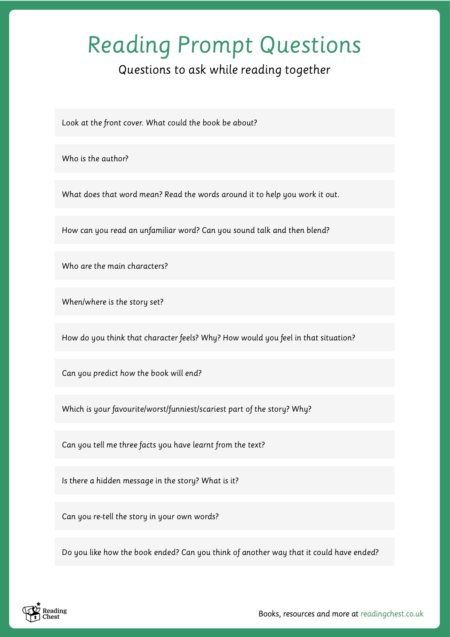
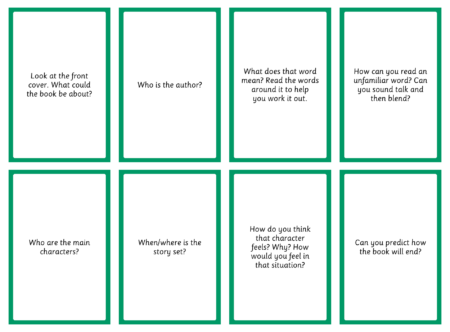
- Reading Prompt Questions
- Reading Prompt Cards
How to do it
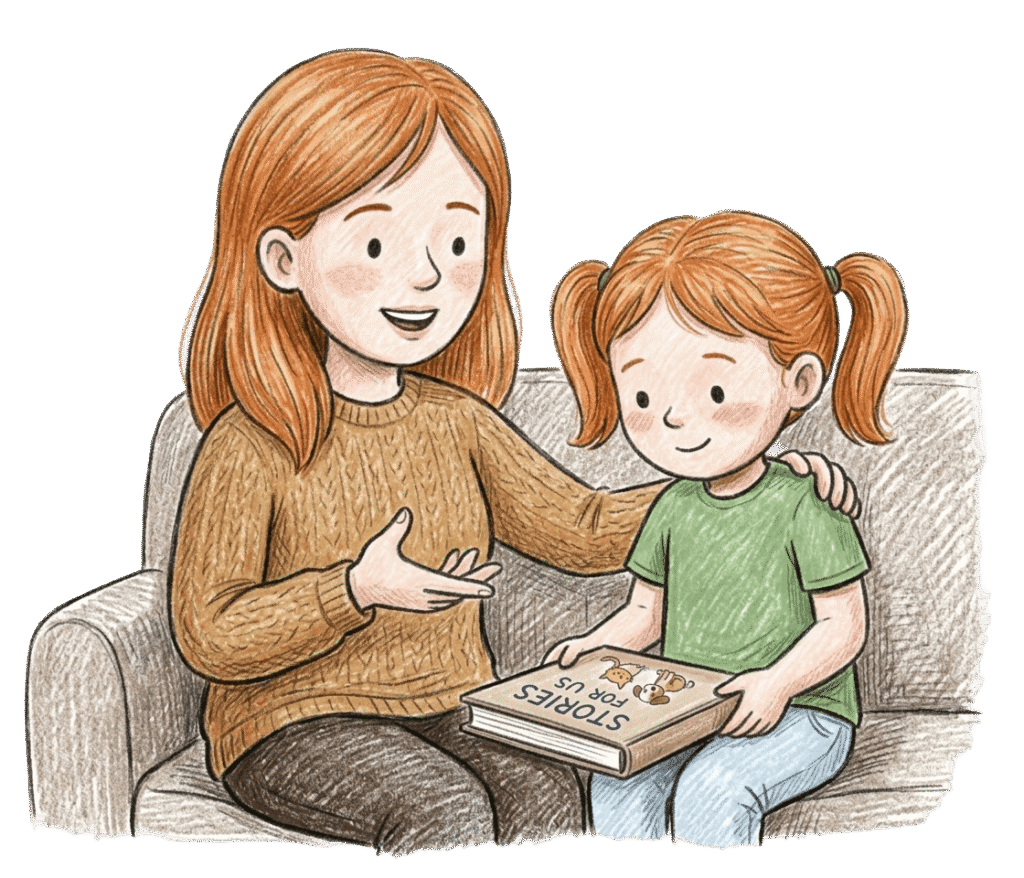
Before you open the book, ask one simple question: "What do you think this might be about?" or "What do you notice on the cover?" That's all — don't overthink it.
Read together. When you finish, ask one follow-up: "What was your favourite part?" or "What would you do if you were that character?" Use the prompt cards if you want more ideas.
Keep it brief. You're not running a comprehension test — you're just helping them connect with what they've read. That habit of pausing to think is one of the most useful things a reader can learn.
Grab our resources
Print our reading prompt questions and reading prompt cards to get started.
Or try this one to create a lasting memory of facts and ideas.
The five-word summary
Sum up the whole story in exactly five words. Harder than it sounds, more fun than it should be, genuinely great for comprehension.
Goal
Practise distilling a story to its essence — what really mattered? What can't you leave out? Five words forces real thinking.
You'll need
Nothing needed — works right after any book, anywhere.
How to do it
When you've finished a story, set the challenge: "Can you sum up the whole thing in exactly five words?" Not roughly five — exactly five.
Give them a minute to think. "Dog finds lost ball. Hmm — that's four. Dog finally finds his ball — five!" The counting and refining is all part of it.
You have a go too. Compare your five words and talk about why you chose differently. There's no single right answer, and that's what makes it interesting. If they want to try again with four words, or seven, go for it.
Frequently asked questions
What is Non-Fiction November?
Non-Fiction November is a celebration of non-fiction reading in November each year. It’s an opportunity for families and schools to focus on information books, facts, and celebrating curious minds. It’s not just for children who love stories about planets and dinosaurs—it’s for anyone who likes finding out.
Should children read non-fiction as well as stories?
Absolutely. Both matter. Stories build imagination and emotional understanding. Non-fiction builds knowledge and shows different ways of reading. Children thrive when they experience both. Some children love stories and tolerate non-fiction; others are the opposite. Either way is perfectly fine.
What non-fiction books are good for early readers?
Look for books with large, clear photos; one sentence per page or fewer; repetition; and topics your child is interested in. Books with labels, simple captions, and visual guides work brilliantly. Many reading schemes include non-fiction titles—check with your school or library for recommendations at your child’s level.
How is reading non-fiction different from reading stories?
Non-fiction teaches information skills: skimming for facts, using indexes and contents pages, reading captions and diagrams. Children learn to read flexibly—not always page by page, sometimes jumping around. Stories teach narrative and emotional understanding. They’re different skills, and both are valuable for becoming a confident, flexible reader.
Non-Fiction November is really an invitation to celebrate the fact that your child’s questions matter. Their curiosity is interesting. And books—beautiful, smart, picture-filled books—are there to help them explore the world.
Browse our collection of non-fiction books to find non-fiction on topics your child loves. You can request specific titles based on their current obsessions. Looking for a way to keep non-fiction books flowing throughout the year? Learn about Reading Chest and how it supports continuous access to books.
