Contents
Phonics Bug is Pearson’s decodable phonics reading scheme — a series of fully phonics-matched books designed to support children in the early stages of learning to read. If your child’s school uses Bug Club, there’s a good chance they’re also using Phonics Bug books as part of the phonics teaching, and the two programmes work closely together.
This guide explains what Phonics Bug is, how it differs from Bug Club, how the levels work, and what you can do at home to support a child who’s using these books.
The key thing to know upfront: Phonics Bug books are designed to be fully decodable, which means every word in each book uses sounds your child has already been taught. That makes them excellent tools for building genuine reading confidence.
What Phonics Bug is
Phonics Bug is published by Pearson and forms the phonics reading component of the Bug Club system. The books are specifically designed to be used alongside a systematic phonics programme, with each level introducing and reinforcing specific grapheme-phoneme correspondences — the links between written letters and the sounds they represent.
Each Phonics Bug book is labelled with the sounds it uses, which makes it easy for teachers (and parents) to match books to a child’s current phonics stage. Books are available in both fiction and non-fiction formats across all levels, which is useful for children who prefer facts to stories.
Bite-sized reading tips, straight to your inbox
Get confidence-boosting tips to help your child learn to read. Short, useful, and easy to fit into (real) family life!
Even better? You'll also get 30% off your first month of Reading Chest.
The relationship between Phonics Bug and Bug Club
This is the question parents ask most often, and it’s a reasonable one to be confused about. Pearson’s reading world has two main components:
- Phonics Bug — the decodable phonics readers. Fully phonics-matched, used in the early reading stages when decoding is the primary skill being developed.
- Bug Club — the broader reading scheme. Colour-banded levelled readers that cover the full primary school range, not limited to decodable text.
In school, children typically use Phonics Bug books in Reception and Year 1, then transition to the wider Bug Club scheme as their phonics becomes secure and the focus shifts to fluency and comprehension. The two systems use the same colour-banding framework, which makes the transition straightforward.
You can read more about Bug Club levels in our Bug Club reading levels guide.
How Phonics Bug levels work
Phonics Bug uses Pearson’s colour-banded level system, which aligns closely with the standard book band framework used by most UK schools:
| Bands | Typical phonics focus |
|---|---|
| Earliest sounds (Phase 2–3 phonics) | |
| More complex sounds including digraphs (Phase 3–4) | |
| Longer words, split digraphs, vowel digraphs (Phase 4–5) |
Because Phonics Bug books are fully decodable, the level of a book is defined primarily by which sounds it uses — not just by sentence length or vocabulary. A child can only read a Phonics Bug book independently once they’ve been taught the sounds it contains.
You can browse Phonics Bug and Bug Club books on Reading Chest across the full level range.
How to support at home
The most important thing you can do with a Phonics Bug book at home is let your child do the decoding. It can be tempting to jump in when they hesitate, but giving them a moment to work it out is more valuable than telling them the word. The whole point of a decodable book is that they have the tools to work it out themselves.
Some practical approaches:
- Read the book more than once. The first read is often slow and deliberate; the second read is faster and builds fluency. Both matter.
- Focus on the sounds, not just the words. If your child gets a word wrong, point to the specific letter(s) they misread and ask them what sound those letters make. That’s more useful than simply saying the word for them.
- Celebrate the effort, not just the accuracy. If they had a go at a tricky word and got it wrong but used the right strategy, that’s worth acknowledging.
- Check the sounds list. Phonics Bug books typically list the sounds they use inside the front cover. You can use this to do a quick warm-up before reading — flashcards, or just running through the sounds quickly.
Avoid asking your child to guess from pictures or context when they get stuck on a word in a Phonics Bug book. These books are specifically designed so that guessing isn’t necessary — the tools to decode every word are there. Guessing builds a habit that works against the phonics approach.
The digital component
Many schools use the Bug Club digital platform alongside physical Phonics Bug books. This gives children access to eBooks and interactive activities that reinforce the same sounds and words. If your child has a school login, it’s worth using this at home too — the eBook versions of Phonics Bug books are identical to the physical ones, and the interactive features can add variety.
What comes after Phonics Bug
Once a child’s phonics knowledge is secure and decoding becomes more automatic (typically towards the end of Year 1 or in Year 2), they’ll move from Phonics Bug books into the wider Bug Club reading scheme — or into other levelled reader series. At this point, the books are no longer strictly decodable, and the focus shifts to fluency, vocabulary, and comprehension.
Reinforcing phonics at home
This activity works alongside any phonics book — it helps consolidate the sounds your child is currently learning in a playful, low-pressure way:
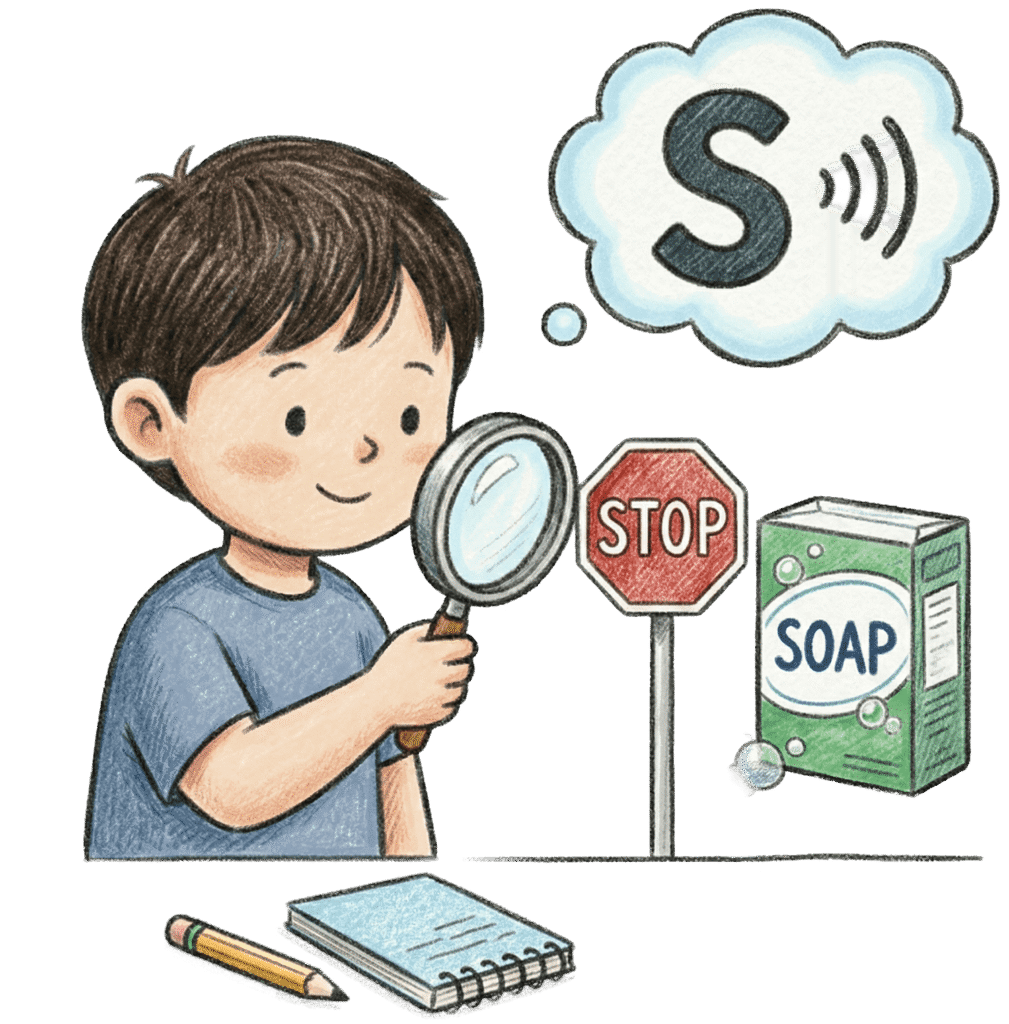
Sound of the day
Pick one sound and spend the day noticing it everywhere — on signs, packets, toys, and out in the world. Quick to set up, surprisingly addictive.
Goal
Help your child notice sounds in everyday life — building phonemic awareness without needing to sit down and "do phonics".
You'll need
Just a focus sound — like sh or ee — and your normal day.
How to do it
Pick a sound in the morning. Say it together clearly: sh, ee, m — whatever you're working on. That's your sound of the day.
Then just keep going with your normal day. Whenever you spot it — on a cereal box, a road sign, a shop name, a toy — point it out and say the sound together. Let your child spot them too and make a fuss when they do.
By the end of the day, you'll have done phonics practice a dozen times without sitting down once. That's the magic of making it ambient rather than formal.
And this one is a good way to build the reading habit around their Phonics Bug books:
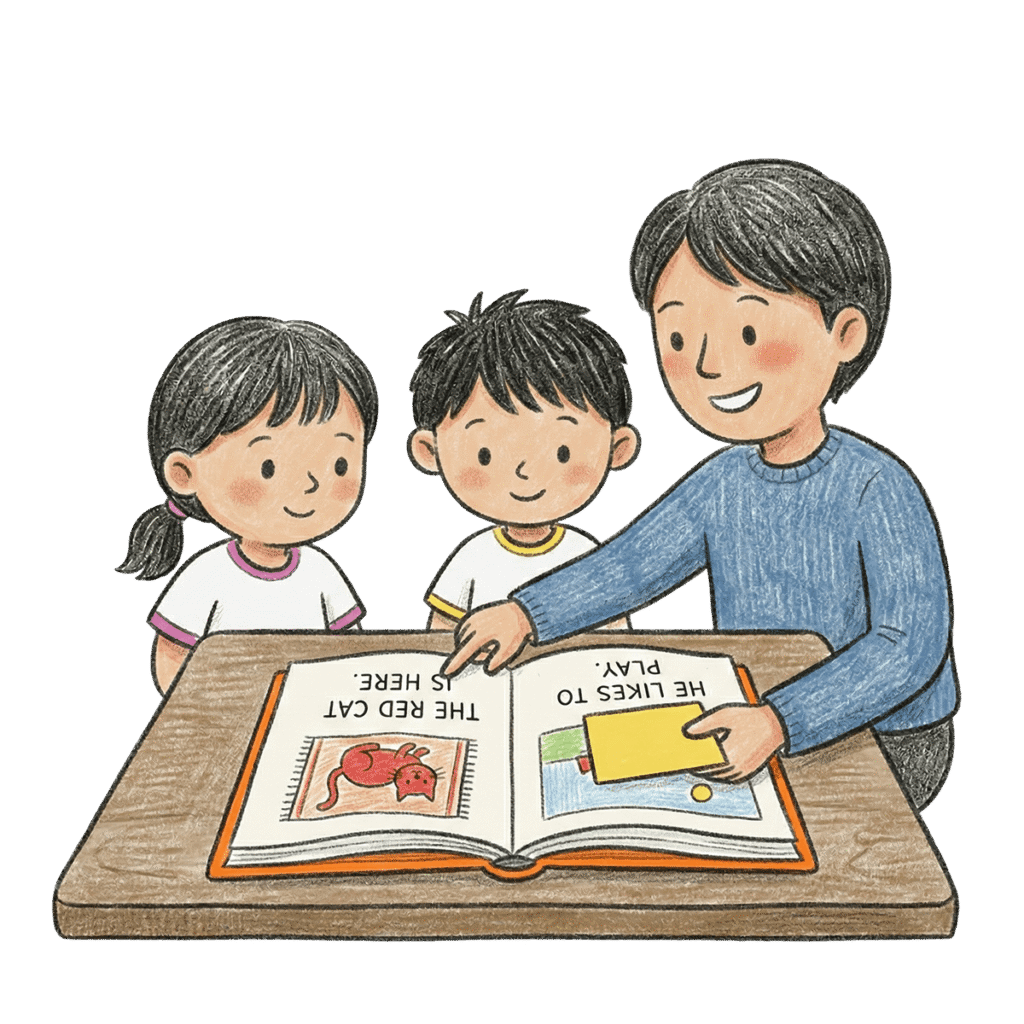
Picture-cover reading
Cover the pictures and read the words first. Then uncover and re-read. It sounds simple — but it makes a real difference to how children approach a page.
Goal
Encourage real decoding rather than guessing from pictures — a habit that pays off as books get harder and illustrations get fewer.
You'll need
- A decodable book
- Two sticky notes
How to do it
Open the book to a page and cover the illustration with a sticky note. Ask your child to read the words first — just the text, no picture clues.
Once they've had a go (stumbles and all), take away the sticky note and re-read the page together with the picture revealed. Talk about what the picture adds. Did it match what they imagined? Did it help them understand anything differently?
This doesn't need to be every page — even doing it once or twice in a session is enough. The goal is to build the habit of trusting the words, not just guessing from the picture. That's a big deal as books get longer.
Grab our resources
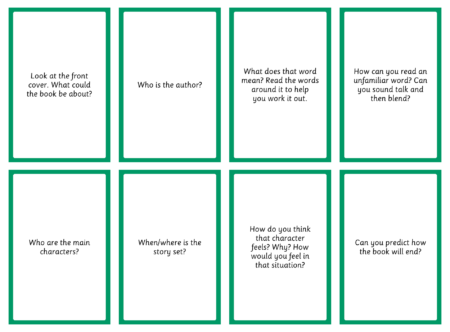
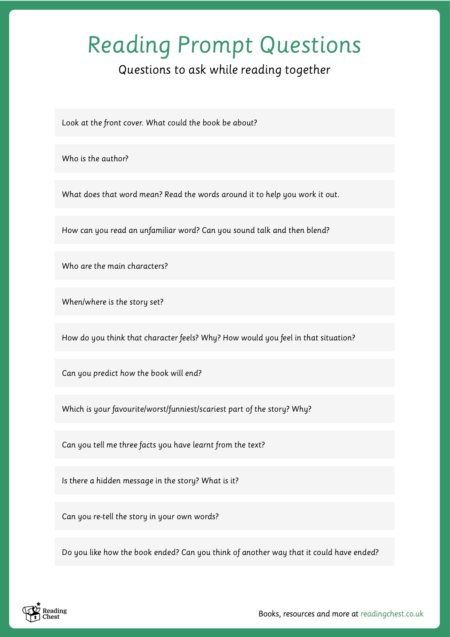
Looking for some help with questions to ask after your reading session? These prompts give you a great starting point.
Frequently asked questions
Is Phonics Bug the same as Bug Club?
No — they’re related but different. Phonics Bug is the decodable phonics reading series for early readers. Bug Club is the broader, colour-banded reading scheme for the full primary range. Schools often use both: Phonics Bug in the early phonics phase, then Bug Club as children develop fluency and comprehension. Both are published by Pearson and use the same colour-banding system.
My child seems bored by Phonics Bug books — what should I do?
Phonics books can sometimes feel repetitive because the vocabulary is deliberately limited. The best response is usually to make sessions shorter and more varied: read together, take turns reading sentences, re-read books they’ve already mastered to build fluency, or use the digital versions which have interactive features. It’s also worth checking whether the books are at the right level — a child who finds books too easy will disengage.
Does Phonics Bug follow a specific phonics programme?
Phonics Bug is designed to be used alongside a systematic phonics programme and follows a phased approach broadly aligned with common UK phonics teaching sequences (similar to the DfE Letters and Sounds phases). It’s not exclusively tied to one programme, but it works well with the Bug Club Active Learn platform, which schools often use alongside it. The books themselves label their sound content clearly, which makes them compatible with most phonics teaching approaches.
