Contents
Reading development across primary school follows a distinct arc: from cracking the phonics code in Reception and Year 1, through building fluency in lower Key Stage 2, to reading independently for meaning and pleasure in upper KS2. But most parents only see the year their child is currently in. This guide zooms out.
Here’s what the full primary reading journey looks like, how progress is measured, what to expect at each stage, and how you can help at home throughout.
The full primary reading arc
Reading development in primary school has three broad phases, each building on the last:
Cracking the code (Reception and Year 1)
The focus is on phonics: learning the relationship between sounds and letters, blending sounds into words, reading simple decodable texts. The phonics screening check at the end of Year 1 is the key assessment milestone of this phase.
Building fluency (Year 2 to Year 3)
As phonics knowledge becomes more secure, decoding starts to become automatic. Children begin to read faster, with more expression, and can focus more attention on meaning rather than just working out the words. The transition from “learning to read” to “reading to learn” happens here.
Reading to learn (Year 4 to Year 6)
By this stage, most children are reading independently. The focus shifts to comprehension: inference, vocabulary in context, understanding authorial intent, and reading across different genres and subjects. The KS2 SATs reading paper at the end of Year 6 is the culminating formal assessment.
Bite-sized reading tips, straight to your inbox
Get confidence-boosting tips to help your child learn to read. Short, useful, and easy to fit into (real) family life!
Even better? You'll also get 30% off your first month of Reading Chest.
Reception and Year 1: phonics and decoding
The systematic teaching of phonics starts in Reception, usually in the first half of the autumn term. Children learn the sounds letters represent and begin blending them into words. By the end of Reception, most children can read simple books containing the sounds they’ve been taught.
In Year 1, phonics continues: digraphs, vowel patterns, and more complex spelling correspondences are introduced. Children work through decodable books matched to their current phonics level, and also begin reading for pleasure with a wider range of texts.
The phonics screening check is taken at the end of Year 1. This is a 40-word test in which children read real words and nonsense words aloud, one-to-one with a teacher. It assesses whether children have grasped the phonics principle reliably. Children who don’t pass at the end of Year 1 are assessed again at the end of Year 2.
Year 2 and Year 3: building fluency
In Year 2, phonics consolidation continues while children also begin the transition to more varied texts. Reading becomes less purely about decoding and more about reading with flow and expression. Most children complete the core phonics programme by the end of Year 2 and are reading early chapter books with growing confidence.
Year 3 is often described as the year when reading “clicks” for many children: decoding becomes more automatic, comprehension becomes the main challenge, and reading for pleasure becomes more naturally possible. Children who’ve arrived at Year 3 with a strong phonics foundation and regular reading practice tend to make visible progress during this year.
Year 4 to Year 6: reading to learn
In upper primary, reading instruction shifts focus from mechanics to meaning. Comprehension skills — inference, vocabulary work, understanding text structure, and evaluating authors’ choices — are taught systematically in English lessons. Children are expected to read more independently, across more genres, and with greater stamina.
The range of what children are expected to read expands significantly: poetry, classic texts, non-fiction, persuasive writing, and literary fiction all feature. The demands of reading in other subjects (maths word problems, science reports, history sources) also increase across KS2.
The KS2 SATs reading paper at the end of Year 6 assesses comprehension skills: retrieval, inference, vocabulary in context, and authorial intent. Children who’ve had a diet of varied reading and regular discussion of books arrive at Year 6 well-prepared.
How reading progress is measured
Schools use several approaches to monitor reading development:
- Book bands and reading levels — levelled reading books (using the colour band system from Pink to Lime and beyond) let teachers track and communicate where a child is in terms of reading complexity. Our book bands guide explains what each colour band means and how the levels work across different schemes.
- Teacher assessment — listening to children read aloud and discussing books with them is how teachers assess accuracy, fluency, and comprehension. This ongoing, informal assessment shapes which books children are given and what teaching they receive.
- Standardised assessments — the phonics screening check (Year 1), optional KS1 SATs (Year 2), and the KS2 SATs reading paper (Year 6) are the main formal assessments.
- Reading ages — some schools use commercial assessments that produce a “reading age” — an estimate of the level a child is reading at compared to national norms. Reading ages are useful indicators but should be interpreted carefully, as they don’t capture all aspects of reading ability.
What parents can do at every stage
One thing stays constant throughout the primary years: reading together is valuable. Even when children are fluent, independent readers, being read to by a parent — and talking about books — builds vocabulary, comprehension, and the love of reading that makes the whole journey sustainable.
At the early stages (Reception to Year 2), the most useful things are reading decodable books with your child, practising the sounds they’ve been taught, and keeping the habit positive and low-pressure. Our guide to how children learn to read covers the phonics stages in detail.
In the middle years (Year 2 to Year 4), building fluency through regular reading at the right level, and having conversations about books and stories, is the priority.
In upper primary (Year 4 to Year 6), the most valuable thing is keeping reading happening for pleasure, alongside the school-assigned reading. Children who read widely across topics and genres arrive at secondary school with a significant advantage.
These activities work at every stage of the primary reading journey:
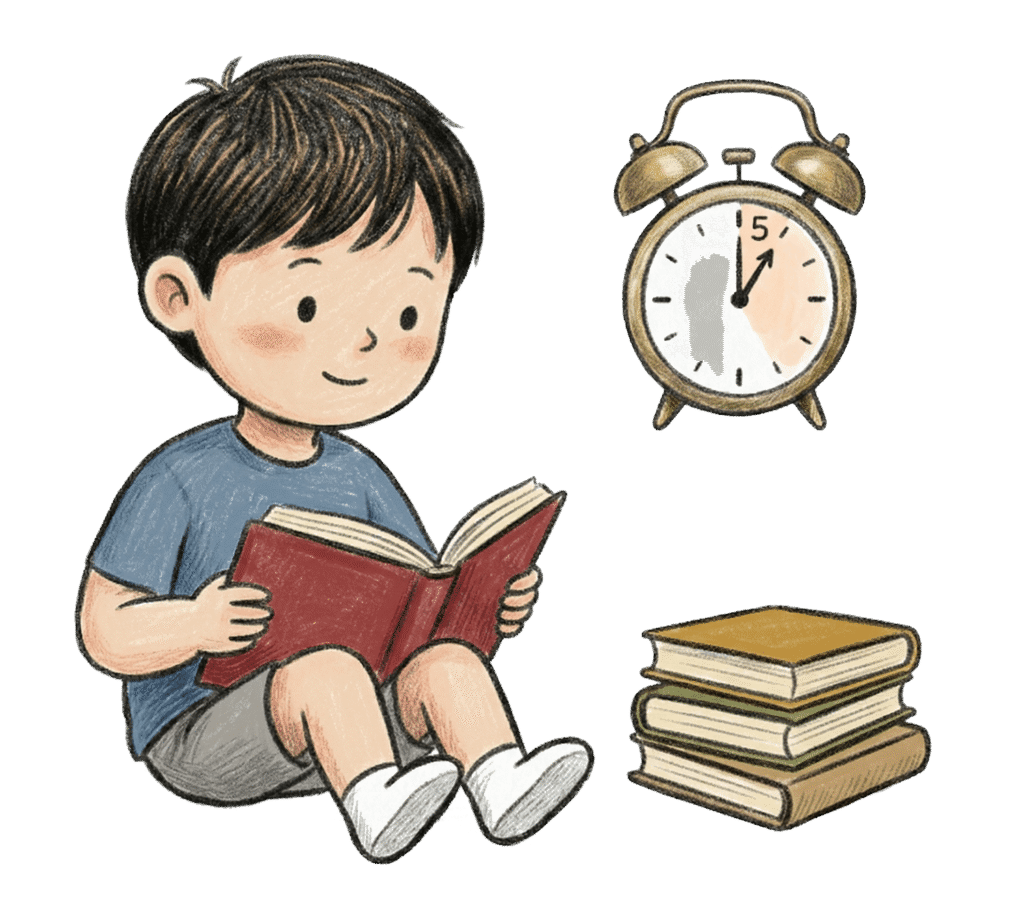
The five-minute reading habit
Five focused minutes with the right book beats an hour of reluctant page-turning. Short daily sessions are where the real progress happens.
Goal
Build confidence and fluency through short, consistent daily reading — because regularity matters more than duration.
You'll need
- A decodable book at the right level
- A comfy spot
- A bit of patience
How to do it
Sit together and read a couple of pages. Let your child point to each word as they sound it out. If they get stuck, give them a moment before you step in — sometimes they just need a second.
When they do need help, try: "Say the sounds, then blend" rather than just saying the word for them. Keep the session upbeat. End it before anyone gets tired.
Five minutes every day adds up to over 30 hours of reading practice in a year. That's not nothing — that's everything. The habit matters more than the duration.
Grab our resources
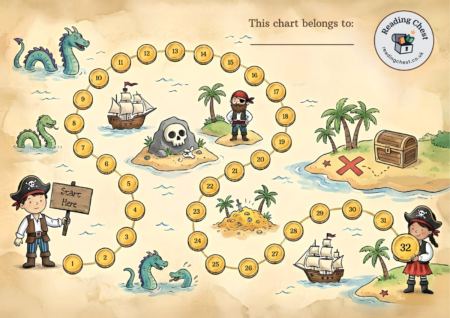
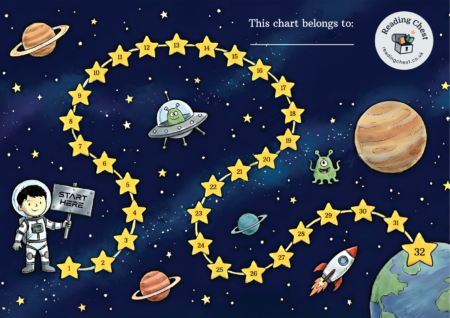
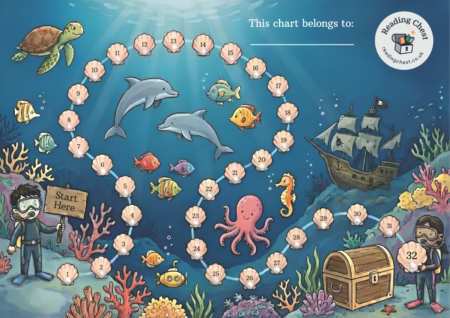
Our handy star charts are the perfect way to track your daily progress as you tick off those five minute reads!
Reader of the week
Run a weekly reading award in your own home. Celebrate effort, not perfection — a certificate and a bit of fanfare go a long way.
Goal
Build reading motivation by recognising effort in a fun, low-pressure way — because being noticed for trying is genuinely powerful.
You'll need
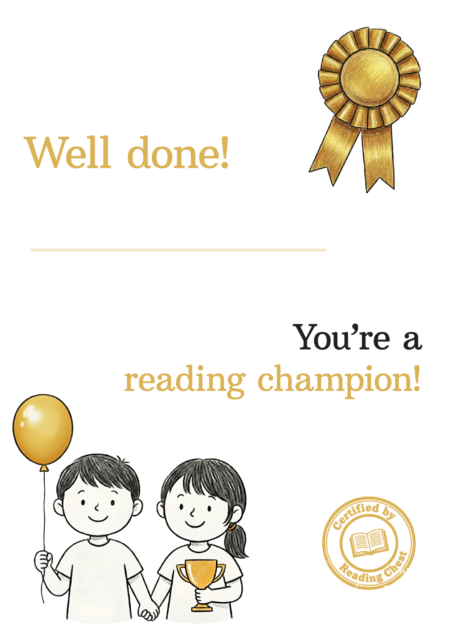
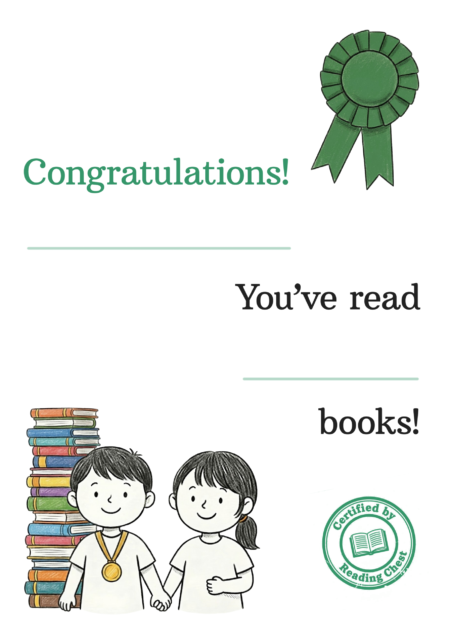
- Reading Champion Certificate or Reading Milestone Certificate
- Star chart (Underwater, Space or Pirate theme)
How to do it
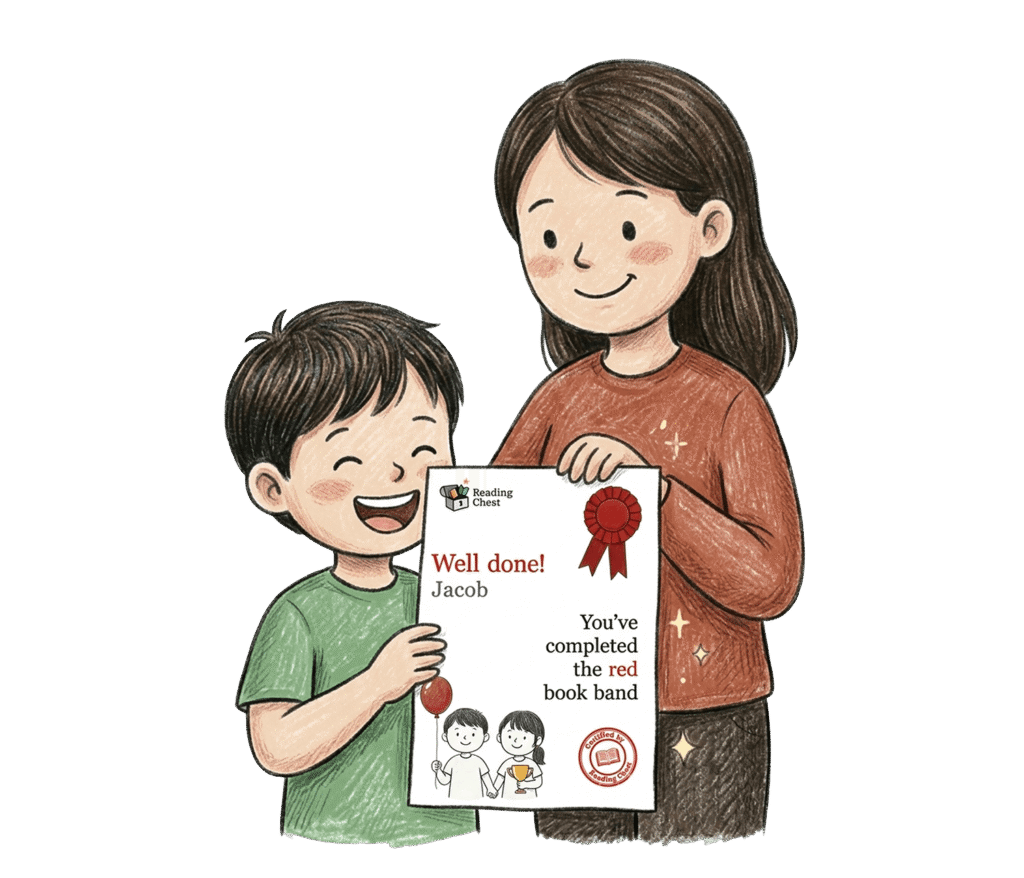
Pick a day each week to announce your "reader of the week". The criteria are up to you — effort, trying a tricky word, finishing a book, or simply having a go on a day when they really didn't want to.
Award a certificate with a bit of ceremony. Make it feel like a proper moment: hand it over, say what they did well, let them display it somewhere. Add stars to the chart as a running record of brilliant reading moments.
Keep it light and rotation-friendly — you don't need a different winner every week. The goal is to make them feel seen for the work they're putting in, not just for being "good at reading".
Grab our resources
Print our reading champion certificate and reading milestone certificate to get started.
Frequently asked questions
How do I know if my child is on track with their reading?
The most direct source is your child’s teacher — ask at a parents’ evening or by email. Teachers can tell you which book band or reading level your child is on and whether they’re making expected progress. The book band system gives you a rough national comparison: Pink and Red bands are typical for early Reception; most children reach Yellow or Blue by end of Year 1; Green to Orange is typical for Year 2. But these are rough guides — there’s significant normal variation at every stage.
What is the phonics screening check and how should I prepare my child?
The phonics screening check is a one-to-one assessment taken in Year 1, where children read 40 words aloud — a mix of real words and nonsense words. It’s designed to be low-stress for children and takes only a few minutes. The best preparation is simply continuing what you’ve been doing: practising phonics sounds, reading decodable books, and keeping the reading habit positive. You don’t need to do anything specifically for the check; if your child’s phonics is secure, they’ll pass it.
Should I be helping my child with reading throughout primary school, even in Year 5 or Year 6?
Yes — the nature of help changes, but it doesn’t stop being valuable. In Year 5 and Year 6, “helping” looks less like sitting with a reading book and more like talking about what they’re reading, recommending books, reading aloud to them (yes, still), and keeping books available and appealing. Children at this age who have parents engaged with their reading tend to read more widely and develop stronger comprehension than those who are left to manage their reading independently.
