
Contents
Somewhere around the first half-term milestone, a child comes home from school with a link instead of a book. Their reading is now digital – a QR code, an app, or a login to an online platform. No physical book to hold, no cover to admire, no pages to turn. Just a screen.
If this has happened in your child’s school, you’re not alone. More and more schools are moving away from sending physical reading books home, switching instead to digital reading schemes. For schools, the logic is straightforward: digital is cheaper, simpler to manage, and easier to track. But for children learning to read, the implications are more complicated.
The concern from parents is real, and it’s worth taking seriously. Is a child truly having the full reading experience if it’s all happening on a screen? And what happens to children whose home environment isn’t set up for device-based learning?
Let’s explore what’s happening, why it matters, and what you can do about it.
Why schools are moving to digital reading schemes
The shift towards eBooks is rarely because schools believe digital reading is better for children. It’s usually about resources and practical management.
Budget pressures
Physical reading scheme books are expensive. Schools have to buy them, stamp them, cover them with plastic, replace them when they get damaged or lost, and store them. An annual subscription to a digital reading platform costs far less than continuously replenishing a library of physical books.
In an era when school budgets are stretched thin, that saving matters. And from a purely financial standpoint, it’s understandable.
Practical management
Digital systems also make management easier. Teachers can assign books with a few clicks, see instantly which children have opened or completed their reading, and track progress without paper-based record-keeping. They don’t worry about books going missing or coming back damaged.
From a teacher’s perspective, that’s a genuine improvement in efficiency.
The assumption that digital is modern
There’s an assumption in some circles that digital is automatically more modern, more engaging, or more suited to how children learn today. In reality, the evidence is more mixed – especially for early readers.
Bite-sized reading tips, straight to your inbox
Get confidence-boosting tips to help your child learn to read. Short, useful, and easy to fit into (real) family life!
Even better? You'll also get 25% off your first month of Reading Chest.
Why digital-only reading can be problematic for early readers
For children who are just beginning their reading journey, relying solely on eBooks has some real downsides.
The sensory experience of a real book
There’s something irreplaceable about holding a physical book. A child can flip back to find a favourite picture. They can see how much of the book they’ve read by the thickness of the pages they’ve completed. They can carry it around, show it to friends, keep it in a special spot. A real book is a tangible, ownership-based experience in a way a screen isn’t.
For early readers, that tactile, visual progress is surprisingly powerful for motivation and confidence.
Practical barriers in many homes
Not every family has:
- A suitable device that a young child can use independently or with minimal supervision
- Multiple devices to share between siblings
- Reliable internet access – especially at homework time when everyone is trying to connect
- An environment where screen time is unlimited or unrestricted
For some families, device-based reading creates a genuine barrier rather than opening one up.
Reading on a screen is different from reading on paper
Research suggests that children process and retain information differently when reading on screens versus paper. Screen reading tends to be more skimming and less deep. For early readers who are still developing fluency and comprehension, the medium absolutely matters.
Eye strain and posture concerns
Young children holding a device at the wrong distance or angle can develop eye strain and posture problems. A physical book allows for much more natural, relaxed positioning.
Loss of the ritual
Reading with a physical book has ritual. Choosing it from a shelf, opening it, sitting together. Clicking a link and staring at a screen doesn’t quite feel the same. For young children, ritual and cosiness matter – they’re part of what builds the association between reading and pleasure.
Why physical books are still essential for early reading
Physical reading books do more than help children practise phonics. They’re part of building a genuine reading life – one that feels real, hands-on and part of the wider world.
With a real book in their hands, children can:
- Look at the front cover and make predictions about what the story might be about
- Flip back and forth between pages to look at a favourite picture again
- See their own progress as the “read” side of the book grows thicker
- Build little routines – keeping their reading book in a special spot, bringing it on journeys, choosing it at bedtime
- Share it physically with a sibling or friend
- Feel genuine pride in ownership and progression
All of this contributes to reading feeling like a real-world activity, something important and personal – not another piece of homework on a screen.
Understanding reading levels and finding the right books
Whether books come from school or whether you’re sourcing them yourself, understanding reading levels helps you choose books that will genuinely work for your child.
Books are levelled so children can experience success – not so easy they’re boring, not so hard they’re frustrating, but just right where reading feels achievable. Our book bands guide explains the system in detail and helps you understand what level your child is on.
The key is: don’t assume you know your child’s level. Ask their teacher. Then use that information to find books that match – whether those books come from school, a library, or elsewhere.
What parents can do if schools have gone digital
If your school has moved to eBooks only, you’re not powerless. Here are some concrete steps:
Talk to the teacher
Have a conversation. Ask how the digital system is working for your child. Mention your concerns about the loss of physical books. Many teachers have concerns too – they’re just not always in a position to change school-wide decisions. But individual conversations matter, and if enough parents raise the issue, it might prompt change at a school level.
Ask about flexibility
Some schools have some flexibility within their digital systems. Ask whether there’s any possibility of borrowing physical books as well as accessing digital ones, even if it’s occasional rather than regular. You might be surprised.
Top up with physical books at home
This is the most direct solution. Supplement what school is providing with real, levelled reading books at home. This ensures your child still gets the page-turning, sensory, tactile experience of reading – which is especially important in these early years.
Your child’s teacher can tell you what level they’re on. Armed with that information, you can find books that are just right – whether through your local library, book rental services like Reading Chest, or by purchasing books.
Use your library
Public libraries are brilliant for this. You get access to thousands of books, all free, all levelled. Let your child visit regularly, choose their own books, and enjoy the experience of browsing and selecting. Libraries aren’t just free – they’re also a community resource that matters.
Consider a book rental service
Book rental services exist precisely for situations like this – to ensure children still have access to levelled physical books even when schools aren’t providing them. Services like Reading Chest send books by post, matched to your child’s reading level, so there’s always something fresh and physical to read.
Finding a reading approach that works for your family
The reality is: digital reading isn’t going away. It’s a legitimate part of modern reading, and children will encounter it. But it shouldn’t be the whole picture – especially not in these crucial early years when reading for pleasure is being built.
The ideal scenario looks something like this:
- School digital platform: providing access and teacher tracking
- Physical books at school or home: for the sensory, tactile, ownership experience
- Read-alouds: every single day, for the joy and the modelling of fluent reading
- Independent pleasure reading: books your child chooses because they’re interested, not because they’re assigned
- Library access: for free browsing and choice
This mix gives children the best of both – the practical benefits of digital systems and the profound benefits of real books.
Making reading a real, hands-on activity
If your child’s school is digital-only, it’s even more important that you bring physical books into their reading life at home.
Here’s a simple routine that works well: choose one time each day when your child reads a physical book. After school, before bedtime, after breakfast – whatever fits your day. Make it consistent, make it relaxed, and make it a genuine part of your routine.
Building this habit is easier with a little structure. This activity helps establish a five-minute daily reading practice that’s flexible enough to work around a busy day:
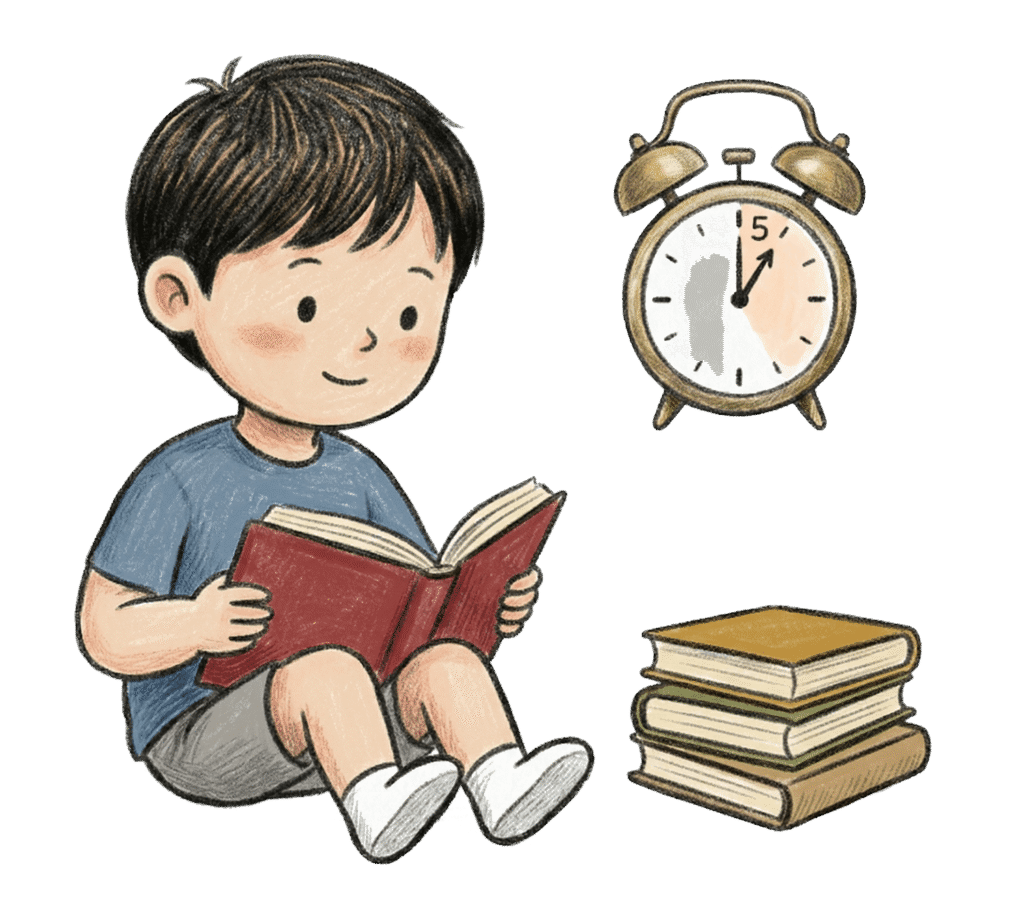
The five-minute reading habit
Five focused minutes with the right book beats an hour of reluctant page-turning. Short daily sessions are where the real progress happens.
Goal
Build confidence and fluency through short, consistent daily reading — because regularity matters more than duration.
You'll need
- A decodable book at the right level
- A comfy spot
- A bit of patience
How to do it
Sit together and read a couple of pages. Let your child point to each word as they sound it out. If they get stuck, give them a moment before you step in — sometimes they just need a second.
When they do need help, try: "Say the sounds, then blend" rather than just saying the word for them. Keep the session upbeat. End it before anyone gets tired.
Five minutes every day adds up to over 30 hours of reading practice in a year. That's not nothing — that's everything. The habit matters more than the duration.
Grab our resources
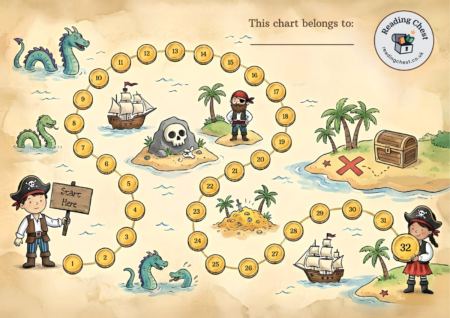
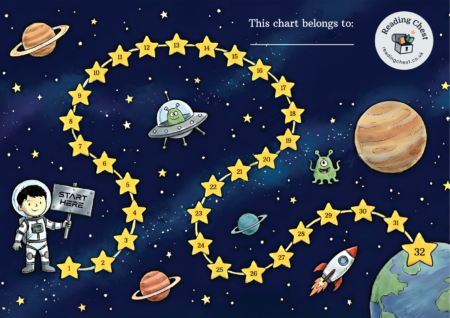
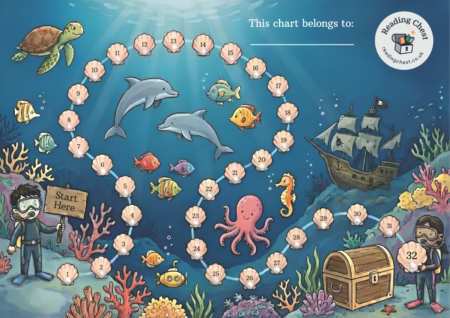
Our handy star charts are the perfect way to track your daily progress as you tick off those five minute reads!
And once you’ve got the habit going, this activity helps children engage more deeply with their reading, thinking about the story beyond just decoding the words:
Before and after reading
One question before you open the book. One after you close it. That's it — but it shifts everything from just decoding words to actually thinking about them.
Goal
Help your child get more from every reading session by tuning in to meaning, not just getting through the words.
You'll need
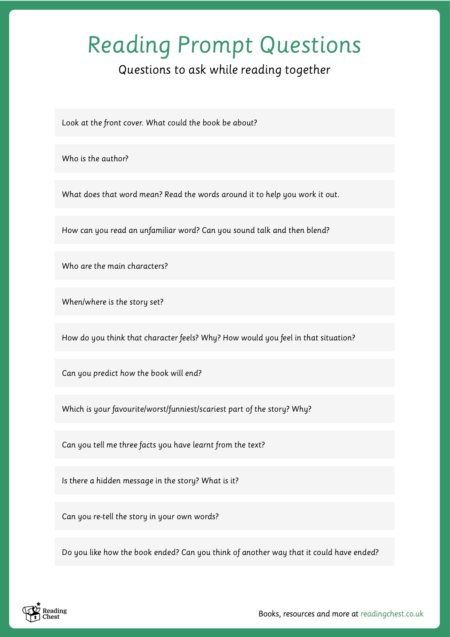
- Reading Prompt Questions
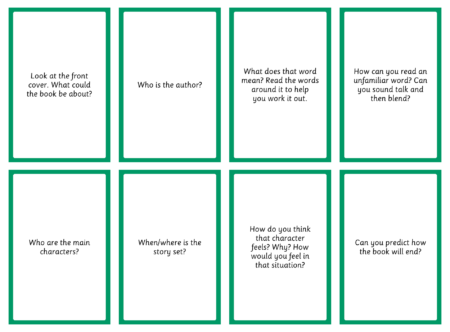
- Reading Prompt Cards
How to do it
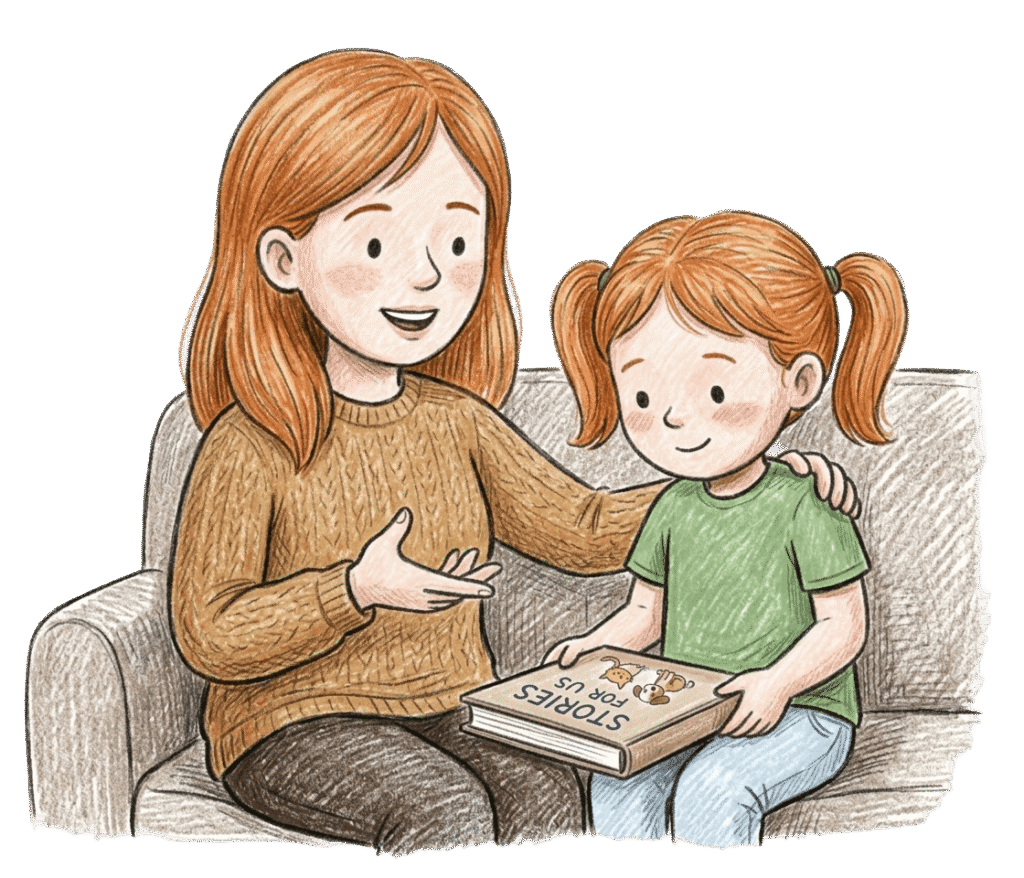
Before you open the book, ask one simple question: "What do you think this might be about?" or "What do you notice on the cover?" That's all — don't overthink it.
Read together. When you finish, ask one follow-up: "What was your favourite part?" or "What would you do if you were that character?" Use the prompt cards if you want more ideas.
Keep it brief. You're not running a comprehension test — you're just helping them connect with what they've read. That habit of pausing to think is one of the most useful things a reader can learn.
Grab our resources
Print our reading prompt questions and reading prompt cards to get started.
Why this matters for your child’s future
The transition from learning to read to reading to learn happens somewhere around age 8 or 9. After that point, children who’ve built a genuine love of reading – who see books as friends and sources of joy – are far more likely to continue reading, to read widely, and to use reading as a tool for learning across all subjects.
Children who only ever encounter reading on screens, especially in these early years, might never develop that visceral, pleasurable connection to books. And that’s a loss worth preventing.
By ensuring physical books stay part of your child’s reading experience – whether from school, libraries, or a rental service – you’re investing in their long-term relationship with reading. You’re saying: this is important, this is pleasurable, this is something we do together.
Frequently asked questions
Why has my child’s school stopped sending reading books home?
Schools usually switch to digital systems for budget and management reasons. Physical books are expensive to buy, maintain and replace. Digital platforms are cheaper and easier for teachers to track. It’s a practical decision, not a judgment that digital is better for learning.
What can I use instead of school reading scheme books?
Your local library is free and brilliant. You can also purchase levelled books, use a book rental service like Reading Chest, or ask your school if they have any flexibility to lend physical books as well as providing digital access. Any books at the right level – picture books, non-fiction, stories – work.
How do I know what reading level my child should be on?
Your child’s teacher will tell you the phonics phase they’re on and their reading level or book band. Our book bands guide explains what each level means. Once you know the level, you can find books that are appropriately pitched.
Does my child still need to read at home if the school doesn’t send books?
Yes. Home reading practice is crucial for developing fluency and confidence. School reading (whether digital or physical) is only part of the picture. By providing books at home, you’re ensuring your child gets enough practice and enough exposure to real, physical books – which is especially important in these early reading years.
The shift towards digital reading in schools is happening, and it’s not going away. But it doesn’t have to mean the end of physical books in your child’s reading life. By being proactive – talking to teachers, sourcing books from libraries or rental services, and making reading together a daily ritual – you can ensure your child gets the best of both worlds: the practical benefits of digital systems and the irreplaceable joy of real books.
