Contents
Segmenting is the process of breaking a spoken word into its individual sounds (phonemes) in order to spell it. A child who wants to write cat segments it into c–a–t, then writes a letter or letters for each sound.
It’s the opposite of blending — where children combine individual sounds to read a written word. Blending is for reading; segmenting is for spelling. Both skills are essential, and they reinforce each other.
If your child is in Reception or Year 1 and their teacher has mentioned segmenting, here’s what it means and how you can support it at home.
Blending vs segmenting: what’s the difference?
These two skills are the core engine of phonics, and it’s worth being clear on which is which:
- Blending — putting sounds together to read a word. You see cat written down, say c–a–t, blend them to get cat. This is how phonics teaches reading.
- Segmenting — breaking a spoken word into its sounds to spell it. You want to write cat, say it aloud, split it into c–a–t, write each sound. This is how phonics teaches spelling.
Children typically find blending slightly easier than segmenting, because reading gives them the visual support of the printed letters. Segmenting requires them to hear a word, hold it in their head, chop it into sounds, and then write each one — all without any visual clues. It’s genuinely harder, and it’s fine for it to take a little longer to click.
Bite-sized reading tips, straight to your inbox
Get confidence-boosting tips to help your child learn to read. Short, useful, and easy to fit into (real) family life!
Even better? You'll also get 30% off your first month of Reading Chest.
Why segmenting matters for spelling
Children who can segment reliably can spell any phonically regular word, even one they’ve never seen written down. They don’t need to have memorised it — they just need to be able to hear the sounds and know the letter(s) that represent each one.
That’s a powerful skill, and it’s why phonics programmes spend as much time on spelling as reading. The two are two sides of the same coin: knowing that the letter s represents the sound s is equally useful for reading sat and for spelling it.
Strong segmenting skills are also the foundation for tackling longer, more complex words. Once a child can segment CVC words reliably, extending the skill to four-sound and five-sound words is a logical next step.
How segmenting is taught in school
Most phonics programmes introduce blending and segmenting together from the start — they’re two parts of the same concept. The typical sequence is:
- Children learn a set of sounds and how to write the letters for each one.
- They practise blending those sounds to read simple words.
- They practise segmenting spoken words into those sounds to spell them.
- As more sounds are introduced, the same cycle continues with more complex words.
In Read Write Inc, segmenting is taught through “Fred fingers” — children hold up a finger for each phoneme they hear, count the phonemes, then write the letters. In other programmes, sound buttons serve a similar role, helping children visually represent the structure before writing.
Note: the National Curriculum refers to “phoneme segmentation” in the programmes of study for Year 1 spelling. If your child’s school mentions this, they mean the same skill described here.
How to support segmenting at home
The most effective practice is spelling simple words together, spoken aloud. Here’s what works:
- Say it, segment it, write it — say a simple word aloud, say each sound separately (“what sounds can you hear in dog? d–o–g“), then write the letters. Don’t skip the spoken stage.
- Fred fingers (or equivalent) — hold up a finger for each phoneme. For cat, that’s three fingers. Then write the three letters. Children often find the physical counting helpful.
- Sound buttons for spelling — draw the word’s sound buttons (a dot per phoneme) first, then fill in the letters above each dot. This separates “how many sounds?” from “what letter?” which reduces the cognitive load.
- Word building games — using magnetic letters or letter tiles, you say a word and your child builds it sound by sound. It’s the same skill as writing, but more tactile and often more motivating.
This activity builds segmenting and blending together in a hands-on way:
CVC word builder
Use letter cards to build simple three-letter words — consonant, vowel, consonant. Sound them out, blend them together, read the word. The basics, done brilliantly.
Goal
Practise blending CVC sounds into whole words — the foundation everything else builds on.
You'll need
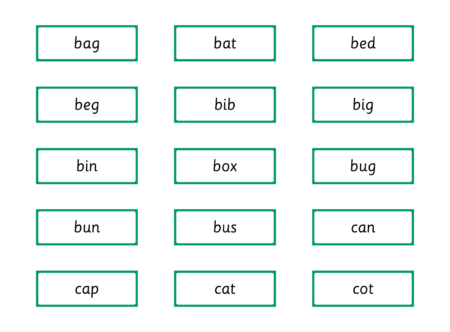
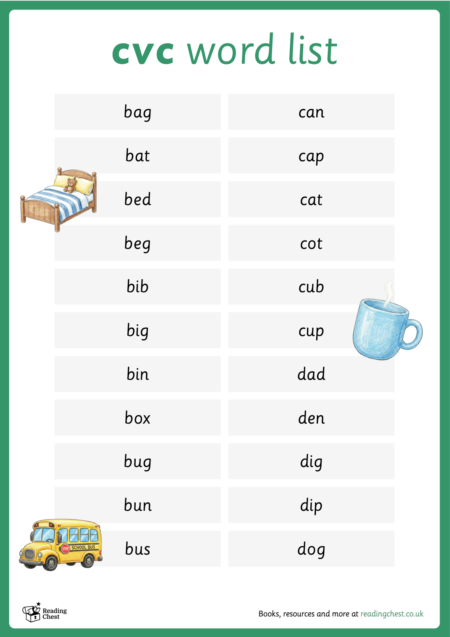
- CVC Word Cards
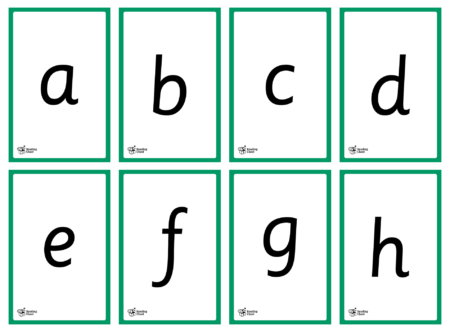
- Alphabet Flashcards (Lower Case)
- Phonics CVC Words List
How to do it
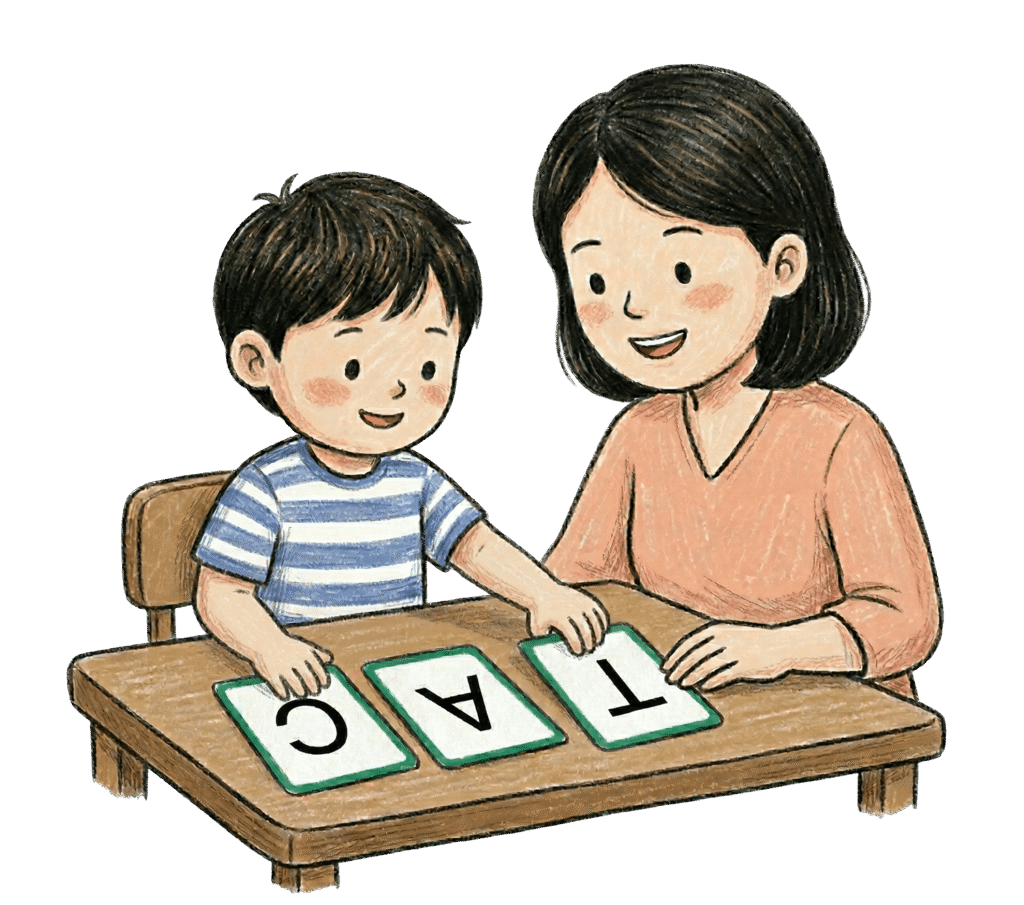
Pick a CVC word — "cat", "dog", "sit" are good starting points. Use the alphabet cards to find each letter. Say each sound as you place it: c... a... t. Then blend: "cat".
Let your child build the next one. You say the word; they find the letters and lay them out. If they get stuck on blending, try the slow-to-fast trick: sound it out like a robot, then speed up until it sounds like a real word.
Work through a few words from the cards or list. Keep sessions short — five or six words is plenty. The goal is confident blending, not endurance.
Grab our resources
Print our cvc word cards and alphabet flashcards (lower case) to get started.
Once your child is confident with simple words, this one moves into consonant clusters:
CCVC blend challenge
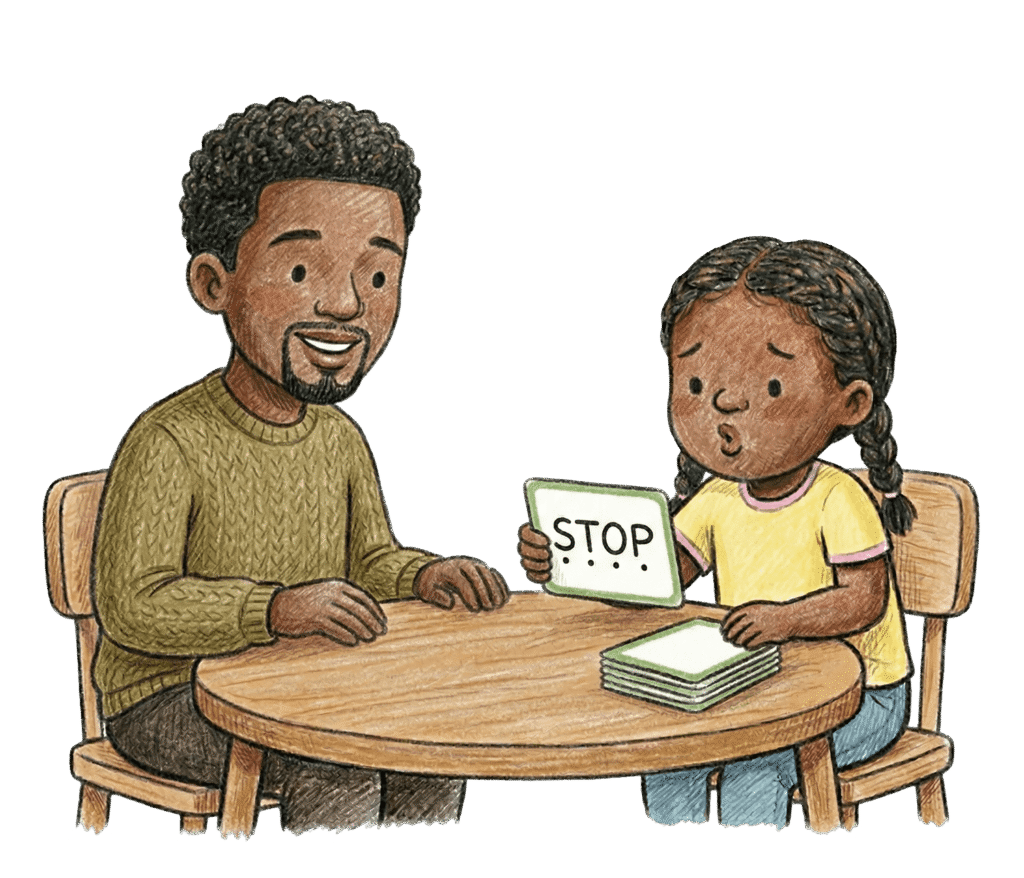
"Stop", "clip", "frog" — words that start with two consonants are a proper step up. This activity helps your child crack those initial blends one at a time.
Goal
Build confidence blending initial consonant clusters — the kind that trip up early readers and feel brilliant once they click.
You'll need
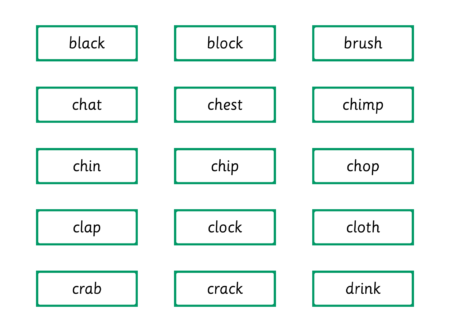
- CCVC Word Cards
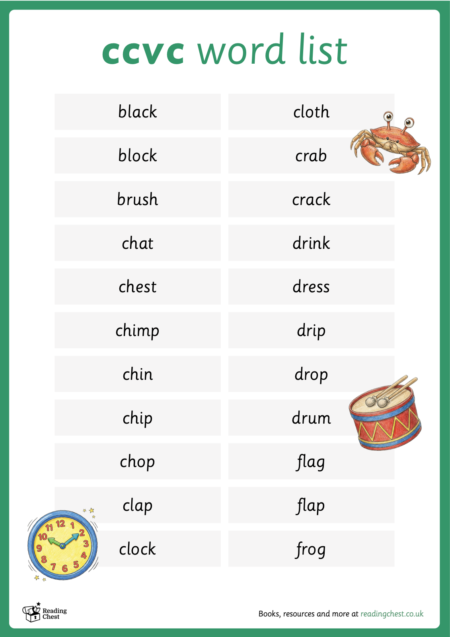
- Phonics CCVC Words List
How to do it
Pick a word card — "stop", "clip", "frog" are good starting points. Say the first two sounds slowly together: st, cl, fr. Then add the rest: st-o-p... "stop".
If they find it tricky, break it right down — "s-t-o-p" — then speed up gradually until it blends. That slow-to-fast trick is genuinely useful and kids often enjoy the "robot voice" version.
Work through a handful of words from the cards or list. These are a real step up from simple CVC words, so make a fuss when they get one. They've earned it.
Grab our resources
Print our ccvc word cards and phonics ccvc words list to get started.
Frequently asked questions
What is the difference between segmenting and blending?
Blending is combining sounds to read a word — you see the letters, say the sounds, and push them together. Segmenting is the reverse: you hear a spoken word and break it into sounds to spell it. Both skills are taught together in phonics from the start, because they’re two sides of the same process.
What age do children learn to segment?
Most children begin practising segmenting in Reception (age 4–5) alongside their early phonics lessons. The complexity of the words they can segment increases through Year 1 as their phonics knowledge grows. Some children find it tricky until Year 1 or Year 2 — this is within the normal range.
My child can read words but struggles to spell them — is that normal?
Very common, and yes — reading and spelling draw on overlapping but distinct skills. Blending (for reading) is generally easier to develop than segmenting (for spelling) because reading has the visual support of the printed letters. Children who read well but struggle to spell often need more explicit practice with segmenting. Focus on simple, regular words and build from there.
Dictation — saying a word aloud and asking your child to write it — is one of the most direct ways to practise segmenting. Start with words you know they can already read, so the task is segmenting and spelling rather than learning new vocabulary at the same time.
