Contents
“Special friends” is the term used in Read Write Inc (RWI) phonics for digraphs — two letters that work together to make a single sound. So sh, ch, th, and ng are all special friends.
If your child has come home talking about “special friends” and you had absolutely no idea what they were on about, that’s entirely understandable. It’s RWI’s own terminology — used in a huge number of UK primary schools — and it’s not widely explained to parents outside of the programme.
Here’s what it means, which special friends your child will be learning, and how to support them at home.
Why does RWI use this term?
Read Write Inc was developed by Ruth Miskin and is one of the most widely used systematic phonics programmes in UK primary schools. The programme has its own vocabulary for phonics concepts — “Fred Talk,” “Fred fingers,” “special friends” — all designed to give young children accessible, memorable hooks for ideas that might otherwise be abstract.
“Special friends” works because it gives children a way to think about digraphs that makes instinctive sense: two letters who are always together, always making the same sound, always acting as a team. For a five-year-old, that’s a much friendlier concept than “consonant digraph.”
If you want to understand more about the programme as a whole, our guide to Read Write Inc explains how it works from start to finish.
Bite-sized reading tips, straight to your inbox
Get confidence-boosting tips to help your child learn to read. Short, useful, and easy to fit into (real) family life!
Even better? You'll also get 25% off your first month of Reading Chest.
Which special friends does RWI teach?
Read Write Inc introduces special friends across its Set 1 Speed Sounds. The main ones your child will encounter are:
- sh — ship, fish, shell
- ch — chin, much, chop
- th — this, thin, with
- qu — queen, quick, quack
- ng — ring, song, long
- nk — think, bank, sink
- wh — when, what, wheel
- ph — phone, photo, graph
More digraphs are introduced in Set 2 and Set 3 sounds (the vowel digraphs and more complex patterns), though the “special friends” label tends to be associated specifically with these early consonant digraphs.
Note: qu is technically always two sounds (/k/ and /w/), but RWI treats it as a unit from the start because the letters are always seen together. It’s a useful shortcut even if it’s slightly technically imprecise.
Are special friends the same as digraphs?
Yes — completely. “Special friends” is RWI’s own term for what phonics teachers and linguists call digraphs. The concept is identical: two letters, one sound.
If your child moves schools and their new school doesn’t use RWI, the same sounds and letter groups will still be taught — they’ll just be called “digraphs” instead. Your child won’t need to relearn anything; they’ll just need to get used to different vocabulary.
Fred Talk and special friends
In RWI, children learn to “Fred Talk” words — sounding them out phoneme by phoneme, just like the frog character Fred. When they reach a special friends pair in a word, they say the two letters together as one sound, not separately.
So for the word shop, Fred Talk would be: sh–o–p. Not s–h–o–p. The special friends are always spoken as a unit.
This is the key thing to reinforce at home: when you spot a special friends pair in a word, say it as one sound, not two. If your child is trying to blend a word and getting stuck on a digraph, it’s often because they’re attempting to sound out each letter individually.
How to help at home
One of the best things you can do is simply use the same language your child’s school uses. If their teacher calls them “special friends,” call them that at home too. It reduces confusion and helps reinforce the connection between school and home practice.
Beyond that:
- Spot them in books — while reading together, point out when you hit a special friends pair. “Shop — can you see the special friends? sh–o–p.” Don’t drill it; just name it.
- Use the flashcards — RWI schools sometimes send home speed sound cards, which include the special friends. If yours has, a quick daily flip through is worth doing.
- Make up silly sentences — “Seven ships with shiny shells” (lots of sh) or “Charlie chops chips cheerfully” (lots of ch). Children enjoy the silliness and it embeds the sound pattern without feeling like practice.
This activity works well for any digraph — including all the RWI special friends:
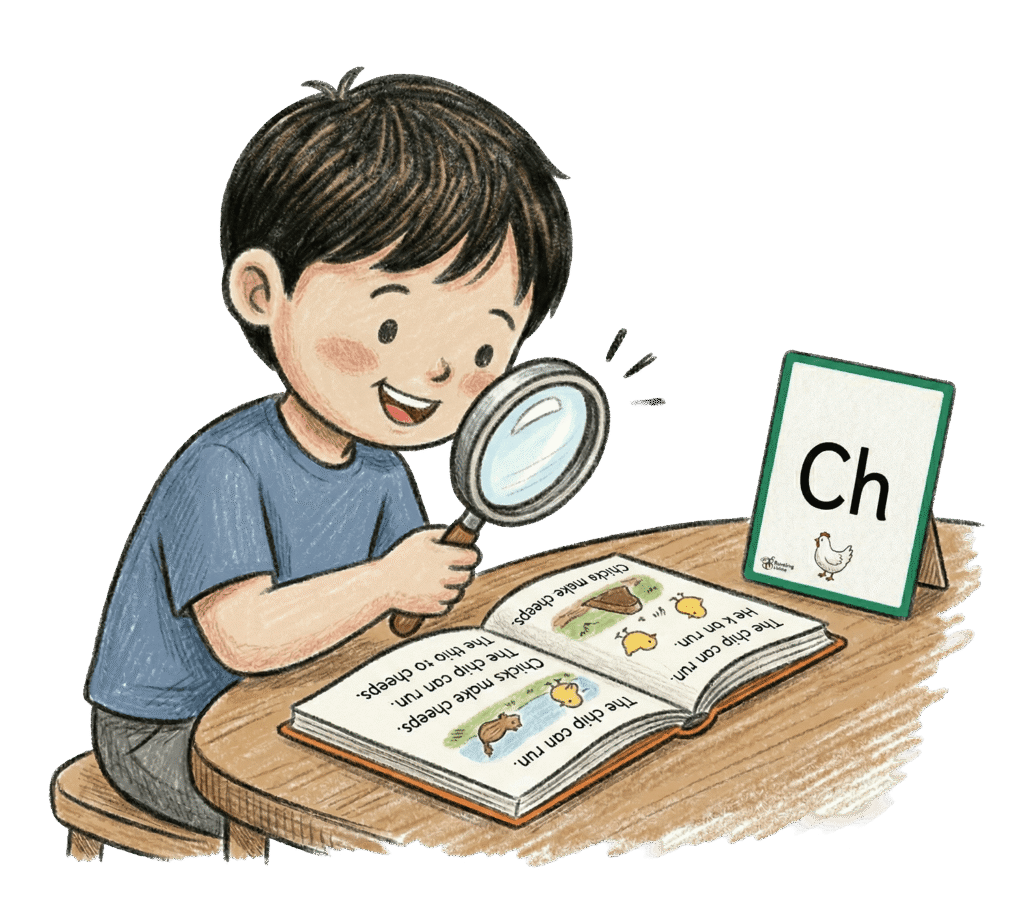
Digraph detective
Pick a digraph — sh, th, ch, ng — and go hunting. How many times can you spot it hiding in words on a page, a sign, a cereal box? Detective hats on.
Goal
Train your child's eye to spot digraphs in real text — so they stop seeing two letters and start seeing one sound.
You'll need
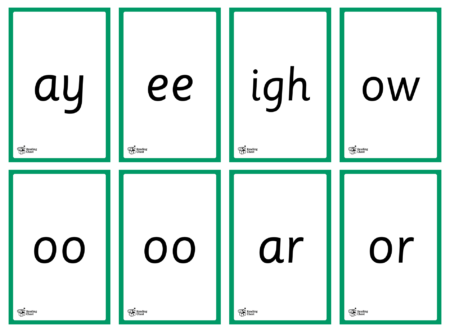
- Digraphs & Trigraphs Flashcards
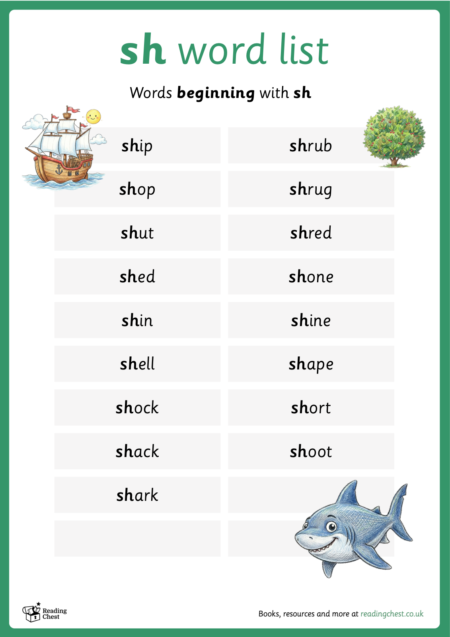
- Phonics "sh" words list
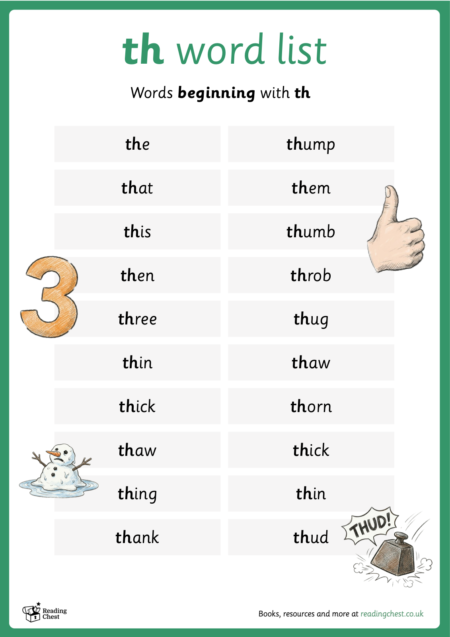
- Phonics "th" words list
How to do it
Choose one digraph to focus on — sh, th, ch or ng are all great options. Say it together a couple of times so it's fresh in their mind.
Then hunt. Open a book, use a word list, or scan whatever's nearby — packaging, posters, signs. Every time they spot the digraph in a word, they point and say the sound. Count how many you find.
Keep it relaxed. You're not testing whether they can read every word — you're just training their eye to notice the pattern. That noticing is half the battle with digraphs.
Grab our resources
Print our digraphs & trigraphs flashcards and phonics "sh" words list to get started.
And this one is good for building speed and confidence with individual sounds, which underpins all of this:
Teach the teddy sounds
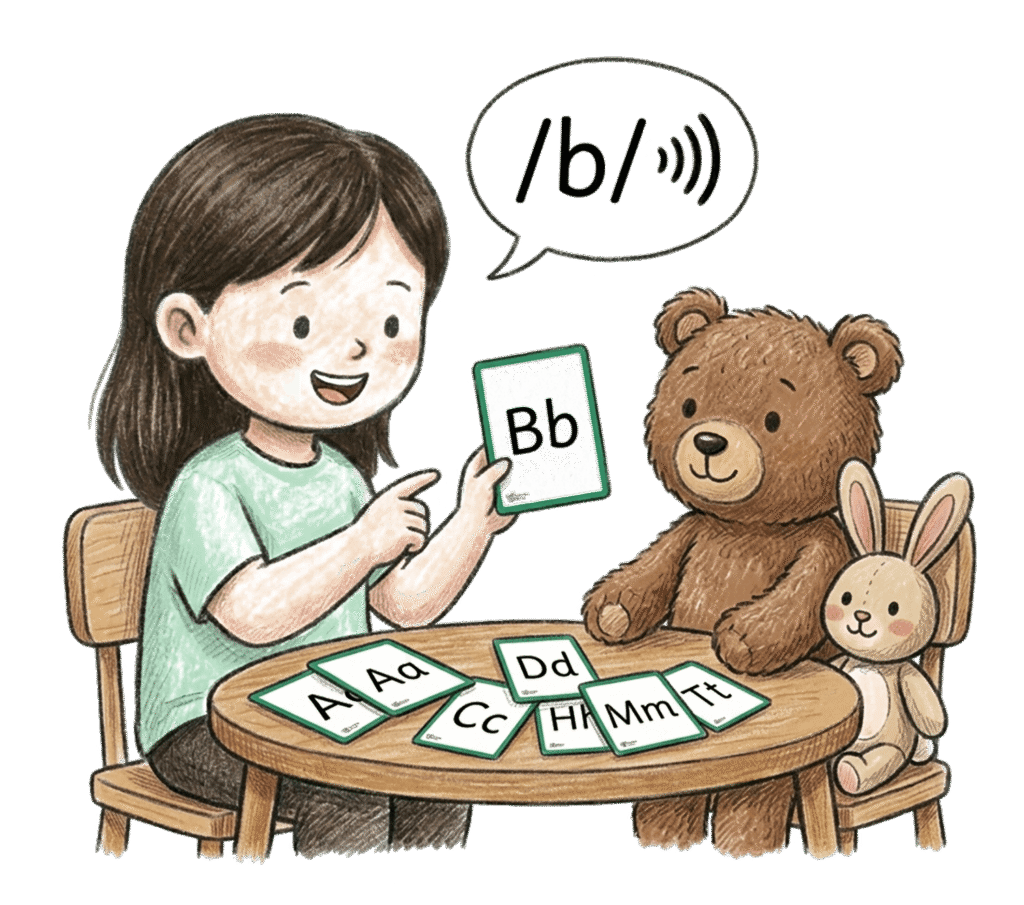
Your child becomes the teacher. They show a teddy (or any toy) the letter cards and explain each sound. Teaching something is the best way to really learn it.
Goal
Practise letter-sound recall by putting your child in charge — teaching takes the pressure off and reveals exactly what they know.
You'll need
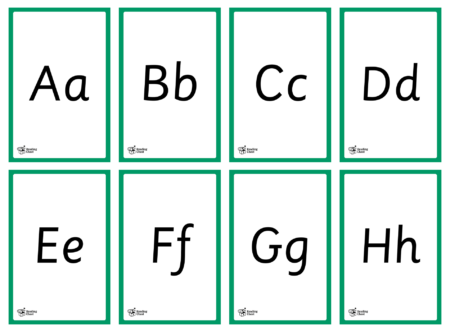
- Alphabet Flashcards (Both Cases)
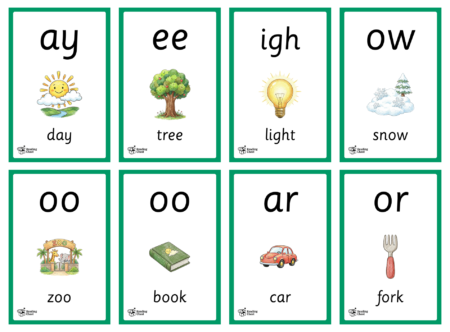
- Digraphs & Trigraphs Picture Flashcards
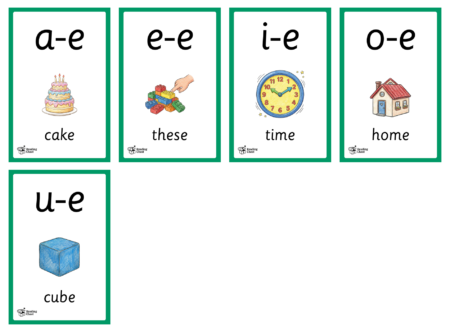
- Split Digraph Flashcards
How to do it
Choose a teddy, doll or soft toy to be the "pupil". Give your child a stack of flashcards — a mix of letters and digraphs. Their job: teach the teddy each sound.
They hold up a card, say the sound clearly, maybe give an example word. You can play the teddy if you like — getting confused, needing things repeated, asking "what word does that make?" Children love being the expert.
If your child gets stuck on a card, the teddy can get it "wrong" too — which takes the pressure off. It's much easier to correct a teddy's mistake than to admit your own. And the teaching still works either way.
Grab our resources
Print our alphabet flashcards (both cases) and digraphs & trigraphs picture flashcards to get started.
Frequently asked questions
My child’s school doesn’t use RWI — do they still learn about special friends?
Yes, but they’ll call them digraphs rather than special friends. All systematic phonics programmes teach the same concept — two letters that make one sound. The terminology varies between programmes, but the underlying phonics knowledge is the same.
How many special friends are there in RWI?
RWI introduces around eight main “special friends” consonant digraphs in Set 1: sh, ch, th, qu, ng, nk, wh, and ph. More complex digraphs (vowel sounds) are introduced in later sets.
When does my child learn special friends in RWI?
Most children start encountering special friends in the second half of Reception, once they’ve built up a set of individual letter sounds. The exact timing depends on how quickly your child’s class is moving through the programme.
What is “Fred Talk” in Read Write Inc?
Fred Talk is the RWI method of sounding out words phoneme by phoneme — named after Fred the Frog, a character in the programme. Children say each sound separately, then blend them together to read the word. When they reach a special friends pair, they say it as one sound, not two separate letters.
