Contents
A syllable is a single, unbroken unit of sound that forms a whole word or part of a word. Every syllable contains exactly one vowel sound. “Cat” is one syllable. “But-ter-fly” is three. “In-for-ma-tion” is four.
If you’ve been asked to help your child practise syllables and found yourself quietly unsure how to explain what a syllable actually is — you’re in good company. Adults know syllables intuitively (we clap songs as children, we drum rhythms without thinking about it) but putting the definition into words can be unexpectedly tricky.
This guide gives you the clear explanation and the fun ways to practise. No complicated theory needed.
Syllables: the beats of language
The easiest way to understand a syllable is to think of it as a beat in a word. Just as music has a pulse, spoken language has a rhythm — and syllables are what create it. When you clap along to a word, each clap is a syllable.
Try it now:
- dog — one clap — one syllable
- hap-py — two claps — two syllables
- com-pu-ter — three claps — three syllables
- in-for-ma-tion — four claps — four syllables
The clapping trick works because it forces you to feel the rhythm. If you’re ever unsure how many syllables a word has, say it aloud while tapping on a table or your leg — one tap per beat. It rarely fails.
Bite-sized reading tips, straight to your inbox
Get confidence-boosting tips to help your child learn to read. Short, useful, and easy to fit into (real) family life!
Even better? You'll also get 25% off your first month of Reading Chest.
The one rule that explains everything
Every syllable contains exactly one vowel sound. That’s the underlying principle that makes the clapping trick work — each “beat” of the word is powered by a vowel.
This means you can often count the syllables in a word by counting the vowel sounds — not the vowel letters, but the sounds. “Cake” has two vowel letters (a and e) but only one vowel sound (ai), so it’s one syllable. “Bottle” has three vowel letters but the final “e” is silent and “ot” and “le” each have one vowel sound, giving two syllables: bot-tle.
You don’t need to explain this rule to your child. The clapping technique gets there naturally. But knowing it yourself helps you answer “but why?” when it comes up.
Open and closed syllables (a quick note)
You might come across the terms “open syllable” and “closed syllable” in school materials. Here’s what they mean:
- An open syllable ends in a vowel sound: go, no, me, ba– (in baby). The vowel is “open” — not closed off by a consonant — and tends to make a long sound.
- A closed syllable ends in a consonant: cat, dog, sit, rab– (in rabbit). The consonant “closes” the syllable, and the vowel tends to be short.
This is a useful pattern for reading longer words. When a child sees an unfamiliar two-syllable word, knowing whether each syllable is open or closed helps them choose the right vowel sound. But this is Phase 5 territory — most children work up to it gradually through Year 1 and Year 2.
Why syllables matter for reading
Syllable awareness matters most when children start encountering longer words. Short words — “cat”, “dog”, “run” — can be sounded out as a whole. But longer words like “computer”, “elephant” or “September” need to be broken into chunks first. Children who can hear the syllables in a word naturally slice it into manageable pieces before attempting to decode each one.
Teachers call this “chunking” — breaking a big word into syllable-sized bites: com-pu-ter, el-e-phant, Sep-tem-ber. It’s one of the key strategies for reading unfamiliar words in Key Stage 1 and beyond.
Syllable awareness also helps with spelling. Children who can hear where one syllable ends and another begins are less likely to miss out middle sounds in a longer word — a very common spelling error.
If your child regularly misspells the middles of longer words, try asking them to tap out the syllables first before attempting to spell. It often makes the missing sound suddenly audible.
Fun ways to practise syllables at home
Syllable practice doesn’t need any materials — just words and a bit of physical energy. A few ideas:
Clap your names
Start with names — they’re familiar and motivating. Clap out every name in the family: Mum (one), Da-vid (two), O-li-vi-a (four). Then move on to friends, favourite characters from books, animals. Naming things is a great way to keep it feeling like play rather than homework.
Jump, tap, or stomp
Clapping is the classic, but any physical action works: jumping, stomping, tapping on knees, throwing a ball back and forth (one word per throw, one bounce per syllable). Physical movement tends to stick syllable patterns in muscle memory.
Syllable sort
Write a list of words and sort them into groups: one-syllable words, two-syllable words, three-syllable words. This is a good quiet activity for the table and works well with any topic your child is interested in — dinosaur names, football clubs, Pokémon — whatever gets them engaged.
This activity builds syllable skills while also reinforcing word structure more broadly:
Word ladder game
Start with one word, change one sound, make a new word. Climb the ladder: cat, bat, sat, set, net. Phonics as a puzzle.
Goal
Practise changing one sound to make new words — builds phonemic awareness, blending and an instinct for how words are constructed.
You'll need
- CVC Word Cards
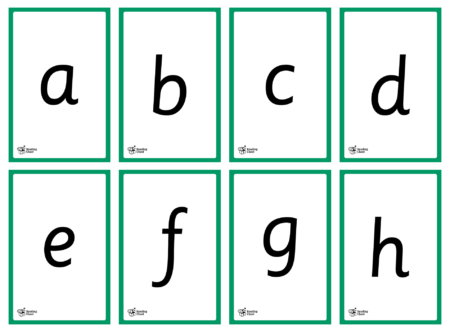
- Alphabet Flashcards (Lower Case)
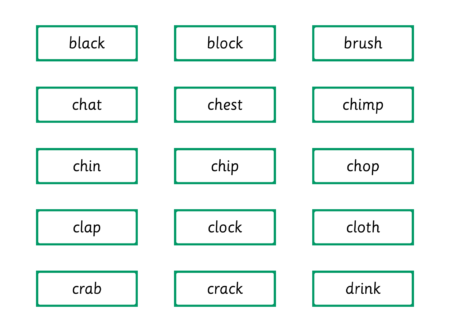
- CCVC Word Cards
How to do it
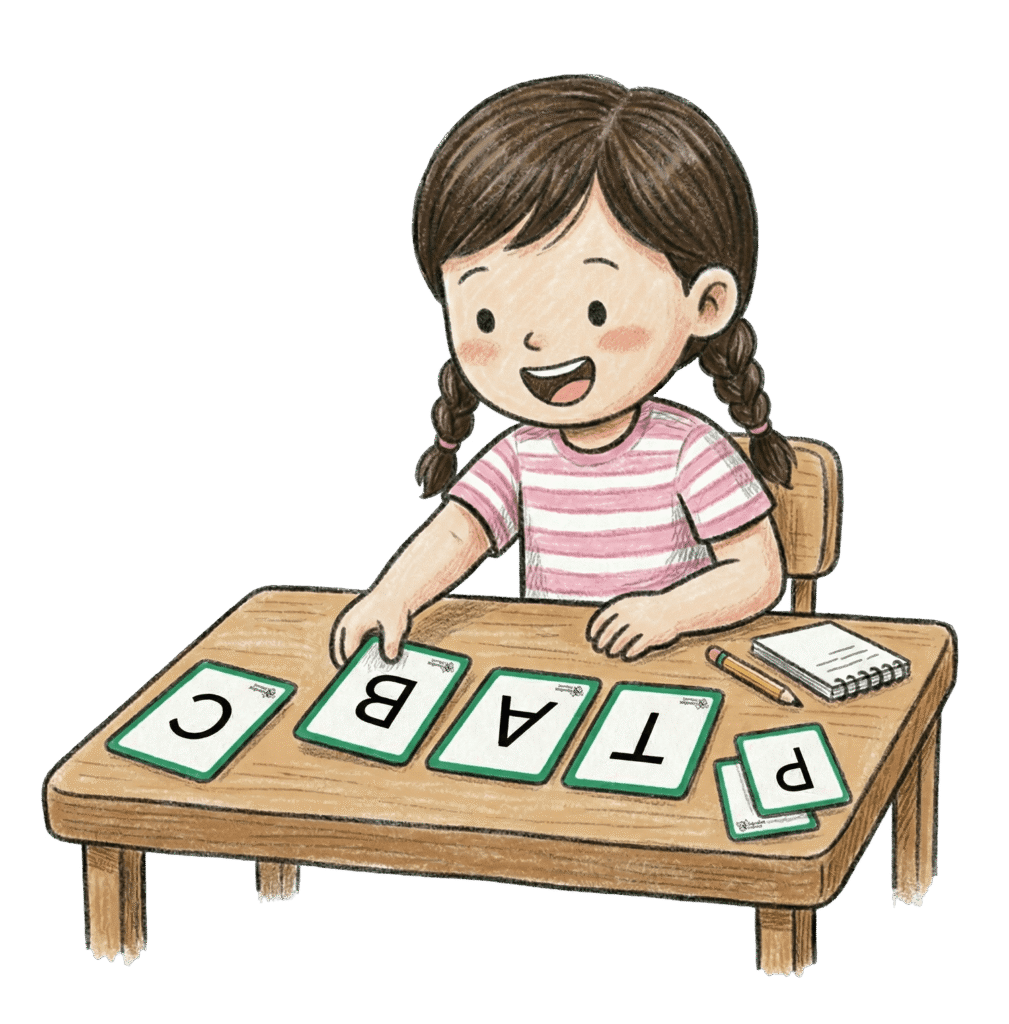
Pick a starting word — "cat" is a good one. Read it together. Now change one sound: swap the c for a b — "bat". Change the a for an i — "bit". Change the b for an s — "sit".
Use the letter cards to build each word physically. Reading the new word as soon as it's built — before moving on — is the key step.
Take turns choosing which sound to swap. See how many rungs you can climb before you run out of real words. You can use the word cards as inspiration if you get stuck. It's a puzzle, and children who don't like "practice" often love puzzles.
Grab our resources
Print our cvc word cards and alphabet flashcards (lower case) to get started.
And this one encourages children to play with language at the sentence level — a fun next step once syllable counting feels solid:
Silly sentence builder
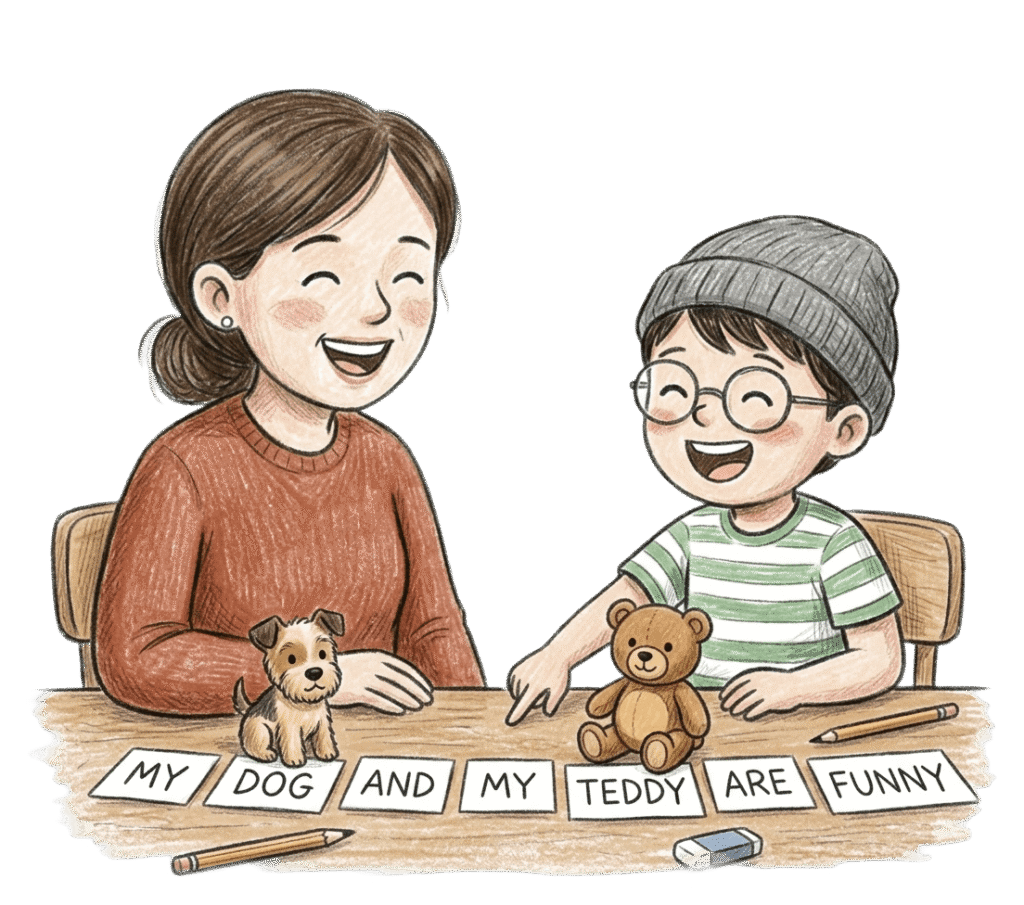
Pick word cards and build the most ridiculous sentence you can. Read it aloud, laugh at it, build another one. The sillier the better.
Goal
Practise reading words in context — and lower the stakes so much that reading feels like the fun bit, not the hard bit.
You'll need
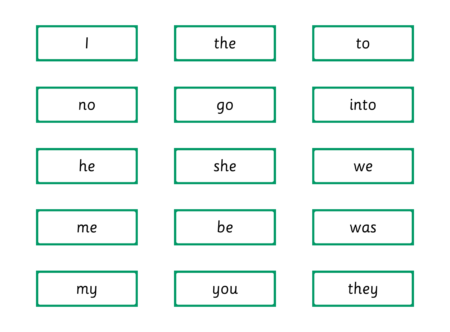
- Tricky Word Cards
- Animal Phonics Flashcards
- CVC Word Cards
How to do it
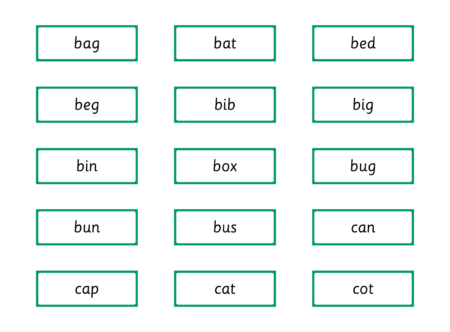
Spread out the word cards — tricky words, animals, CVC words, whatever you have. Each person picks two or three at random. The challenge: make the silliest sentence possible using those words.
"The blue frog sat on the moon." "A sad cat said the big dog was wet." Read your sentence aloud, as dramatically as you can. Then swap cards and go again.
There's real phonics work happening here — blending, reading tricky words by sight, understanding how sentences fit together — but it doesn't feel like it. Which is entirely the point.
Grab our resources
Print our tricky word cards and animal phonics flashcards to get started.
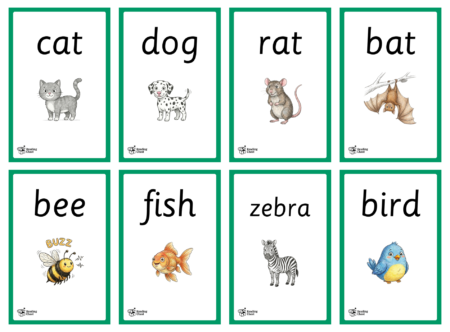
If your child is still working on CVC words (three-letter words like “cat”, “pin”, “hop”), our CVC word list is a handy resource for finding good one-syllable practice words.
Frequently asked questions
How many syllables does “beautiful” have?
“Beautiful” has three syllables: beau-ti-ful. Despite having five vowel letters (e, a, u, i, u), only three of them carry a vowel sound in natural speech. This is a good example of how counting vowel letters is less reliable than counting vowel sounds — or just clapping the word out.
Is a syllable the same as a phoneme?
No — they’re different units. A phoneme is a single sound (like sh or a). A syllable is a “beat” in a word that always contains one vowel sound, and may contain several phonemes. “Cat” has one syllable and three phonemes: c, a, t. “Chip” has one syllable and three phonemes: ch, i, p.
At what age do children learn about syllables?
Children are introduced to syllable awareness in Reception and Year 1, often through clapping games and oral activities before they’re applied to reading. Syllable work becomes more important as children encounter longer words from Year 1 onwards. By Year 2, most children can confidently identify syllables in words they know, and use syllable chunking to tackle unfamiliar words.
Why do some words sound like they have more syllables than they do?
This often comes down to accent and how we naturally say words in informal speech. “Every” can sound like three syllables (ev-er-y) or two (ev-ry) depending on how quickly it’s said. “Camera” is similarly two or three syllables depending on speaker and speed. When in doubt, go with the clapping test on a slow, deliberate pronunciation.
What to remember
A syllable is a beat in a word — a single unit of sound with one vowel at its core. The clapping trick (“how many claps?”) is the most reliable way to count them, and it works for children and adults alike. Syllable awareness helps children break longer words into manageable pieces when reading, and keeps middle sounds from getting lost when spelling.
The best practice is physical, playful, and woven into everyday moments rather than saved for a formal session at the table.
