Contents
A children’s book subscription takes the decision of what to read next off the table — books arrive regularly, matched to your child’s age or reading level, without the weekly trip to the bookshop or library. For busy families, that consistency can make a real difference to reading habits.
But “children’s book subscription” covers several quite different services, and they don’t all work the same way.
Understanding the distinction — particularly between owning books and borrowing them — helps you pick the right option for your family.
The main types of service
Book subscription boxes
These services send a curated selection of books each month for your child to keep. Books are chosen based on age, reading level, and sometimes genre preferences.
The appeal is clear: new books, chosen for your child, delivered to your door. The limitation is cost — buying books monthly adds up, and children often outgrow scheme books or read them once and set them aside.
Book rental services
Rather than buying to keep, a rental service lends books that you return when you’ve finished. You choose (or are matched with) books at the right level, read them, then swap for the next selection. This model works particularly well for reading scheme books, which children progress through quickly and rarely want to re-read.
Reading Chest works on this rental model: you borrow books matched to your child’s reading level — including books from popular school schemes like Oxford Reading Tree, Project X, and Bug Club — and swap them when your child has read them. Because you’re borrowing rather than buying, you can access a wide range of scheme books at a fraction of the cost of purchasing them individually. Find out how Reading Chest works.
The key advantage of rental over buying is access without accumulation. Reading scheme books are needed for a specific window — once a child moves to the next level, the previous level books are no longer useful. Renting removes the need to buy books your child will outgrow in weeks.
Digital subscriptions
Services like Kindle Unlimited and Epic! provide access to large digital libraries of children’s books for a monthly fee. These are convenient for travel and easy to carry. They work less well as a primary reading source for early readers, where physical books and reading scheme books tied to specific phonics programmes are generally more effective.
Bite-sized reading tips, straight to your inbox
Get confidence-boosting tips to help your child learn to read. Short, useful, and easy to fit into (real) family life!
Even better? You'll also get 30% off your first month of Reading Chest.
Choosing what’s right for your family
The right service depends on what problem you’re trying to solve.
If your child is in the early reading stages and working through a school reading scheme, a rental service that stocks those books at the right level is likely to be more useful than a general book subscription box. Early reading scheme books need to be specifically matched to a child’s phonics stage — that requires more targeted curation than a general monthly selection provides.
If you want to build a home library and introduce your child to a variety of books they can keep and return to, a subscription box makes more sense. It’s worth checking which titles are sent before subscribing, to confirm they match your child’s interests and reading level.
For families who read quickly and get through books fast, rental models typically offer better value. For families looking to build collections or mark milestones with permanent books, owning may matter more.
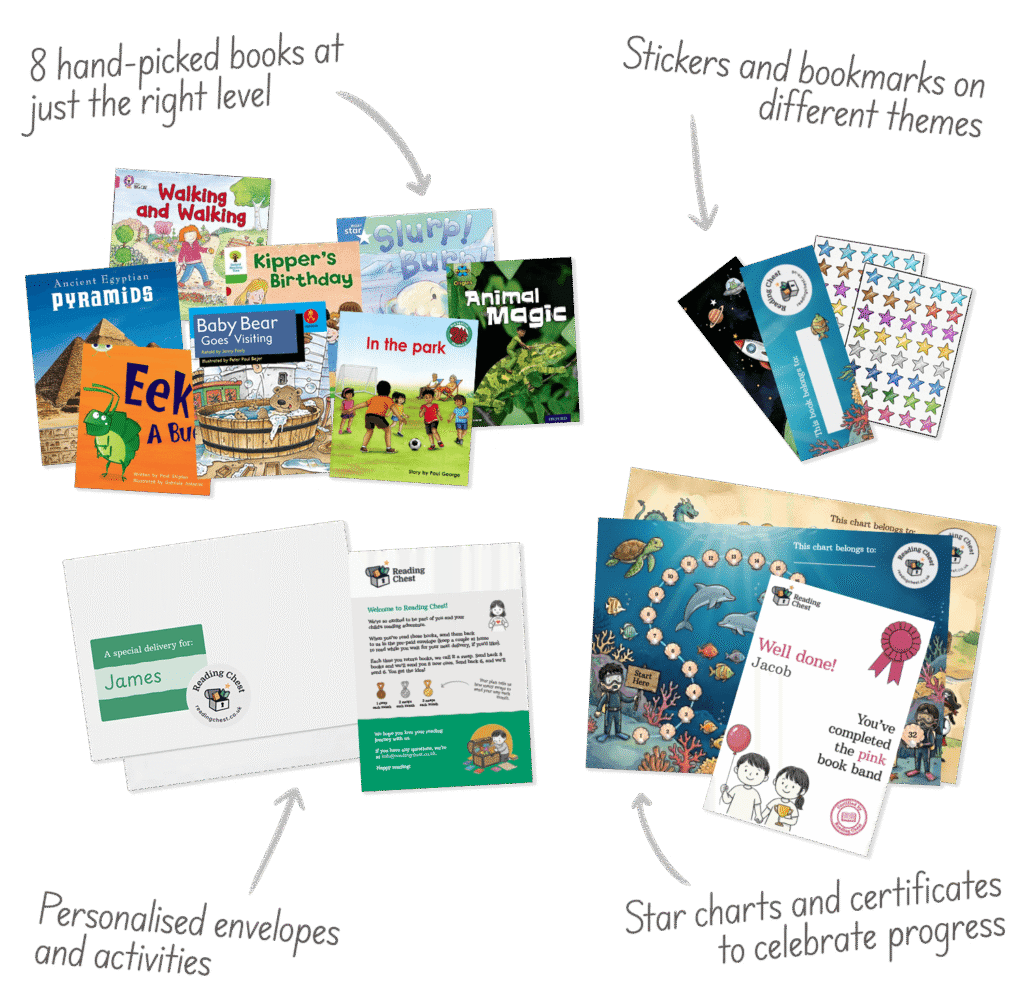
Here’s a look at what comes in each Reading Chest delivery:
A note on reading scheme books
If your child is on a school reading scheme, supplementary reading at home is one of the most effective things you can do to support their progress. But buying individual scheme books can be expensive — a single Oxford Reading Tree book typically costs £5–7 — and children often need several books per week to make meaningful progress through a level.
Our guide to reading schemes explains how schemes work and how to find books at the right level. This is the main reason rental services for reading scheme books exist: they make regular, level-appropriate reading sustainable without requiring families to buy and store large numbers of books their child will quickly outgrow. You can browse the full Reading Chest catalogue filtered by scheme and book band.
Frequently asked questions
Are children’s book subscriptions worth it?
That depends on the service and how it’s used. A rental service for reading scheme books is typically much cheaper than buying the books individually and is particularly well-suited to the early reading years, when children progress through levels quickly. A subscription box that sends books to keep is worth it if the child reads those books — less so if they pile up unread. The best subscription is the one that solves an actual problem your family has: finding scheme books at the right level, keeping an enthusiastic reader supplied, or removing the friction of choosing what to read next.
What’s the difference between a book rental and a book subscription box?
A book rental service lends books — you read them and return them when you’re done, then borrow more. A subscription box sends books for you to keep, typically with a monthly delivery. Rental is usually better value for reading scheme books (which children outgrow quickly) and for high-volume readers. Subscription boxes are better if you want to build a library of books to own and return to.
Can I choose specific books, or are they chosen for me?
This varies by service. Some subscription boxes curate monthly selections based on age and preferences, with limited choice of specific titles. Rental services like Reading Chest let you browse and choose specific books, or set a reading level and receive matched selections — the level of control is up to you. If your child has strong preferences or you need to match a specific school phonics programme, a service where you can choose individual titles tends to work better than a surprise box.
What happens if a book gets damaged?
Policies vary by service. Most children’s book rental services have a fair-wear policy that distinguishes between normal reading wear and accidental damage. A torn cover or dog-eared spine from regular use is usually covered; significant damage (drawing on pages, water damage, lost pages) may not be. Reading Chest has its own damage policy, explained clearly at sign-up. Most services are more reasonable about accidental damage than the fine print might suggest, especially with young children.
