Contents
Choosing the right books for your child can feel surprisingly tricky — especially when you’re trying to balance phonics, book bands, confidence, and keeping reading fun. This guide breaks everything down into simple steps so you can pick books that truly support (and excite!) your early reader.
Whether you’re brand new to book bands or just want to understand what actually makes a “good” early reader book, you’ll learn the essentials.
From finding your child’s level to spotting when a book is too easy, too hard, or just right — here’s everything you need to choose with confidence.
First, find your book band
If you’ve ever opened your child’s school book bag and wondered why everything is colour-coded like a bag of Skittles… welcome to book bands.
Book bands are the UK’s way of organising early-reader books by difficulty. Each colour represents a level, and each level gradually introduces slightly more text, richer vocabulary, and trickier phonics patterns. They’re used across almost all reading schemes, which means a Yellow book from Collins Big Cat should be roughly the same difficulty as a Yellow book from Oxford Reading Tree.
In short: book bands make it possible to browse confidently, even if you’re jumping between brands and styles.
How to find your child’s book band
- Look for a coloured sticker or printed tag on your child’s school book.
- If in doubt, ask the teacher — they’ll know exactly where your child is working.
- You can also check sample pages on Reading Chest’s book band guide (super helpful if you’ve got a child who’s “between levels”).
Don’t feel pressured by the colour. Every child climbs the bands at their own pace. There’s no “behind” — just where they are now and where they’re heading.
Why book bands help you choose books
Book bands make life easier because:
- You know the book won’t be too easy or too frustrating.
- You can mix books from different series/publishers without guessing.
- You’ll see steady, gentle progression — not sudden jumps in difficulty.
If you stick roughly to your child’s band (plus a few easier confidence-boosters and the odd challenge), you’ll have a lovely balanced reading routine.
Bite-sized reading tips, straight to your inbox
Get confidence-boosting tips to help your child learn to read. Short, useful, and easy to fit into (real) family life!
Even better? You'll also get 30% off your first month of Reading Chest.
Decodable books vs levelled books: what’s the difference?
Not all early reading books are built the same — and honestly, it’s confusing until someone explains it. Let’s make it simple.
There are two main types of early-reader books:
Decodable books (phonics-friendly)
These are the books that follow your child’s phonics progression. If they’ve learned sh, ch, th, ai, ee, etc., the book will only include words that use those sounds.
Why they matter
Decodable books help children:
- Build proper decoding skills
- Avoid guessing from pictures
- Gain confidence because they can read every word
- Feel like “real readers” much sooner
Example: A child who knows sh, ar, and k can decode shark — and that’s a huge “I did it!” moment.
Use decodables for independent reading practice or for those “I can read it myself!” moments.
Levelled / “guided reading” books
These follow book bands too, but they’re not tied strictly to phonics sequences.
You’ll find:
- A mix of decodable words
- Tricky words
- More story-driven language
- A bit more variety in sentence structures
These are brilliant for:
- Enjoying a more natural story flow
- Talking about characters and plot
- Building comprehension skills
- Shared reading with you
Think of levelled books as the “big picture” reading — helping children make sense of stories, not just words.
So, which do you choose?
Both! They work beautifully together.
- Decodables build the mechanics of reading (blending, decoding).
- Levelled books build the magic — vocabulary, comprehension, and story enjoyment.
A healthy reading routine includes a bit of each, depending on where your child is in their journey.
Your child might prefer one type at first. That’s completely normal. Keep offering variety — they’ll eventually settle into a rhythm.
What makes a good early reader book
Choosing a book for an early reader can feel like a mysterious art form. You want something they’ll want to read, something they can read, and something that won’t make them instantly groan and slide off the sofa. Here’s what actually matters.
Clear, simple text that still feels like a real story
Good early reader books use short, manageable sentences and repeated patterns without talking down to children. The text should feel achievable, but not boring — like a gentle set of stepping stones across a stream.
Illustrations that support the story
Pictures are hugely helpful for understanding, especially in the early stages. The best illustrations:
- Support new vocabulary
- Help children make predictions
- Add humour or emotion
But they shouldn’t give away everything. If a child can “read” the whole book from the pictures alone, it’s probably not pulling its weight as a reading tool.
Before reading, ask, “What do you think is happening here?” After reading, ask, “Was it what you expected?” It builds comprehension naturally.
Topics they genuinely care about
Interest matters more than we often realise. If your child is obsessed with dogs, dragons, or double-decker buses, use that. A motivated child will happily tackle trickier words simply because they want to know what happens next.
When in doubt, choose the book with a shark on the cover. It’s rarely the wrong decision.
A child-friendly layout
A page that looks approachable instantly boosts confidence. Clear fonts, decent spacing, short lines, and uncluttered pages all make early reading feel manageable.
Mix things up for variety
Even at the earliest stages, it helps to offer:
- Fiction and non-fiction
- Stories and poems
- Silly books and factual ones
- A few comics or graphic-style books too
Variety keeps reading feeling fresh and prevents everything becoming “more of the same”.
If every book feels identical, children quickly disengage. Rotate authors, series, and topics often.
How to tell if a book is “just right” — not too hard, not too easy
Picking the right book level is a bit like finding shoes for school: the perfect fit makes everything easier, and the wrong fit… well, you’ll know quickly.
The 90% rule (simple but powerful)
As a rough guide, your child should be able to read about 90% of the words without help. If they’re stumbling on every line, the book is probably too hard for independent reading right now.
One way to check:
- Let them read a short page
- Count the tricky spots
- If it’s more than one or two per page, save it for shared reading instead
Confident reading builds better skills than constant struggle. A slightly too-easy book is miles better than a too-hard one.
Use the “two-page test”
This is a wonderfully quick gut-check. Let your child read two pages aloud while you quietly observe:
- Are they focused, steady, and comfortable? → Just right.
- Are they anxious, guessing wildly, or losing the meaning? → Too hard.
- Are they powering through but look bored out of their mind? → Maybe too easy.
Children are brilliantly honest with their body language — it’s often clearer than the text itself.
Mix easy wins with gentle challenges
Children thrive when they get a balance. They need:
- Easy books for fluency and confidence
- Slightly harder books for stretching new skills
Both have value. You don’t need to stick rigidly to one level. Think of reading like climbing a ladder: sometimes they go up a rung, sometimes they stay put and strengthen their grip. It’s all progress.
If reading becomes a daily battle — tears, frustration, meltdown territory — step down a level for now. This isn’t “going backwards”. It’s rebuilding confidence so they can move forward steadily later.
Children learn in spurts, and temporary dips often lead to brilliant leaps down the line.
The right book level is the one your child can enjoy today. Not the one their classmate is on. Not the one the colour chart suggests they “should” be on. Your child’s pace is the right pace.
Encourage choice and ownership
One of the quickest ways to boost a child’s enthusiasm for reading is to let them have a say in what they read. When they feel ownership over their books, everything becomes easier — the motivation, the effort, the “just one more page” magic.
Let them choose (even if their choices surprise you)
Sometimes a child will pick a book that’s technically “too easy”, or one you’re certain won’t interest them… and then read it three times in a row. Go with it. Children are instinctive about what they need — comfort, challenge, or just a story that makes them giggle.
If they show an interest in a particular theme (dogs, dragons, outer space, tractors, fairies, volcanoes), lean into it. Interest is a massively underrated reading superpower.
Let your child browse Reading Chest’s book collection with you and favourite titles together. Their choices matter.
Mix familiarity with new discoveries
Children love returning to favourite characters — it’s reassuring. But they also need the thrill of discovering something new. Try a blend of:
- “Comfort books” they already know and love
- One new author or topic each week
- A factual book alongside a storybook
This keeps things fresh without overwhelming them.
Kids often read a favourite book to the point of memorising it. That’s okay — fluency comes from repetition. Just pop a new title into the mix now and then.
Let them abandon books sometimes
Adults do this too — we start books we don’t finish. Children should have that freedom as well. If your child is clearly not connecting with a story, don’t force it.
There are thousands of children’s books. It’s okay to let one go. Choosing books is partly about learning what you don’t like. That’s still progress.
Make use of libraries and Reading Chest
You don’t need to buy mountains of books (or build an extension) for your child to become a great reader. Borrowing books gives children variety, flexibility, and that lovely “ooh, what’s next?” excitement.
Libraries: free, brilliant, and full of gems
Libraries are treasure troves for early readers. You’ll find:
- A huge variety of levels and topics
- Staff who can help match your child with suitable reads
- Space to browse without pressure
- Books you’d never have encountered otherwise
Let your child wander and pick out anything that grabs their eye. Even if they choose five books about cats and one about international space stations, it’s all good reading fuel.
Have a “library bag” ready to go. It makes the whole outing feel like an adventure.
How to use Reading Chest to choose great books
Reading Chest exists to make book-choosing easier, not harder. Once you know your child’s book band, everything opens up.
-
Pick your child’s book band
This ensures the books you receive are at just the right level — readable, enjoyable, and confidence-boosting.
-
Choose how hands-on you want to be
You can:
- Sit back and let us send a varied selection
- Or log in and customise your preferences (fiction only, add more non-fiction, mix publishers, etc.)
-
Use reading schemes to diversify
If your child gets the same scheme at school (e.g., Collins Big Cat), you can exclude it to widen the variety. Or keep it in if they love it — both are fine!
-
Create a favourites list
Perfect if your child is learning about a topic (e.g., climate change, dinosaurs, space). Add books you want us to prioritise.
Revisit your preferences every couple of months. Children’s reading tastes change quickly, and so should your book choices.
Mix sources for the best reading experience
A healthy reading routine usually includes:
- School reading books — often one a week
- Books your child chooses (library/store/borrowed)
- Levelled/decodable books for skills
- “Just for fun” books — comics count!
- Fresh Reading Chest deliveries for variety
Each type supports reading in a different way. You don’t need a perfect system. You just need enough variety to keep books exciting.
Transitioning beyond early books — when and how to move on
There comes a moment when your child looks at their familiar early-reader books and… yawns. This is a good thing. It means they’re growing in confidence and ready for richer stories, longer sentences, and a world of new vocabulary.
You might also find it helpful to explore reading levels in UK primary schools and what a reading age means.
But how do you know when they’re really ready to move on?
Signs your child is ready for the next step
It’s usually time to explore more challenging books when your child:
- Reads their current books fluently, with expression
- Makes very few decoding errors
- Understands the story well enough to talk about it afterwards
- Starts asking for “longer books” or “a chapter book like my friend has”
- Seems slightly bored with the current level
You’ll often see this before they say it — reading will begin to look effortless.
If your child starts reading aloud in a “storyteller voice”, adding drama and flair… you’ve officially entered the next stage.
Introduce challenge gently (not all at once)
Don’t leap straight from Pink level to Harry Potter. Children still need stepping stones.
Try:
- Short chapter books with illustrations
- Slightly longer sentences and richer vocabulary
- Books with more plot and character detail
- Non-fiction with interesting facts and diagrams
These help them adjust to reading more text without overwhelming them.
Keep reading aloud, even after they can read independently
This is where the magic really happens. Your child’s listening comprehension is always ahead of their reading comprehension, so reading aloud exposes them to stories and language they’re not quite ready to tackle alone.
Plus… it’s still a lovely way to end the day.
Choose books that are above their reading level but well within their interest level.
Don’t worry if progress is uneven
It’s normal for a child to read a chapter book one day and then happily return to a simple picture book the next. This isn’t regression — it’s comfort.
Think of reading development like climbing a hill: some steep bits, some flat bits, some “let’s sit down and eat a biscuit” bits. It’s all movement in the right direction.
A few common problems (and solutions!)
Even the keenest reader has wobbles. Here’s how to solve the most common reading hiccups — calmly, kindly, and without turning your home into a phonics battleground. For broader support on building reading skills, see also helping children learn to read.
“This book is too hard!”
If your child is struggling, losing meaning, or getting frustrated:
- Drop down to an easier level for now
- Switch to shared reading (you read a line, they read a line)
- Go back to decodable books to rebuild decoding confidence
If your child starts guessing wildly, it’s usually a sign the book is beyond their decoding skills — not that they’re “rushing”. They’re coping!
“This book is too easy!”
If they’re breezing through, yawning, and barely looking at the page:
- Offer something slightly more challenging
- Introduce new genres or authors
- Add a non-fiction book that matches their interests
- Let them read the easy book again anyway — fluency matters!
Confident reading builds better readers. Never feel bad about choosing an “easy win.”
“My child refuses to read.”
This is incredibly common. Try:
- Letting them choose any book they want (even comics count!)
- Giving them a star chart to help track progress (we have free star charts to download)
- Reading aloud to reignite interest
- Short, playful reading sessions rather than long ones
- Reading at a different time of day (tired children = NOPE)
Sometimes resistance isn’t about reading at all — it’s tiredness, hunger, or a rough day at school.
Don’t turn reading into a battle of wills. That never ends well.
“My child keeps guessing words from the pictures.”
Every early reader does this at some point.
Shift focus back to phonics gently:
- Cover the picture on the first read
- Point to each sound as they blend
- Reveal the picture on the re-read and enjoy the full story
This helps build decoding first, comprehension second — the right order.
“They keep mixing up ‘tricky’ words.”
This is normal. Tricky words follow weird spellings and need lots of repetition.
Try:
- Flashcards stuck around the house
- Spot-the-word games
- Silly-sentence challenges (“Put said in the funniest sentence you can!”)
A little repetition goes a long way.
“They don’t understand what they’ve read.”
If decoding is going well but comprehension is shaky:
- Pause often to chat about the story
- Ask what they think will happen next
- Act out scenes or use toys to retell the plot
- Read the book again the next day — familiarity helps
Understanding the story is the whole point of reading. If they can decode beautifully but can’t explain what happened, the book might be too hard or too dense.
Make book-choosing fun with activities
Reading doesn’t end when the book closes. These activities help your child engage more deeply with their books — thinking about covers, predicting stories, and really exploring what they’ve read.
Judging books by their covers is exactly what we want children to do sometimes!
Picture-cover reading
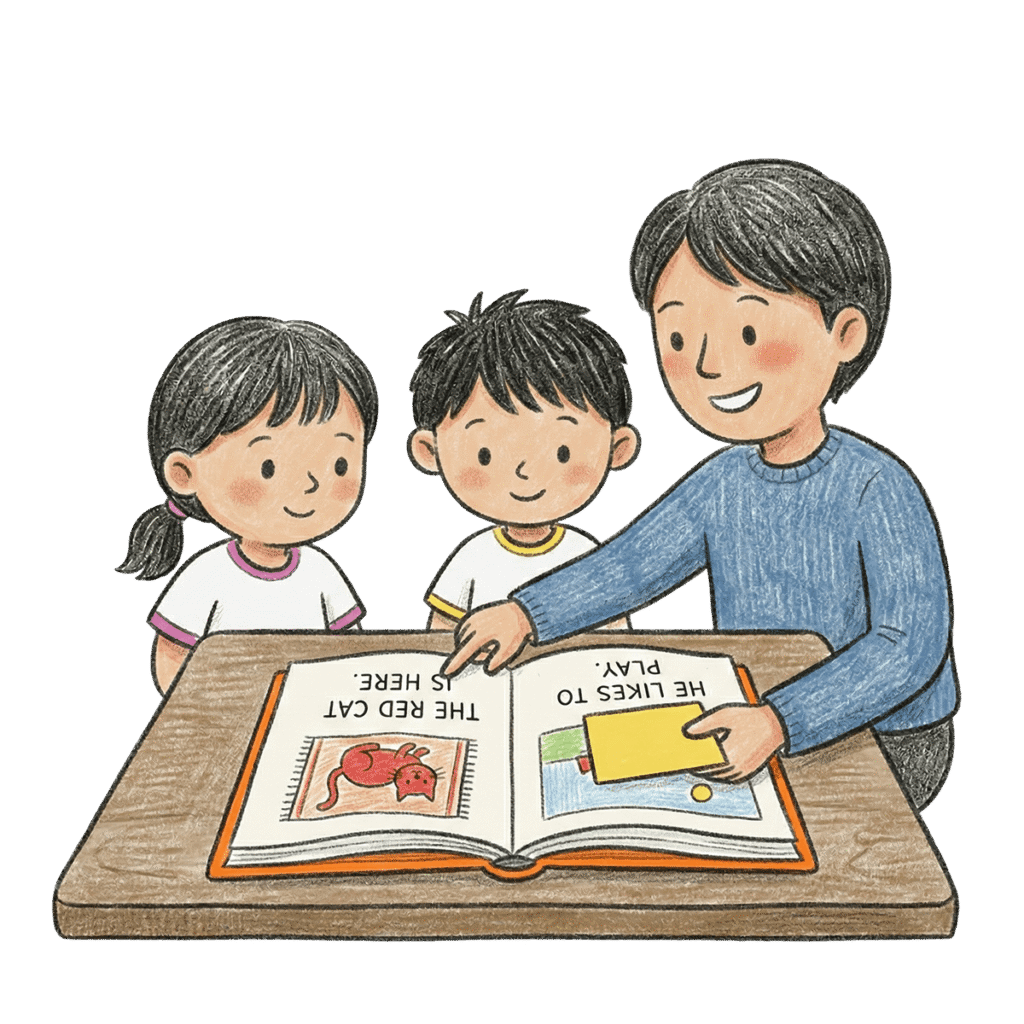
Cover the pictures and read the words first. Then uncover and re-read. It sounds simple — but it makes a real difference to how children approach a page.
Goal
Encourage real decoding rather than guessing from pictures — a habit that pays off as books get harder and illustrations get fewer.
You'll need
- A decodable book
- Two sticky notes
How to do it
Open the book to a page and cover the illustration with a sticky note. Ask your child to read the words first — just the text, no picture clues.
Once they've had a go (stumbles and all), take away the sticky note and re-read the page together with the picture revealed. Talk about what the picture adds. Did it match what they imagined? Did it help them understand anything differently?
This doesn't need to be every page — even doing it once or twice in a session is enough. The goal is to build the habit of trusting the words, not just guessing from the picture. That's a big deal as books get longer.
Grab our resources
Looking for some help with questions to ask after your reading session? These prompts give you a great starting point.
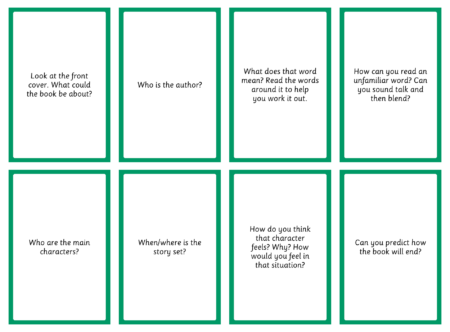
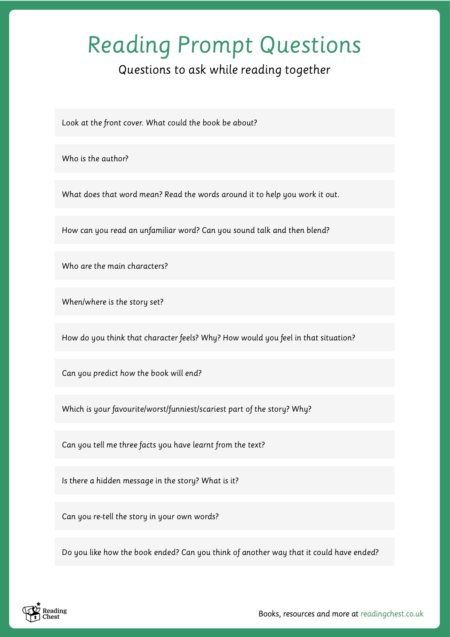
Once they’ve finished a book, try this five-word summary activity to help them reflect on what they’ve learned.
The five-word summary
Sum up the whole story in exactly five words. Harder than it sounds, more fun than it should be, genuinely great for comprehension.
Goal
Practise distilling a story to its essence — what really mattered? What can't you leave out? Five words forces real thinking.
You'll need
Nothing needed — works right after any book, anywhere.
How to do it
When you've finished a story, set the challenge: "Can you sum up the whole thing in exactly five words?" Not roughly five — exactly five.
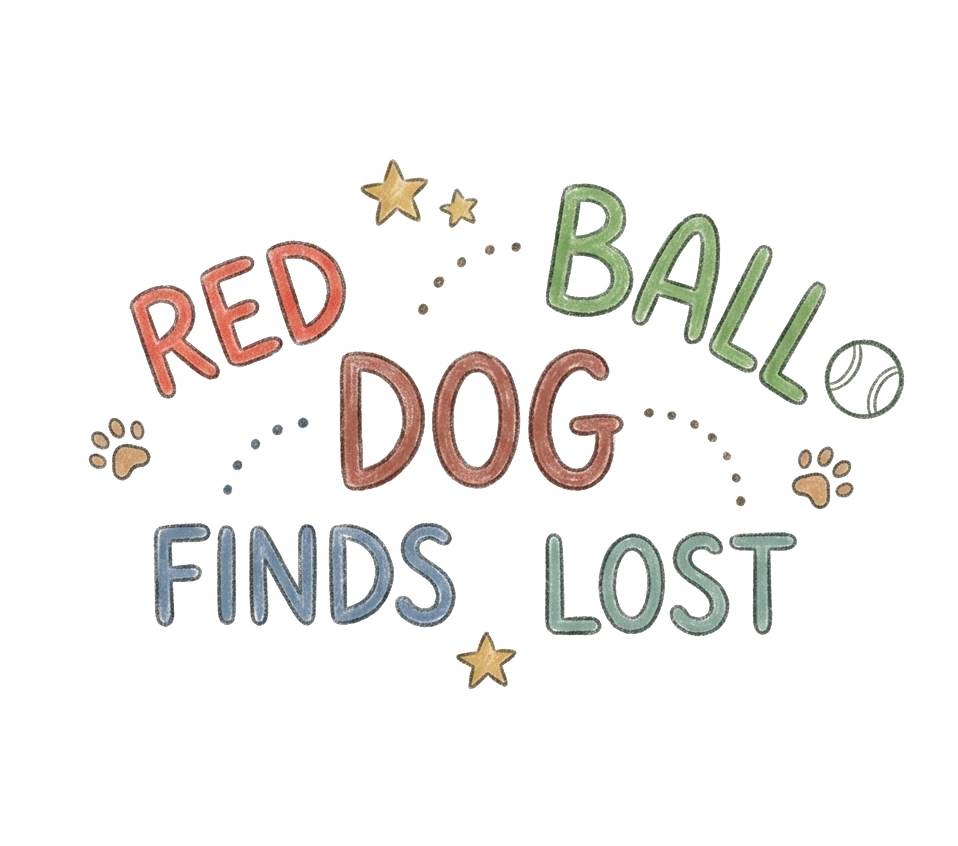
Give them a minute to think. "Dog finds lost ball. Hmm — that's four. Dog finally finds his ball — five!" The counting and refining is all part of it.
You have a go too. Compare your five words and talk about why you chose differently. There's no single right answer, and that's what makes it interesting. If they want to try again with four words, or seven, go for it.
Frequently asked questions
How do I know if a book is the right level for my child?
A simple rule: your child should be able to read about 90% of the words without help. If you let them read a short page and there are more than one or two tricky words per page, it’s probably too hard for independent reading. Watch their body language too — confident and focused means “just right”; anxious and struggling means you should save it for shared reading instead.
What if my child only wants to read one type of book?
That’s completely normal. Children often go through phases where they’re obsessed with one topic or series. Let them follow their interests — interest is a massively underrated reading superpower. You can gently introduce variety alongside their favourites, but don’t force it. A child happily reading one genre is better than a reluctant reader.
Should I let my child choose their own books?
Yes, absolutely. Children are instinctive about what they need — comfort, challenge, or just a story that makes them giggle. Letting them have ownership makes reading feel like an adventure rather than a chore. You can guide them within their level, but their choices matter.
How do I find books my child will actually enjoy?
Start with their interests — if they love dinosaurs, space, animals, or superheroes, lean into that. Ask their teacher for recommendations. Browse your library and let them pick. And don’t underestimate the power of a good cover — if your child is drawn to a book, give it a go. There’s no substitute for knowing your own child’s tastes.
In summary
Choosing books is part science (book bands and reading levels matter), part intuition (interest and enjoyment matter more), and part teamwork (between you, your child, and their teacher).
There’s no single “right” book — just the ones that work for your child right now. Start with their level, follow their interests, mix in some challenges and some easy wins, and trust your gut. You’ll quickly develop a feel for what works.
And if you ever feel stuck, remember: a child who’s reading — happily and confidently, at their own pace — is a child who’s winning. That’s the only level that really matters.
