Contents
The honest answer is: it depends. Most children achieve basic decoding by the end of Year 1, and reading fluency — reading with accuracy, at a good pace, and with expression — typically develops through Years 2 to 4. But the range within those years is wide, and “reading fluently” means different things at different stages.
If you’re worried your child isn’t where they should be, here’s what the trajectory actually looks like, what factors affect it, and when to take action.
What reading fluency actually means
Reading fluency has three components, all of which need to develop together:
- Accuracy — reading words correctly, including decoding unfamiliar words rather than guessing.
- Rate — reading at a pace that allows comprehension. Not rushing, but not so slow that the meaning of a sentence is lost by the time you reach the end of it.
- Prosody — reading with appropriate expression, phrasing, and intonation — the difference between reading that sounds like speech and reading that sounds like a word list.
A child can be accurate but slow; accurate and quick but flat and expressionless; or even speedy but missing words. Full fluency means all three are working together. Our reading fluency guide covers the components in more detail if you want a deeper understanding of what each involves.
Bite-sized reading tips, straight to your inbox
Get confidence-boosting tips to help your child learn to read. Short, useful, and easy to fit into (real) family life!
Even better? You'll also get 30% off your first month of Reading Chest.
Typical reading milestones by year group
These are approximate expectations based on typical development — they’re a guide, not a threshold. Individual children vary significantly.
- Reception (age 4–5) — children are learning the letter-sound correspondences and beginning to blend simple CVC words. Fluency isn’t the goal at this stage; accurate decoding is.
- Year 1 (age 5–6) — children work through digraphs, more complex letter combinations, and tricky words. By the end of Year 1, most children should be able to decode simple books independently, though reading may still be slow and laboured.
- Year 2 (age 6–7) — decoding becomes more automatic for most children. Pace improves. Some expression begins to emerge. By end of Year 2, most children are reading simple chapter books with some fluency.
- Year 3 (age 7–8) — for many children, this is when fluency “clicks”. Decoding is largely automatic, pace is comfortable, and expression develops naturally. Children can read for longer periods without fatigue.
- Year 4 and beyond (age 8+) — children who are reading fluently shift focus to comprehension, stamina, and reading range. Those who are not yet fluent may need targeted support.
Why the range is so wide
Several factors affect when a child reaches fluency, none of which are fixed:
- Reading exposure — children who have been read to regularly and who read at home tend to develop fluency faster. Volume matters.
- Phonics instruction — children who’ve had clear, systematic phonics teaching tend to crack decoding more reliably than those whose early phonics experience was patchy.
- Vocabulary — knowing what words mean when you encounter them in print removes one barrier to fluency. Children with rich spoken language tend to find reading easier.
- Developmental timing — children develop at different rates, and some children who are late to fluency catch up without intervention when the timing is right.
- Specific learning difficulties — dyslexia and other reading-related difficulties affect fluency development and may need specialist support.
The fluency plateau
Some children decode competently — they can read words correctly — but seem stuck before fluency develops. Reading stays slow and laboured even as accuracy improves. This is sometimes called the fluency plateau, and it’s surprisingly common.
The main cause is that decoding is still requiring conscious effort, leaving little cognitive capacity for pace or expression. The solution is usually extended practice at the child’s current comfortable level — reading a lot of books that aren’t a stretch, so that word recognition becomes more automatic. Repeated reading of familiar texts also helps: reading the same short passage two or three times, each time with the goal of improving fluency.
Our prosody guide has more on why expression develops after accuracy and rate, and what you can do to develop it at home.
Red flags vs normal variation
Not everything that looks like a reading delay is a red flag. A child who is still reading slowly at the end of Year 2 might just need more reading practice and a slightly different book diet. But a few patterns are worth discussing with a teacher or specialist:
- Difficulty identifying individual sounds in words, even after systematic phonics teaching
- Consistent letter or word reversals (reading was as saw, or b as d) well into Year 2 and beyond
- Very significant gap between listening comprehension (understanding spoken text) and reading comprehension (understanding what they’ve read) — this suggests the barrier is decoding, not comprehension
- Reading fluency that isn’t improving despite regular practice and good phonics instruction
If you’re concerned, talking to your child’s teacher is the right first step. Early support, when it’s needed, is far more effective than waiting and hoping.
What you can do at home
The most effective things you can do at home to support fluency development are also the most sustainable: read together daily, keep sessions enjoyable, and make sure your child has access to books they want to read at a level that’s comfortable but not without challenge.
These activities are specifically good for building fluency through repeated, purposeful reading:
Read it three ways
Read the same sentence three times — robot voice, pirate voice, mouse voice. Repetition that somehow gets more fun each time.
Goal
Build fluency through repeated reading of the same text — without anyone noticing that's what's happening.
You'll need
Nothing needed — works with any book, anywhere.

How to do it
Pick a sentence from a book — or just the page you're on. Read it once together in a robot voice: flat, staccato, mechanical. Then again as a pirate: gruff, dramatic, a bit "arrr". Then one more time as a mouse: tiny, squeaky, barely audible.
The words are the same each time. That's the secret. By the third read, your child has said the sentence three times without it feeling like practice at all.
You can let them choose the voices after a while — the weirder, the better. It keeps sessions from feeling like a grind on days when reading feels harder than usual.
The reading relay
Take turns reading a sentence or page each — you share the load, keep the momentum, and finish the book together. A proper team effort.
Goal
Make reading feel shared and manageable — less pressure, more momentum, and a natural model of fluent reading built right in.
You'll need
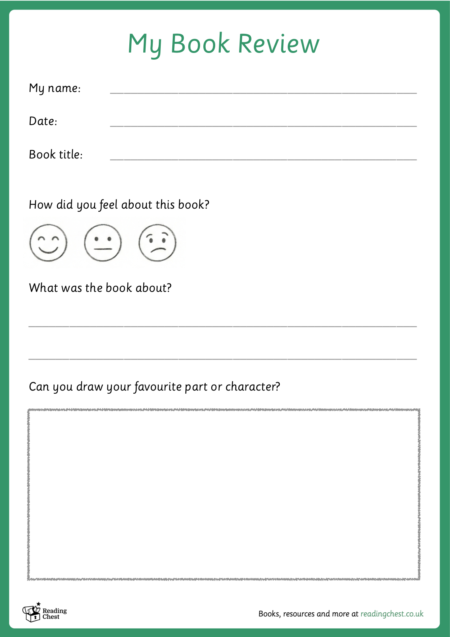
- Beginner Book Review
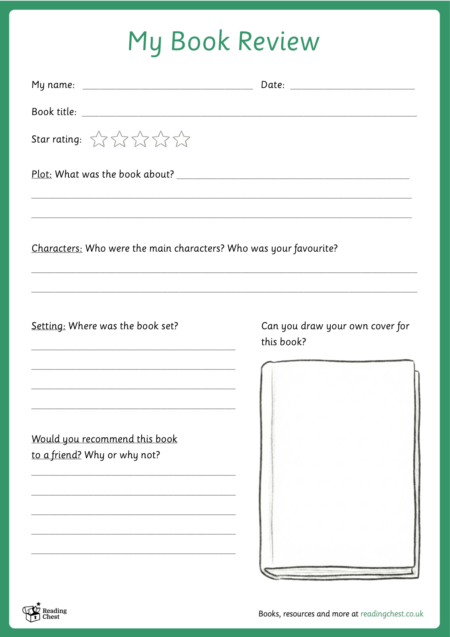
- Intermediate Book Review
How to do it
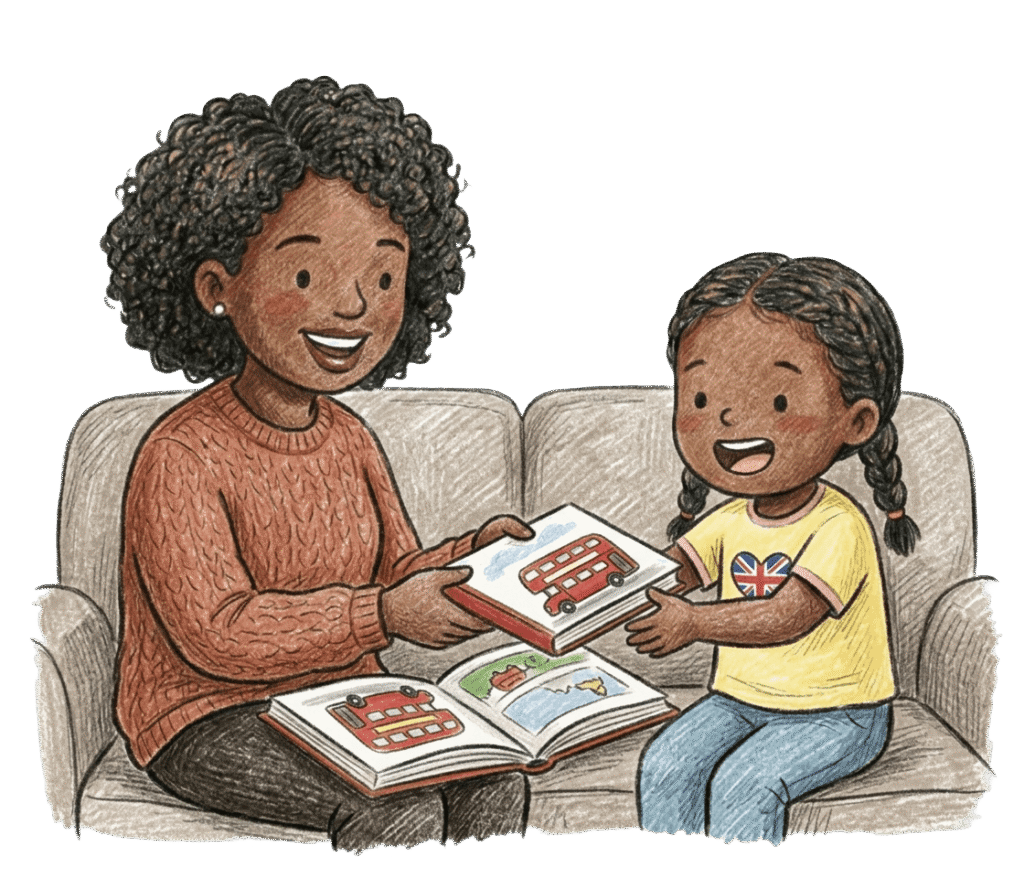
Pick a book and take turns: you read a sentence (or paragraph), they read a sentence. Pass it back and forth. If they stumble on a word, carry on — don't stop to correct mid-relay unless they ask for help.
Hearing you read fluently between their turns is genuinely useful — they're getting a live model of what reading sounds like at full speed. The relay format also keeps the story moving, which helps with children who find long reading sessions exhausting.
Fill in a book review together when you're done. Writing about it while the story's fresh is much better than coming back to it later.
Grab our resources
Print our beginner book review and intermediate book review to get started.
Frequently asked questions
My child is in Year 3 and still sounding out most words — is this a problem?
It depends on how much sounding out and how successfully. Some word-by-word reading is normal in Year 3, especially for longer or less familiar words. If your child is reading accurately but slowly, that’s often a fluency issue that practice will address. If they’re consistently struggling to decode familiar words, or if their reading accuracy is low, it’s worth discussing with their teacher. Reading at a comfortable level every day — books that aren’t a stretch — is usually the best home intervention for slow but accurate reading.
Is there a way to measure whether my child is reading fluently enough?
Schools use various assessments, including reading rate (words per minute), accuracy checks, and comprehension measures. At home, you can get a rough sense: a child reading at roughly 70–90 words per minute with good accuracy is in a comfortable range for the end of Year 2. By the end of Year 4, 100–120 words per minute with good accuracy and some expression is typical for a fluent reader. But these figures are guidelines, not benchmarks — your child’s teacher can give you a more specific picture of where they are.
Should I choose books above or below my child’s level to build fluency?
Both have a place. Books at or slightly above your child’s level challenge decoding and build vocabulary. Books below their level, read for pleasure or repeated for fluency practice, build automaticity and confidence. For fluency development specifically, reading easy material at speed — books where they know most of the words already — is a well-evidenced approach. Don’t underestimate the value of letting a child re-read a favourite easy book.
