
Contents
Reading fluency is the ability to read accurately, at a reasonable pace, and with expression — not just decoding words correctly, but reading in a way that sounds like natural speech. A fluent reader doesn’t have to stop and sound out every word; they read smoothly and with understanding.
Fluency is often described as the bridge between decoding and comprehension. A child can know every phonics rule and still read in a slow, word-by-word way that makes it difficult to hold the meaning of a sentence. Fluency is what turns that halting reading into something that sounds — and feels — like real reading.
If you’ve been told your child needs to work on fluency, or if you’ve noticed they sound out every word correctly but their reading still sounds stilted, here’s what’s going on and what you can do about it.
The three parts of fluency
Researchers typically describe fluency as having three components:
- Accuracy — reading words correctly. This is the decoding component: the child needs to know their phonics well enough to reliably decode the words on the page.
- Rate — reading at an appropriate speed. Not racing, not painfully slow — a pace that allows meaning to accumulate across sentences.
- Prosody — reading with expression, appropriate phrasing, and intonation. This is the component that makes reading sound like spoken language rather than a robot reciting words.
All three matter. A child who reads accurately but very slowly may have fluency that needs work. A child who reads quickly but without expression is also not fully fluent. And a child who hasn’t yet mastered decoding will struggle with fluency because too much mental effort is going on accuracy, leaving nothing left for pace or expression.
Bite-sized reading tips, straight to your inbox
Get confidence-boosting tips to help your child learn to read. Short, useful, and easy to fit into (real) family life!
Even better? You'll also get 30% off your first month of Reading Chest.
Why fluency matters for comprehension
When a child is decoding word by word — The…cat…sat…on…the…mat — a large portion of their mental energy is going into just reading the words. Very little is left over for understanding what those words mean, or how they connect into a sentence.
Fluent reading frees up cognitive capacity. Once word recognition becomes more automatic, the child can focus on meaning, on tracking plot or argument, on noticing language choices. This is why fluency is the bridge to comprehension — and why children who read haltingly often struggle to answer questions about what they’ve just read, even when they’ve decoded every word accurately.
It’s also why reading aloud matters as a diagnostic tool: a child reading silently can mask fluency issues that become immediately obvious when they read aloud.
What halting reading looks like — and what it means
The most common signs that fluency needs work:
- Reads word by word with long pauses between each one
- Sounds out familiar words that they’ve decoded correctly many times before
- Reads in a flat, monotone voice with no expression
- Loses the meaning of a sentence by the time they reach the end of it
- Reads slowly even on books that are at the right level
This is very common in Year 1 and Year 2, and it doesn’t mean the phonics teaching has failed. It means the child has learned to decode but hasn’t yet had enough exposure to the same words (and similar texts) to make recognition automatic. Fluency develops through reading volume — the more they read, the more words become instant.
How fluency develops
Fluency isn’t really taught in the same way that phonics is taught — it’s developed through sustained reading practice. The key factors are:
- Reading volume — children who read a lot develop fluency naturally over time. The more exposure a child has to print, the more words become automatic.
- Reading at the right level — books that are too hard force a child to decode almost every word, which builds decoding but not fluency. Books at the right level — where the child can read 90–95% of words automatically — build fluency because the familiar words come easily and the cognitive effort can be spread more evenly.
- Repeated reading — rereading the same book or passage multiple times is one of the most evidence-backed strategies for building fluency. Each re-read, the child processes the text a little more automatically.
- Hearing fluent reading — being read to, or listening to audiobooks, gives children a model of what fluent reading sounds like. It’s particularly useful for prosody, which is hard to develop without ever having heard good reading.
How to support fluency at home
There’s a lot you can do without any specialist resources:
- Read aloud to your child — this builds vocabulary, background knowledge, and a sense of how fluent reading sounds. Don’t stop reading aloud just because your child can read independently.
- Re-read familiar books — encourage your child to re-read books they’ve already read once. The second reading is almost always smoother and more expressive than the first.
- Echo reading — you read a sentence, your child echoes it back with the same expression and rhythm. Good for prosody specifically.
- Paired reading — read aloud together simultaneously. Your child matches your pace and expression. When they feel confident, drop out and let them continue alone.
- Performance reading — asking your child to “perform” a passage for a real or imaginary audience gives them a reason to read with expression, not just decode. It naturally motivates prosody.
Our guide to reading with your child has more ideas for making regular reading sessions worthwhile — whether your child reads independently or still needs a lot of support.
This activity is specifically designed to build reading expression and fluency:
Read it three ways
Read the same sentence three times — robot voice, pirate voice, mouse voice. Repetition that somehow gets more fun each time.
Goal
Build fluency through repeated reading of the same text — without anyone noticing that's what's happening.
You'll need
Nothing needed — works with any book, anywhere.

How to do it
Pick a sentence from a book — or just the page you're on. Read it once together in a robot voice: flat, staccato, mechanical. Then again as a pirate: gruff, dramatic, a bit "arrr". Then one more time as a mouse: tiny, squeaky, barely audible.
The words are the same each time. That's the secret. By the third read, your child has said the sentence three times without it feeling like practice at all.
You can let them choose the voices after a while — the weirder, the better. It keeps sessions from feeling like a grind on days when reading feels harder than usual.
And this one is good for making reading together feel like a shared activity rather than a test:
The reading relay
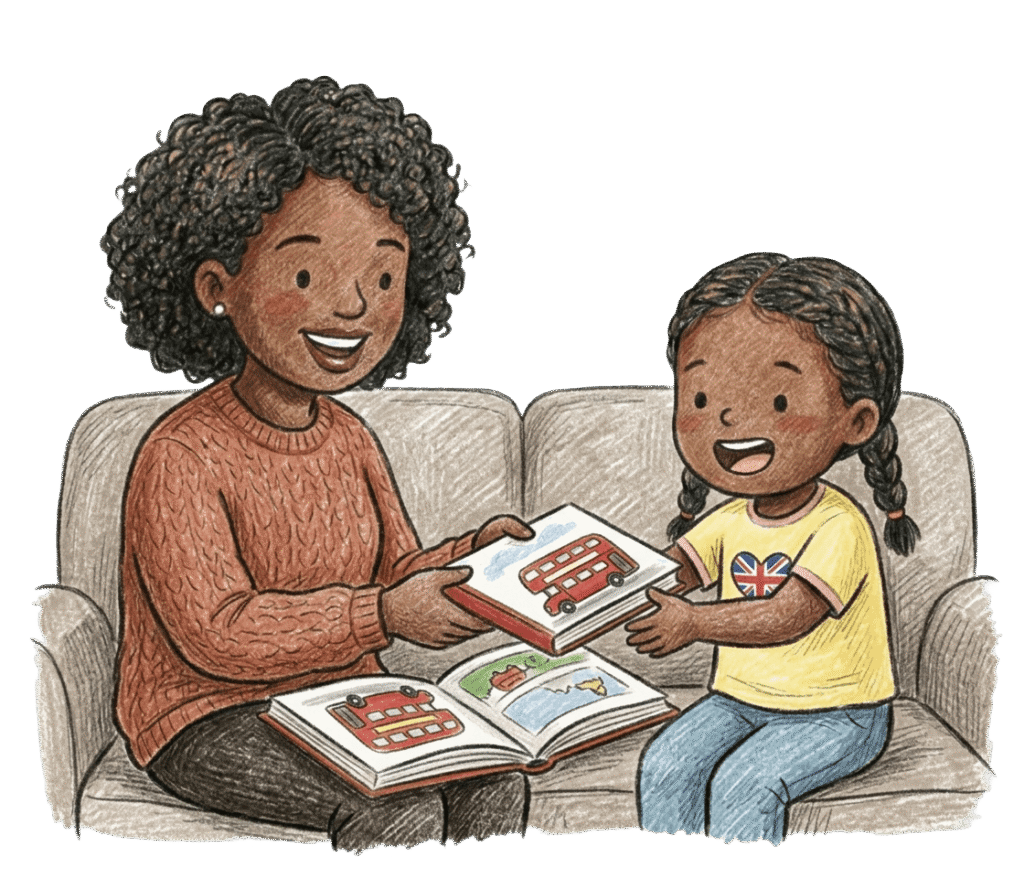
Take turns reading a sentence or page each — you share the load, keep the momentum, and finish the book together. A proper team effort.
Goal
Make reading feel shared and manageable — less pressure, more momentum, and a natural model of fluent reading built right in.
You'll need
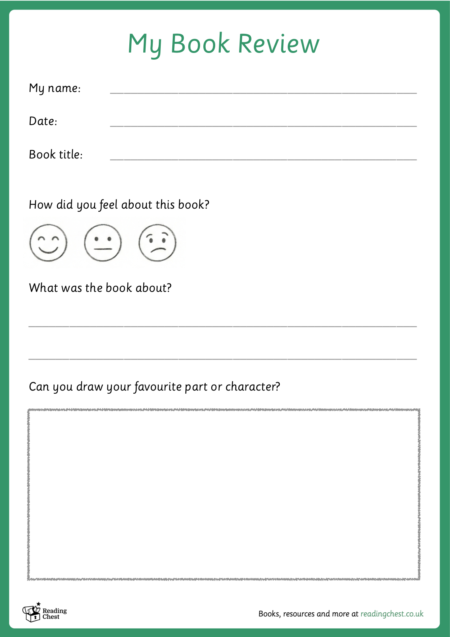
- Beginner Book Review
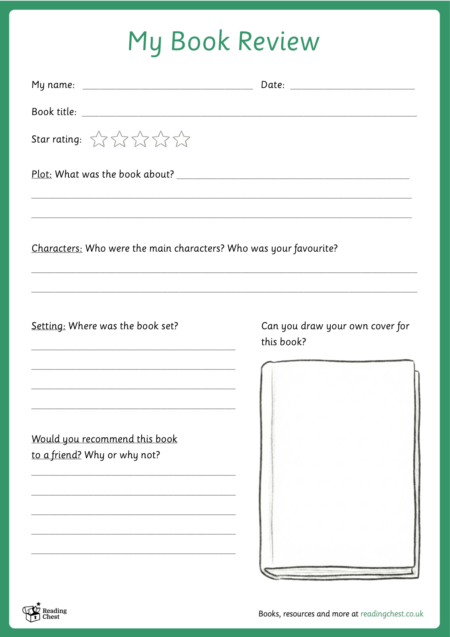
- Intermediate Book Review
How to do it
Pick a book and take turns: you read a sentence (or paragraph), they read a sentence. Pass it back and forth. If they stumble on a word, carry on — don't stop to correct mid-relay unless they ask for help.
Hearing you read fluently between their turns is genuinely useful — they're getting a live model of what reading sounds like at full speed. The relay format also keeps the story moving, which helps with children who find long reading sessions exhausting.
Fill in a book review together when you're done. Writing about it while the story's fresh is much better than coming back to it later.
Grab our resources
Print our beginner book review and intermediate book review to get started.
When to seek extra support
It’s worth raising fluency concerns with your child’s teacher if:
- Your child is in Year 2 or above and still reading word by word in books at their level
- Their reading has plateaued and isn’t improving despite regular practice
- They’re becoming anxious or resistant about reading aloud
Schools can offer targeted support — including reading intervention programmes that specifically address fluency — if it’s identified as a need. Raising it early is always better than waiting.
It’s also worth knowing that some children who struggle significantly with fluency may have an underlying difficulty such as dyslexia or processing differences. A good assessment can be the first step towards the right support.
Frequently asked questions
What is a good reading fluency rate for a primary school child?
Benchmarks vary by programme and year group, but rough UK guidelines suggest children should be reading around 60–80 words per minute by the end of Year 1 and 90–110+ words per minute by Year 3. But pace alone doesn’t equal fluency — expression and accuracy matter too. If your child reads quickly but without comprehension, speed isn’t the goal.
Is fluency the same as reading speed?
No — reading speed is one component of fluency, but fluency also includes accuracy and prosody (expression and phrasing). A child who reads very fast but makes lots of errors or reads in a monotone isn’t fluent. The goal is smooth, expressive, accurate reading — not just fast reading.
What is prosody in reading?
Prosody refers to the expression, rhythm, and intonation of reading aloud — the qualities that make it sound like natural speech rather than a word-by-word recitation. A child with good prosody will pause at commas, raise their voice for questions, speed up for exciting passages. Our guide to prosody in reading explains it in more detail.
Does fluency develop naturally or does it need to be taught?
Both, really. The volume of reading is the biggest driver of fluency — children who read a lot become more fluent naturally over time. But specific strategies like repeated reading and echo reading can accelerate development, particularly for children who are falling behind. Schools typically address fluency explicitly in Year 1 and Year 2 once basic decoding is in place.
My child reads perfectly at school but struggles at home — why?
This is very common. Reading at home often involves performance anxiety — your child knows you’re listening and wants to get it right, which can actually increase halting. Try taking the pressure off: read together rather than asking them to read to you, choose books they’ve already read once, and don’t correct every error. Relaxed reading is usually more fluent reading.
