Contents
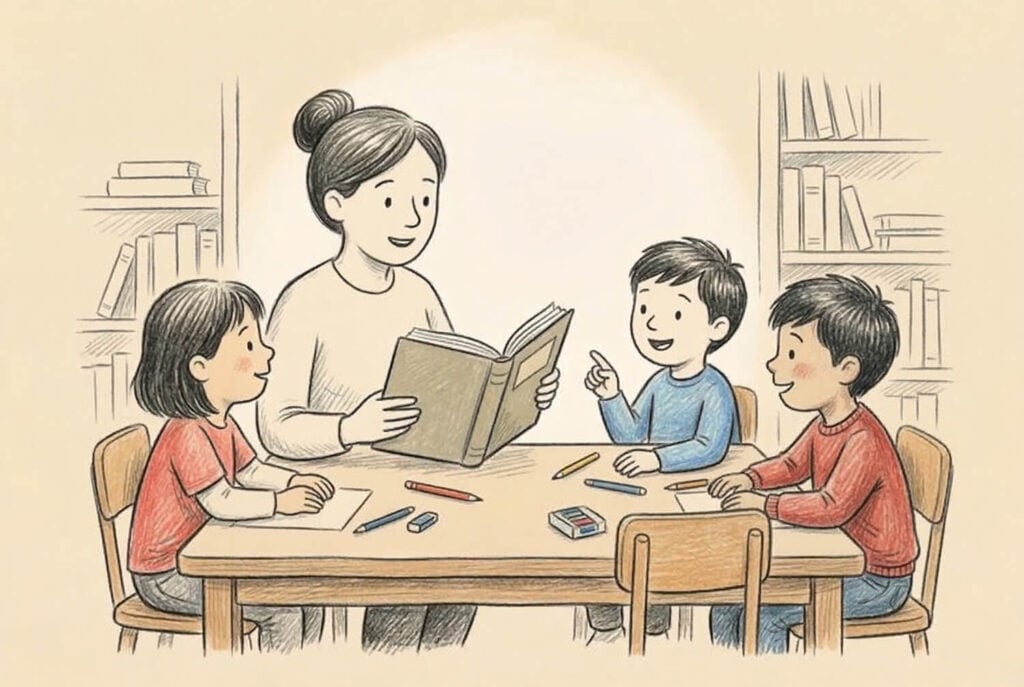
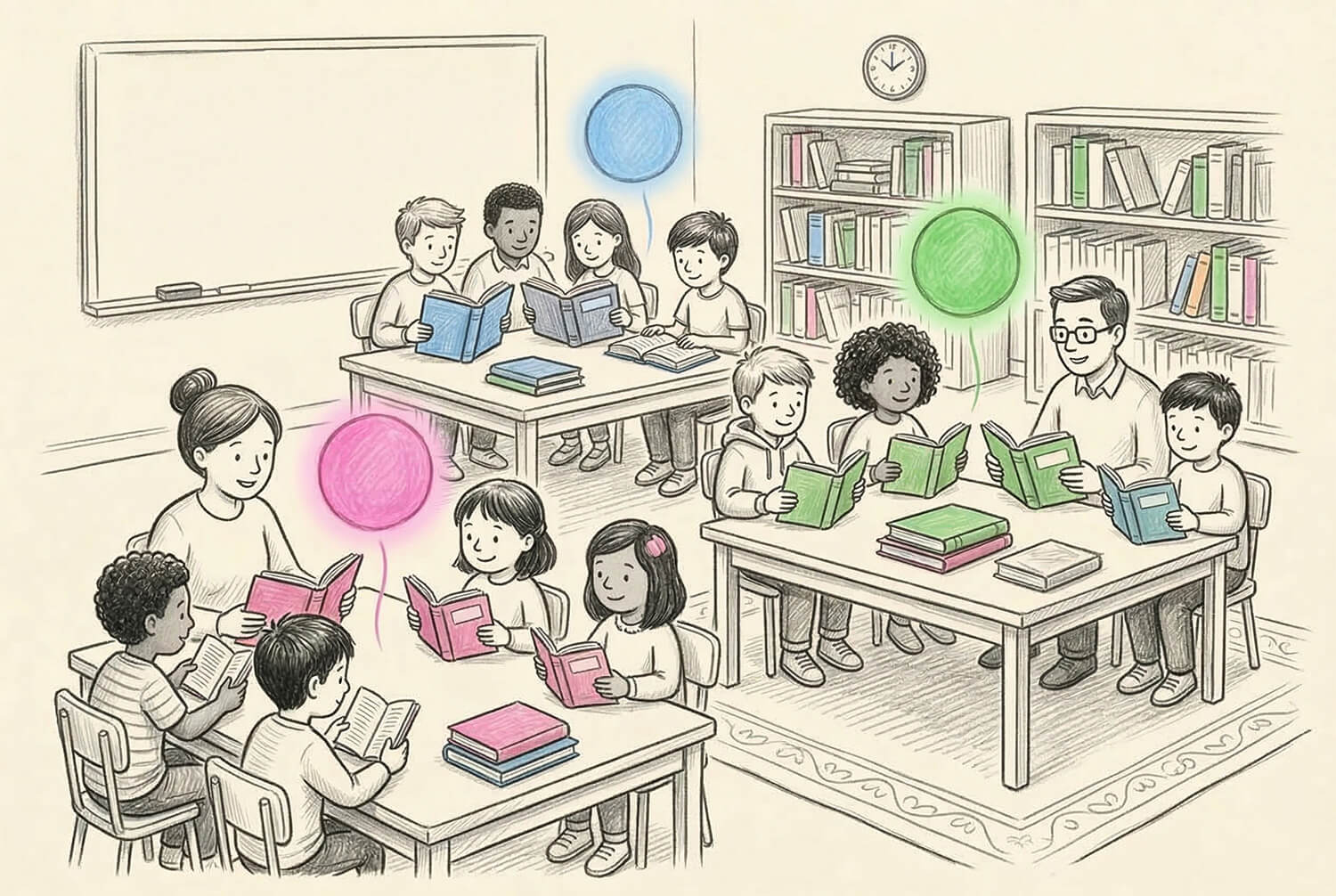
Guided reading is a structured reading session where a teacher or teaching assistant works with a small group of children — usually four to six — who are at a similar reading level. Using a shared text, the adult guides children through the reading and asks questions before, during, and after.
It’s one of the most common things on a primary school timetable, and one of the least understood by parents. Many people picture something very different from what actually happens. Here’s what guided reading is, how it supports your child’s development, and what you can do at home to complement it.
What happens in a guided reading session
A typical guided reading session lasts around twenty minutes. The exact format varies by school and year group, but the broad structure is consistent:
- Introduction — the teacher introduces the text, often using the cover, title, or first page to build anticipation. They might introduce a few tricky words in advance, or ask children to make predictions about the story.
- Reading — children read the text, either quietly to themselves, aloud in turn, or with the adult moving around the group to listen to individuals. This is not a performance; it’s supported practice.
- Discussion and questioning — the teacher asks questions about the text: what happened, how characters felt, what a word means, what the author was trying to say. These questions get more sophisticated as children progress through school.
- Follow-up — sometimes children complete a short written activity, draw a response, or talk in pairs about what they’ve read.
Bite-sized reading tips, straight to your inbox
Get confidence-boosting tips to help your child learn to read. Short, useful, and easy to fit into (real) family life!
Even better? You'll also get 30% off your first month of Reading Chest.
How it differs from other reading at school
Guided reading sits between two other types of reading that happen in primary schools. Shared reading is whole-class work — the teacher reads a text with the whole class, often using a big book or projected text. Independent reading is children reading alone, at their own pace, for pleasure or practice.
Guided reading is the middle ground: small enough that every child is actively engaged, structured enough that the teacher can target specific skills, and supported enough that children can attempt texts slightly beyond their comfortable independent level. That “slightly beyond” element is deliberate — it’s where real learning happens, with the scaffolding of an adult present.
The types of questions teachers ask
Even with early readers, guided reading sessions involve substantive questions. These aren’t just “what happened next?” — they’re designed to develop different aspects of reading comprehension:
- Retrieval — finding information that’s explicitly stated in the text: “Where did the children go on their trip?”
- Inference — working out what’s implied but not directly stated: “How do you think she was feeling? What makes you think that?”
- Vocabulary — unpicking the meaning of words and phrases in context: “What does ‘hesitated’ mean here? What does it tell us about how he felt?”
- Authorial intent — thinking about why the writer made particular choices: “Why do you think the author chose to end the chapter there?”
These four question types are the same ones tested in the KS2 SATs reading paper — so what happens in guided reading groups in Year 1 is laying the groundwork for what children are expected to do independently in Year 6.
Reading levels and grouping
Children are placed in guided reading groups based on their current reading level, typically mapped to book band colours or a school’s internal assessment. Groups are reviewed regularly — children don’t stay in the same group all year.
The grouping isn’t labelling; it’s practical. A child reading at Pink level can’t meaningfully participate in a discussion of a Gold-level text, and vice versa. The groups let the teacher pitch the text, the vocabulary, and the questions at a level where all the children in that session can engage.
How to complement guided reading at home
The most valuable thing you can do at home is read with your child and ask questions — not testing questions, but genuine “I wonder” questions that prompt thinking. “What do you think the character is going to do next?” “Why do you think he said that?” “What would you have done?”
These don’t require any planning. They can happen naturally in the middle of a book, during bedtime reading, or over breakfast when your child is reading independently. The habit of thinking about texts — rather than just moving through them — is exactly what guided reading is trying to develop.
Reading Chest subscribers can use the reading with your child guide for more on how to have these conversations at different stages.
These two activities build exactly the kind of active reading engagement that guided reading develops — they’re easy to use at home with any book:
Before and after reading
One question before you open the book. One after you close it. That's it — but it shifts everything from just decoding words to actually thinking about them.
Goal
Help your child get more from every reading session by tuning in to meaning, not just getting through the words.
You'll need
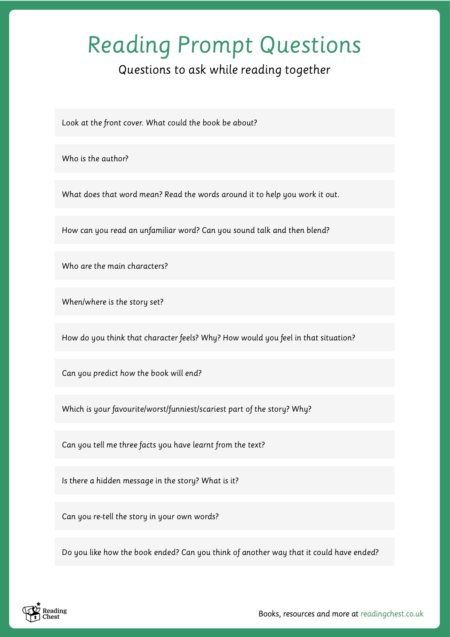
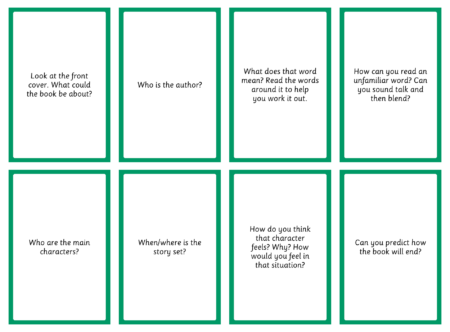
- Reading Prompt Questions
- Reading Prompt Cards
How to do it
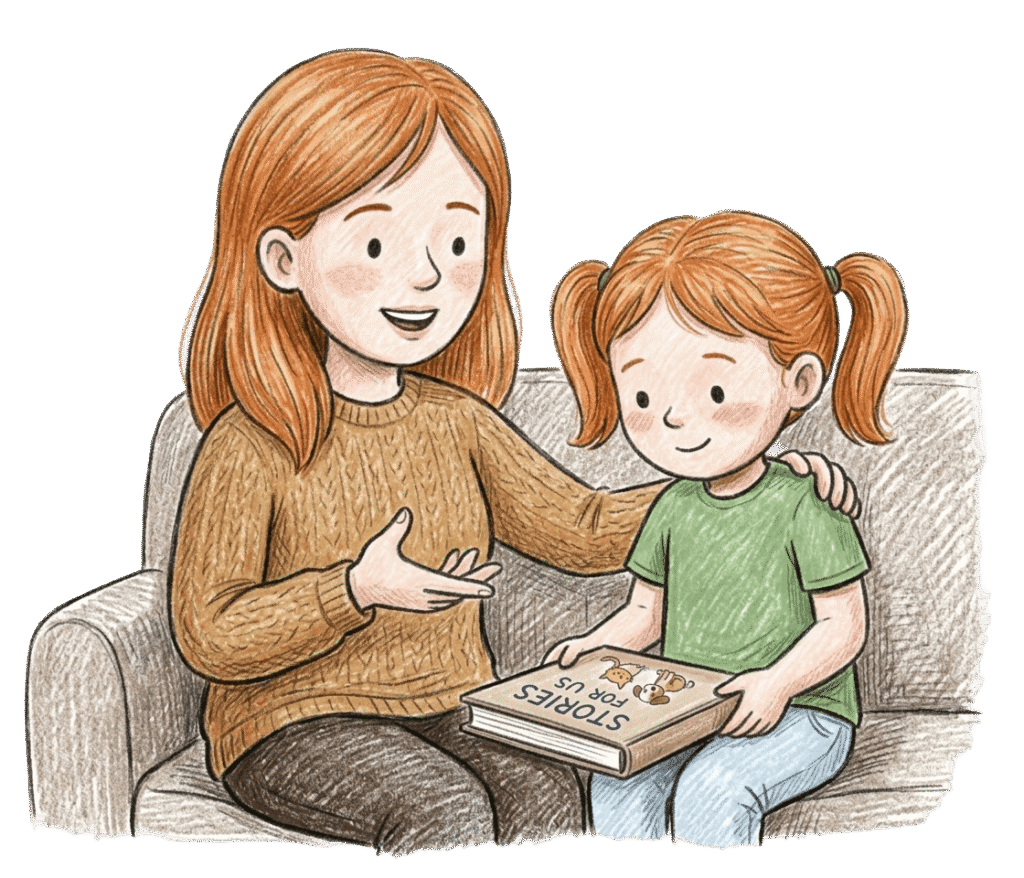
Before you open the book, ask one simple question: "What do you think this might be about?" or "What do you notice on the cover?" That's all — don't overthink it.
Read together. When you finish, ask one follow-up: "What was your favourite part?" or "What would you do if you were that character?" Use the prompt cards if you want more ideas.
Keep it brief. You're not running a comprehension test — you're just helping them connect with what they've read. That habit of pausing to think is one of the most useful things a reader can learn.
Grab our resources
Print our reading prompt questions and reading prompt cards to get started.
Character hot seat
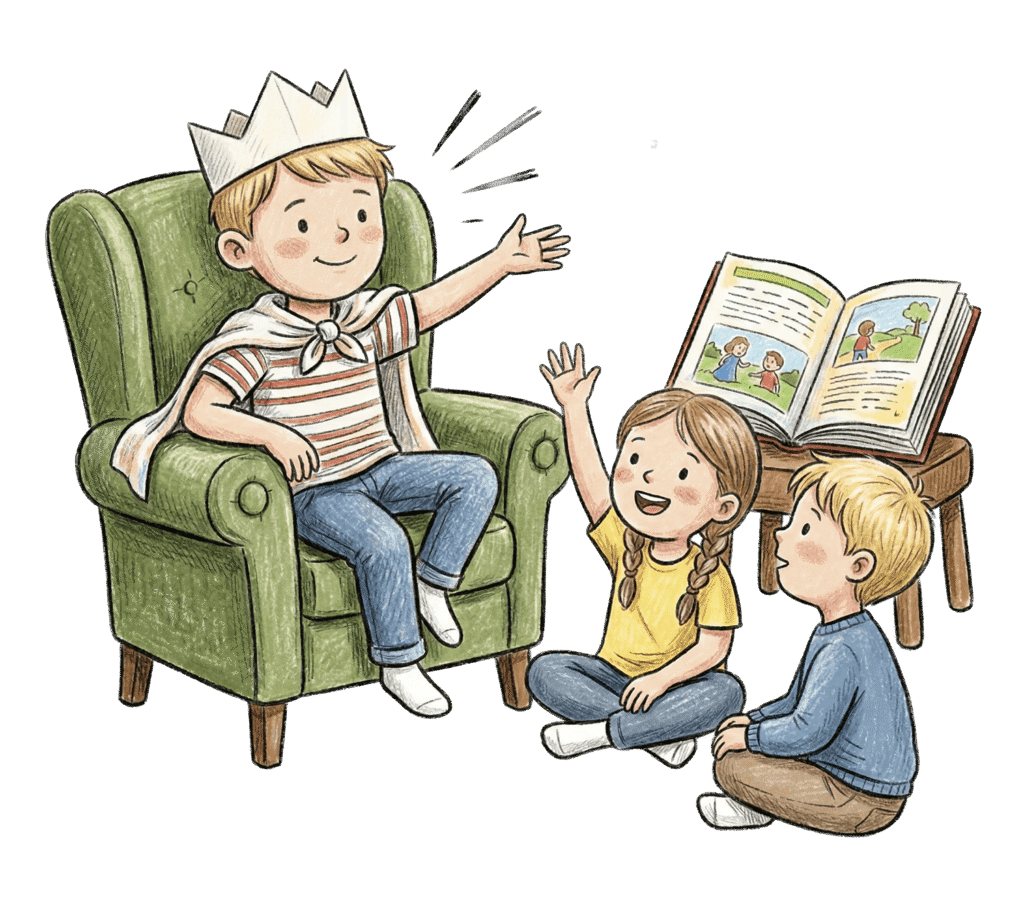
One person sits in the hot seat as a character from the story. Everyone else fires questions. Great for getting inside a character's head.
Goal
Explore a character's thoughts, motives and feelings through role-play — the kind of deep thinking that makes stories stick.
You'll need
- Reading Prompt Questions
- Reading Prompt Cards
How to do it
After reading, pick a character. One person — you or your child — sits in the "hot seat" and becomes that character. The others ask questions: "Why did you do that?" "How did you feel when...?" "What would you do differently?"
Use the prompt cards and questions if you need ideas. The person in the hot seat answers in character — no wrong answers, just thinking about how the character might have seen things.
Take turns in the seat. It's surprisingly revealing — children often come out with insights about the story that they wouldn't have spotted in a normal conversation. And yes, you will be asked to do silly voices.
Grab our resources
Print our reading prompt questions and reading prompt cards to get started.
Frequently asked questions
Why is my child in a different guided reading group from their friend?
Guided reading groups are based on reading level, not overall ability or how “clever” a child is. Children develop reading skills at different rates and in different ways — a child who finds decoding easy might find comprehension harder, or vice versa. Being in a different group from a friend simply means they’re currently at different points in their reading journey, which is completely normal. Groups are reviewed regularly, and children move when they’re ready.
My child says they don’t do guided reading at their school — is that a problem?
Not necessarily — guided reading is one model for supported reading instruction, but schools structure this time differently. Some schools use whole-class reading instead of small groups, particularly in KS2. Others use one-to-one reading more often. What matters is that children are getting regular, supported engagement with texts that stretch their comprehension. If you’re concerned about the amount of supported reading your child receives, it’s worth asking their teacher how reading is structured in their class.
How is guided reading different from the reading books my child brings home?
The books children bring home are typically at their independent reading level — texts they can read comfortably with some challenge, but without needing constant support. Guided reading uses texts that are slightly above that level, with adult scaffolding to help children access them. The home reading book is for building fluency and confidence; guided reading is for stretching skills and developing comprehension in a supported setting.
Should I do anything to prepare my child for guided reading?
You don’t need to do anything specific. Guided reading preparation happens at school — the teacher introduces the text and builds context before children read. The most useful thing you can do at home is read together regularly and have conversations about books. Children who are used to talking about stories and characters come into guided reading sessions already warmed up for the kind of discussion that happens there.
