Contents
Twinkl Phonics is a DfE-validated systematic phonics programme that’s increasingly adopted by UK primary schools — especially schools that already use Twinkl’s broader range of teaching resources. If your child’s school has recently switched to Twinkl Phonics and you want to understand what it involves, this is your starting point.
It’s a newer addition to the landscape compared to programmes like Read Write Inc or Little Wandle, but it follows the same fundamental approach: systematic, synthetic phonics taught in a structured sequence. Here’s what’s different, what you can expect, and how to support at home.
What Twinkl Phonics is
Twinkl Phonics is a complete systematic synthetic phonics programme, meaning it teaches children to read and spell by working through the sounds of spoken English and the letters that represent them, in a specific order. It received DfE validation — which confirms it meets the government’s criteria for high-quality phonics provision — and is structured across six levels.
Twinkl is already well known among primary school teachers as a source of teaching resources, and the phonics programme integrates naturally with the broader Twinkl library that many schools already use. This is partly why some schools have adopted it: the training, classroom materials, and parent resources all sit within a platform their staff already know.
Bite-sized reading tips, straight to your inbox
Get confidence-boosting tips to help your child learn to read. Short, useful, and easy to fit into (real) family life!
Even better? You'll also get 30% off your first month of Reading Chest.
The six levels
Twinkl Phonics organises its teaching into six levels, which broadly map to the phonics journey from Reception through to Year 2:
- Level 1 — environmental sound discrimination, rhythm, and oral blending and segmenting. Prepares children’s ears and attention before letter-sound correspondence begins.
- Level 2 — the first single-letter sounds and simple CVC words. Children begin blending and reading short decodable words.
- Level 3 — additional single-letter sounds plus the main digraphs: sh, ch, th, ai, ee, igh, oa, and more.
- Level 4 — consonant clusters and more complex word structures (CCVC and CVCC words). Children practise blending longer words.
- Level 5 — alternative spellings of vowel sounds. Children learn that the /ai/ sound can be written as ai, ay, or a-e, and so on.
- Level 6 — spelling patterns, morphology (prefixes, suffixes), and building writing confidence alongside reading fluency.
This sequence is similar to other validated programmes: simple sounds first, then digraphs, then more complex patterns. The content is the same phonics knowledge — what differs between programmes is mainly the teaching materials, the lesson structure, and the associated books.
Books and digital access
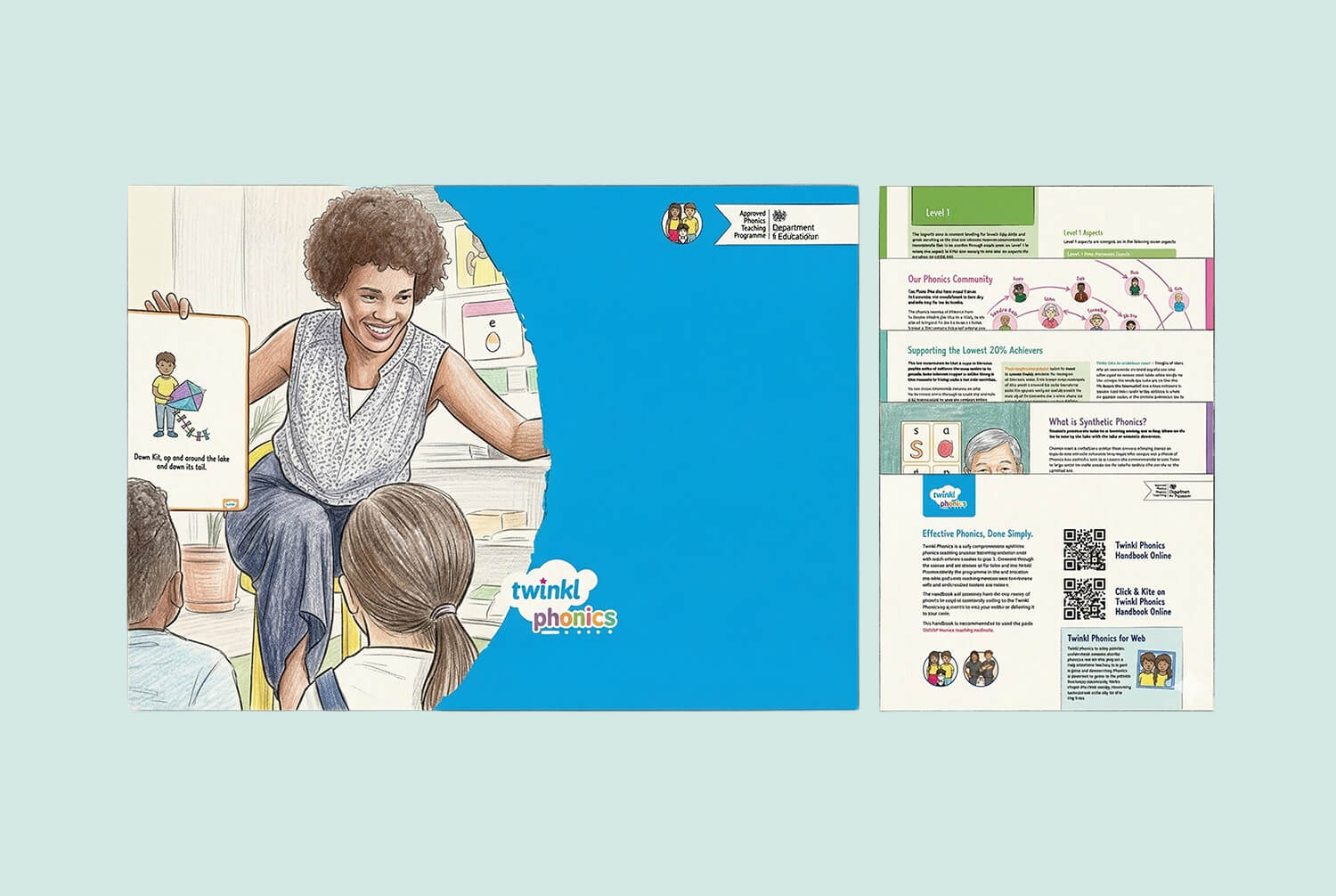
Twinkl Phonics has its own range of decodable readers — books designed so that children can decode every word using the sounds they’ve been taught at that level. These come in print and are also available digitally through the Twinkl Go! platform, which some schools provide access to for home reading.
If your school uses Twinkl Go!, your child may have a login to access digital books and phonics activities at home. Ask the school if you’re not sure whether this applies to your child.
How it compares to other schemes
The core phonics content in Twinkl Phonics is the same as any other validated programme — the sounds of English and how they’re written. What varies is the teaching approach and materials.
Compared to Read Write Inc, which uses specific characters and catchy mnemonics for each sound, Twinkl Phonics has a slightly more straightforward visual style — less character-driven, more resource-led. Compared to Little Wandle, which has a tightly prescribed lesson structure, Twinkl Phonics gives teachers a bit more flexibility in how they use the materials.
For parents, the practical implication is: if you’re looking for home-practice resources that match your school’s programme, Twinkl’s own website has a range of phonics materials that align with the levels your child is working on. Some are free; others are behind the Twinkl subscription.
How to support your child at home
Regardless of which scheme your school uses, the fundamentals of supporting phonics at home are the same: read decodable books regularly, encourage sounding out rather than guessing, and keep sessions short and positive.
If your child’s school uses Twinkl Phonics specifically, it’s worth asking the school which level your child is currently on, so you can focus any extra practice on the right sounds. Twinkl’s parent-facing resources on their website can also give you a sense of what’s being covered at each level.
This activity is a good match for practising sounds at home, whatever level your child is working on:
Sound of the day
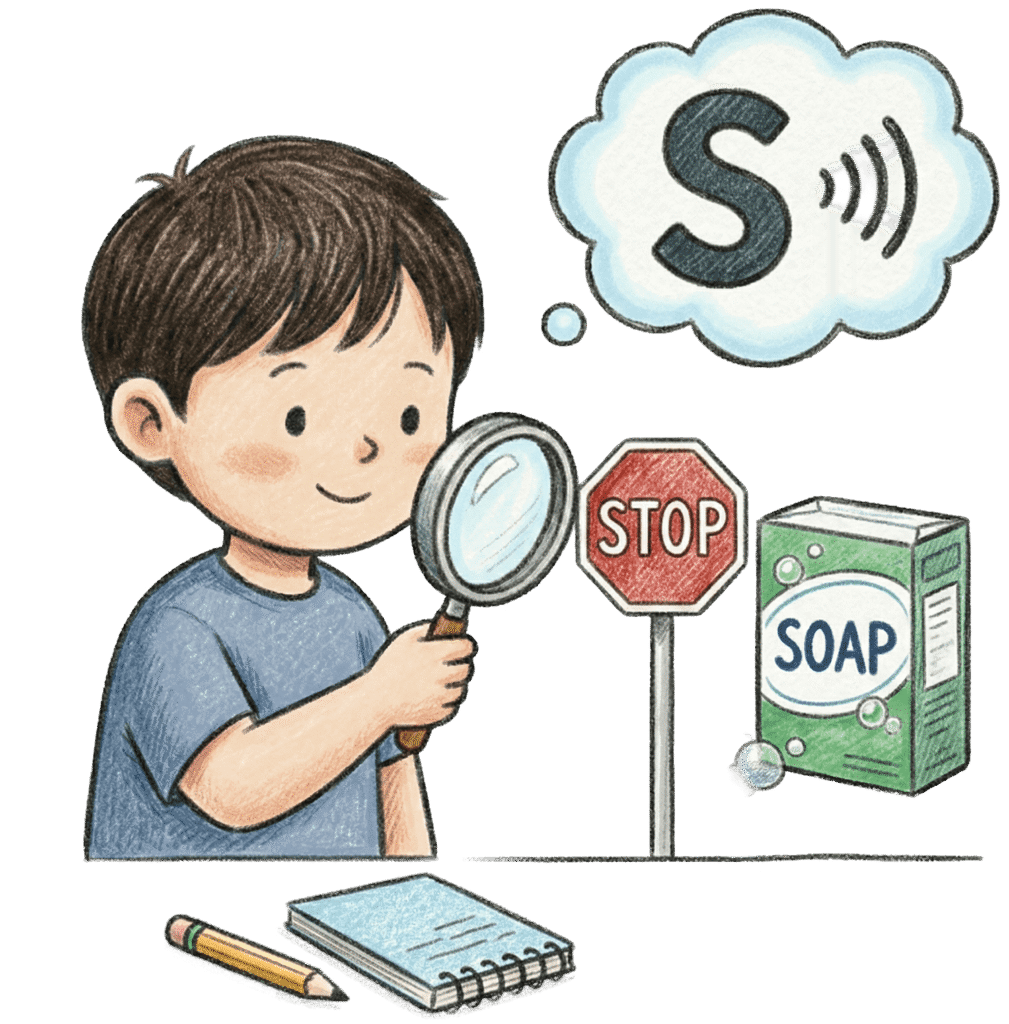
Pick one sound and spend the day noticing it everywhere — on signs, packets, toys, and out in the world. Quick to set up, surprisingly addictive.
Goal
Help your child notice sounds in everyday life — building phonemic awareness without needing to sit down and "do phonics".
You'll need
Just a focus sound — like sh or ee — and your normal day.
How to do it
Pick a sound in the morning. Say it together clearly: sh, ee, m — whatever you're working on. That's your sound of the day.
Then just keep going with your normal day. Whenever you spot it — on a cereal box, a road sign, a shop name, a toy — point it out and say the sound together. Let your child spot them too and make a fuss when they do.
By the end of the day, you'll have done phonics practice a dozen times without sitting down once. That's the magic of making it ambient rather than formal.
And this one builds sound awareness through a game that young children respond well to:
Teach the teddy sounds
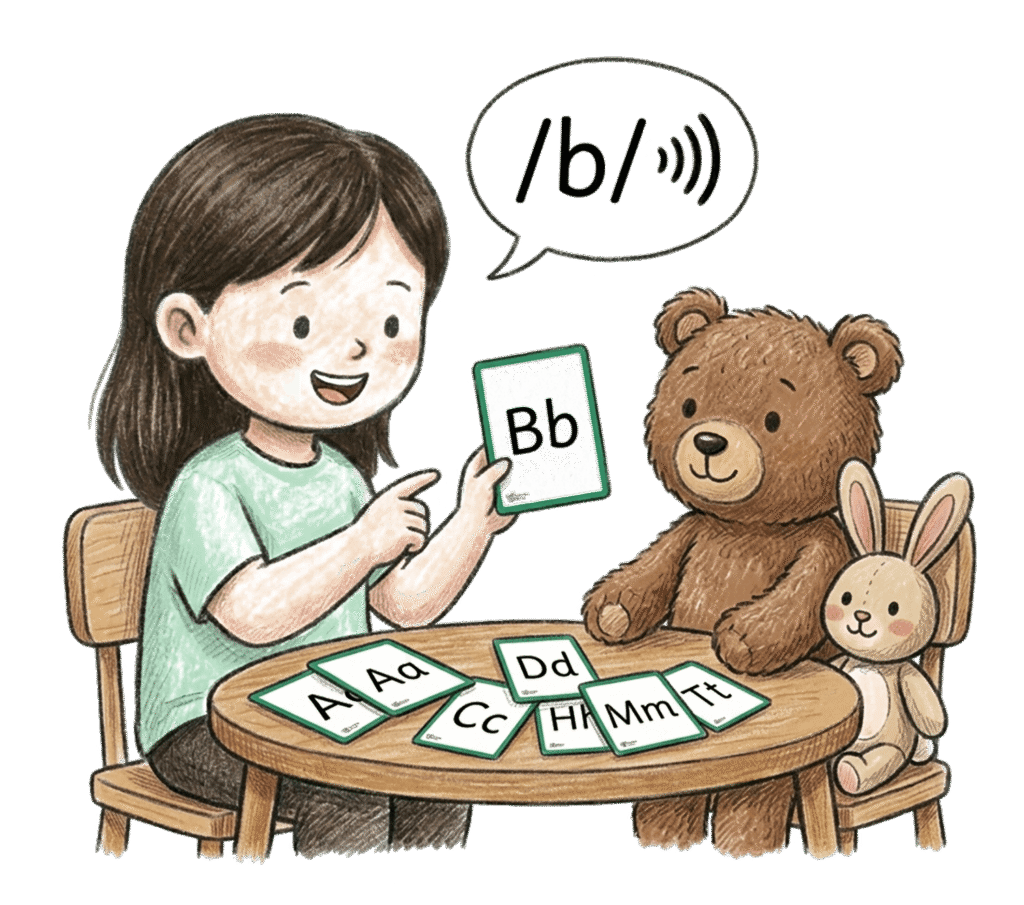
Your child becomes the teacher. They show a teddy (or any toy) the letter cards and explain each sound. Teaching something is the best way to really learn it.
Goal
Practise letter-sound recall by putting your child in charge — teaching takes the pressure off and reveals exactly what they know.
You'll need
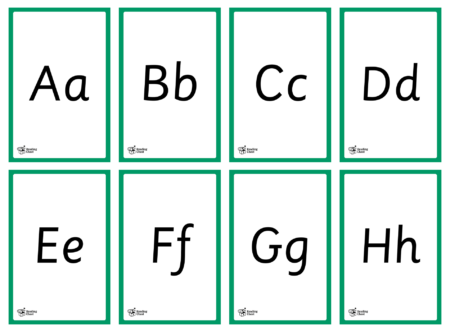
- Alphabet Flashcards (Both Cases)
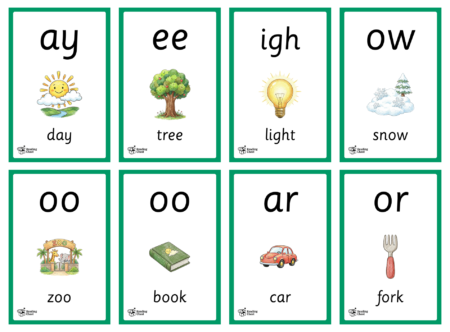
- Digraphs & Trigraphs Picture Flashcards
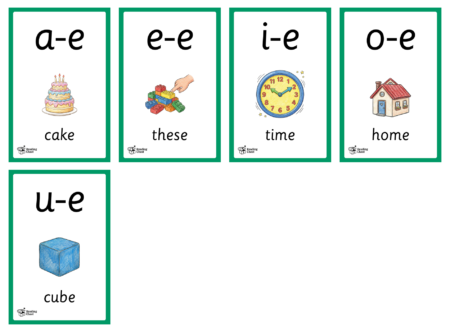
- Split Digraph Flashcards
How to do it
Choose a teddy, doll or soft toy to be the "pupil". Give your child a stack of flashcards — a mix of letters and digraphs. Their job: teach the teddy each sound.
They hold up a card, say the sound clearly, maybe give an example word. You can play the teddy if you like — getting confused, needing things repeated, asking "what word does that make?" Children love being the expert.
If your child gets stuck on a card, the teddy can get it "wrong" too — which takes the pressure off. It's much easier to correct a teddy's mistake than to admit your own. And the teaching still works either way.
Grab our resources
Print our alphabet flashcards (both cases) and digraphs & trigraphs picture flashcards to get started.
Frequently asked questions
Is Twinkl Phonics as good as Read Write Inc or Little Wandle?
All three programmes are DfE-validated, which means they’ve each been assessed against the government’s criteria for systematic synthetic phonics teaching. The core phonics content is the same across validated programmes — the differences are in teaching style, materials, and how schools implement them. A well-delivered Twinkl Phonics programme will produce the same outcomes as well-delivered RWI or Little Wandle. Implementation quality matters more than the specific programme.
Why has my child’s school switched to Twinkl Phonics?
Many schools that adopted Twinkl Phonics have done so partly because they already use Twinkl’s teaching resources extensively. Having the phonics programme, classroom materials, and assessment tools all within one platform reduces teacher workload. The DfE validation means schools can be confident it meets the required standards. If you want to understand the specific reasons, it’s worth asking at the school — most schools are happy to explain a curriculum change to parents.
Can I access Twinkl Phonics materials at home?
Some Twinkl materials are available free on the Twinkl website; others require a subscription. If your school has provided a Twinkl Go! login for your child, use that for their digital reading and phonics activities. For additional home practice, it’s worth asking the school what they recommend — they may have specific suggestions rather than leaving you to find materials independently.
How do Twinkl Phonics levels map to year groups?
Broadly: Level 1 is pre-phonics preparation (often in nursery or early Reception), Levels 2 and 3 are taught in Reception, Levels 4 and 5 are covered in Year 1, and Level 6 spans Year 1 to Year 2. However, this is a rough guide — children progress at different rates, and some children move through the levels faster or slower than the typical pace. Your child’s teacher can tell you which level they’re on and what to expect next.
